
Portrait of a Venetian Woman — History & Facts
It is the gaze that first catches you—a young woman, her eyes cast slightly downward, as if caught in a moment of thought or memory. The light falls gently across her face, illuminating the delicate modeling of her features and the intricate coils of her hair, each strand rendered with the meticulous care that marks Albrecht Dürer at his most attentive. The necklace she wears, a string of alternating black stones and pearls, draws the eye to the pale expanse of her neck and the subtle play of shadow across her skin.
The ribbons on her shoulders, one golden, one black, add a note of quiet contrast and hint at a story just out of reach. Every element seems chosen to hold the viewer’s attention in the hush between presence and absence. Painted in 1505, this Portrait of a Venetian Woman belongs to a world where likeness was both a record and a negotiation of identity. In Venice, portraiture had become a way to signal status and virtue, but Dürer, a visitor from the north, brings a clarity and directness that sets his work apart from the softer, more idealized faces of Venetian painters.
Her dress, with its lattice of gold embroidery, speaks of wealth, but her expression is reserved, almost private. The black background isolates her, making her presence more immediate and her individuality more pronounced. In this moment, the sitter is neither merely a symbol nor a type, but a person with her own interior life—an effect that invites us to linger, searching her face for clues.
More Artworks by Albrecht Dürer

Melancholia
Albrecht Dürer

St. George and the dragon.
Albrecht Dürer
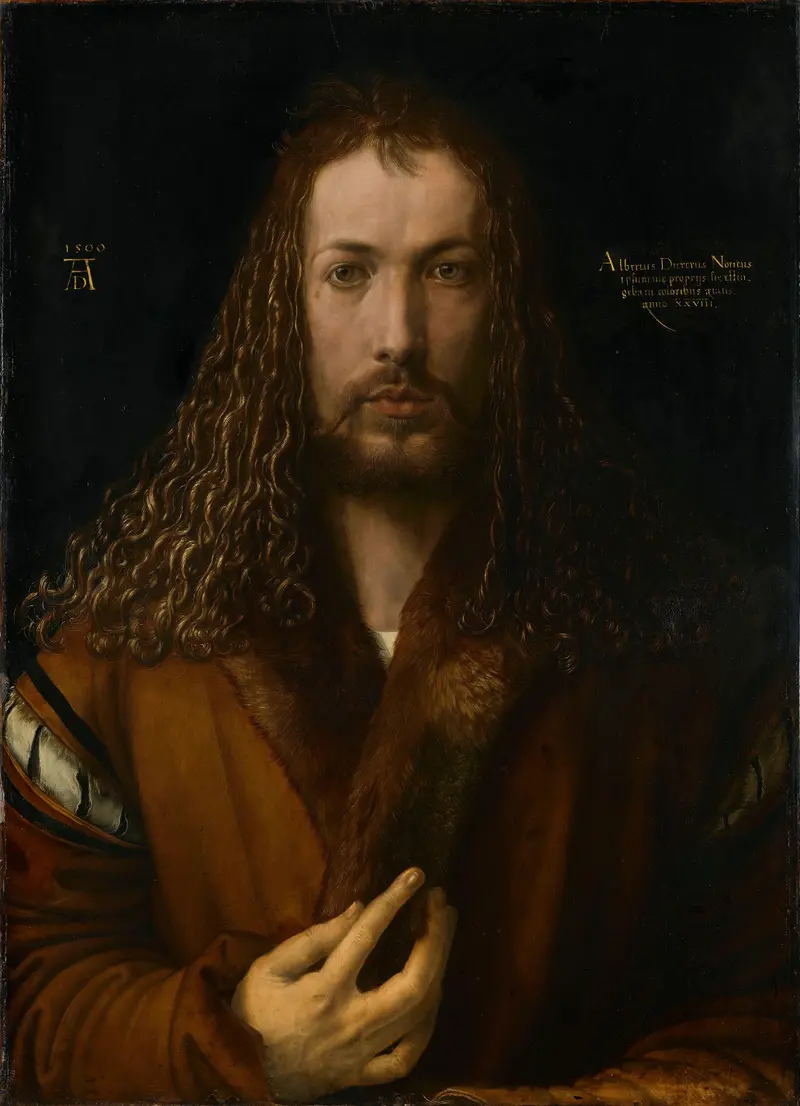
Self-Portrait with Fur-Trimmed Robe
Albrecht Dürer

Wing of a European Roller
Albrecht Dürer

Iris
Albrecht Dürer

The Great Piece of Turf
Albrecht Dürer
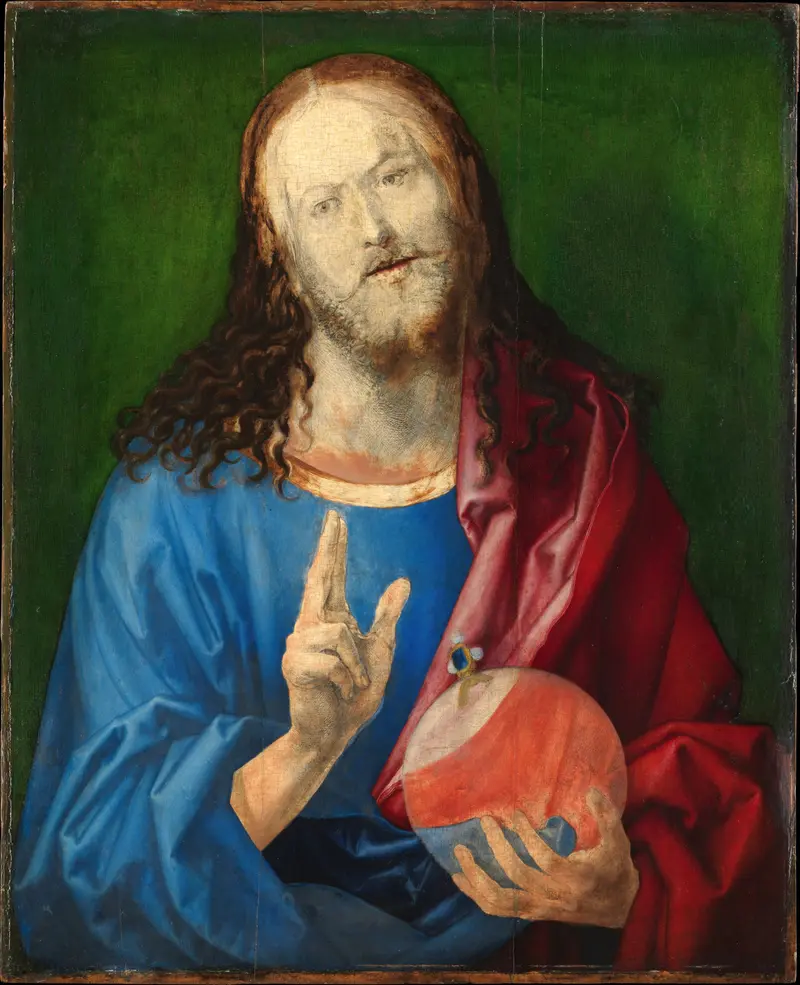
Salvator Mundi
Albrecht Dürer
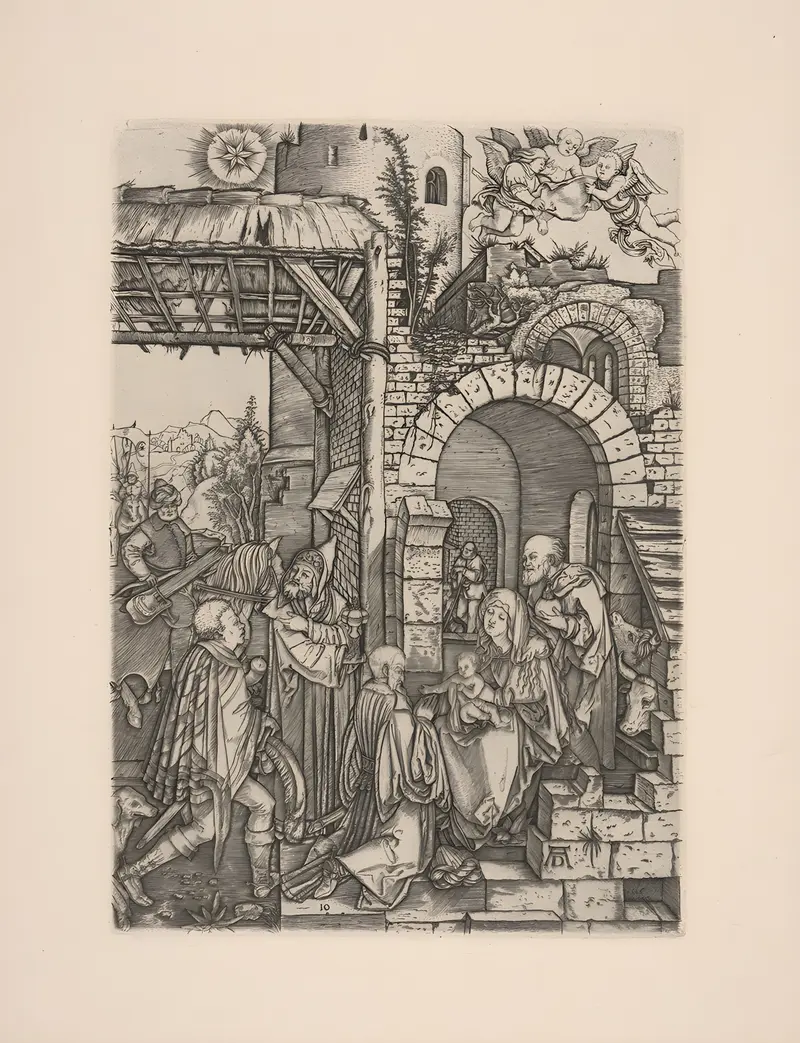
The Adoration of the Magi
Albrecht Dürer
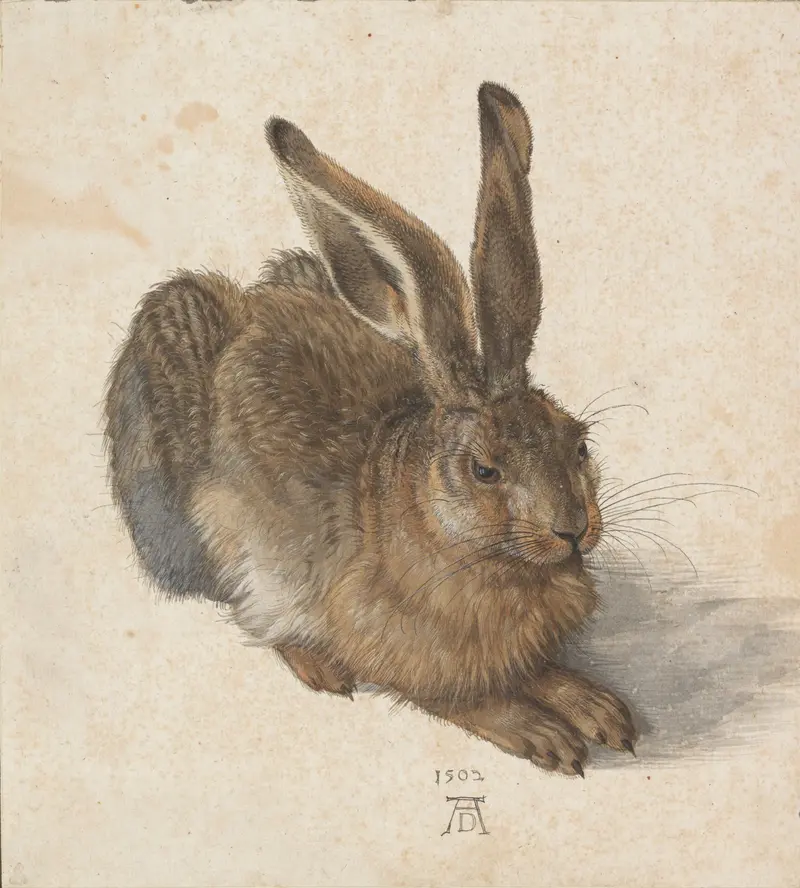
Young Hare
Albrecht Dürer
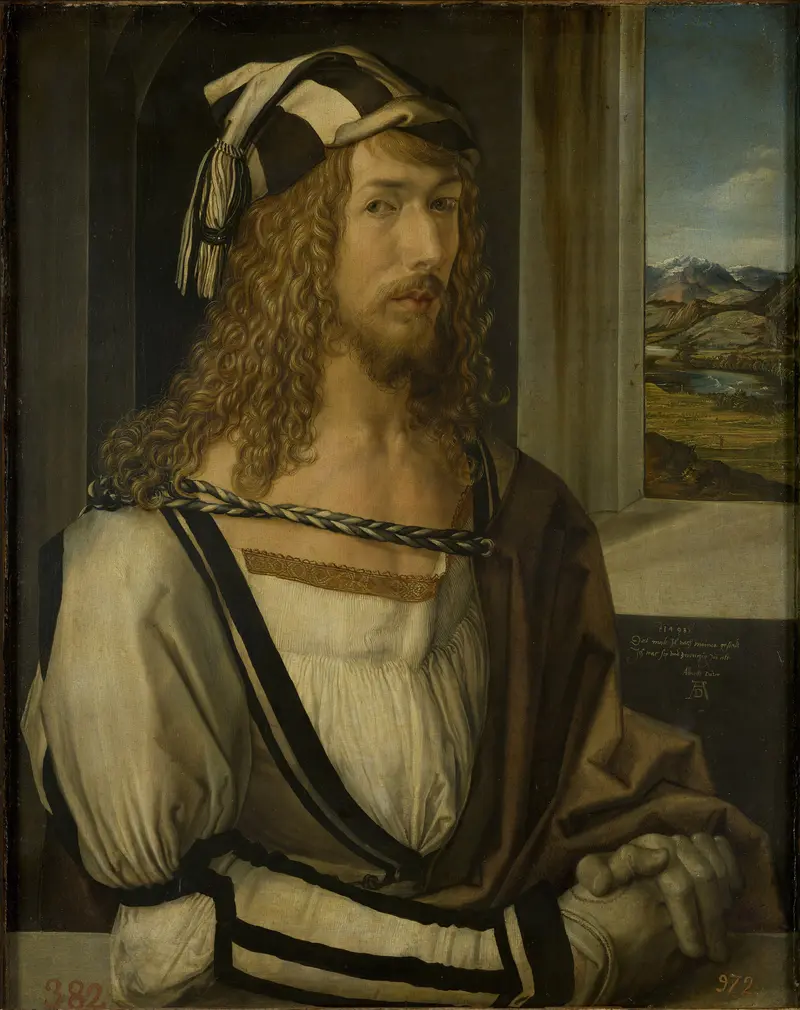
Self-portrait
Albrecht Dürer





