
Portrait of a Young Man — History & Facts
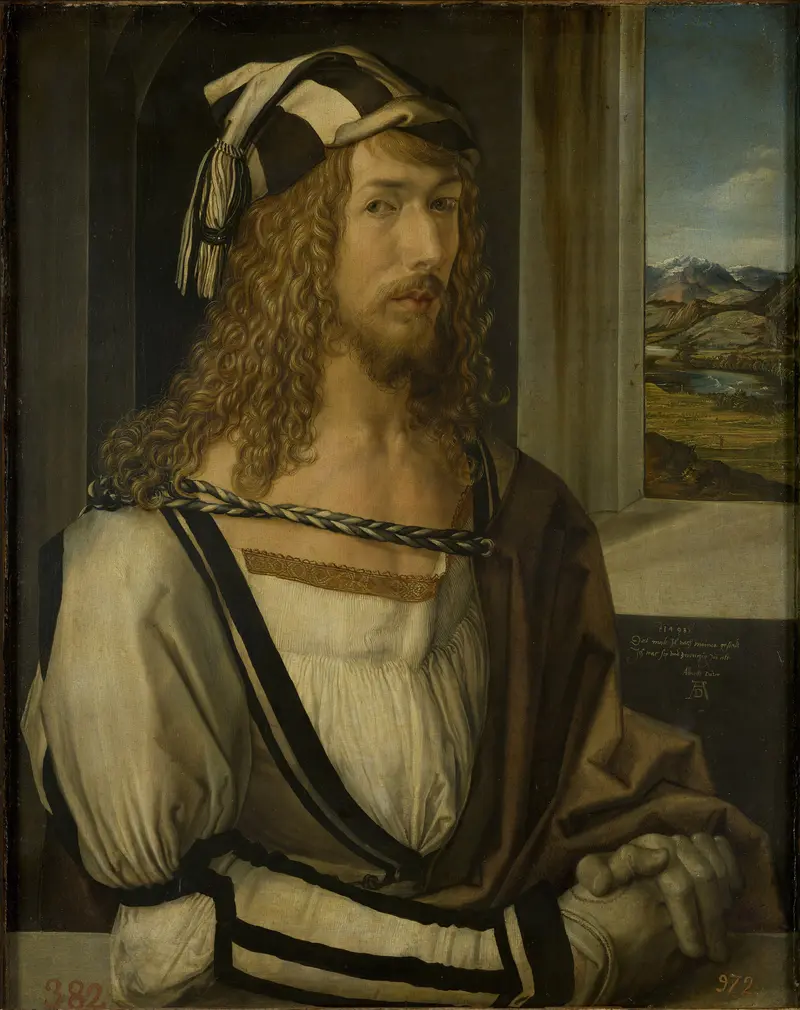
What first catches the eye in Portrait of a Young Man is the striking contrast between the sitter’s pale, luminous face and the saturated red backdrop. The young man’s gaze is quietly alert, turned slightly away from the viewer as if caught in a moment of thought, his lips poised between reserve and a hint of a smile. The crisp, almost sculptural modeling of his features draws attention to the careful observation that defines Albrecht Dürer’s approach, while the delicate rendering of his fur collar and the intricate pattern of his cap signal both status and individuality.
Light falls softly across his face, picking out the fine lines of his brow and the subtle flush of his cheeks, inviting the viewer to linger on the psychological presence behind the surface. This portrait, created sometime between 1500 and 1510, belongs to a world where likeness was becoming a statement of personal identity and social aspiration. In the late 15th and early 16th centuries, portraits such as this were often commissioned by wealthy merchants or rising professionals eager to assert their place in a rapidly changing society. The painting’s direct gaze and careful attention to material detail reflect the Renaissance fascination with the individual, a spirit that Dürer helped to define in Northern Europe.
While history has kept few traces of this specific sitter or the painting’s early journey, its presence today—preserved in an online collection—reminds us how the face of one unknown youth can still command attention across five centuries. Return to those eyes, and consider what it meant to be seen, and to endure, in the age of Dürer.
More Artworks by Albrecht Dürer

Melancholia
Albrecht Dürer

St. George and the dragon.
Albrecht Dürer
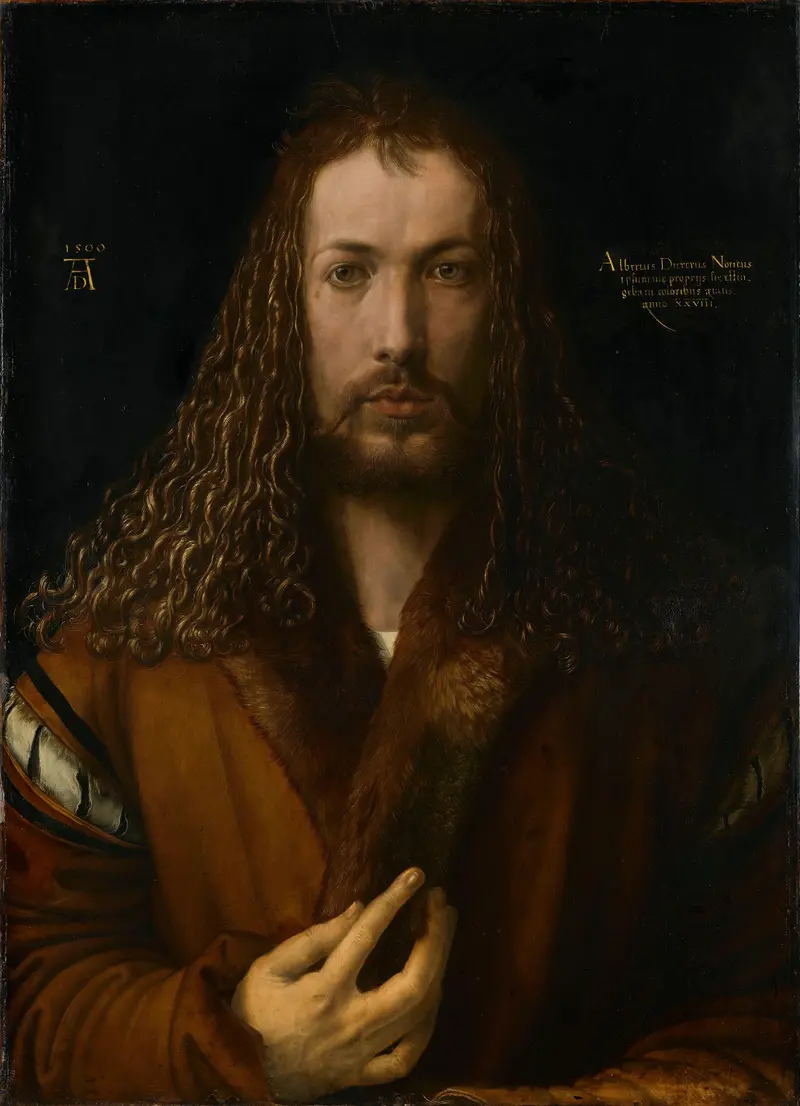
Self-Portrait with Fur-Trimmed Robe
Albrecht Dürer

Wing of a European Roller
Albrecht Dürer

Iris
Albrecht Dürer

The Great Piece of Turf
Albrecht Dürer
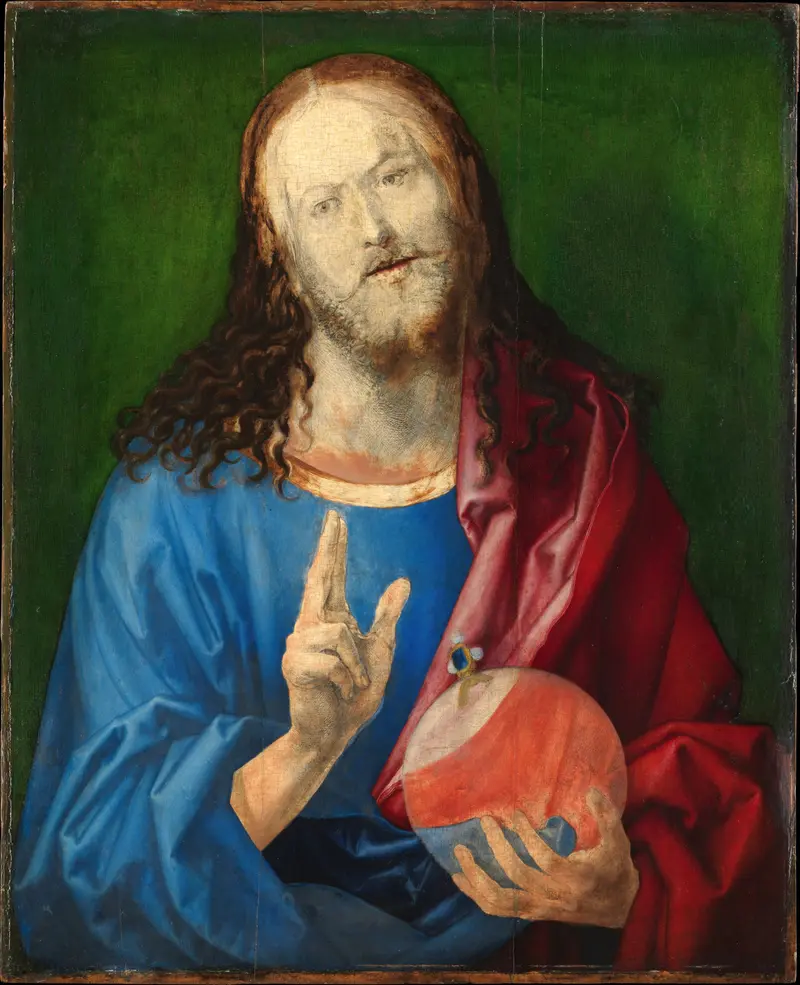
Salvator Mundi
Albrecht Dürer
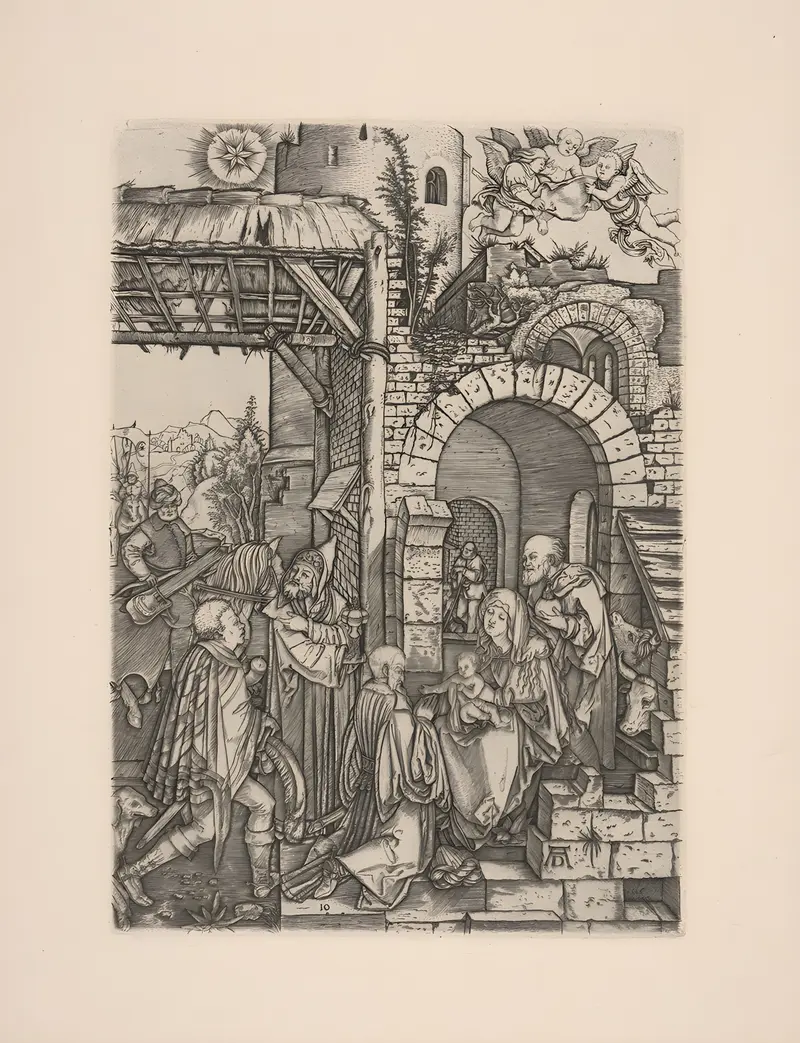
The Adoration of the Magi
Albrecht Dürer
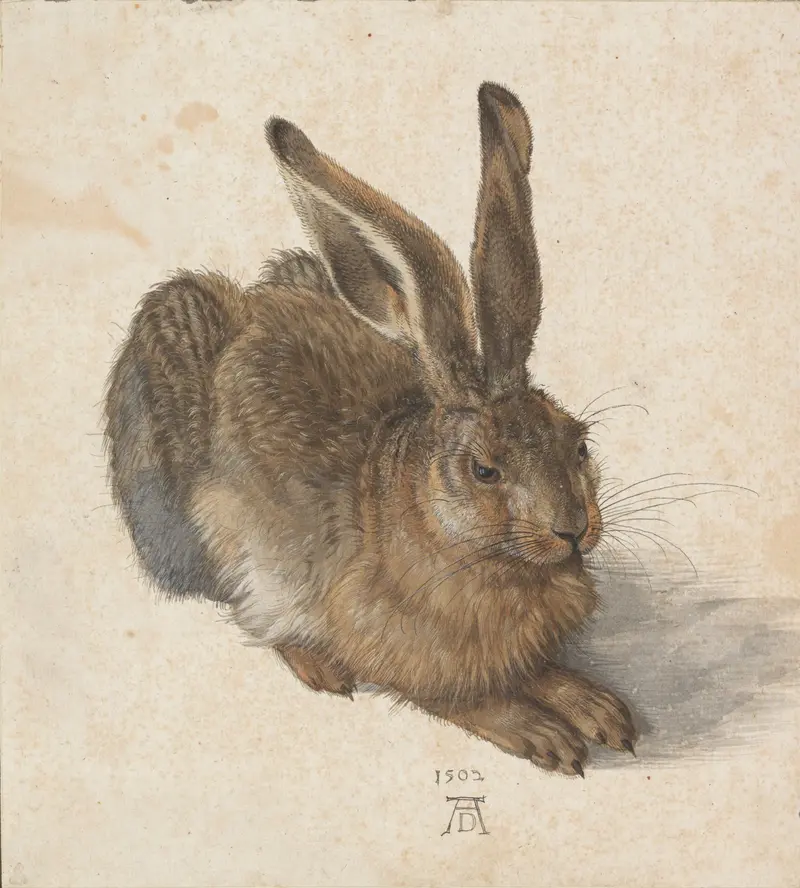
Young Hare
Albrecht Dürer
Self-portrait
Albrecht Dürer





