
Portrait of Aletta Hanemans (1606–1653) — History & Facts
A young woman stands against a plain, muted brown background, her body turned three-quarters to the left while her face meets the viewer with a composed, direct gaze. A wide, starched ruff encircles her neck, its crisp pleats painted with sharp precision, casting soft shadows on her collarbone and shoulders. Her dress is deep black, patterned with subtle floral motifs that catch the light, and the sleeves are slashed to reveal white fabric beneath, ending in fine lace cuffs.
Over her bodice, an elaborate stomacher of gold embroidery and lace glimmers with intricate patterns, secured at the waist with a braided gold cord that drapes down the front of her skirt. On her left hand, she wears a gold ring and a delicate bracelet, while her right hand holds an embroidered glove decorated with colored threads and dangling red tassels. Her fingers are slender and slightly bent, suggesting a gentle, poised movement as she displays both her jewelry and the glove.
The artist’s brushwork varies from the smooth, almost invisible handling of her face to the textured, lively strokes in the lace and embroidery, revealing a mastery of surface and material. The upper left corner of the background contains a faint gold inscription with the sitter’s age and the year, painted in small, serifed letters. The light source comes from the left, illuminating the woman’s face and the front of her ruff, while casting a gentle shadow on the right side of her cheek and neck.
The edges of the painting are softly blended into the plain background, with no visible frame or border elements intruding into the composition. The brown background is subtly varied in tone, with lighter and darker patches suggesting a textured surface rather than a flat color. The lace edging of her cap is rendered with fine, delicate lines, each loop and floral motif crisply outlined against her hair and the background. The details of her attire, including the diadem cap, stomacher, ring, bracelet, and glove, are all described in the museum’s documentation and are visible in the composition.
Sources: Mauritshuis, record 460 · Wikidata Q17275957 · Image source (Wikimedia Commons)
More Artworks by Frans Hals

Banquet of the Officers of the St George Civic Guard
Frans Hals

Portrait of Jacob Pietersz Olycan (1596-1638)
Frans Hals

Laughing Cavalier
Frans Hals

Militia Company of District XI under the Command of Captain Reynier Reael, Known as ‘The Meagre Company’
Frans Hals

Regentesses of the Old Men's Alms House
Frans Hals

Portrait of a Married Couple, Likely Isaac Abrahamsz Massa and Beatrix van der Laen
Frans Hals
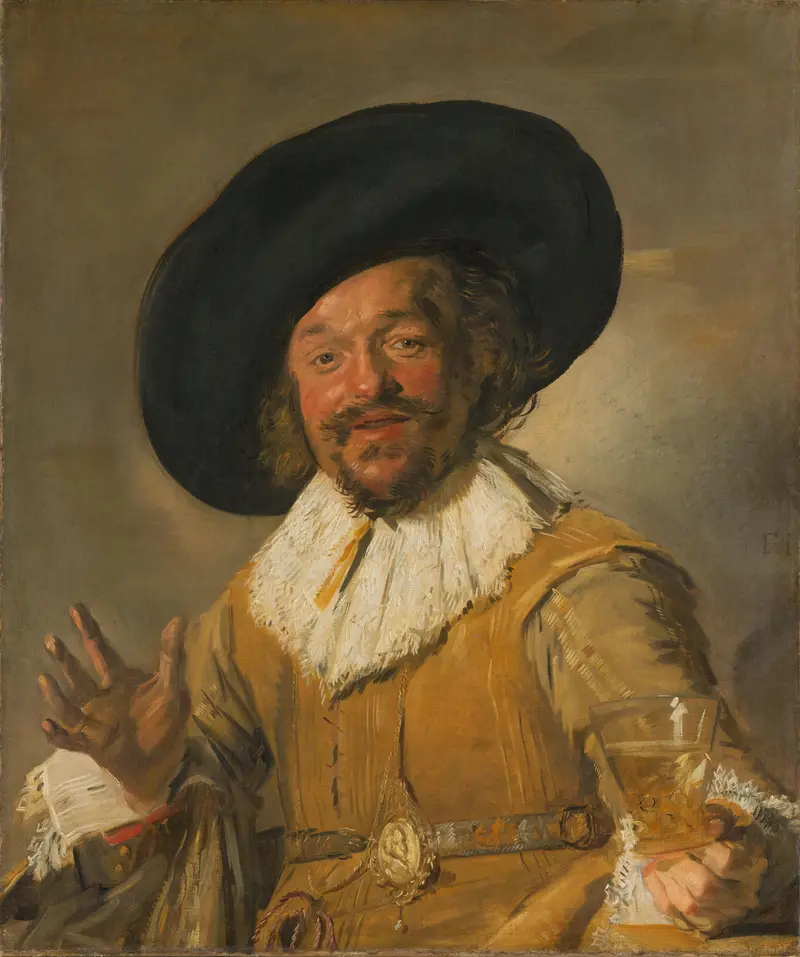
The Merry Drinker
Frans Hals

Portrait of Paulus Verschuur
Frans Hals

Portrait of Pieter van den Broecke
Frans Hals
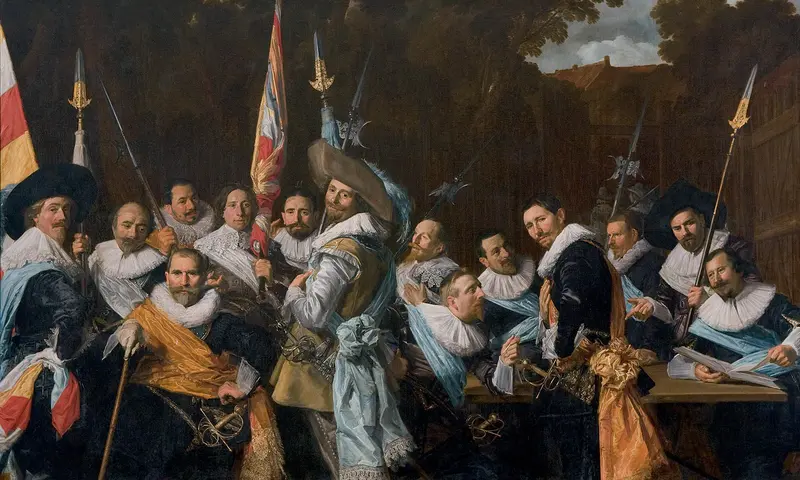
The Officers of the St Adrian Militia Company in
Frans Hals





