
The Merry Drinker — History & Facts
A man with flushed cheeks and a lively expression sits at the center, his body turned slightly to the left while his face meets the viewer with a broad, open smile. He wears a wide-brimmed black hat tipped at an angle, a tan leather jerkin, and a crisp white lace collar and cuffs that catch the warm light. His right hand is raised in a gesture, fingers spread as if caught mid-conversation, while his left hand holds a glass of white wine, the liquid glinting near the rim.
A decorative belt with a large, round medal sits at his waist, its metallic surface rendered with quick, bright strokes. The background is a plain, muted brown, which throws the figure into sharp relief and focuses attention on his animated features and gestures. Hals’s loose brushwork is visible throughout: the lace is built up with energetic, irregular dabs of white, and the jerkin’s folds are described with sweeping, fluid lines.
The man's ruddy complexion and the highlights on his face are created with layered paint, and the rapid, circular marks on his cheeks and forehead give a sense of movement and immediacy. The glass in his hand is painted with transparent washes, capturing the reflections and the faint golden tint of the wine. The composition is tightly cropped, showing the figure from the waist up and filling the canvas with his presence, while the absence of other objects or background details keeps the focus on his lively interaction. The Merry Drinker was painted by Frans Hals in the late 1620s, during the artist’s mature period in Haarlem.
The subject’s jovial demeanor and the act of drinking connect the painting to the popular Dutch theme of the ‘merry drinker’ or ‘jolly toper’, which appeared frequently in seventeenth-century inventories. Art historians have debated whether this is a genre scene or a portrait, but the consensus, following Cornelis Hofstede de Groot, is that it represents a genre piece rather than an individual likeness. The painting’s originality and candor have made it one of the most popular works in the Rijksmuseum’s collection, reflecting the energy and spirit of the Dutch Golden Age. Frans Hals is known for his rapid, expressive brushwork and his ability to capture fleeting expressions, qualities that are evident in this painting’s lively surface and direct engagement with the viewer.
The loose, layered technique, visible in the irregular paint strokes and the use of the brush handle to create texture, marks the style that distinguishes Hals’s work within Dutch genre painting of the 1620s.
Sources: Rijksmuseum, record SK-A-135 · Wikidata Q650635 · Wikipedia: The Merry Drinker
More Artworks by Frans Hals

Banquet of the Officers of the St George Civic Guard
Frans Hals

Portrait of Jacob Pietersz Olycan (1596-1638)
Frans Hals

Laughing Cavalier
Frans Hals

Militia Company of District XI under the Command of Captain Reynier Reael, Known as ‘The Meagre Company’
Frans Hals

Regentesses of the Old Men's Alms House
Frans Hals
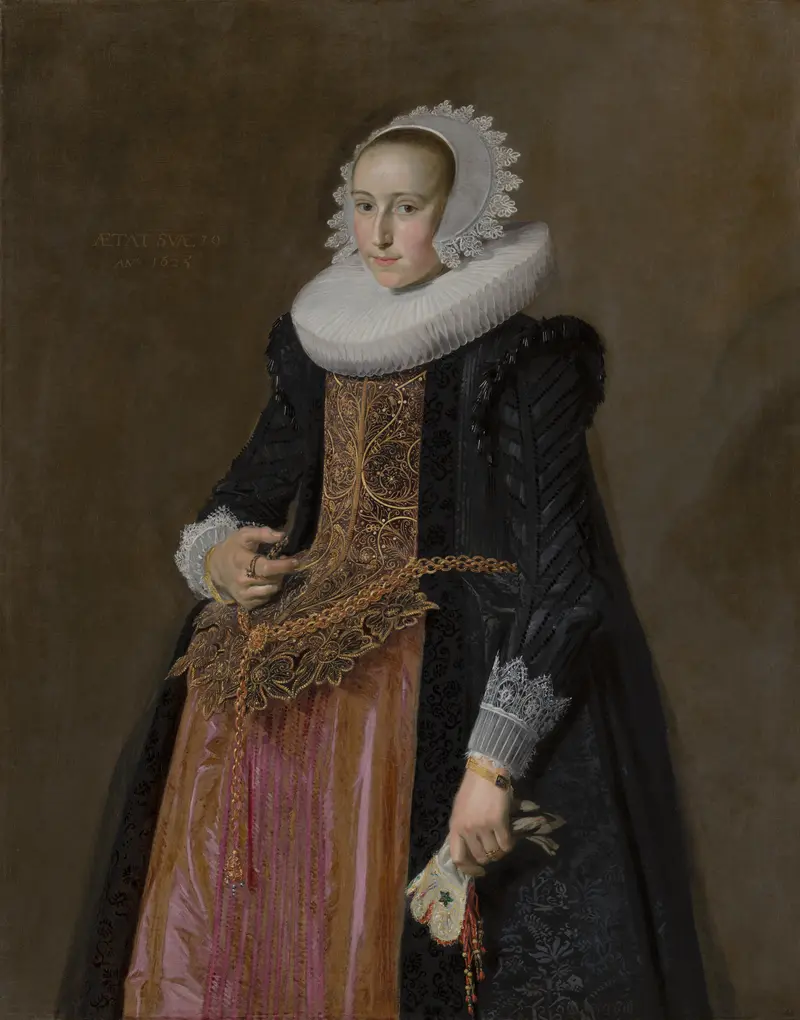
Portrait of Aletta Hanemans (1606–1653)
Frans Hals

Portrait of a Married Couple, Likely Isaac Abrahamsz Massa and Beatrix van der Laen
Frans Hals

Portrait of Paulus Verschuur
Frans Hals

Portrait of Pieter van den Broecke
Frans Hals
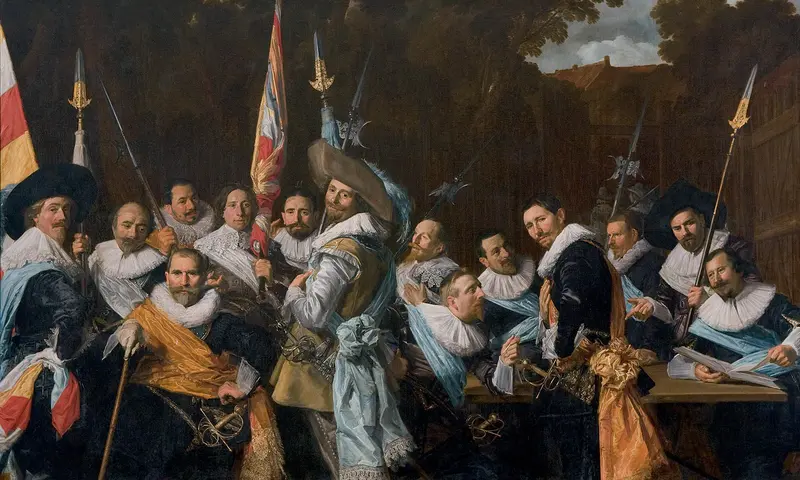
The Officers of the St Adrian Militia Company in
Frans Hals
More Genre Scene Art
Banquet of the Officers of the St George Civic Guard
Frans Hals

Rembrandt and Saskia in the Scene of the Prodigal Son
Rembrandt van Rijn

Bal du moulin de la Galette
Pierre-Auguste Renoir

Quadrille at the Moulin Rouge
Henri de Toulouse-Lautrec

A Burial at Ornans
Gustave Courbet

When Will You Marry?
Paul Gauguin