
Portrait of Elisabeth van Cronenburgh — History & Facts
What first draws the eye in Portrait of Elisabeth van Cronenburgh is the quiet force of her gaze—steady, almost searching, set against the crisp geometry of her ruff and the deep, sober folds of her dress. The painter, Aert Pietersz., has chosen a moment of poised stillness, capturing not just a likeness but a sense of presence. The light falls cleanly across her face and hands, emphasizing her pale skin and the delicate transparency of her cap, while the dark velvet of her gown recedes into shadow, lending the sitter an air of gravity and self-possession.
Every detail, from the gold rings on her fingers to the carved armchair and inscribed stonework behind, signals status and careful self-presentation, yet there is a softness in the modeling of her features that hints at the individual behind the formality. Portraits like this, made in the late sixteenth-century Northern Netherlands, were both declarations and records—commissioned by prosperous families to mark marriages, alliances, or personal milestones. The inscription at left—dated 1593 and noting her age as 29—anchors the work in a world where identity and memory were crafted as much in paint as in parchment. In this era, the rise of the Dutch merchant class brought a new demand for portraits that balanced dignity with individuality, and artists like Aert Pietersz. responded with a sober clarity that still feels immediate.
Today, the painting resides in the Stedelijk Museum Alkmaar, a quiet witness to a time when the careful rendering of lace and flesh was itself an act of ambition and remembrance. Look again at her hands: they rest, but they do not relax—there is always something more beneath the surface.
More Artworks by Aert Pietersz.
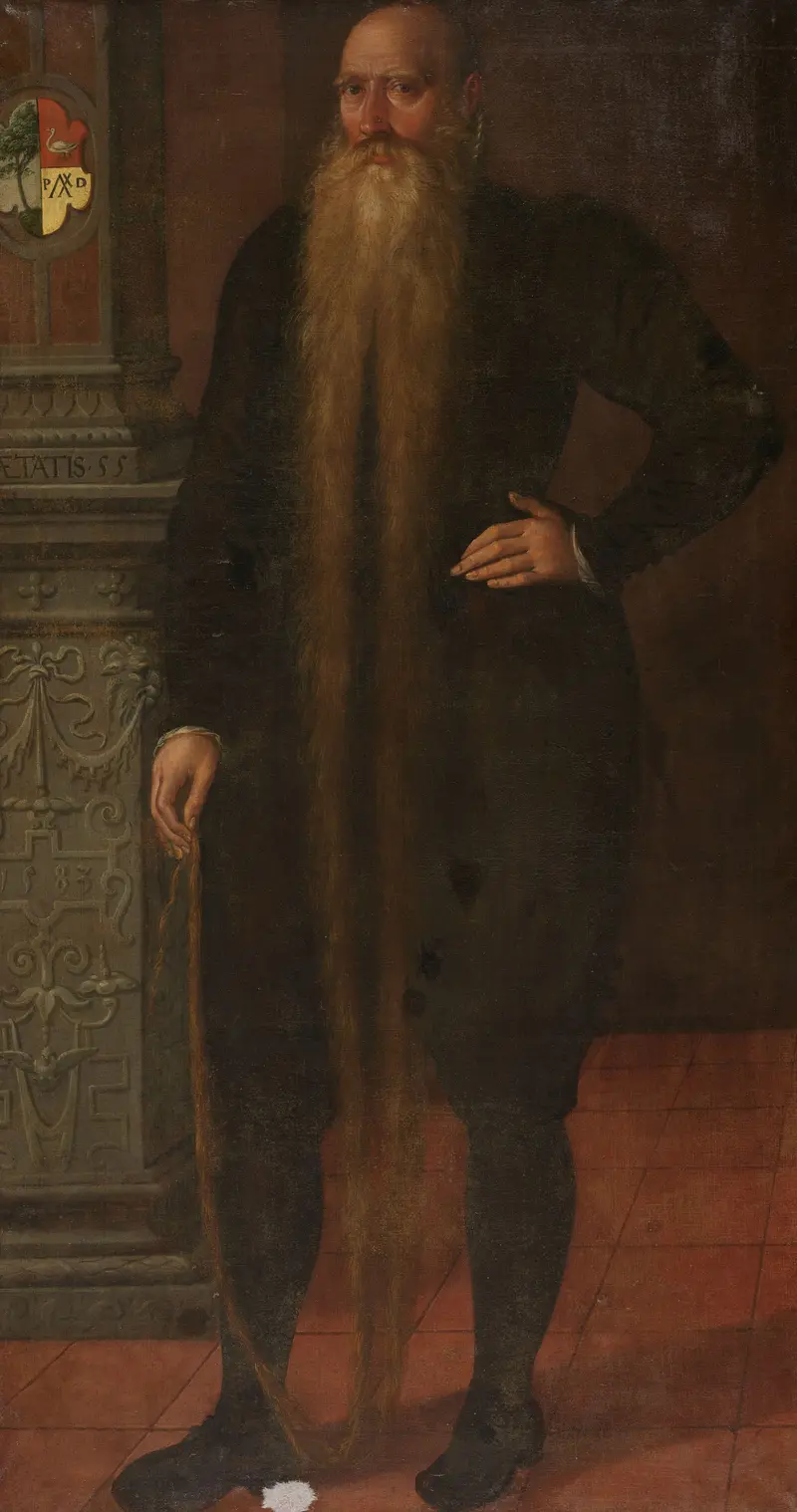
Portrait of Pieter Dircksz, called Long Beard, Council Member of the Orphan Chamber in Edam
Aert Pietersz.
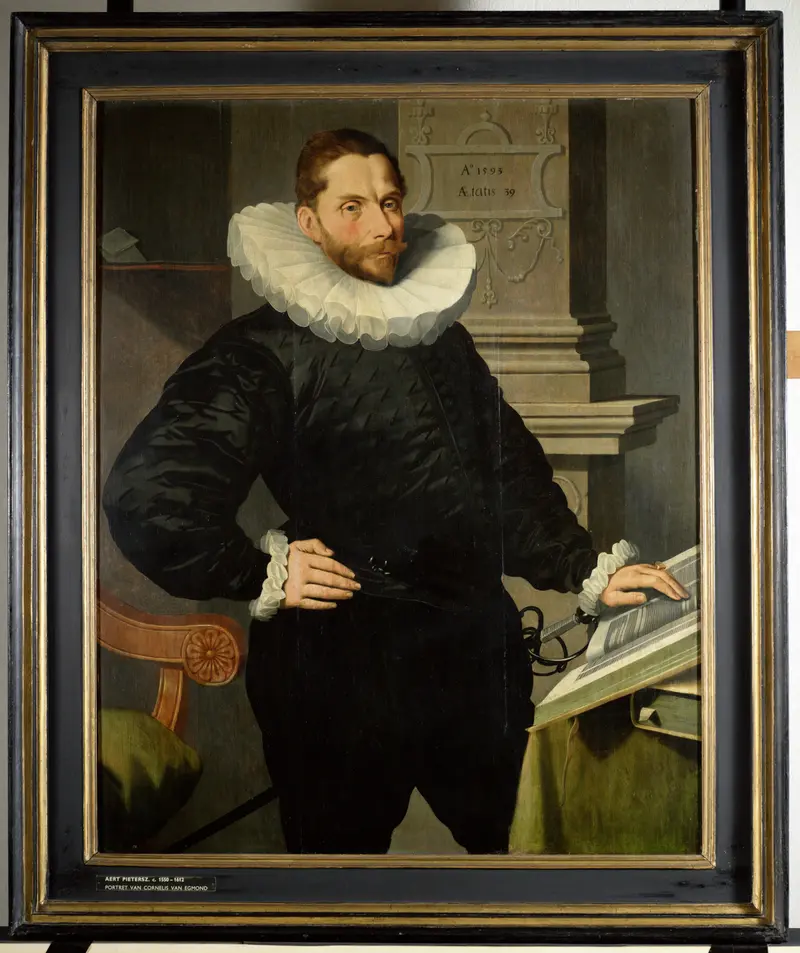
Portrait of Cornelis Basgen Jansz. van Egmond van der Nyenburgh (1553-1606)
Aert Pietersz.
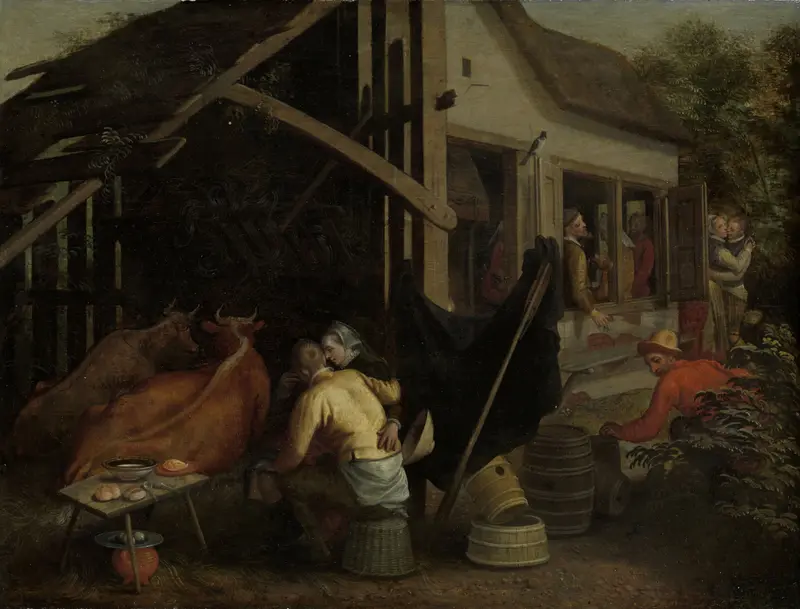
Couples making love at a country inn
Aert Pietersz.

Portrait of a Man
Aert Pietersz.
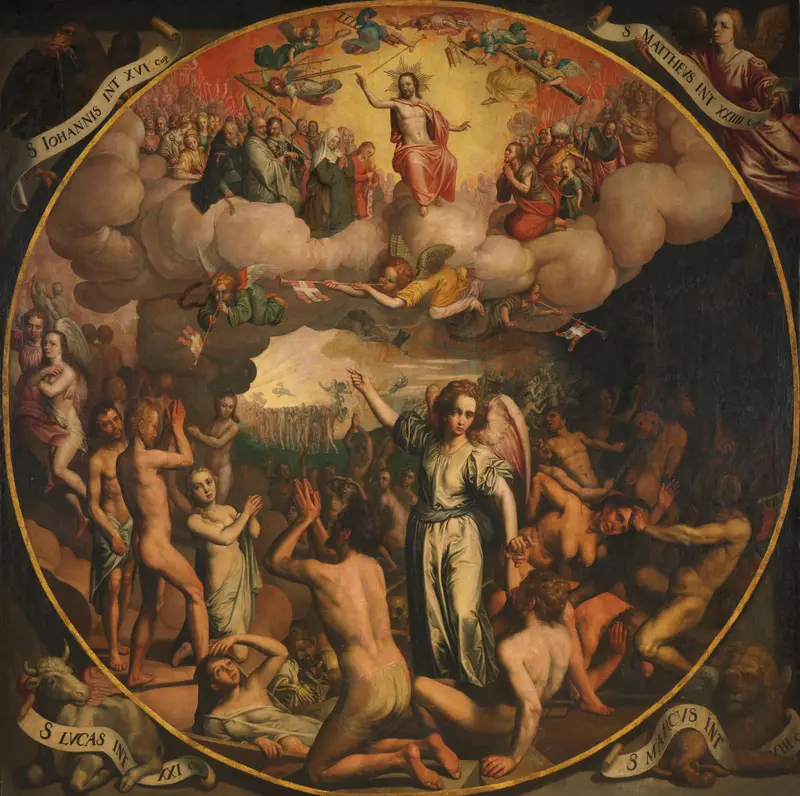
Last Judgment
Aert Pietersz.
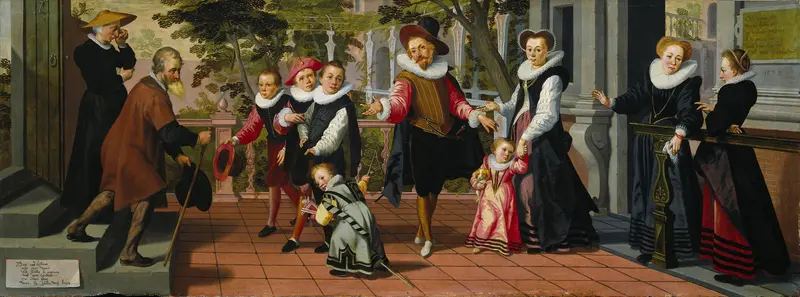
Rich Children, Poor Parents
Aert Pietersz.





