
Portrait of Erna Schilling — History & Facts
A single feathered hat, rendered in urgent, slashing strokes, draws the eye immediately to the subject’s face—a face at once masklike and searching. The sitter’s gaze is direct but unreadable, her features outlined in thick, almost sculptural lines of ochre and violet. Around her, the background splits into bold fields of blue and red, pushing her forward into the viewer’s space, while a yellow splash at her shoulder vibrates with the energy of the whole.
This is a portrait that refuses to settle into calm; every brushstroke seems to pulse with the tension of the sitter’s inner life. Painted in 1913, this Portrait of Erna Schilling belongs to the charged world of early twentieth-century Expressionism, a movement that sought not to flatter or idealize but to reveal psychological truth through color and form. Ernst Ludwig Kirchner was a leading figure in this revolution, and his portraits often captured the shifting identities and anxieties of modern urban life. The sitter’s elaborate hat and stylized clothing hint at the era’s fascination with performance and self-presentation, while the rough handling of paint and abrupt color contrasts speak to a world in upheaval.
History has kept few traces of this particular canvas’s journey, but its restless energy invites us to look again—and to wonder what stories lie behind that steady, enigmatic stare.
More Artworks by Ernst Ludwig Kirchner
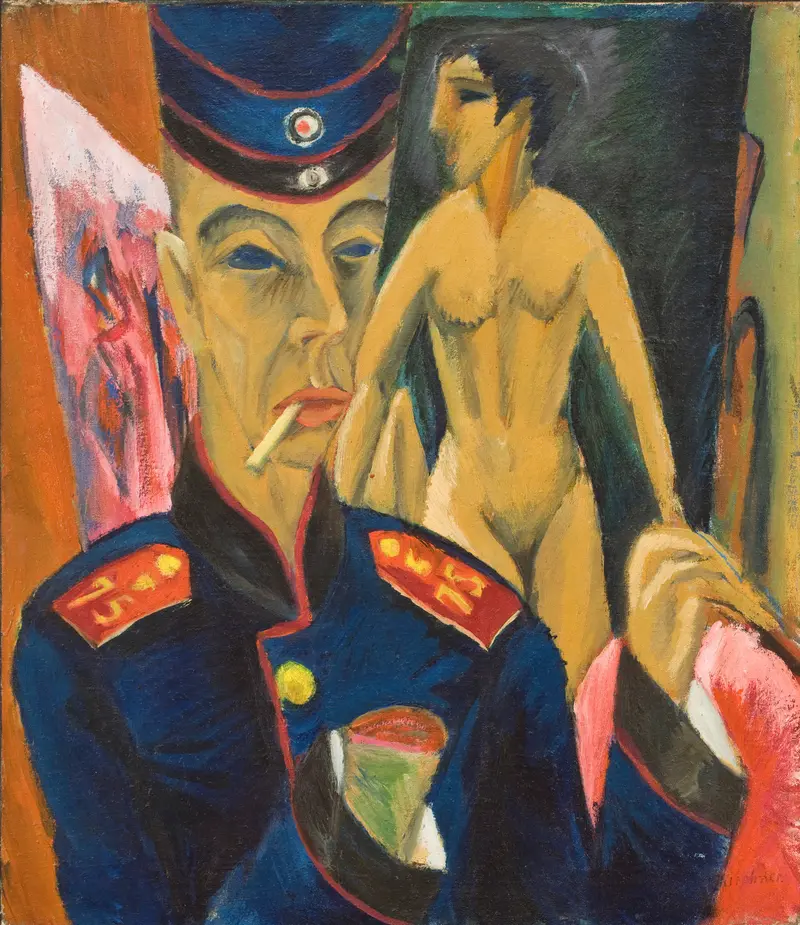
Self-Portrait as a Soldier
Ernst Ludwig Kirchner
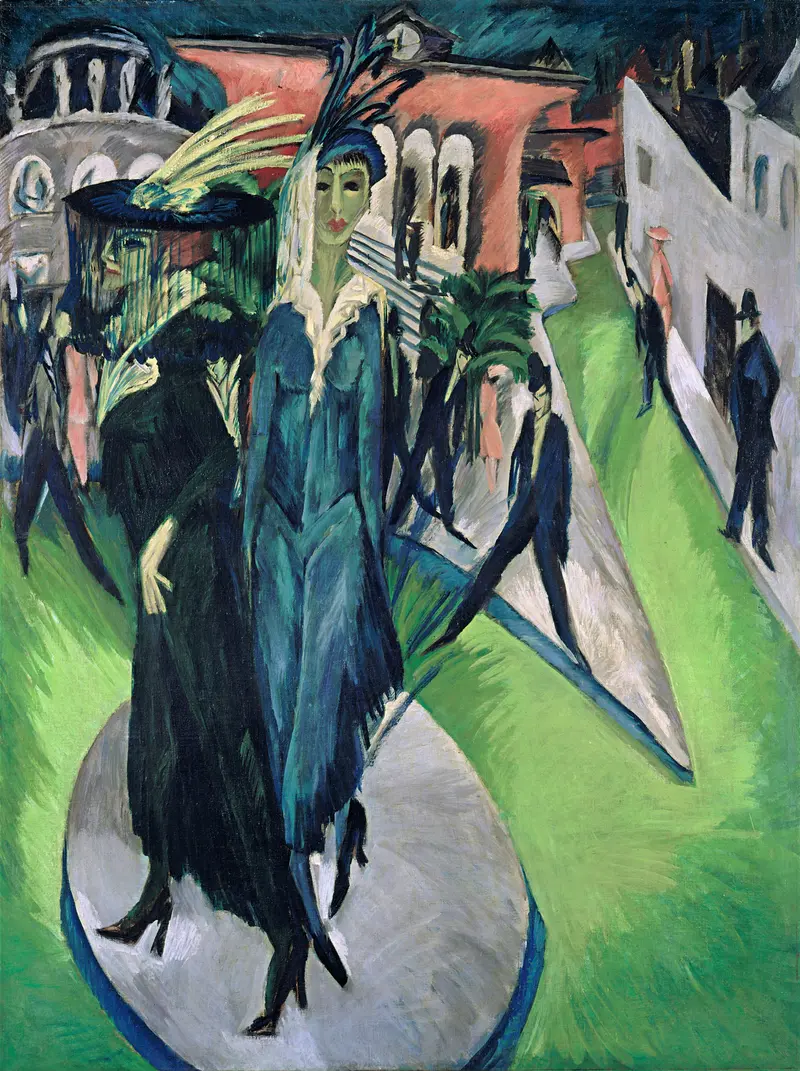
Potsdamer Platz
Ernst Ludwig Kirchner

Alphütten und Tinzenhorn
Ernst Ludwig Kirchner
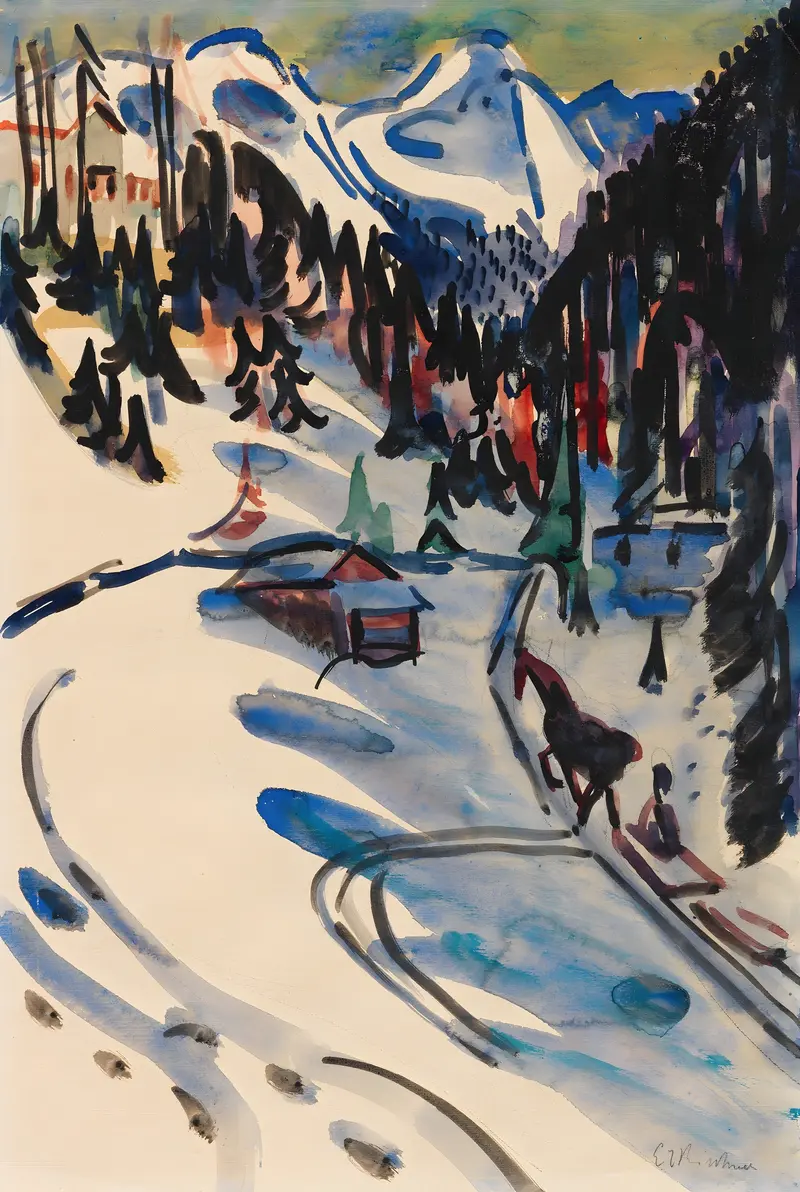
Sertigtal im Winter
Ernst Ludwig Kirchner
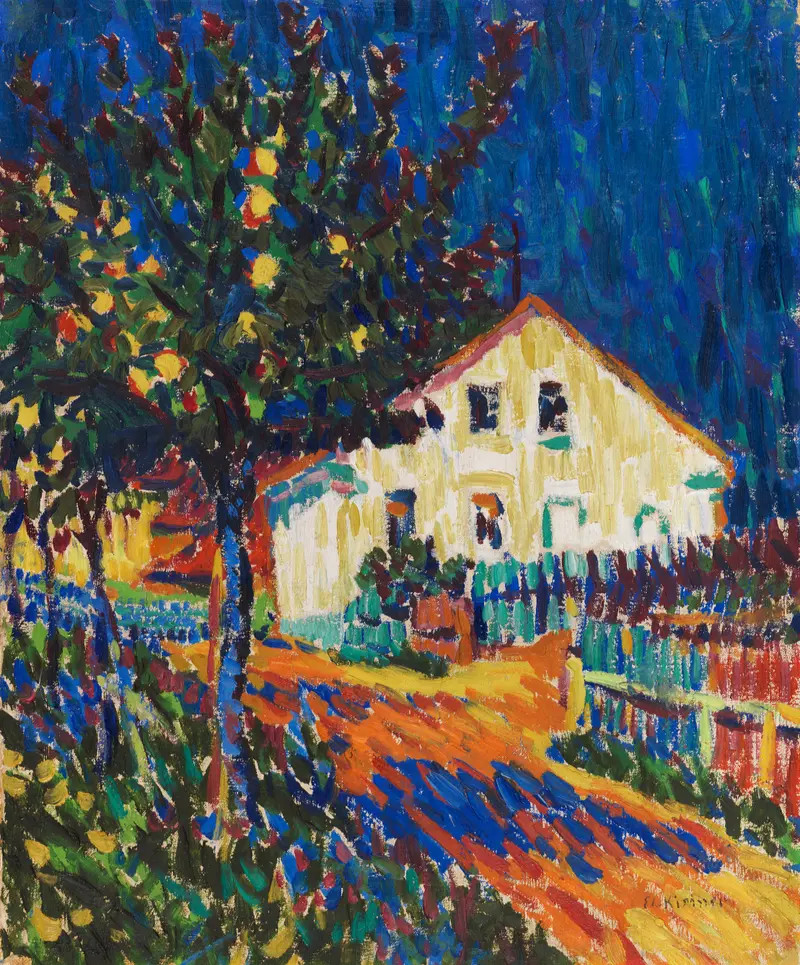
Dorfstraße mit Apfelbäumen
Ernst Ludwig Kirchner
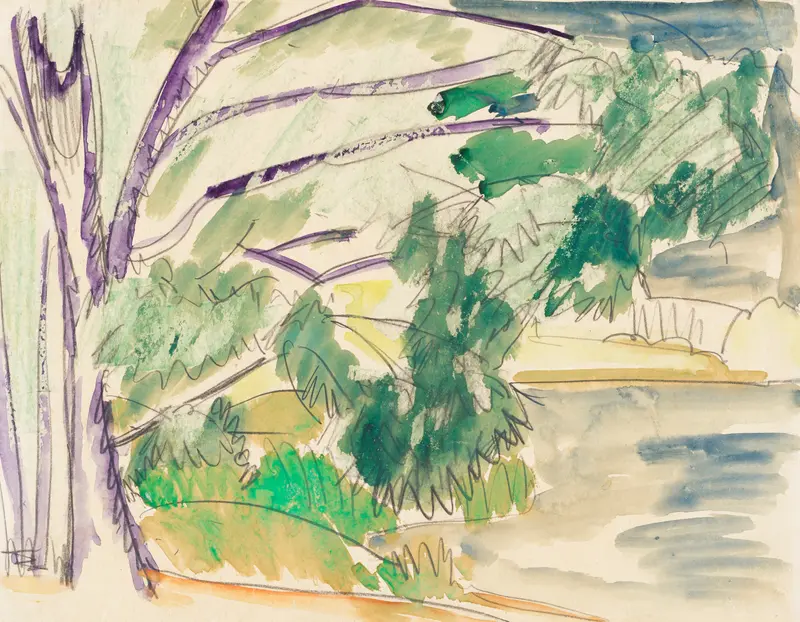
Unter Bäumen am See
Ernst Ludwig Kirchner
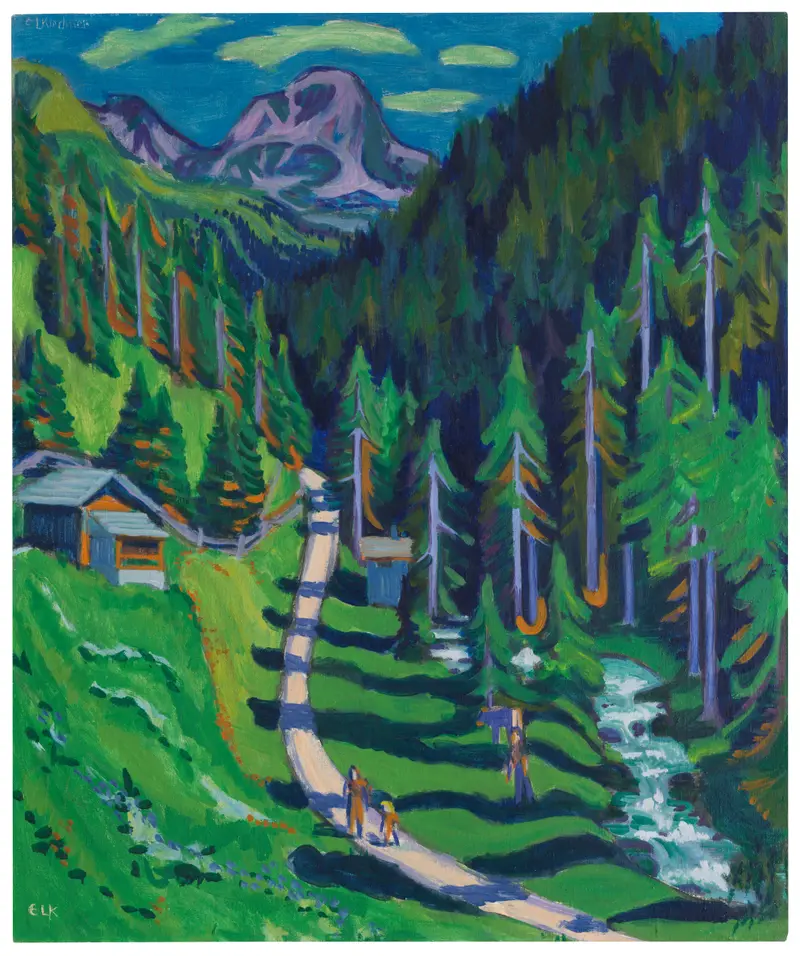
Sertigweg
Ernst Ludwig Kirchner
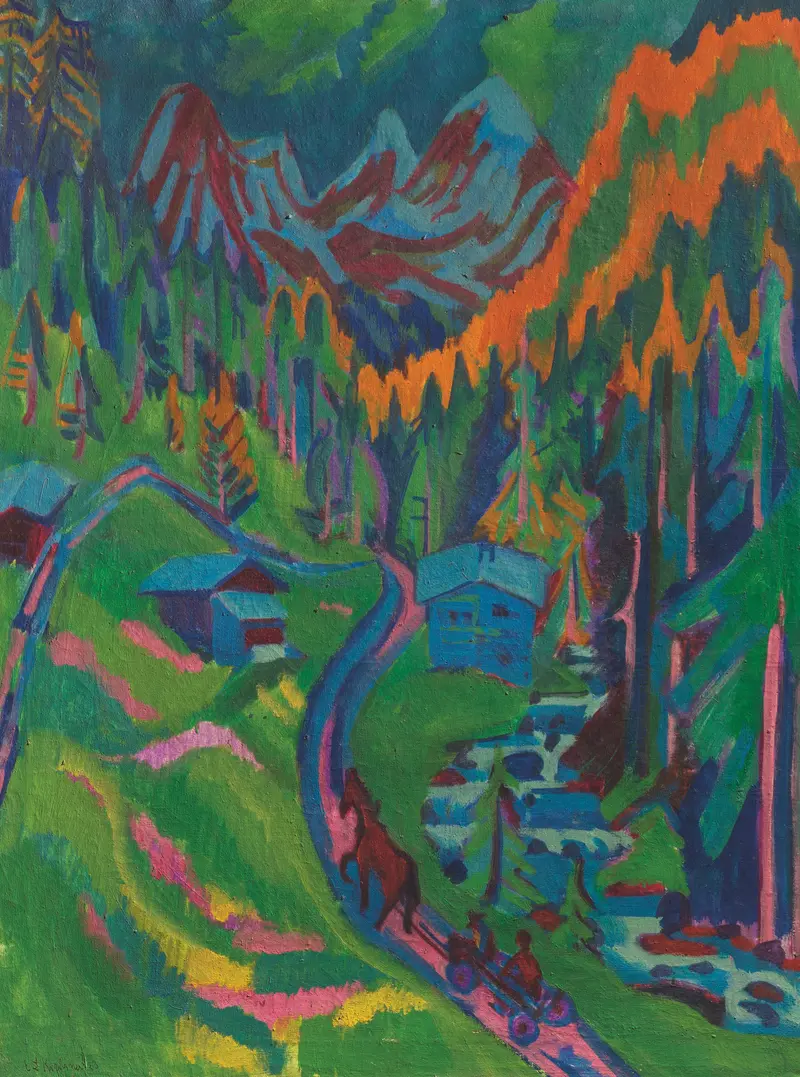
Sertigweg im Sommer
Ernst Ludwig Kirchner
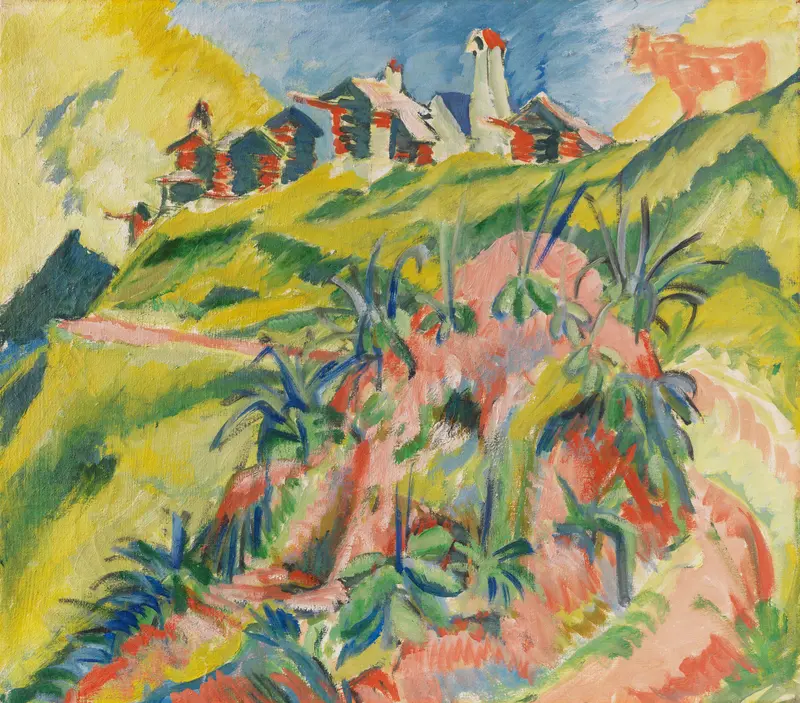
Bergdorf mit rosa Kuh
Ernst Ludwig Kirchner
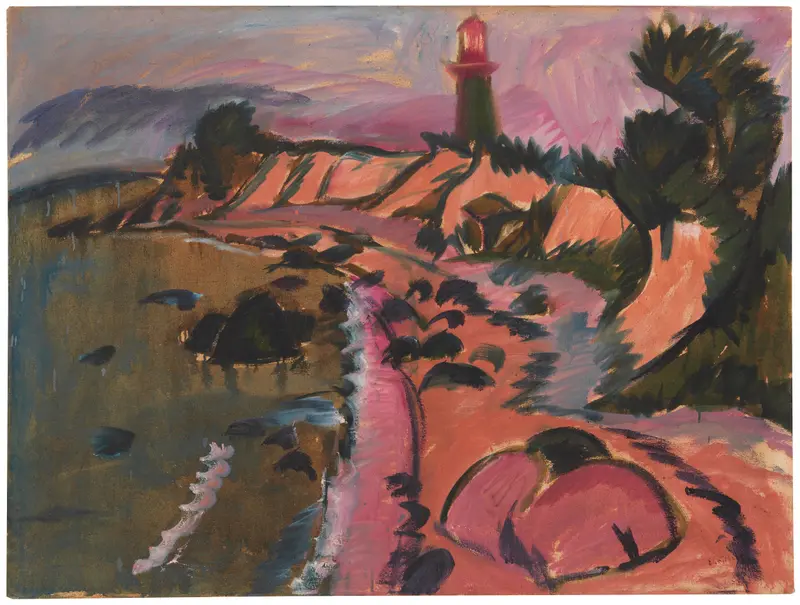
Fehmarnküste mit Leuchtturm
Ernst Ludwig Kirchner





