
Portrait of Guido Arnot — History & Facts
In Portrait of Guido Arnot, Egon Schiele uses bold colors and expressive brushwork to depict his subject. The figure of Guido Arnot is rendered with angular shapes and exaggerated features, typical of Schiele's style. The background is a mix of vibrant hues that enhance the emotional intensity of the portrait.
Overall, the painting conveys a sense of urgency and raw emotion. The painting is executed in oil on canvas, a medium that allows for rich texture and depth. Schiele's technique involves thick application of paint, creating a tactile quality that draws the viewer in. The dimensions are approximately 70 x 90 cm, making it a substantial work that commands attention.
The use of color and form is characteristic of Expressionism, a movement that sought to express emotional experience rather than physical reality. Egon Schiele was a prominent figure in the Austrian Expressionist movement, known for his raw and provocative style. This portrait, created around 1910, showcases his unique ability to capture the psychological depth of his subjects. An interesting fact about this work is that it reflects Schiele's fascination with the human form and his desire to explore the inner emotions of individuals.
Schiele's works often provoke strong reactions, and this portrait is no exception.
More Artworks by Egon Schiele

Lovers
Egon Schiele
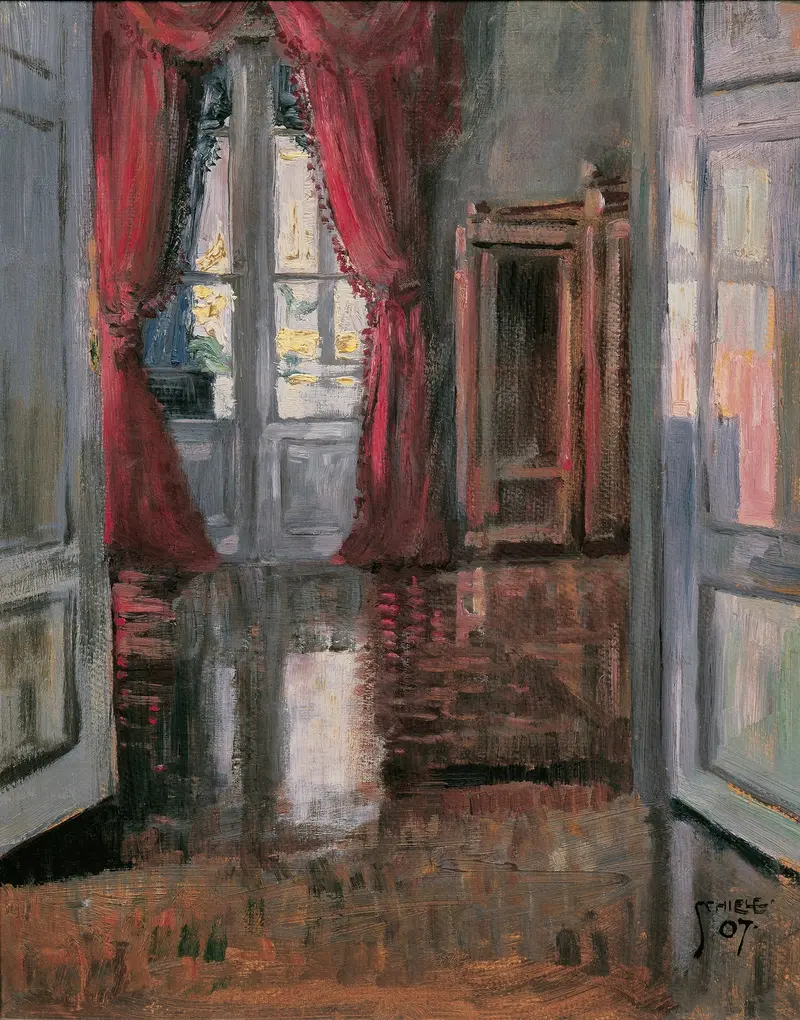
Blick in die Wohnung von Leopold und Marie Czihaczek
Egon Schiele
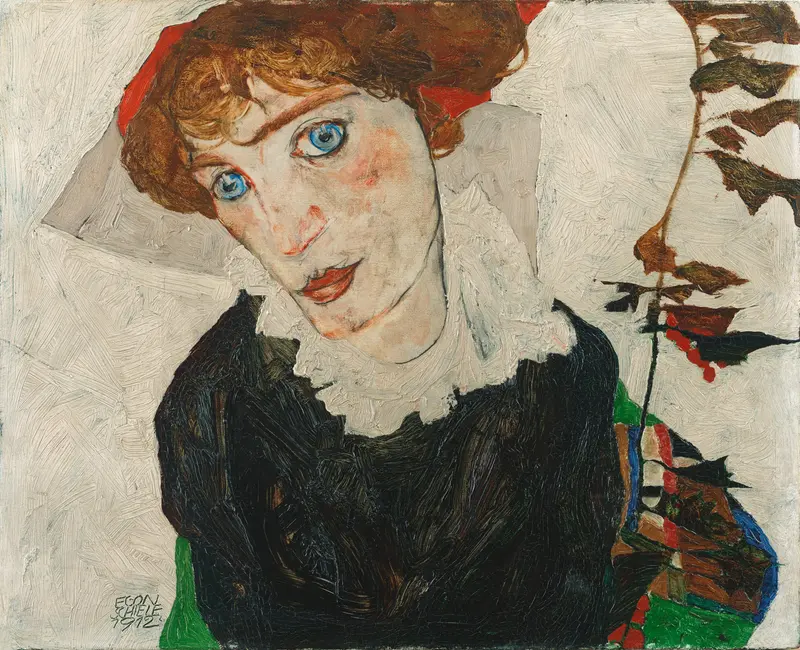
Portrait Of Wally Neuzil
Egon Schiele
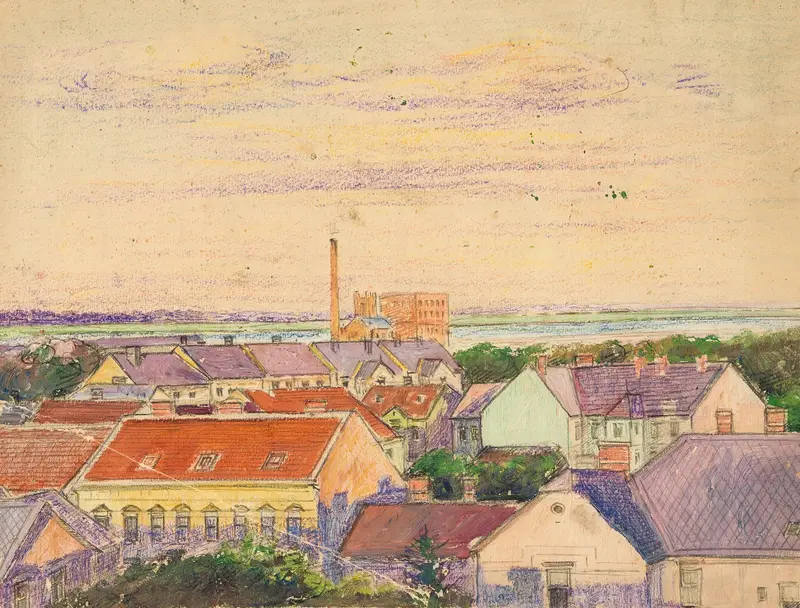
Stadtansicht
Egon Schiele
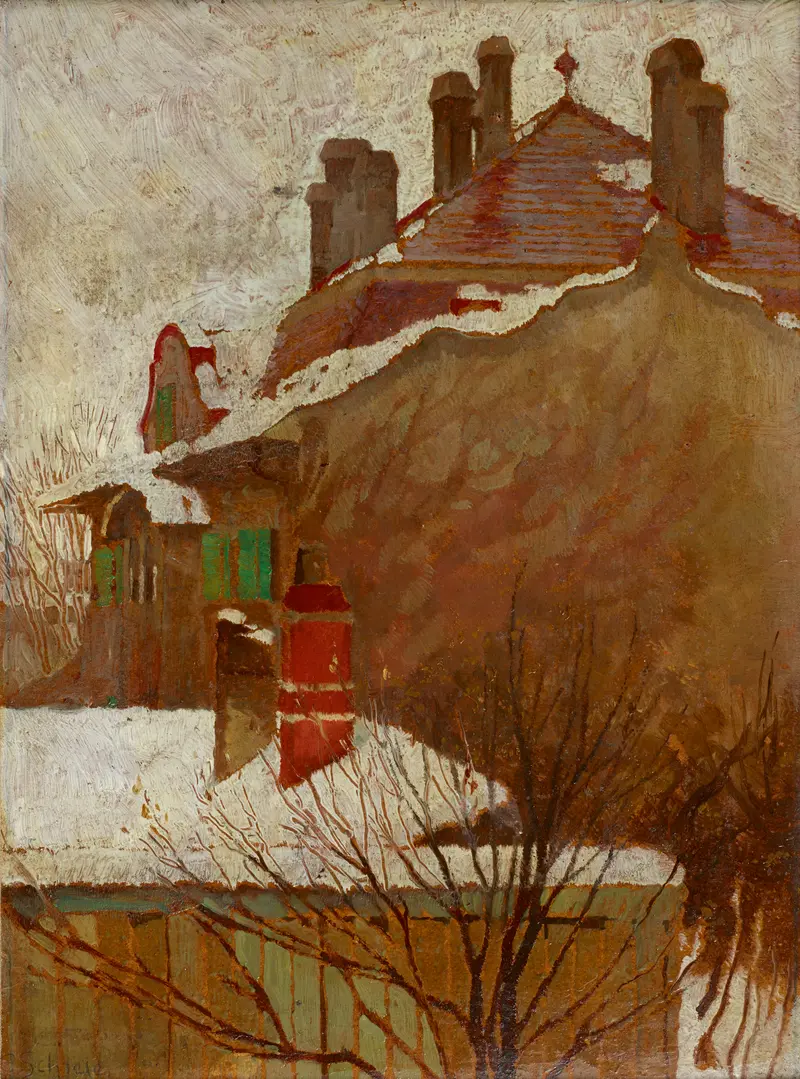
Häuser im Winter (Blick aus dem Atelier)
Egon Schiele
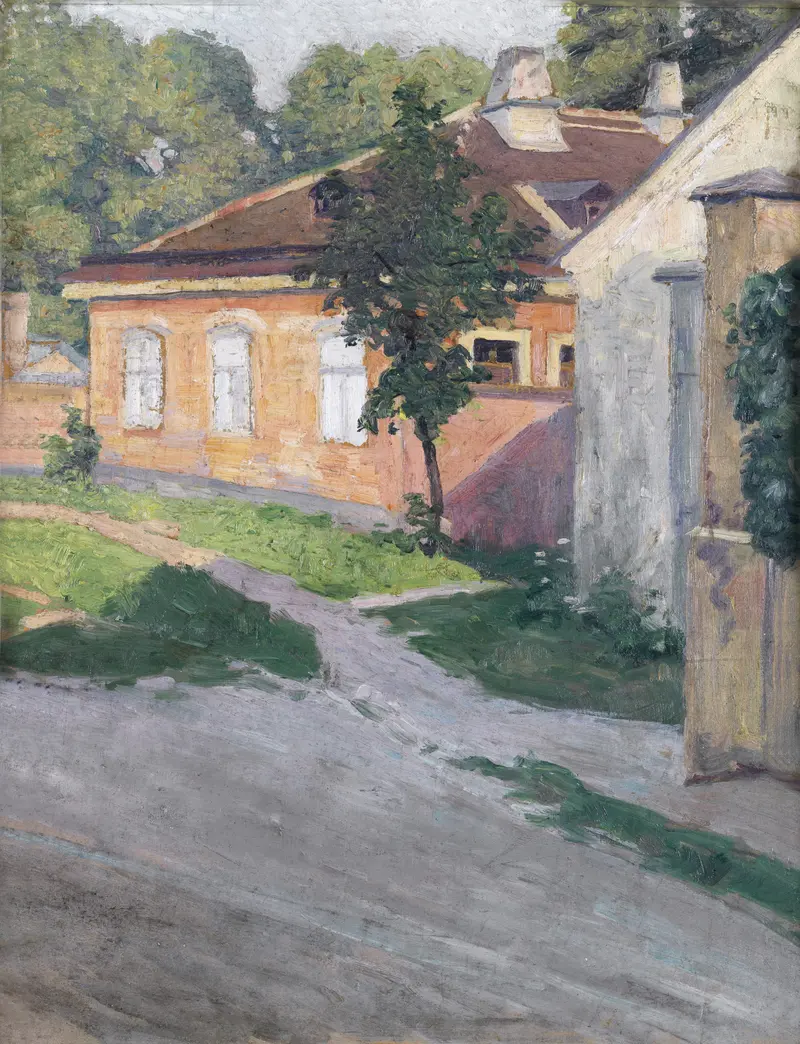
Haus In Hütteldorf (House In Hütteldorf)
Egon Schiele
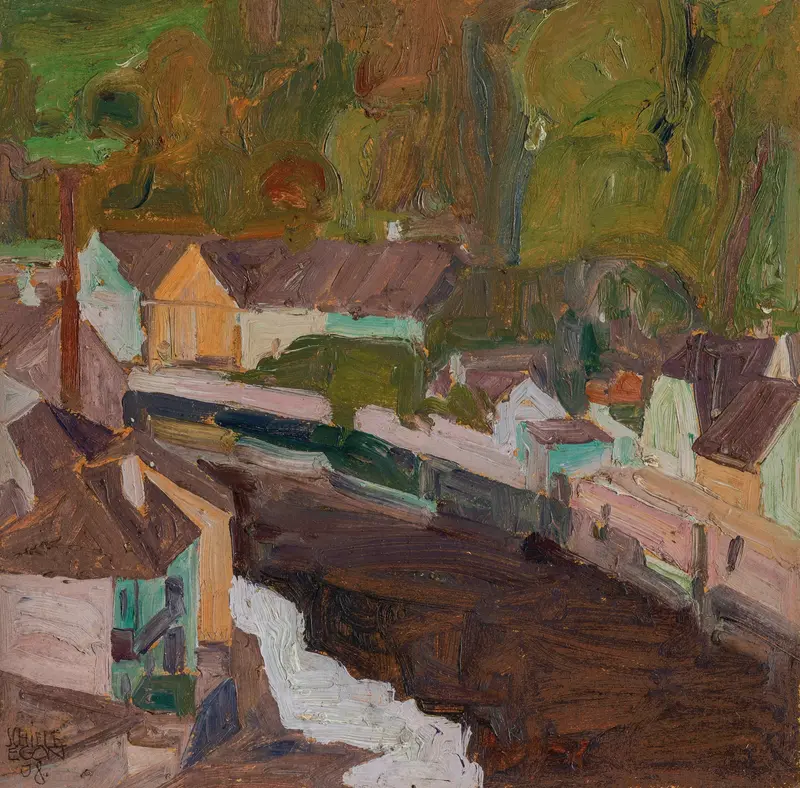
Dorf am Fluss II
Egon Schiele
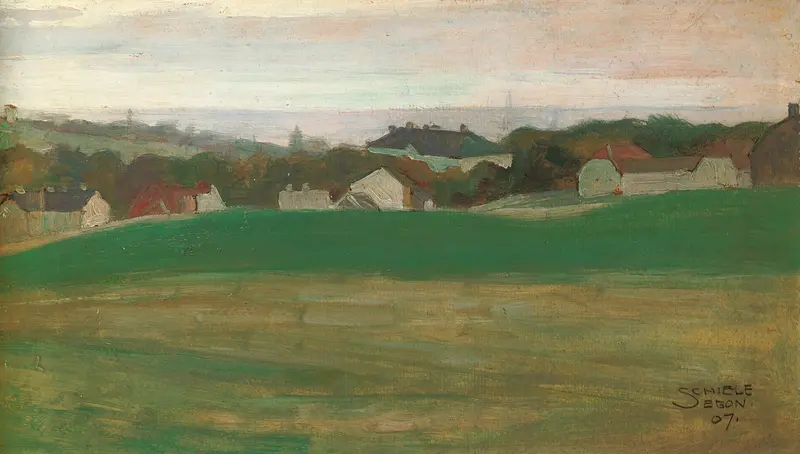
Wiese mit Dorf im Hintergrund II
Egon Schiele
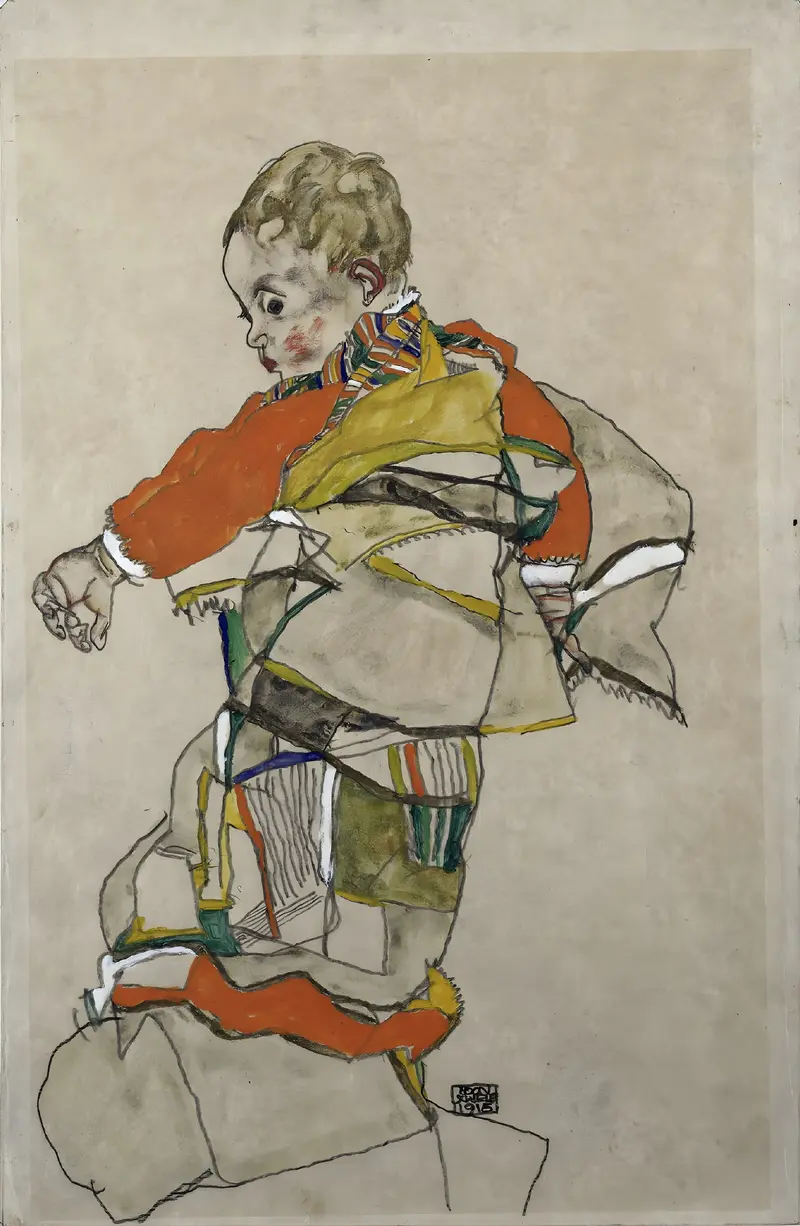
Portrait of a Child (Anton Peschka, Jr.)
Egon Schiele
The Embrace
Egon Schiele





