
Portrait of P.V. Engelhardt — History & Facts
The most striking fact about Portrait of P.V. Engelhardt is that it marks one of the earliest surviving works by Taras Shevchenko, created in 1833 when he was still a serf in the household of Pavel Engelhardt. This portrait is not just a likeness; it is a document of Shevchenko’s life before his emancipation, capturing the face of the very man who owned him.
The painting stands at the intersection of art and biography, offering a rare glimpse into the formative years of the artist who would later become a national symbol for Ukraine. In the portrait, P.V. Engelhardt is depicted with a reserved dignity, his gaze directed slightly away from the viewer, suggesting both authority and distance. The sitter’s attire is formal, with carefully rendered details in the collar and buttons, signaling his social status.
Shevchenko’s attention to the textures of fabric and the subtle modeling of the face already hints at the observational skill he would later refine. Unlike the grand, idealized portraits of the Russian aristocracy by artists such as Karl Bryullov, Shevchenko’s approach is more intimate, focusing on psychological presence rather than mere display of rank. Little is known about the journey of this particular painting after its creation, and the medium remains uncertain—likely oil or watercolor, given Shevchenko’s early training. The portrait’s survival is itself remarkable, considering the artist’s humble beginnings and the turbulent history of his works.
Today, Portrait of P.V. Engelhardt is valued not only as an early example of Shevchenko’s talent but also as a testament to his origins and the social realities he would later challenge in both art and poetry. Its place in his oeuvre is foundational, bridging his life as a serf and his emergence as a leading figure in Ukrainian culture.
More Artworks by Taras Shevchenko
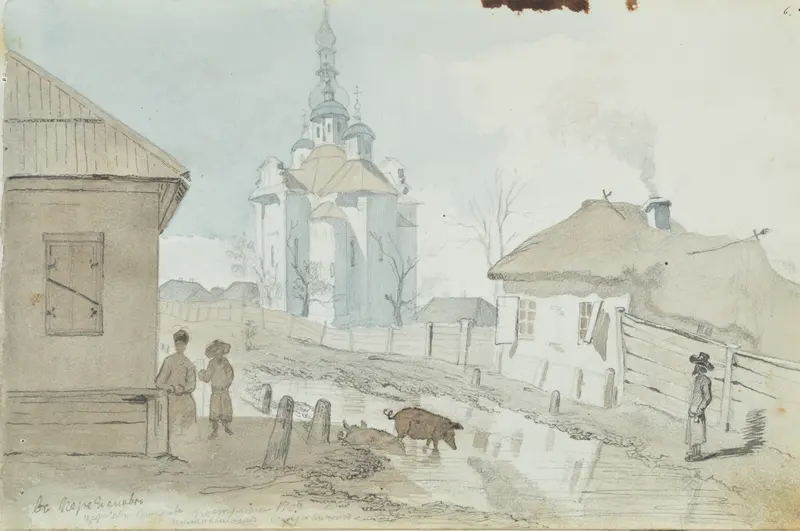
1845 Sh Sketchbook f.06r
Taras Shevchenko

1845 Sh Sketchbook f.04r
Taras Shevchenko

1848 Bilia vohnu
Taras Shevchenko
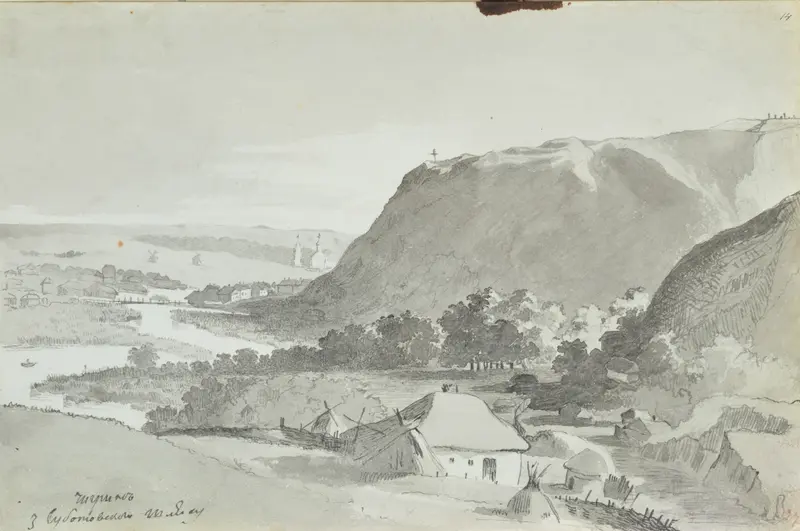
1845 Sh Sketchbook f.14r
Taras Shevchenko
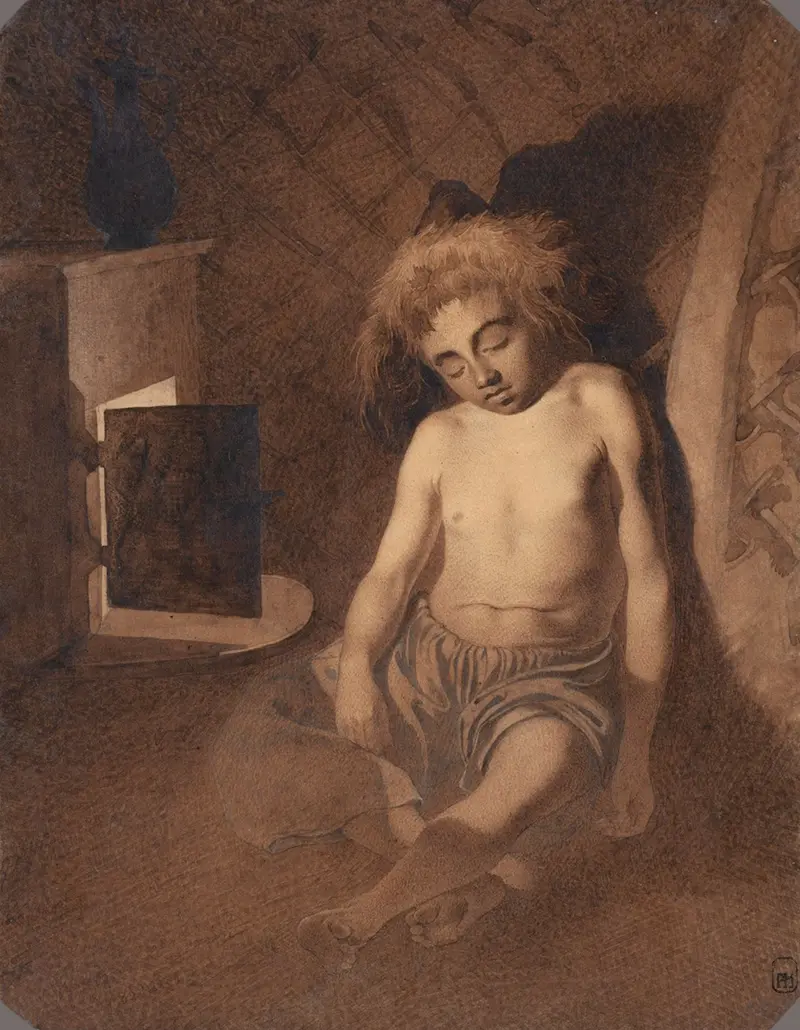
1848 Hlopcyk zasnuv
Taras Shevchenko
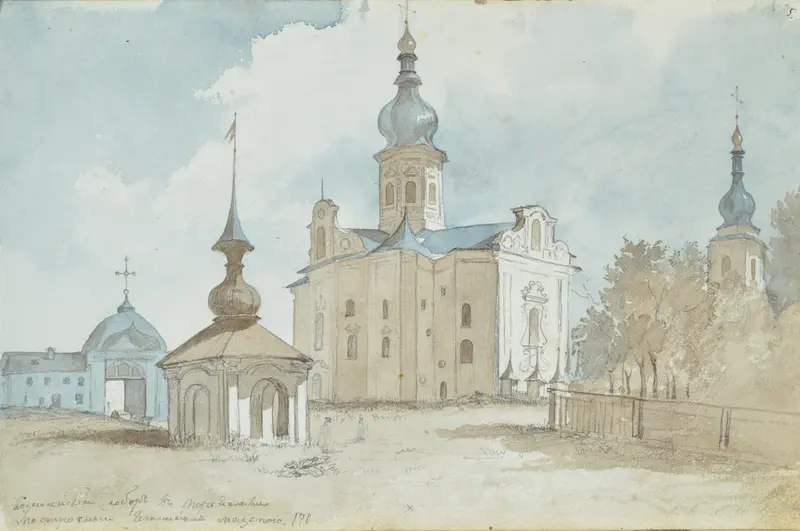
1845 Sh Sketchbook f.05r
Taras Shevchenko
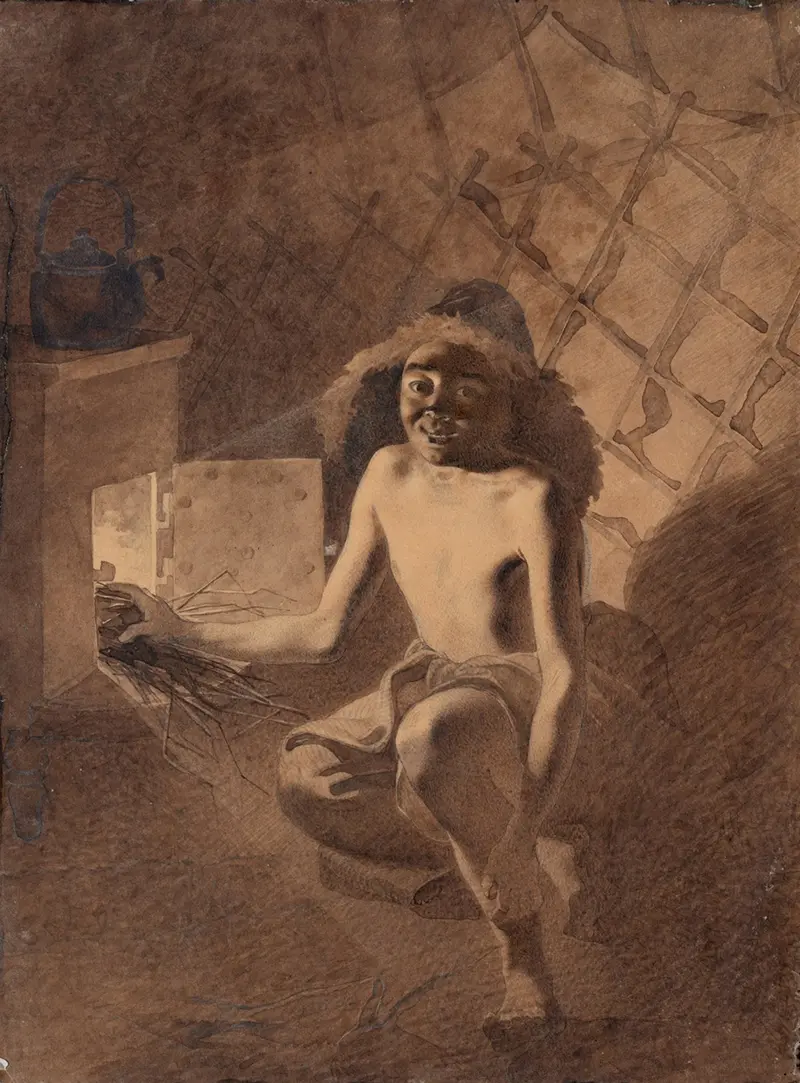
1848 Hlopcyk rozpalije
Taras Shevchenko
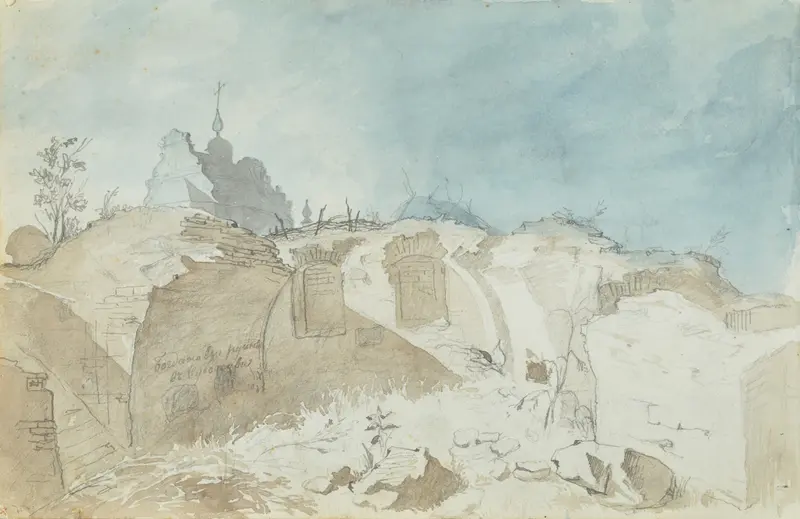
1845 Sh Sketchbook f.12v
Taras Shevchenko
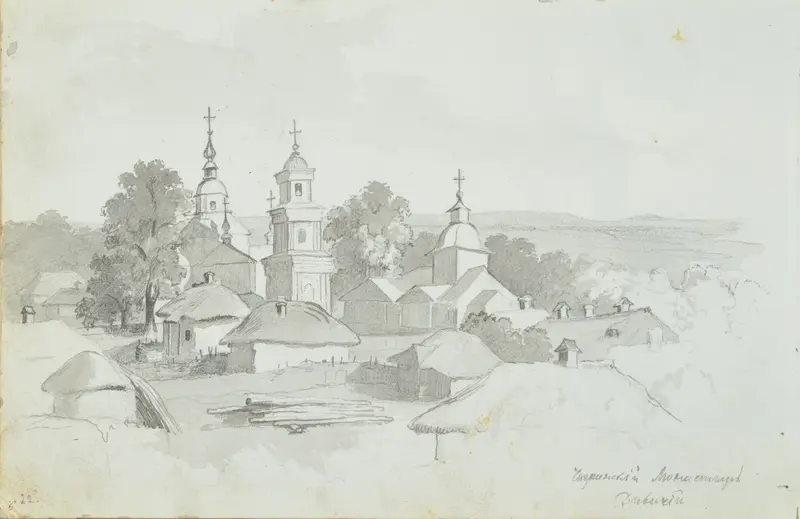
1845 Sh Sketchbook zz f.11v
Taras Shevchenko
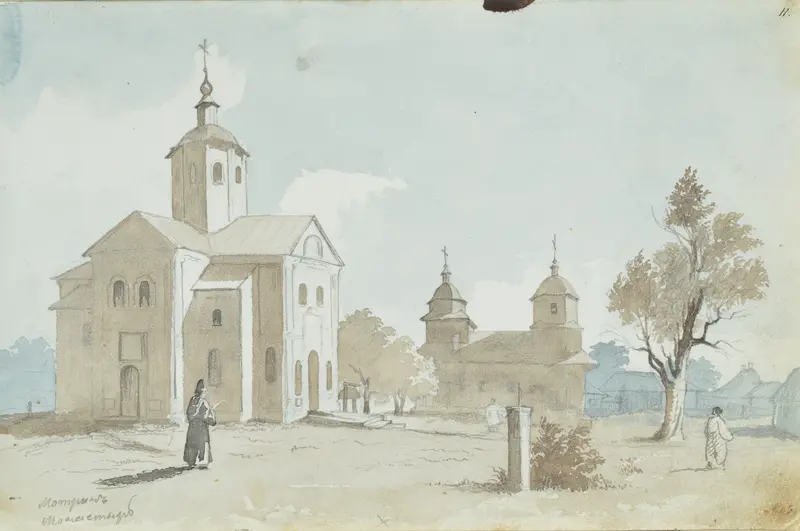
1845 Sh Sketchbook f.11r
Taras Shevchenko





