
Portrait of the artist's father — History & Facts
What first seizes the eye is the quiet, almost sculptural dignity of a man lost in thought, his hands gently circling a string of bright red beads. The deep green background presses forward, throwing every line of his face and every fold of his brown mantle into sharp relief. The sitter’s gaze is fixed just beyond the frame, as if weighing something unspoken, while the black cap and fur collar lend a gravity that speaks of both age and station.
Light falls from the left, carving out the planes of his cheek and brow, and the rosary between his fingers is not mere ornament: it signals devotion, a habit of contemplation, perhaps even the daily rituals that shaped his life. Painted in 1490, this portrait belongs to a world on the cusp of change, when artists in German-speaking lands were beginning to look closely at the individual, not just the archetype. Such portraits were often commissioned by families eager to record their lineage, or by prosperous burghers marking their place in a rapidly shifting society. The presence of the family alliance coat of arms on the reverse, as documented, roots this work in the traditions of memory and status.
History has kept few traces of this sitter’s daily life, but the care with which his features and hands are rendered urges us to linger, to search his face for the story of a life lived in the late fifteenth century.
More Artworks by Albrecht Dürer

Melancholia
Albrecht Dürer

St. George and the dragon.
Albrecht Dürer
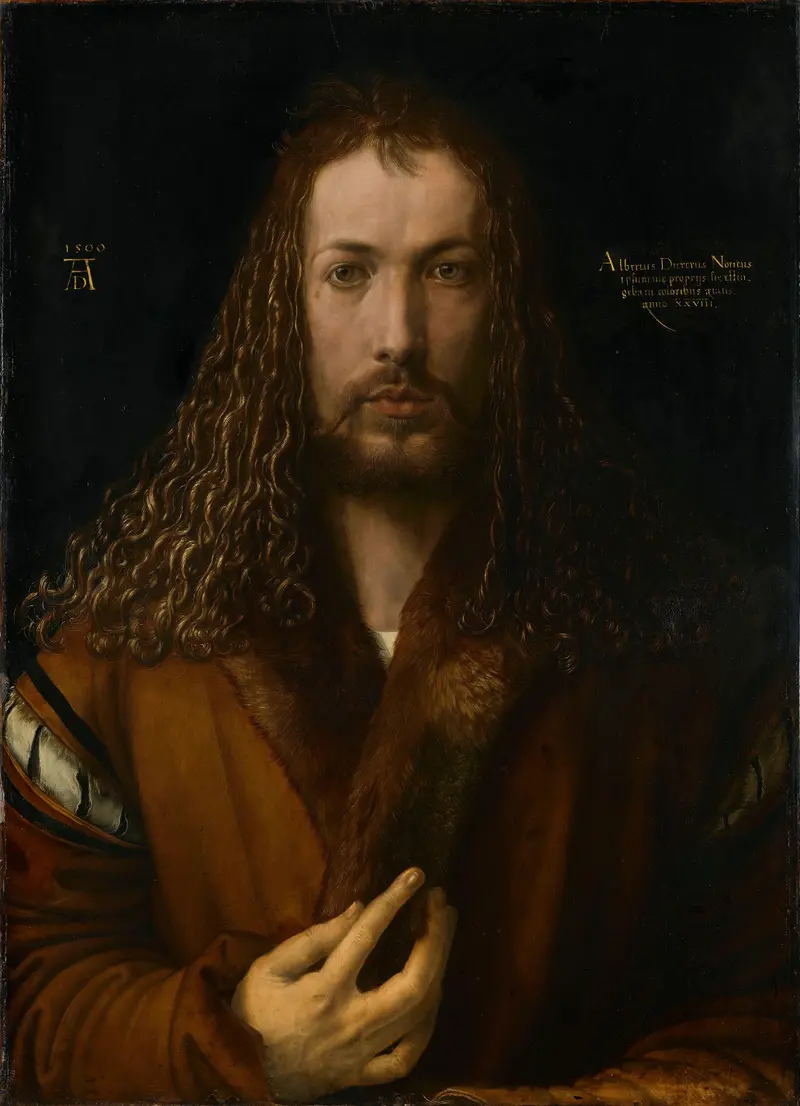
Self-Portrait with Fur-Trimmed Robe
Albrecht Dürer

Wing of a European Roller
Albrecht Dürer

Iris
Albrecht Dürer

The Great Piece of Turf
Albrecht Dürer
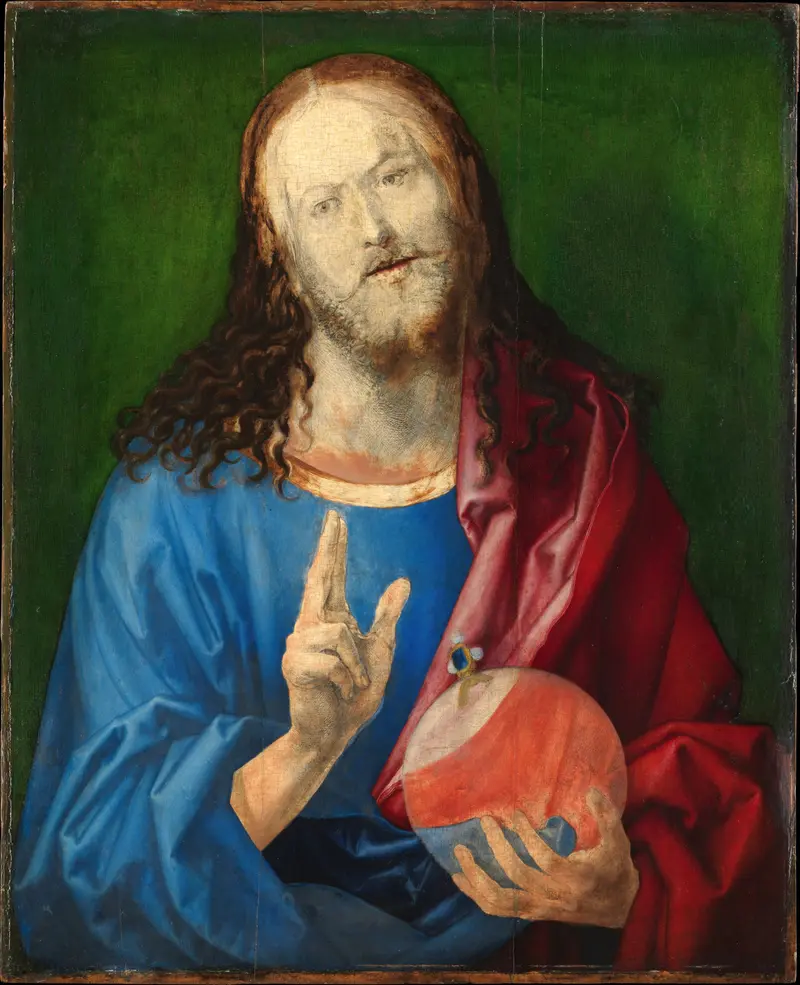
Salvator Mundi
Albrecht Dürer
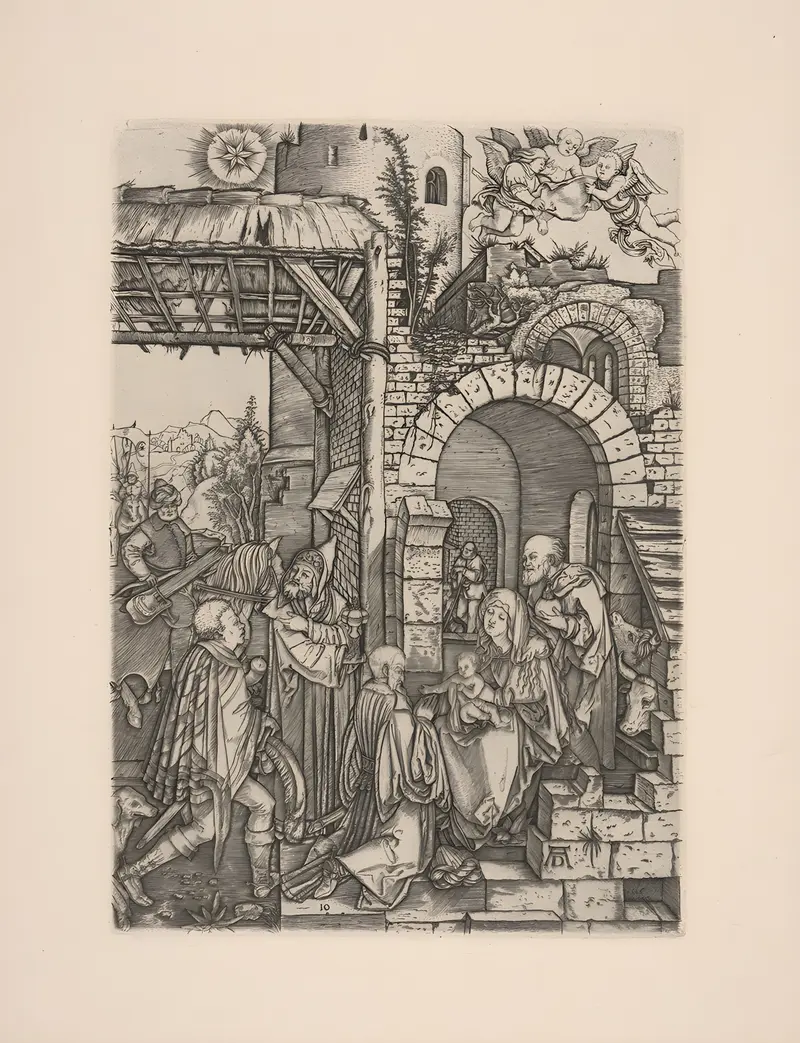
The Adoration of the Magi
Albrecht Dürer
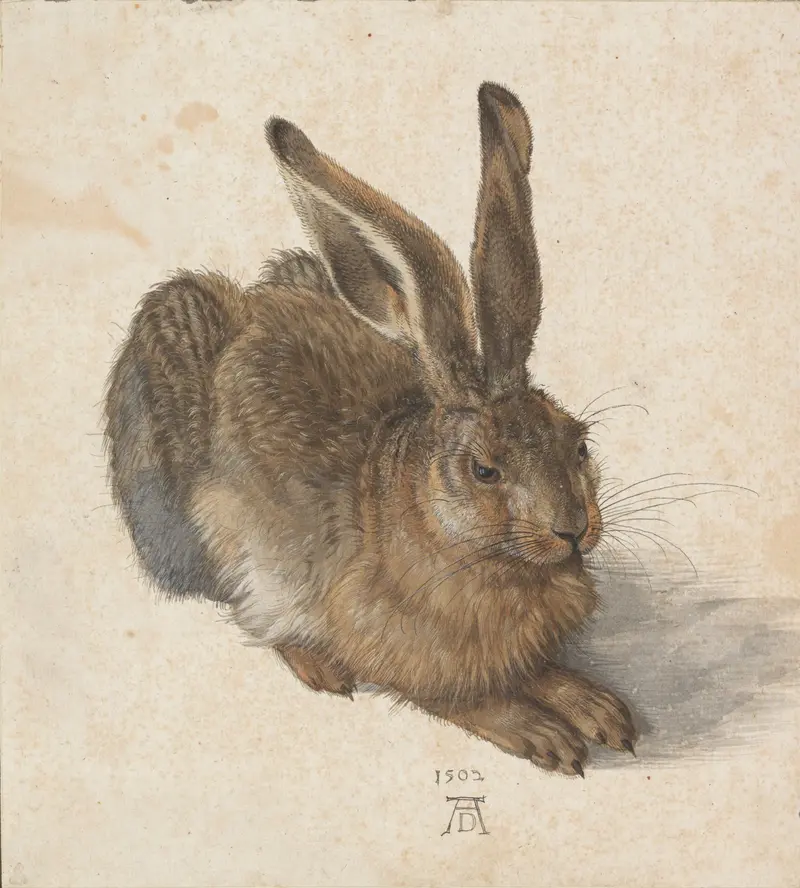
Young Hare
Albrecht Dürer
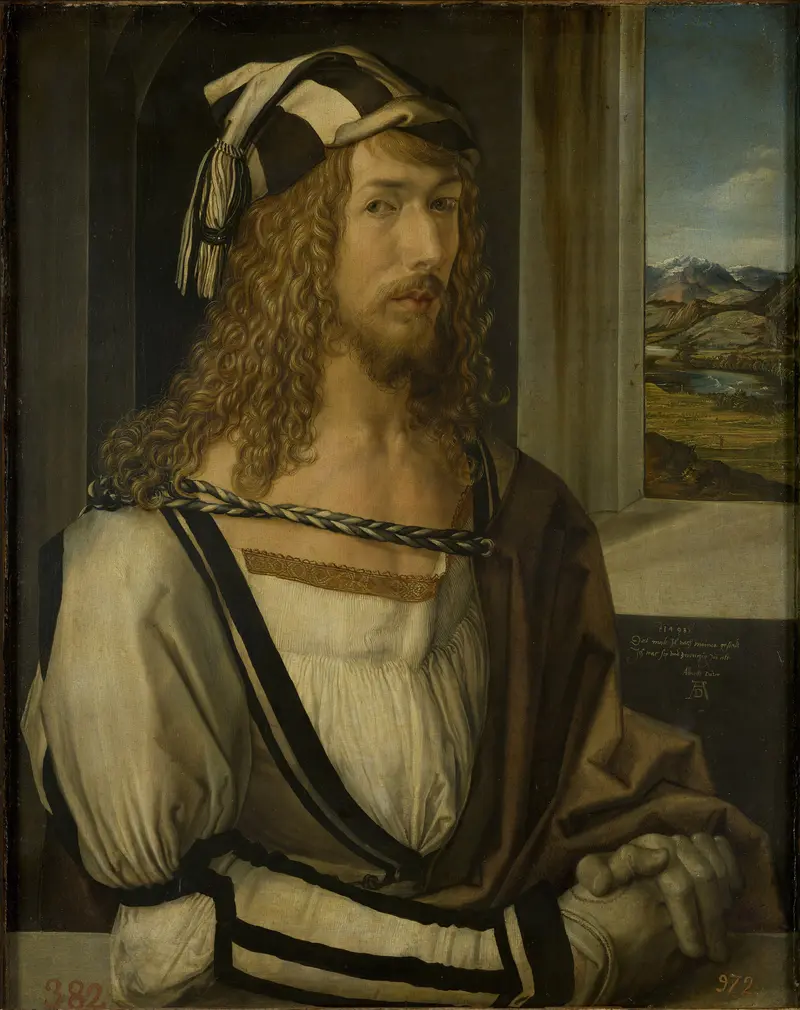
Self-portrait
Albrecht Dürer





