
Procession in the Courtyard of the Ducal Palace,Venice — History & Facts
Amid the grandeur of the Ducal Palace, figures surge like a tide, garbed in resplendent fabrics that sway with a ceremonial rhythm. Sunlight filters through the majestic arches, casting ethereal patterns upon the courtyard stone. In the foreground, a dignitary gestures in stately discourse, flanked by curious onlookers, their expressions alive with intrigue and anticipation. Look to the left at the rich tapestry of colors that dances across the scene: crimson, gold, and azure fabrics drape elegantly, embodying the opulence of Venetian life.
The artist employs a masterful interplay of light and shadow, enhancing the dimensionality of the figures. As you explore the scene, notice the intricate details of the architecture, the delicate carvings, and the way the light catches the edges, creating an illusion of depth that draws the viewer into this vibrant moment. Beneath the lavish exterior, hidden tensions reveal themselves: the contrast between the dignified procession and the casual curiosity of the crowd underscores a divide between power and the people. The artist invites us to reflect on the nature of authority and spectacle, as the figures seem to both participate in and observe their own pageantry.
This duality emphasizes the illusion of control within the public eye, suggesting that appearances can be as ephemeral as the light that plays across their forms. Created in Venice around 1742, during a period of flourishing artistic exchange and political intrigue, the work reflects Antonio Joli's commitment to capturing the essence of his city. At this time, Venice was a hub for both art and culture, and the artist, influenced by the vibrant Baroque style, sought to depict the lively spectacle of civic life. Joli's portrayal of grandeur not only immortalizes a moment but also engages with the broader themes of illusion that resonate through the heart of Venetian identity.
More Artworks by Antonio Joli
Browse all →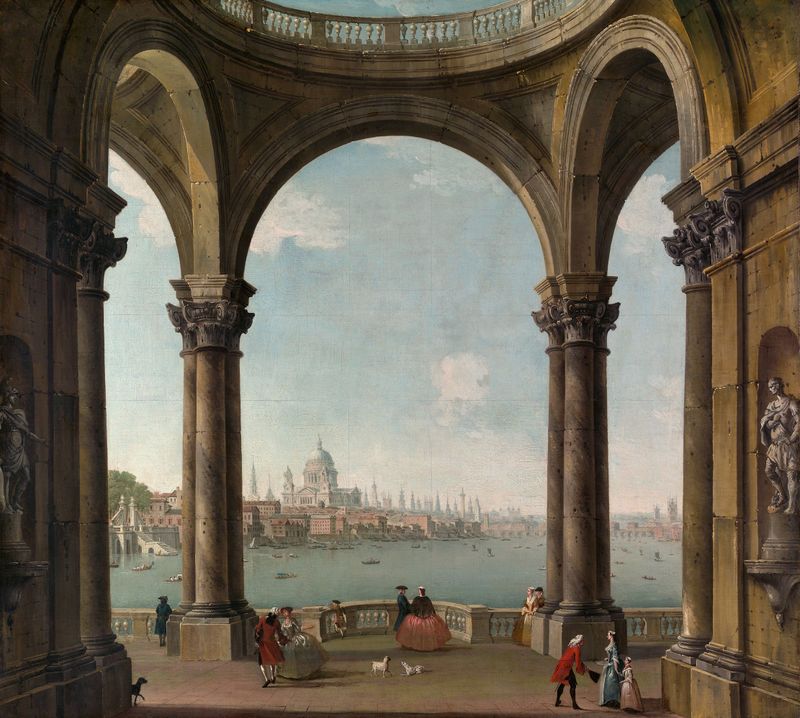
Capriccio with St. Paul’s and Old London Bridge
Antonio Joli
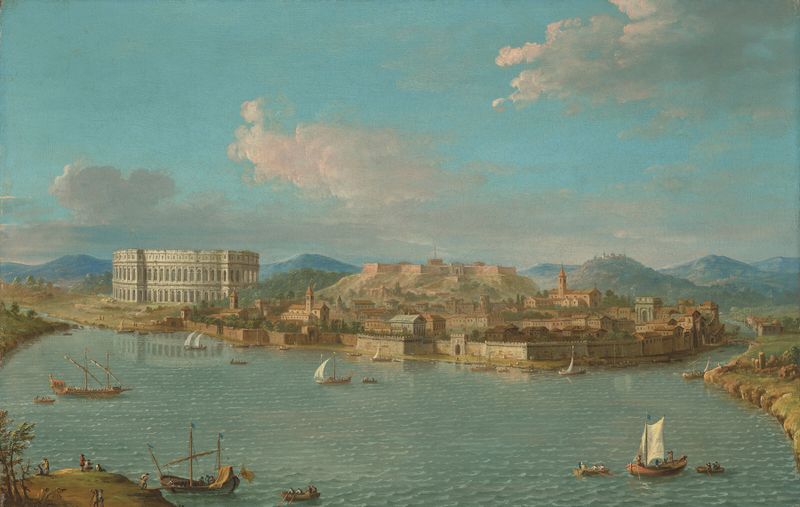
Pula, with the Pula Arena
Antonio Joli
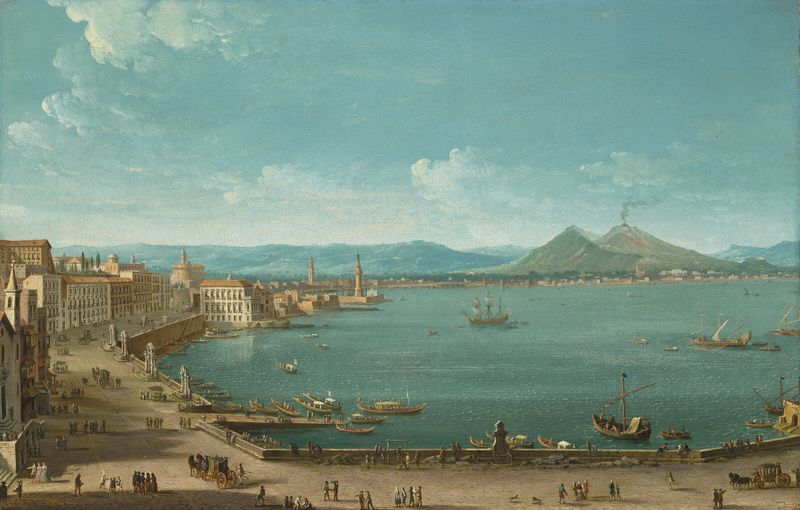
Naples with the Bay of Santa Lucia and Vesuvius beyond
Antonio Joli
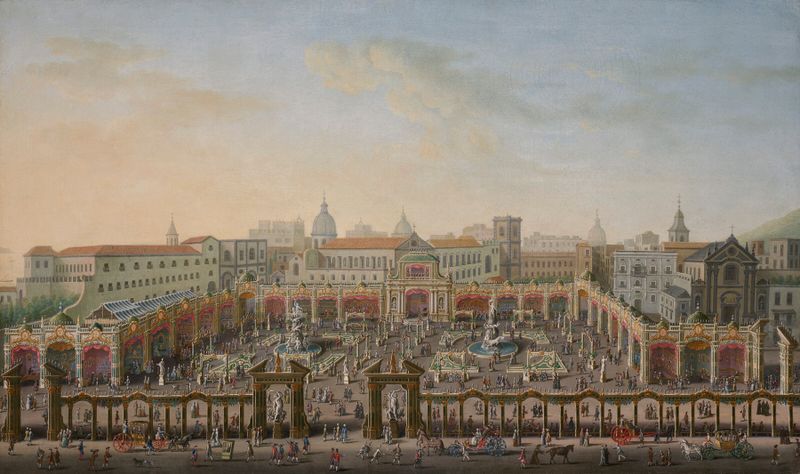
Naples, Piazza Trieste e Trento with a fair viewed from a balcony of the Palazzo Reale
Antonio Joli
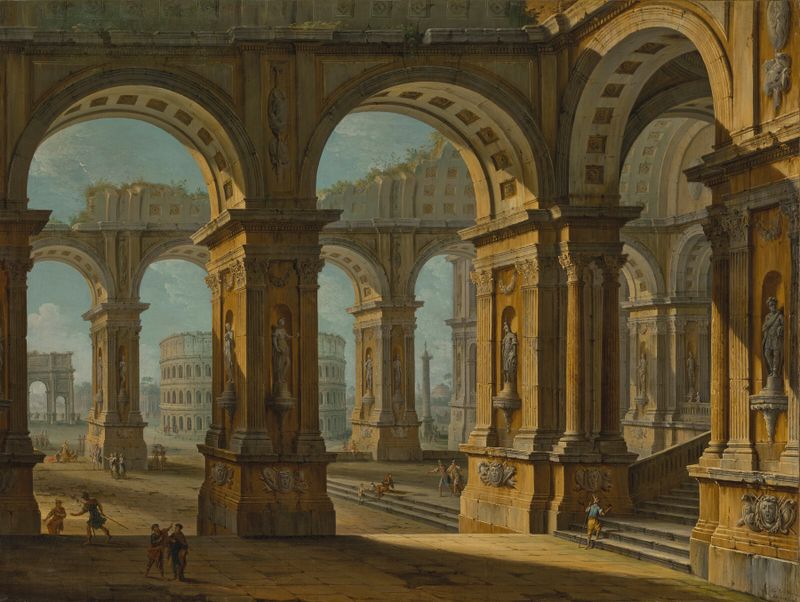
A capriccio of Rome with the Colusseum and Arch of Titus
Antonio Joli
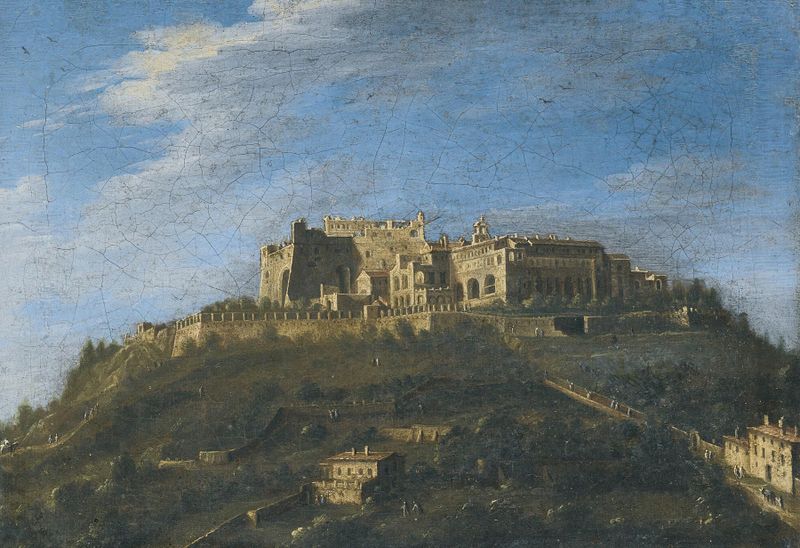
Monastery Di San Martino, Naples
Antonio Joli
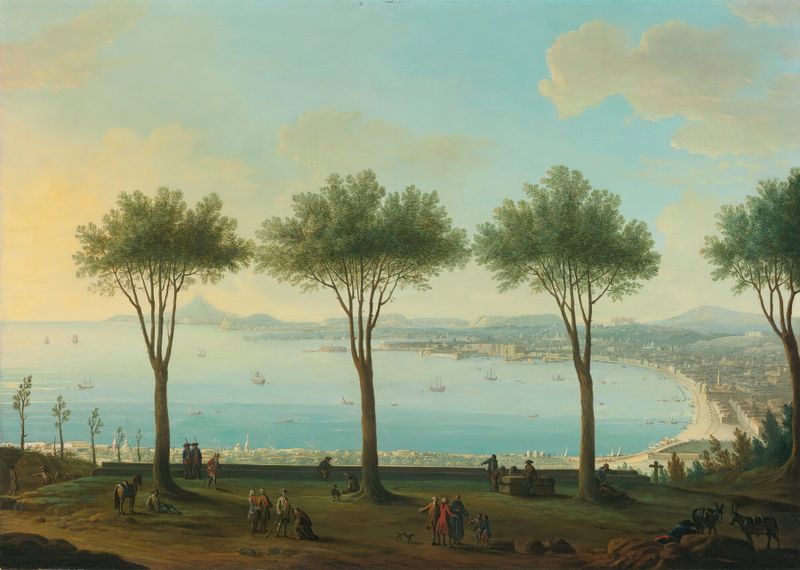
View Of The Bay Of Naples From The South (Possibly Poggioreale), Looking North With A King Of The Bourbon Family, Possibly Ferdinand Iv, In The Foreground
Antonio Joli
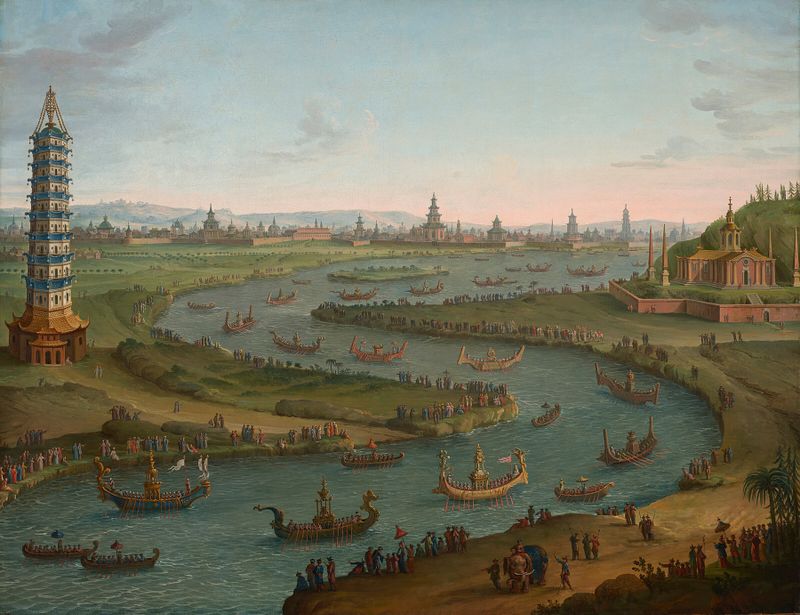
A capriccio with the French Ambassador approaching the King of Siam’s Palace in a state barge, in October 1685
Antonio Joli
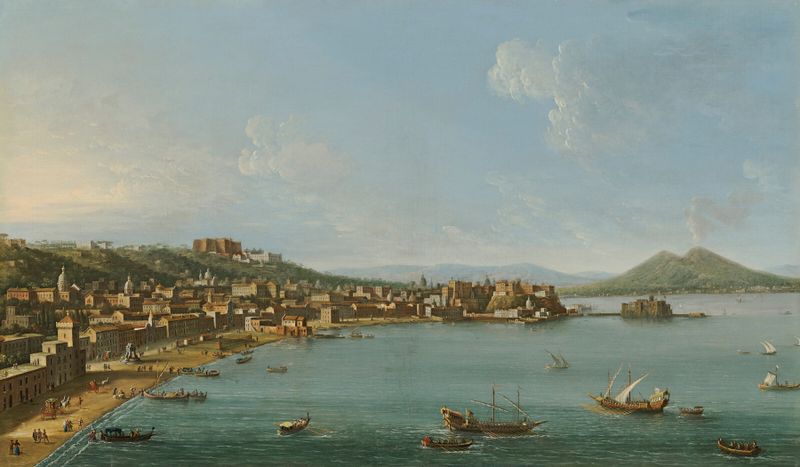
Naples, a view of the Riviera di Chiaia, from the north-west, with Vesuvius beyond
Antonio Joli
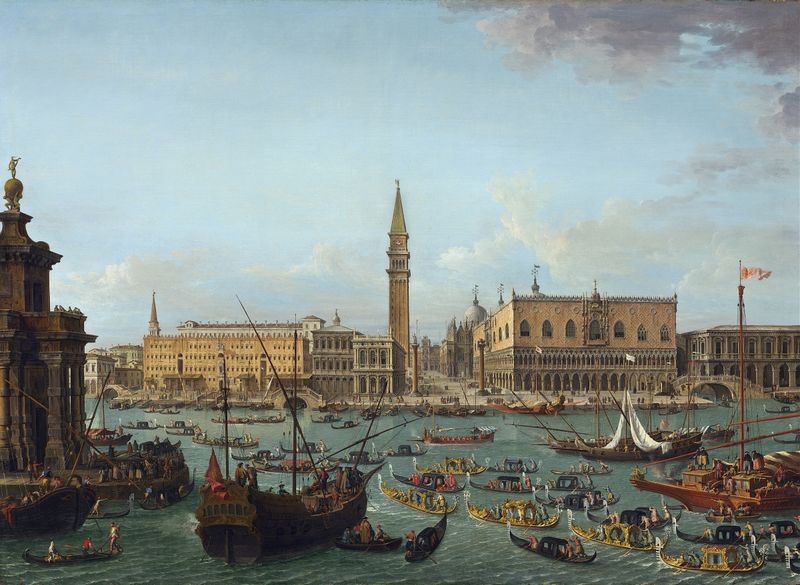
Procession of Gondolas in the Bacino di San Marco,Venice
Antonio Joli
More Historical Art
Browse all →
The Night Watch Militia Company of District II under the Command of Captain Frans Banninck Cocq
Rembrandt van Rijn

Lincoln Memorial
Henry Bacon

The Third of May 1808
Francisco de Goya

Isaac and Rebecca, Known as ‘The Jewish Bride’
Rembrandt van Rijn

The Charge of the Mamelukes (1814)
Francisco de Goya

De vier ruiters van de apocalyps
Albrecht Dürer