
Projet de bureau (non exécuté) : vue de trois-quarts — History & Facts
A vision of ornamented order emerges from the soft graphite lines of Projet de bureau (non exécuté) : vue de trois-quarts, drawing the viewer into a world where furniture aspires to the grandeur of architecture. The eye is led first to the central panel, where a seated figure—part muse, part guardian—anchors the composition, her flowing robes and poised gesture suggesting both inspiration and protection. The enclosing structure, with its swirling Art Nouveau motifs and crowned finials, frames her like a stage, inviting us to imagine the daily rituals and quiet ambitions that might have unfolded here.
Even in sketch form, the play of curves and verticals creates a sense of enclosure and ceremony, as if this desk were meant for more than mere paperwork. This drawing belongs to the feverish turn-of-the-century Paris that saw Alphonse Mucha become a defining force in the Art Nouveau movement. In that era, artists and designers sought to dissolve the boundaries between fine art and functional object, and proposals like this—whether for private offices, salons, or public pavilions—were often commissioned by ambitious patrons eager to display modern taste. History has kept few traces of this particular project beyond the sheet itself, now in the Musée Carnavalet, but its careful draftsmanship and theatrical flair speak to a moment when even the most utilitarian spaces were imagined as total works of art.
The unfinished quality leaves us wondering what stories might have unfolded behind those swirling lines—an invitation to linger, and to look closer.
More Artworks by Alphonse Mucha

Bières de la Meuse
Alphonse Mucha

Abstract design based on flowers and leaves
Alphonse Mucha
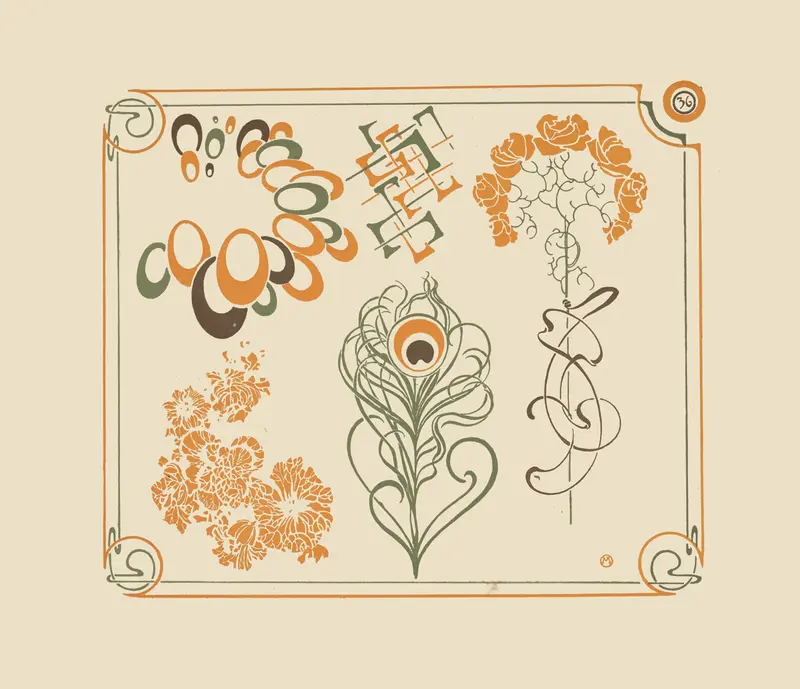
Abstract design based on flowers and curvilinear shapes.
Alphonse Mucha
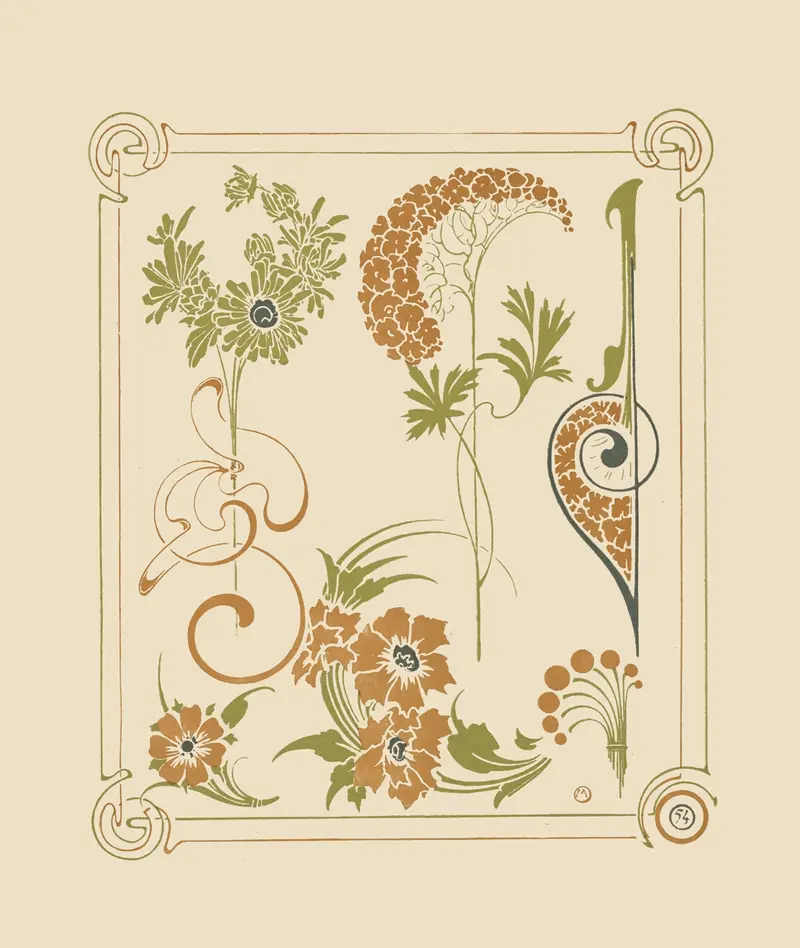
Abstract design based on flowers and arabesques.
Alphonse Mucha
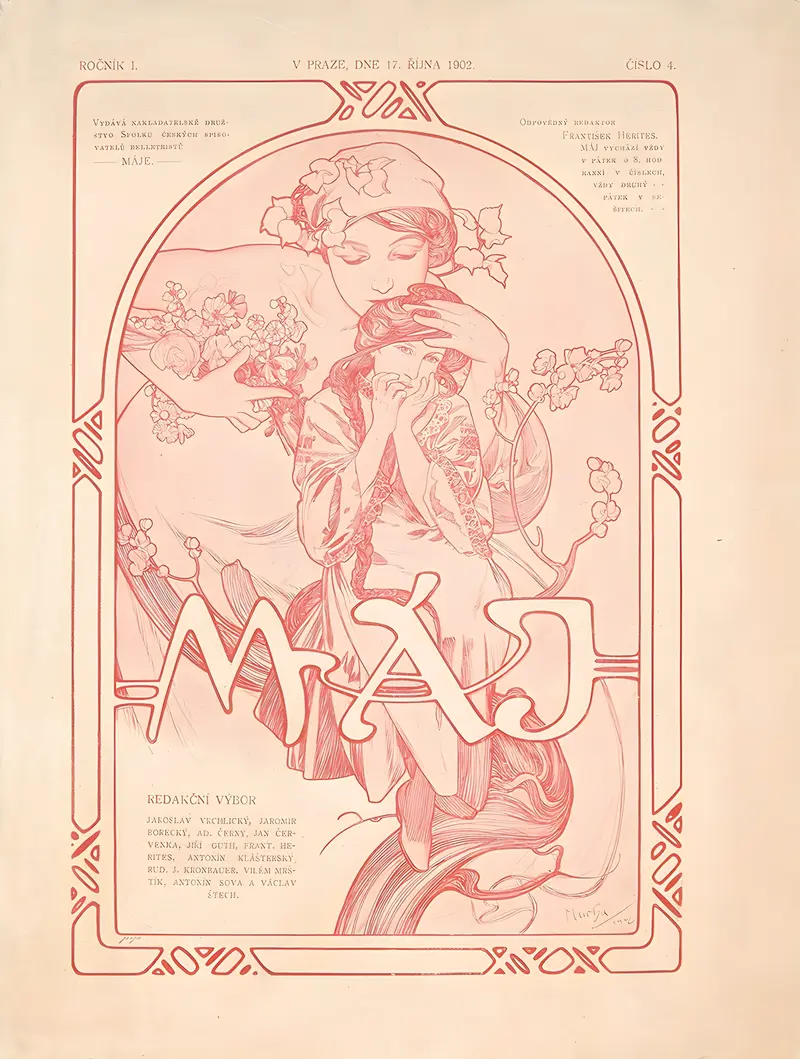
Máje
Alphonse Mucha
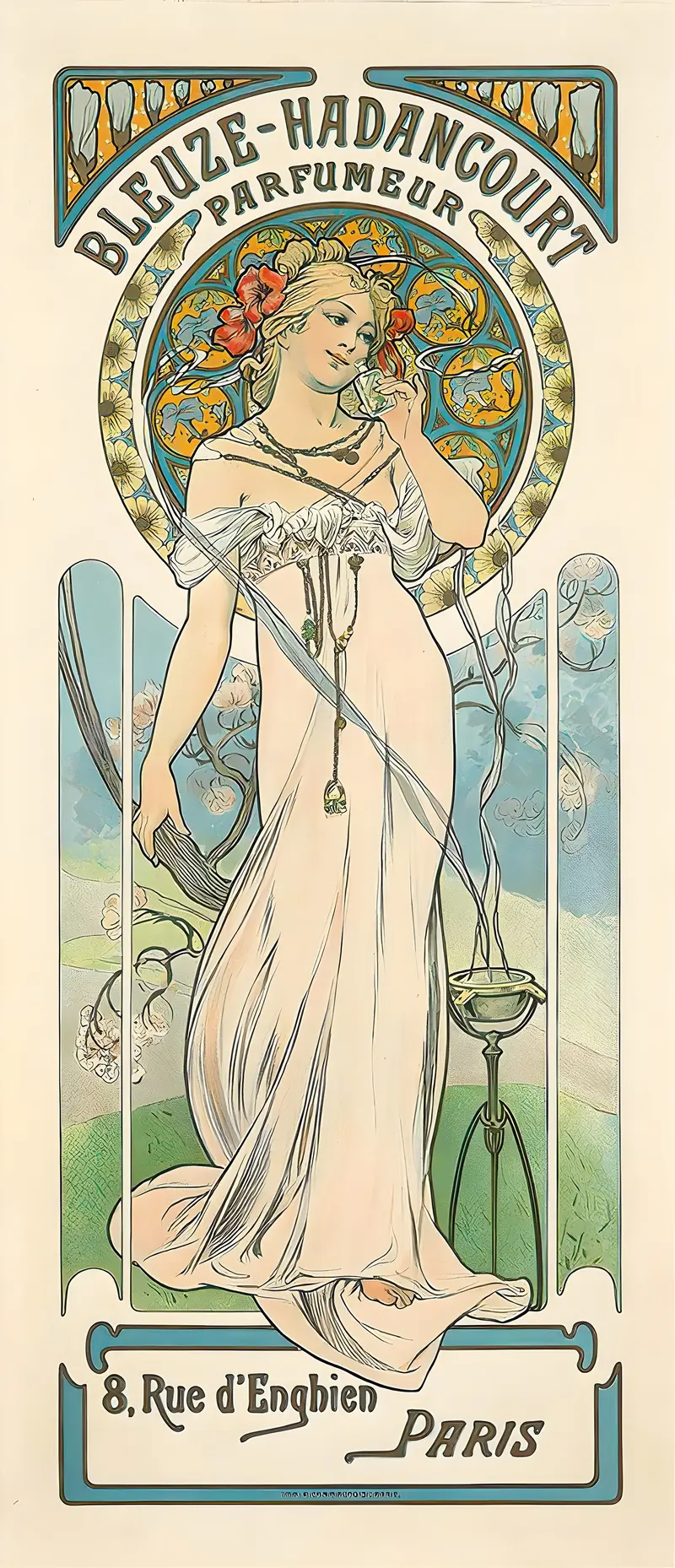
Bleuze-Hadancourt Parfumeur
Alphonse Mucha
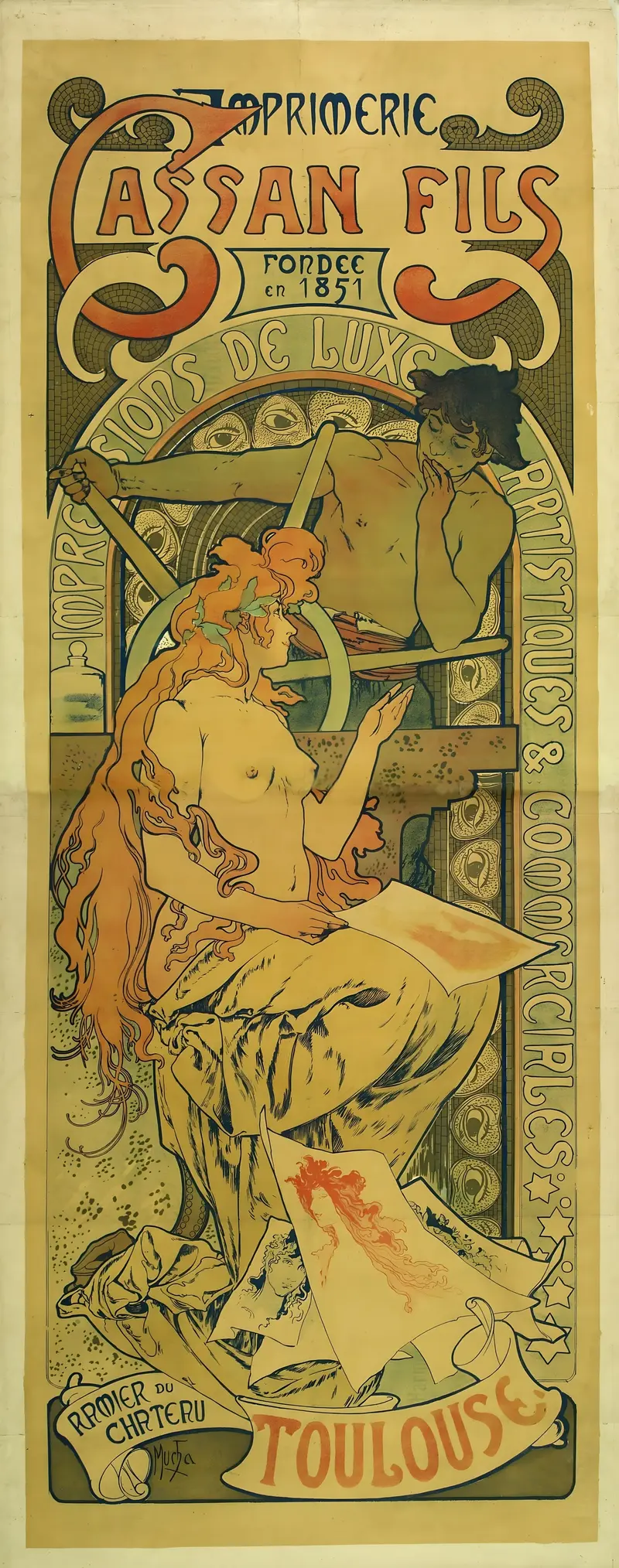
Imprimerie Cassan Fils Fondée en 1851 Impressions de Luxe Artistiques & Commerciales Ramier du Chateau Toulouse
Alphonse Mucha
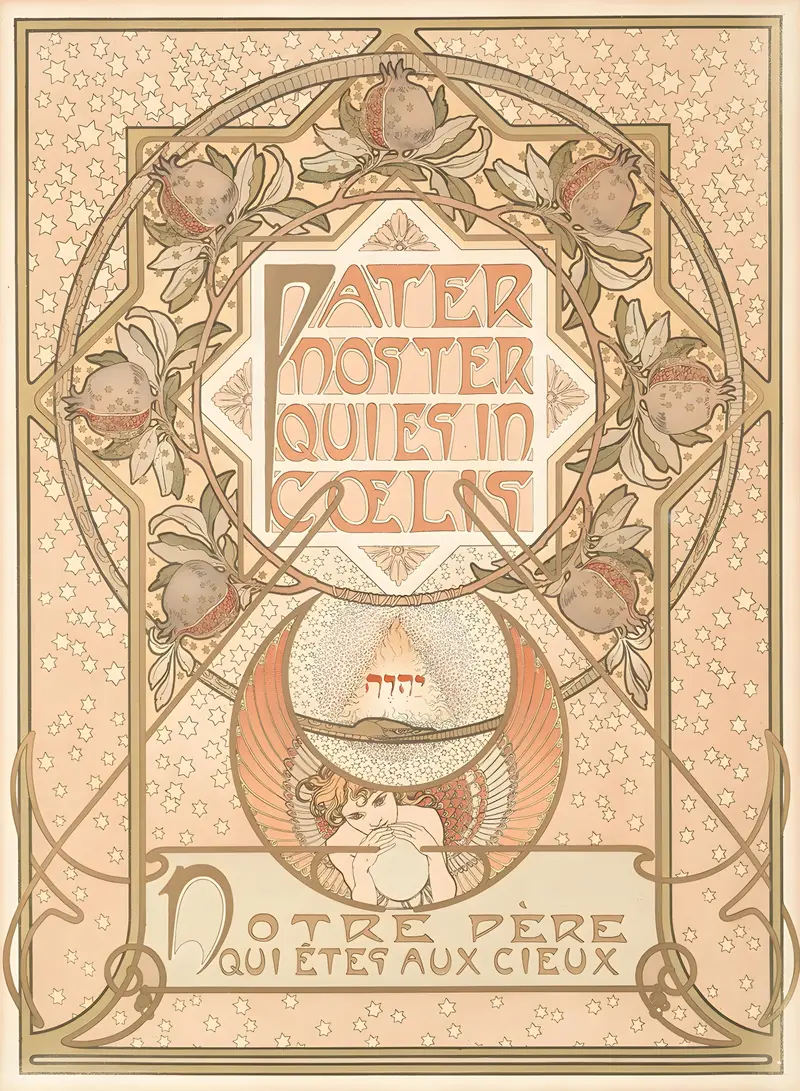
Pater Noster
Alphonse Mucha
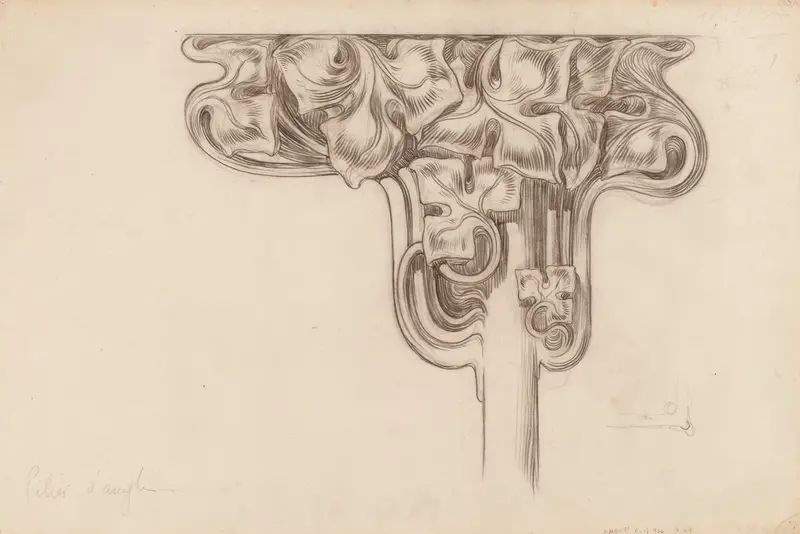
Projet de chapiteau de bronze pour un pilier de la boutique Fouquet
Alphonse Mucha
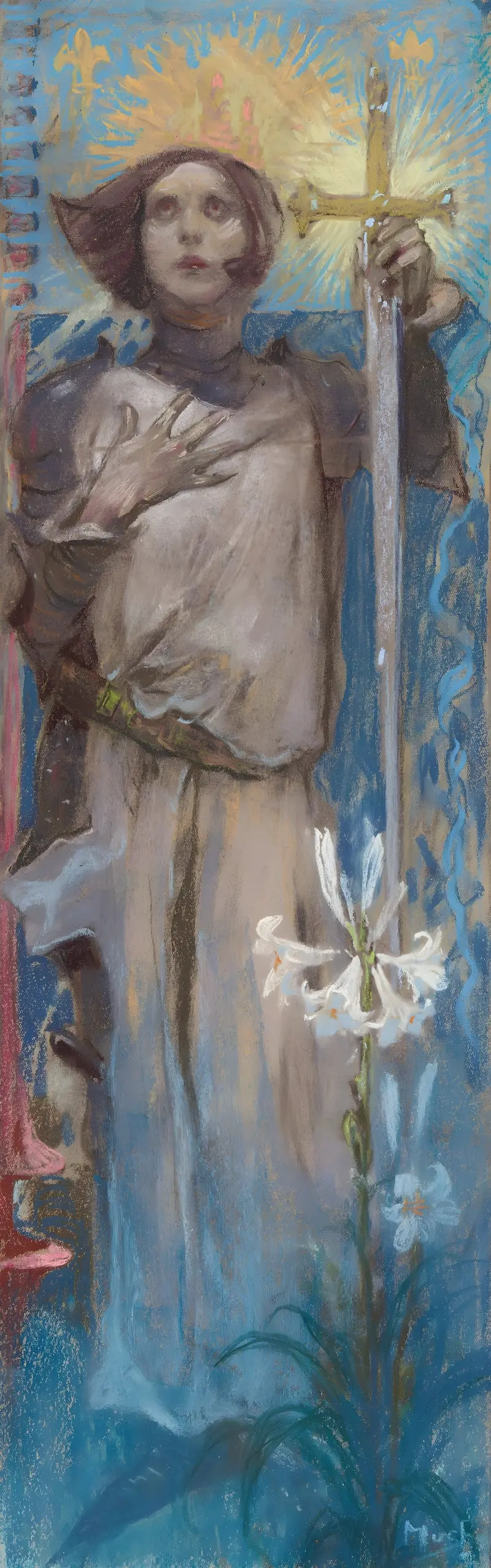
Joan of Arc. Apparition
Alphonse Mucha




