
Prophet Ezekiel — History & Facts
A bearded figure in flowing red and lavender robes sits powerfully on a marble throne, his body twisting sharply to the left as if caught mid-turn. His right hand is extended, palm open and fingers splayed, suggesting a moment of speech or revelation, while his left hand clutches a tightly rolled scroll. Michelangelo uses strong, directional light to model the prophet’s muscular form, casting deep shadows under his chin and arm, and highlighting the folds of his voluminous garments.
The colour palette is dominated by warm reds and cool lavenders, with subtle greens and ochres in the background and the attendant figures, creating a harmonious yet dramatic effect. The fresco’s surface reveals Michelangelo’s mastery of line and form, with crisp contours, smooth transitions of tone, and a sculptural quality that makes the painted figures appear almost three-dimensional. At the lower edge, the prophet’s left foot is firmly planted on the ledge, while the right foot is slightly lifted, toes gripping the platform, emphasizing the sense of movement.
The background features a muted, pale ochre wall that recedes behind the figures, creating a subtle contrast with the vibrant robes and enhancing the three-dimensional effect. The painted architectural moldings along the bottom and sides are rendered in cool greys and creams, with crisp shadow lines that sharply define the edges and corners of the setting. Two youthful secondary figures with curly hair appear behind the main figure, one draped in green and the other in a brownish garment, both gazing outward with alert expressions.
On either side of the throne, painted reliefs depict pairs of nude, muscular male figures in mirrored, twisting poses, their backs and arms pressed together. The background wall is softly shaded, with subtle cracks and variations in tone that suggest the texture of aged stone. Light falls most strongly on the prophet’s forehead, nose, and the upper surfaces of his outstretched hand, leaving the attendant figures partially in shadow.
The painted architectural elements at the lower corners feature intricate scrollwork and fine, linear detailing that frame the central scene with crisp precision.
Sources: Wikidata Q3736323 · Image source (Wikimedia Commons)
More Artworks by Michelangelo

Libyan Sibyl
Michelangelo
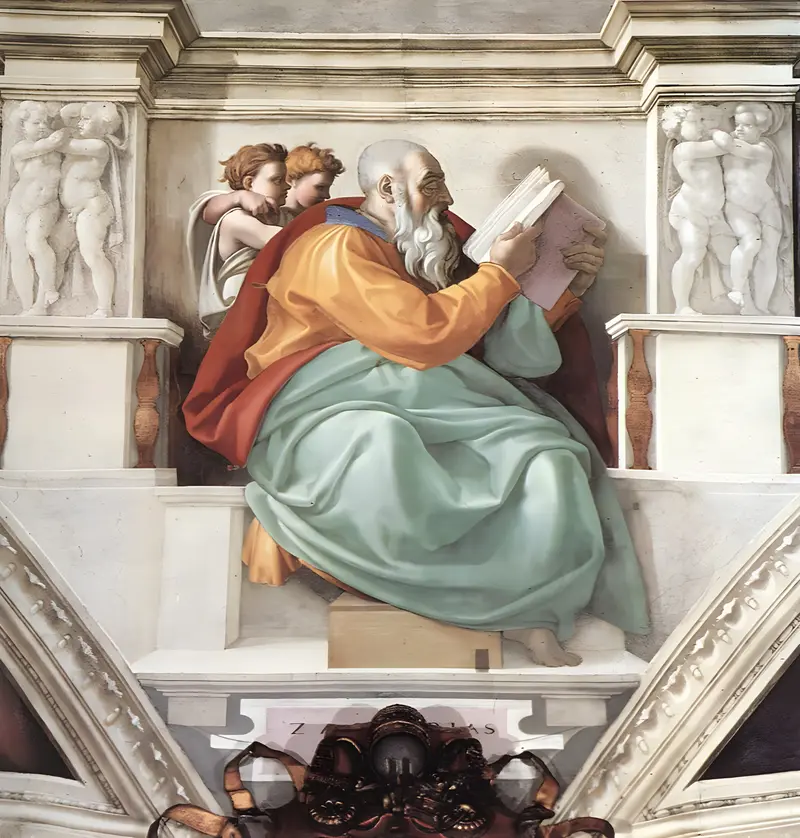
Prophet Zechariah
Michelangelo

Cumaean Sibyl
Michelangelo
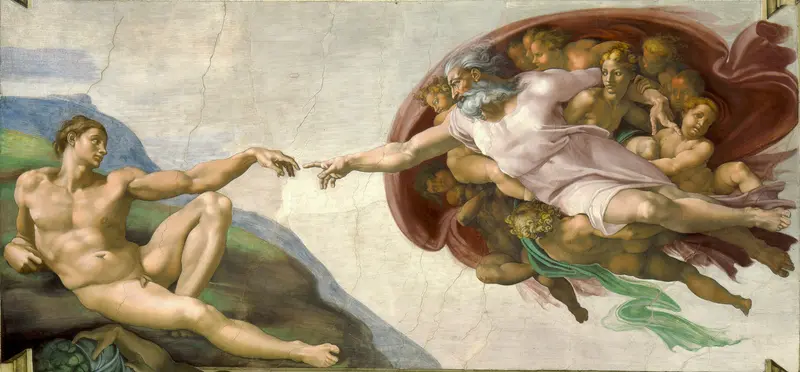
The Creation of Adam
Michelangelo
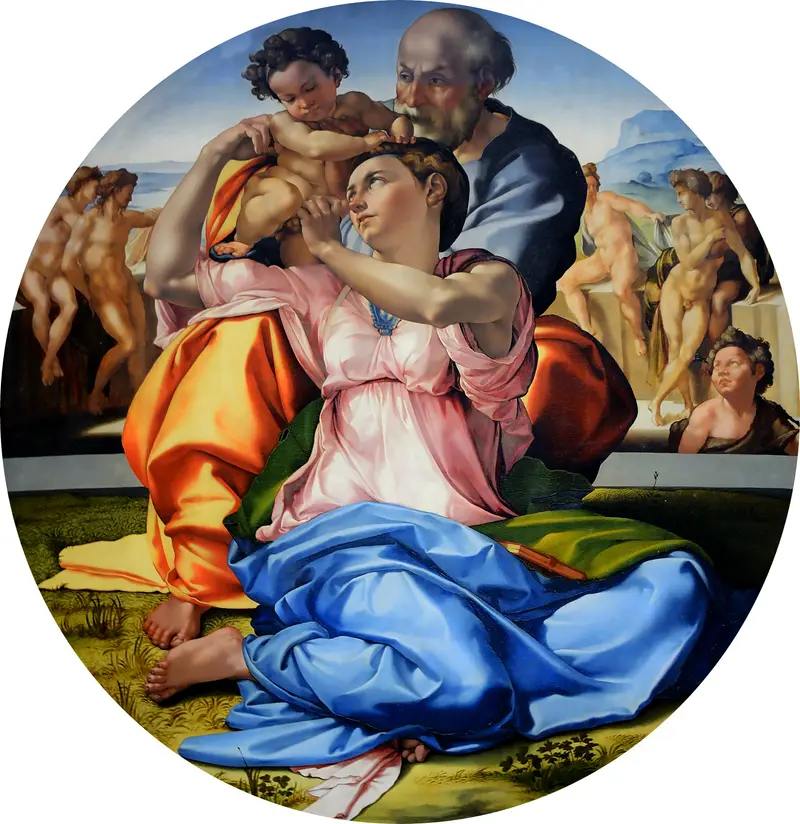
Doni Tondo
Michelangelo
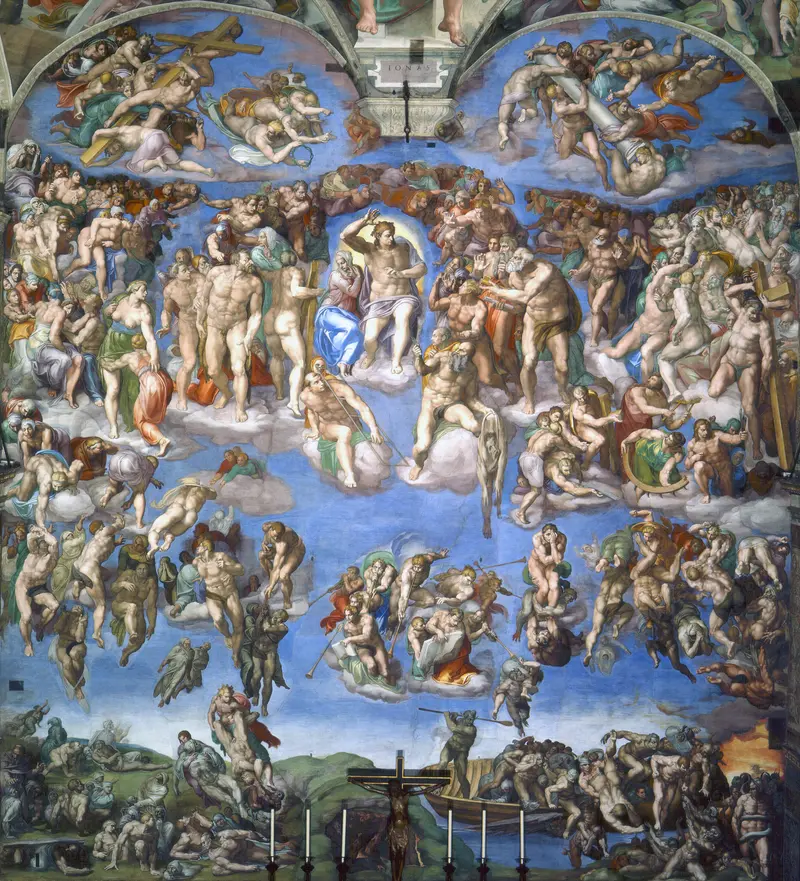
The Last Judgment
Michelangelo
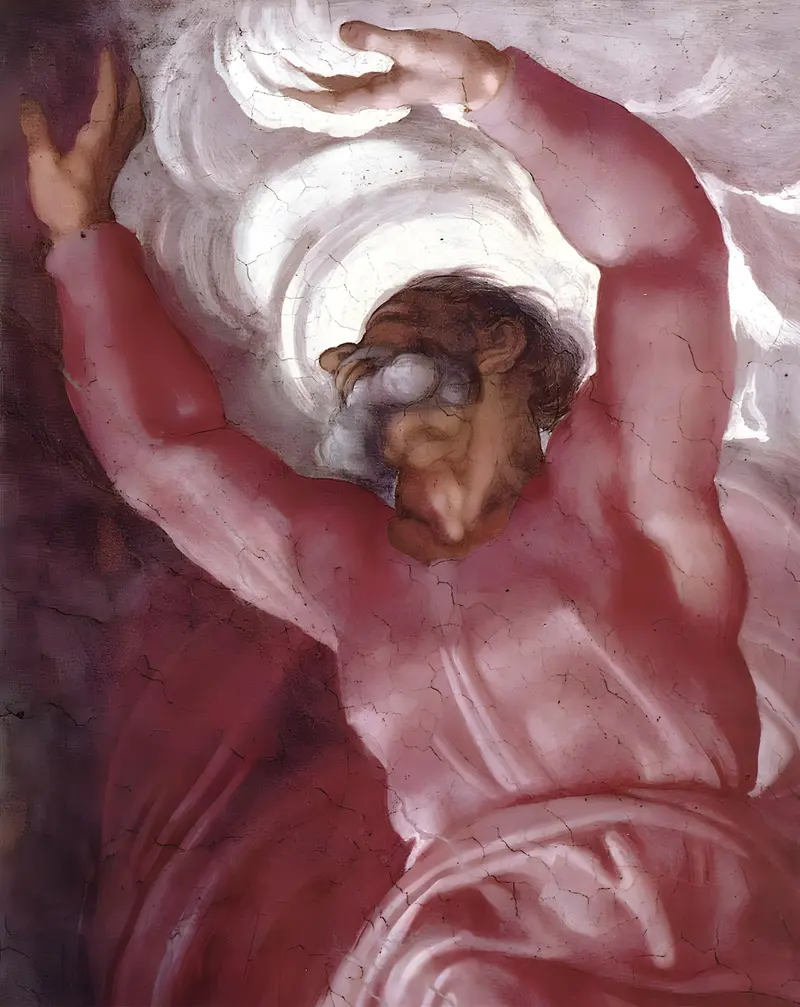
Separation of Light from Darkness
Michelangelo
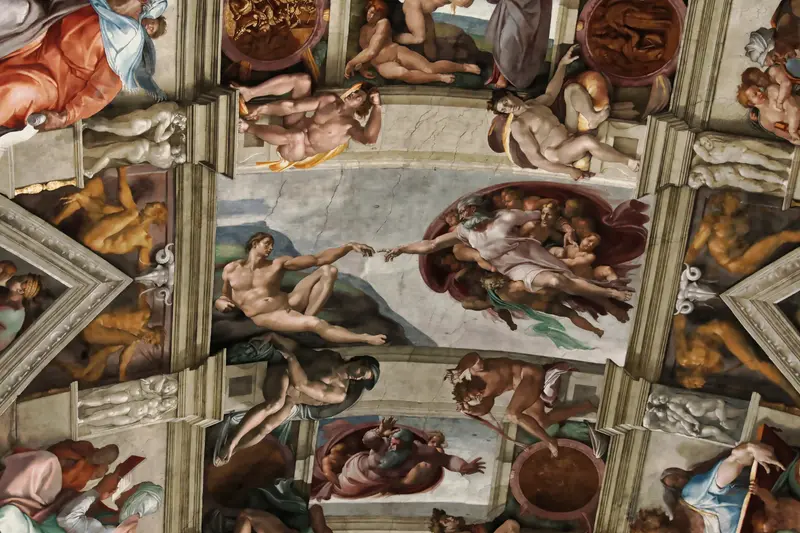
The Separation of the Earth and Waters
Michelangelo

Erythraean Sibyl
Michelangelo
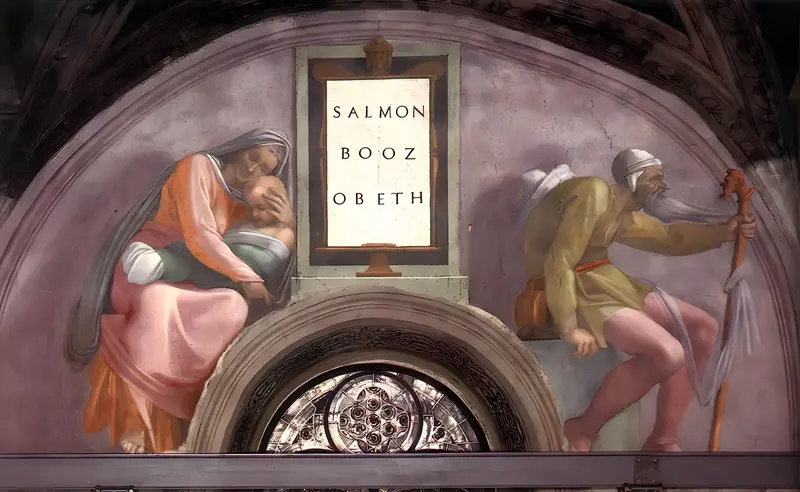
Salmon, Boaz, Obed
Michelangelo




