
Pygmalion and Galatea — History & Facts
The first thing to catch the eye here is the uncanny stillness of the woman at the altar’s edge, her body wrapped in a coral-pink drapery that seems to hover between marble and flesh. Her gaze meets the viewer’s directly, as if surprised by her own awakening, while beside her, a kneeling figure—his hands clasped in fervent prayer—pleads before a smoking altar crowned by a bull’s head. The fire’s orange glow throws dramatic shadows across the scene, drawing a sharp boundary between the living and the inanimate, the hopeful and the miraculous.
Every detail, from the careful modeling of the figures to the intricate reliefs on the altar, is a clue: this is the moment of transformation, when desire and devotion are answered by the impossible. Painted between 1529 and 1530, this Pygmalion and Galatea by Agnolo Bronzino belongs to a world in which myth and artifice were inseparable. The story—of a sculptor whose love brings his statue to life—was a favorite among Renaissance artists, who saw in it a metaphor for their own creative power. The woman’s ambiguous pose, one hand raised as if testing her new existence, captures the instant between stone and life.
The kneeling man, his face lit with hope and awe, becomes a stand-in for the artist himself. In the crisp twilight landscape and the careful balance of warm and cool tones, we glimpse the intellectual ambitions of early sixteenth-century Florence, when artists and patrons alike sought to rival the marvels of antiquity. This painting, preserved in the digital archives of The Yorck Project, invites us to linger at the threshold between imagination and reality, where the boundaries of art are always in question.
More Artworks by Agnolo Bronzino

Eleonora Of Toledo
Agnolo Bronzino
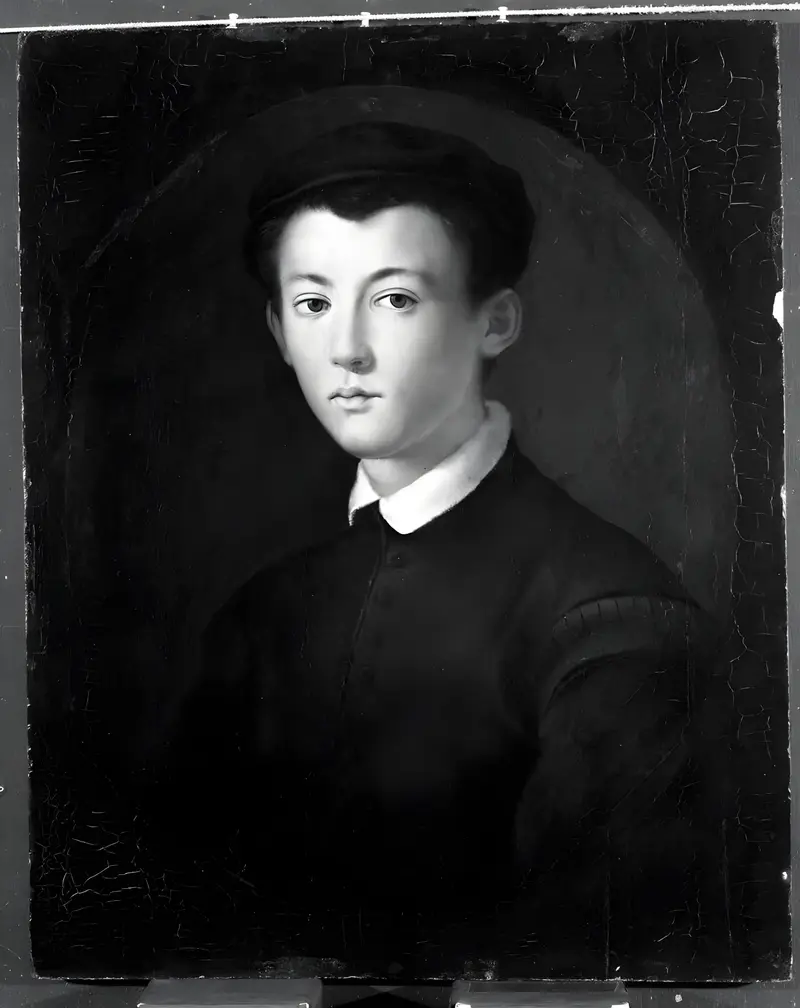
Portrait of a Young Man
Agnolo Bronzino
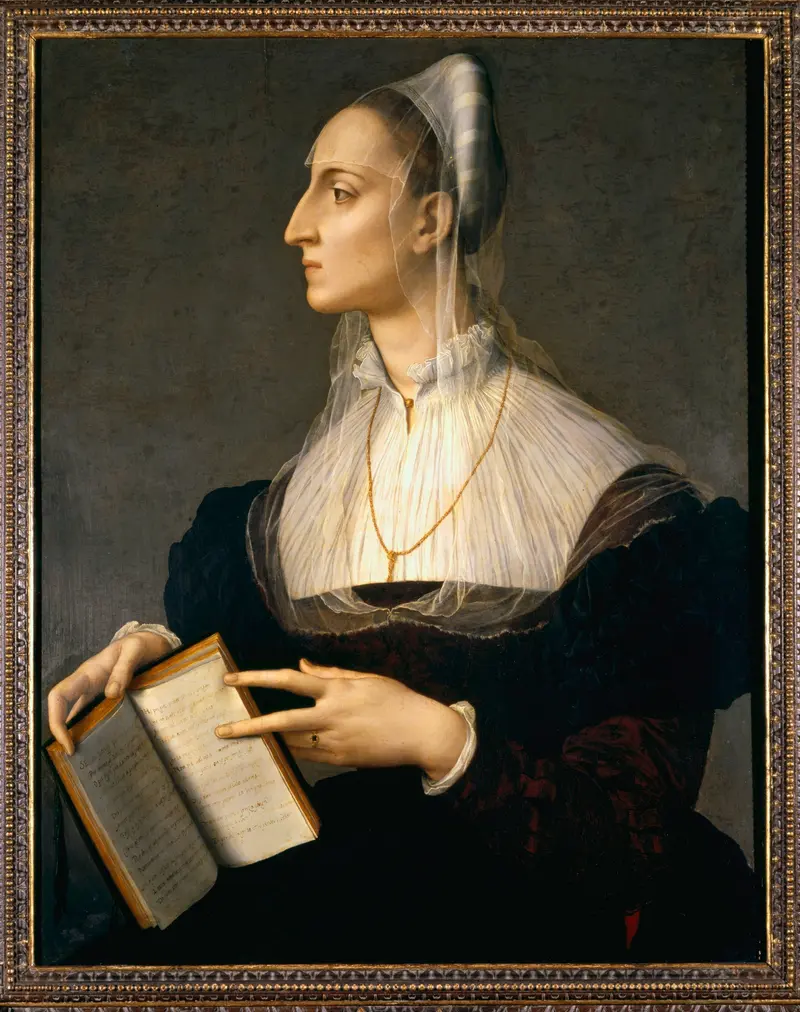
Portrait Of Laura Battiferri
Agnolo Bronzino
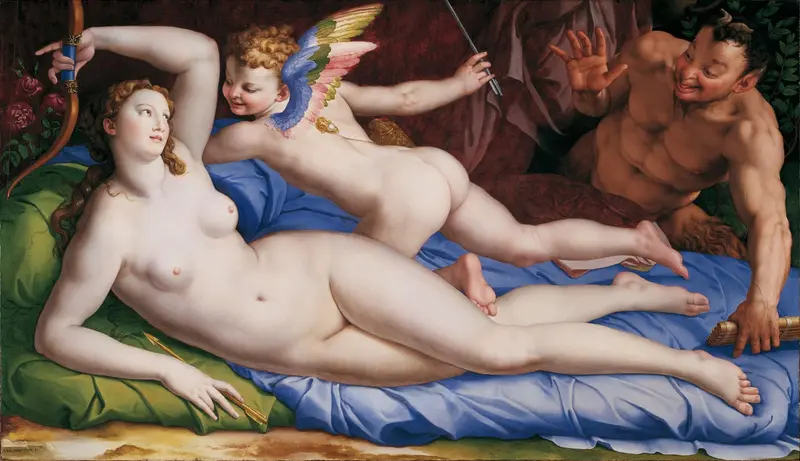
Venus, Cupid And Satyr
Agnolo Bronzino
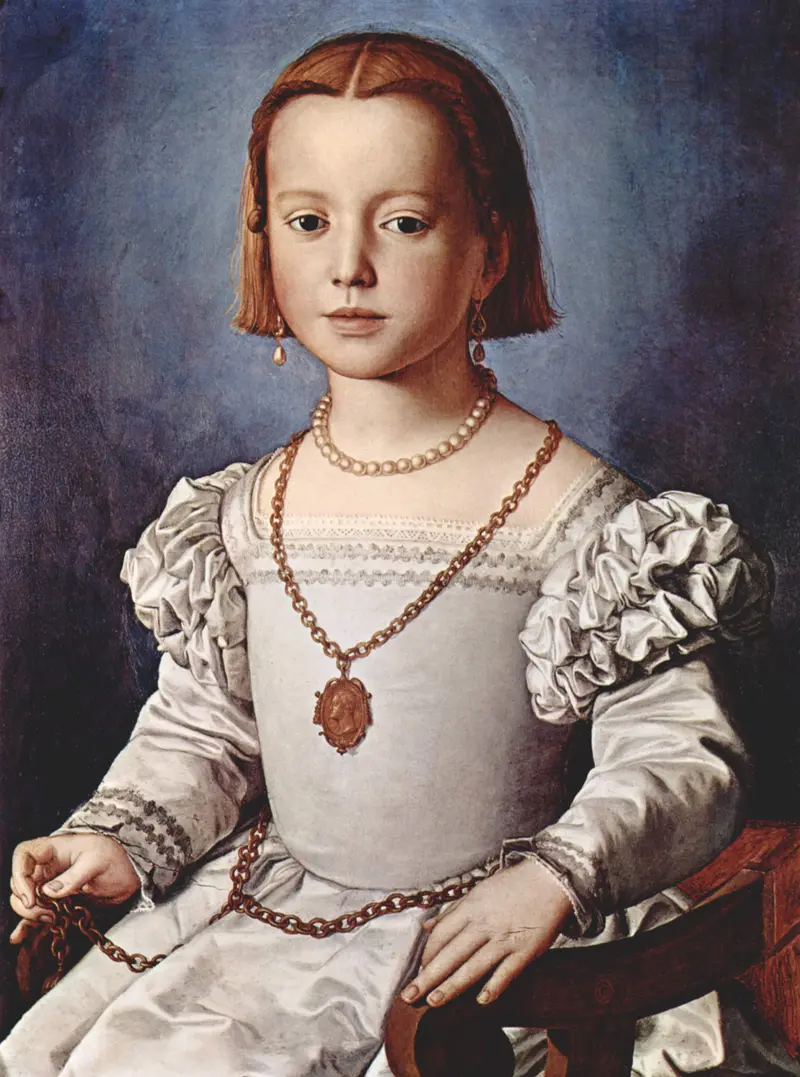
Bia Di Cosimo De‘ Medici
Agnolo Bronzino
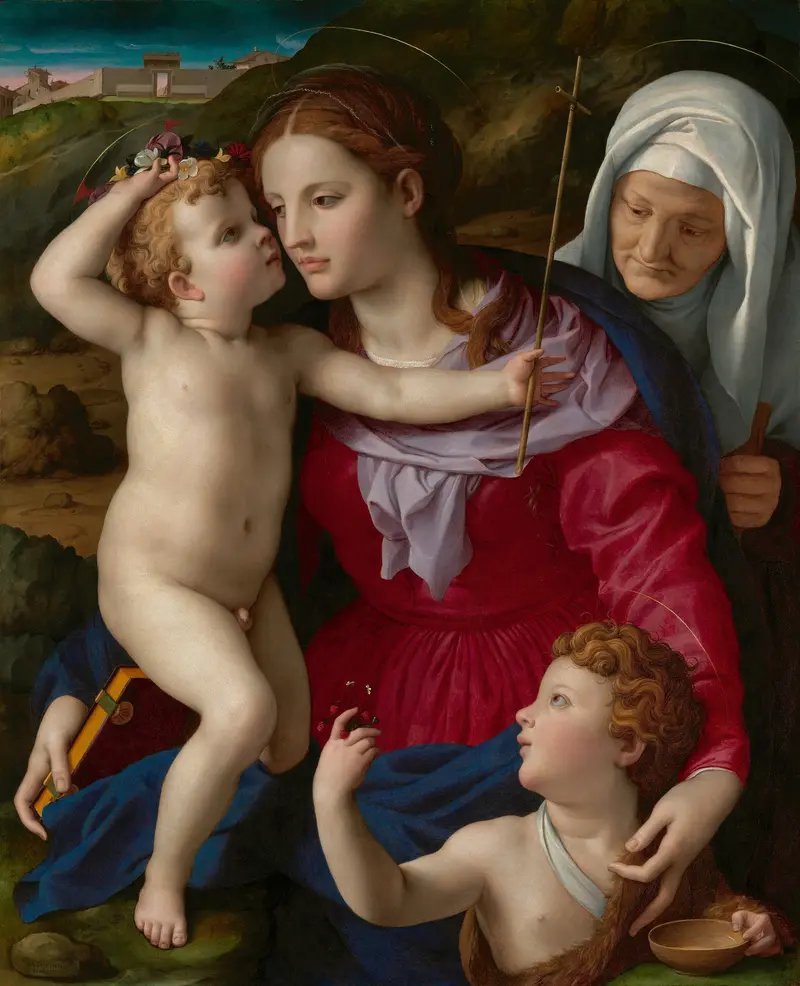
Virgin and Child with Saint Elizabeth and Saint John the Baptist
Agnolo Bronzino
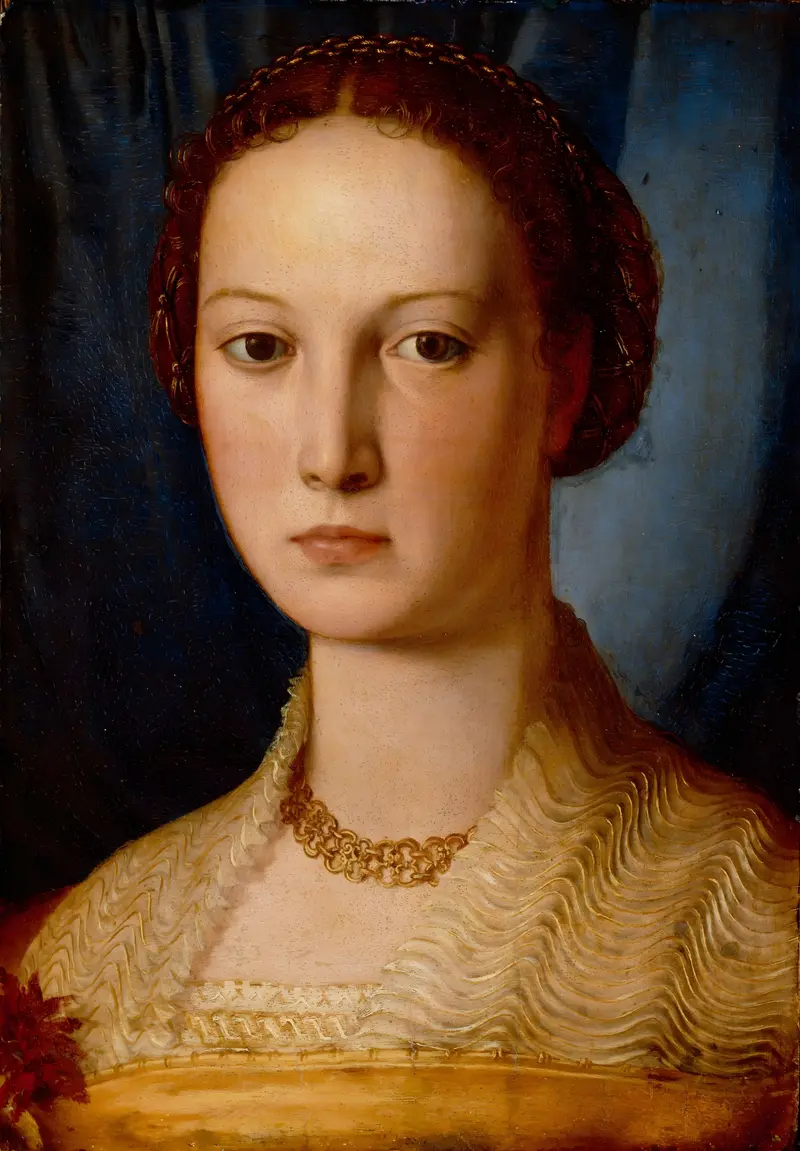
Costanza Da Sommaia
Agnolo Bronzino
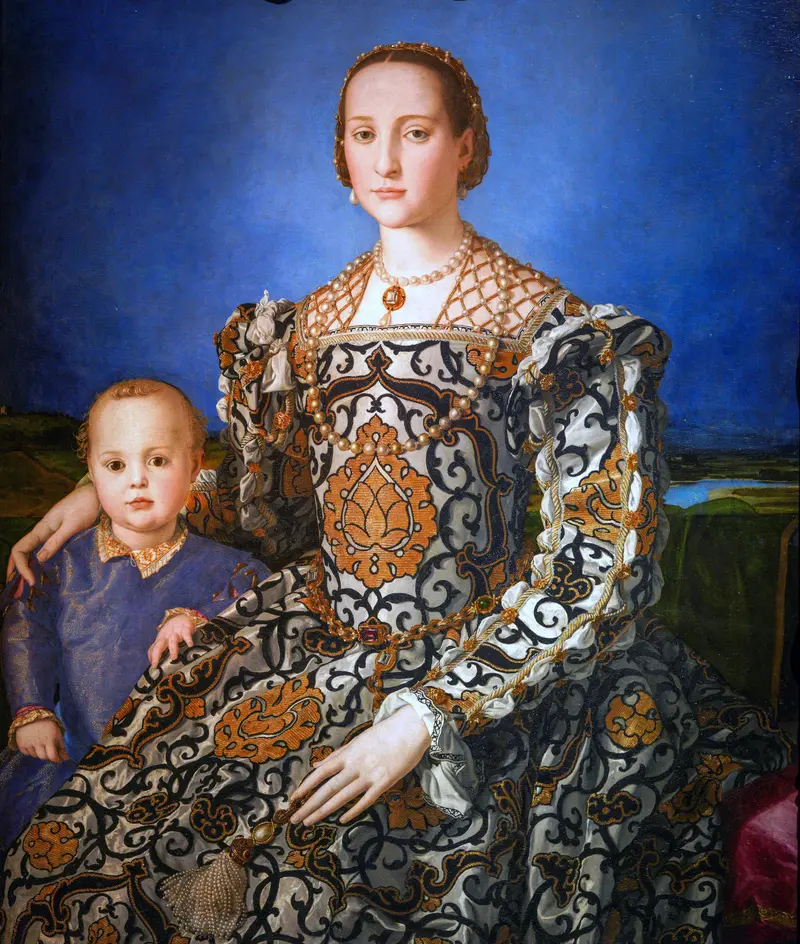
Portrait of Eleanor of Toledo with Her Son Giovanni de’ Medici
Agnolo Bronzino
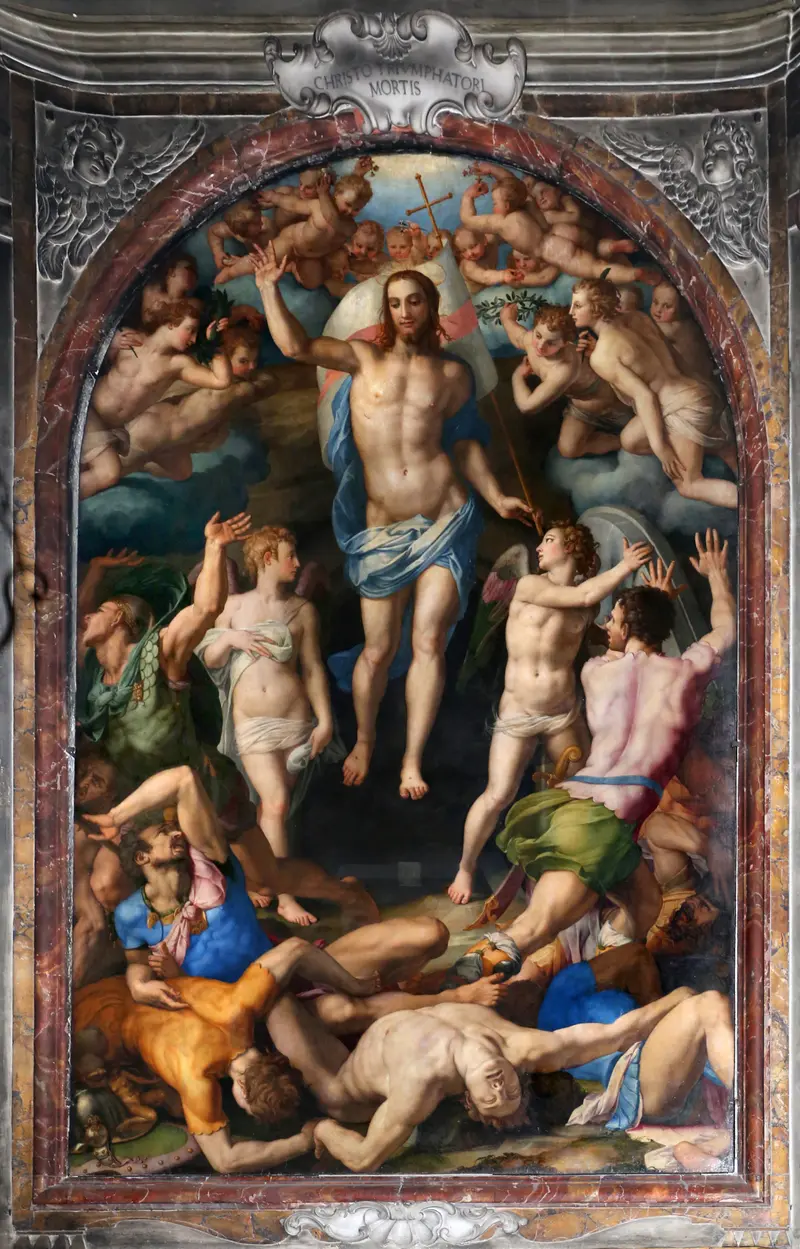
Resurrection Of Christ
Agnolo Bronzino
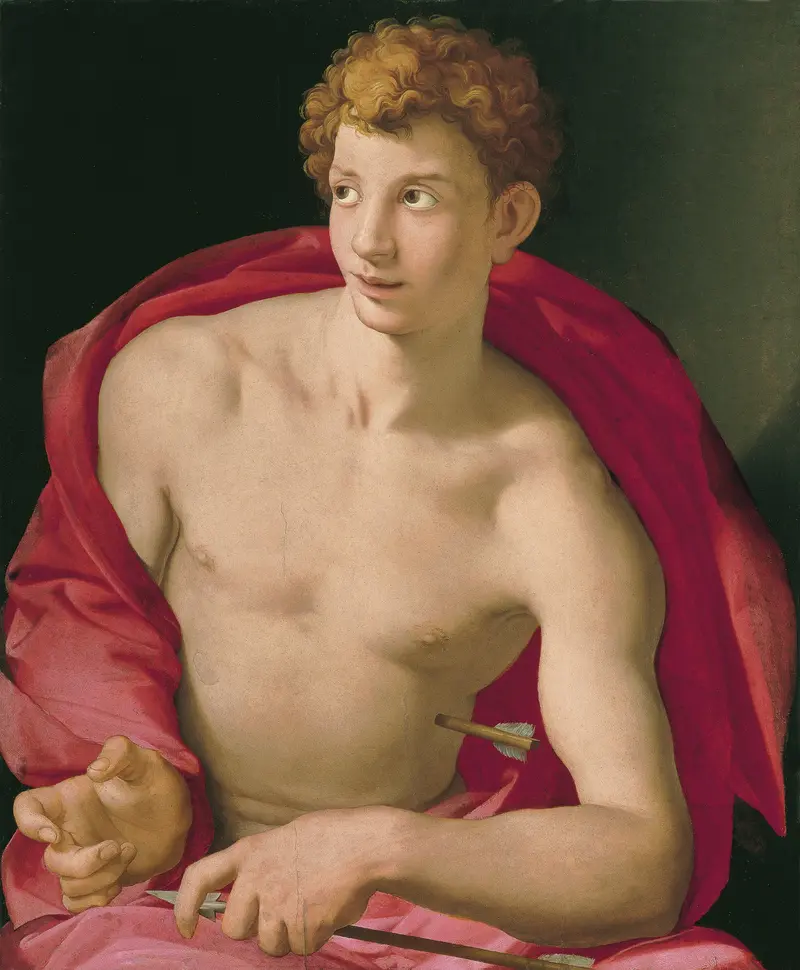
Saint Sebastian
Agnolo Bronzino





