Pyramus en Thisbe — History & Facts
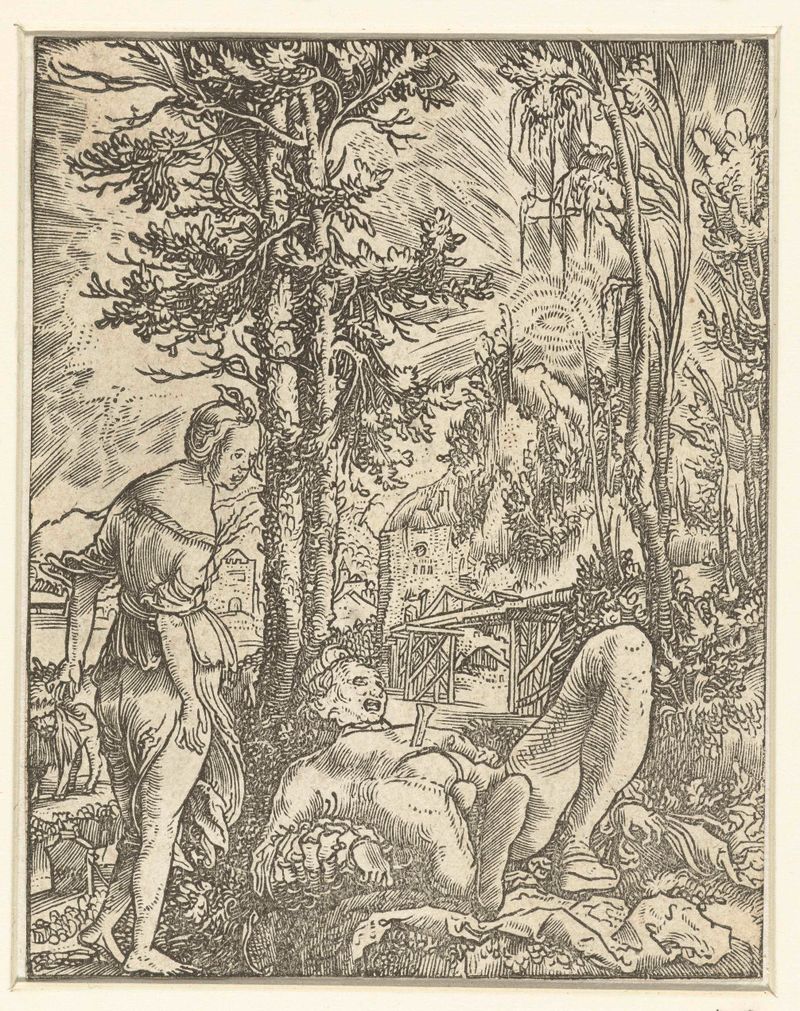
Could beauty survive in a century of chaos? In Pyramus en Thisbe, innocence blooms amidst turmoil, evoking both longing and despair in a world fraught with conflict. Look to the center of the canvas where the figures of Pyramus and Thisbe draw the eye, their elegant postures and intertwining forms creating an intimate connection. Notice how the soft, muted tones of their garments contrast with the darker hues surrounding them, as if the chaos of their environment cannot penetrate their moment of love. The play of light delicately outlines their features, casting a gentle glow that highlights the tender expressions on their faces, contrasting with the shadows lurking at the edges of the composition. Delve deeper into the symbolism of their embrace: the blossoming flowers between them hint at fragile hope, while the looming shadows serve as reminders of the tragic fate that awaits these star-crossed lovers.
This interplay between light and dark reflects the tension of innocence against the backdrop of impending doom, emphasizing the fragility of their love in the face of societal discord. Each brushstroke conveys not just beauty, but also the echo of fate, intertwining joy with sorrow. Painted during the early 16th century, Pyramus en Thisbe emerged from Wolfgang Huber’s profound engagement with Renaissance ideals in a time marked by religious upheaval and artistic exploration. As Europe grappled with the Reformation, Huber’s work illustrates a yearning for purity and innocence, encapsulating a moment that transcends the chaos of his contemporary world, offering a glimpse of timeless love amidst ephemeral beauty.