Pyramus en Thisbe — History & Facts
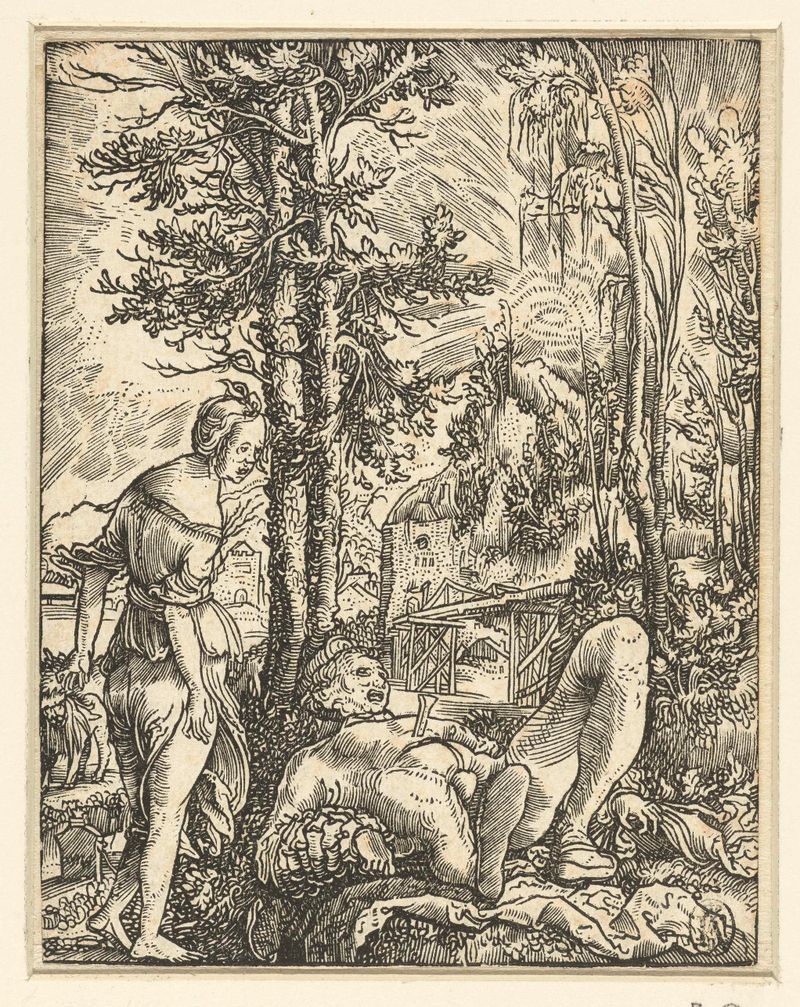
Could beauty survive in a century of chaos? This question lingers as we gaze at a work where myth intertwines with the human condition, revealing the transformative power of love and faith against adversity. Focus on the tender expressions of the two lovers at the center, their faces illuminated with a delicate glow that speaks of yearning and tragedy. The rich, warm colors of their garments contrast sharply with the darker, muted background, drawing the eye to their intertwined hands. Notice how the artist employs gentle brushstrokes to create an almost ethereal quality, as if the couple exists between reality and dreams, suspended in their fateful moment. Yet, beneath the surface of this romantic tableau lies a bittersweet tension.
The lovers’ eyes reflect both hope and impending despair, hinting at the fatal consequences of their forbidden love. The surrounding landscape, rendered with jagged edges and ominous shadows, serves as a reminder of the external forces threatening to tear them apart. Each detail—the delicate blossoms, the looming night—builds a poignant contrast, embodying the fragility of beauty amid chaos. Wolfgang Huber created this poignant representation in the early 16th century, a time marked by social upheaval and the burgeoning Renaissance.
Living in a period where artistic expression began to flourish, yet was often shadowed by turmoil, Huber channeled both the ideals of classical mythology and the human experience into his work, reflecting the complex interplay of love and faith in an uncertain world.