
Q2733 — History & Facts
A thistle arches like a crown of thorns against the dusk, its spiny silhouette thrown into relief by the last light of day. The drama here is not in grand gestures but in the quiet theater of nature: a swirl of butterflies, a pair of birds caught in mid-flight, and the gleam of a lizard’s body among the undergrowth. Every leaf, every wing, every scale is rendered with a precision that invites the eye to linger, to follow the curling stems and shifting shadows.
The painter, Abraham Jansz. Begeyn, orchestrates a world where the wild and the cultivated meet—note the architectural column looming behind the riot of foliage, a silent reminder of human presence at the edge of wilderness. This is the world of late Dutch Golden Age still life, where artists like Begeyn built entire universes from the humblest subjects. Such paintings were prized by collectors not just for their technical bravura but for their layered meanings: the fleeting butterfly, the encroaching dusk, the tangle of life and decay.
While little is recorded about the specific journey of Q2733, its place in the collection of the RKD hints at the enduring fascination with these natural dramas. The viewer is left to wonder at the balance of order and chaos, and to marvel at how a single patch of earth can hold so many stories at once.
More Artworks by Abraham Jansz. Begeyn

Landscape with people and cattle
Abraham Jansz. Begeyn
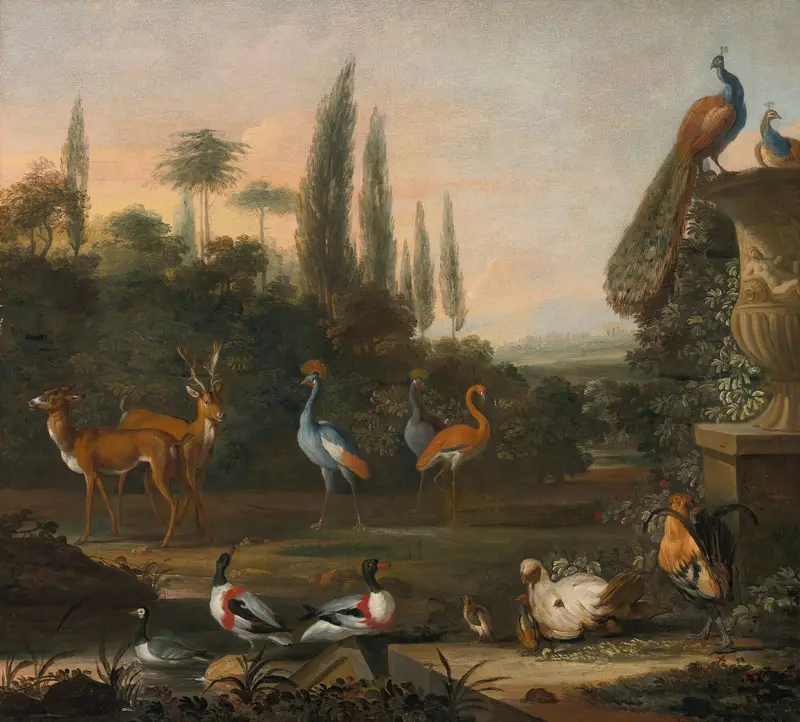
Landscape with deer and exotic birds
Abraham Jansz. Begeyn
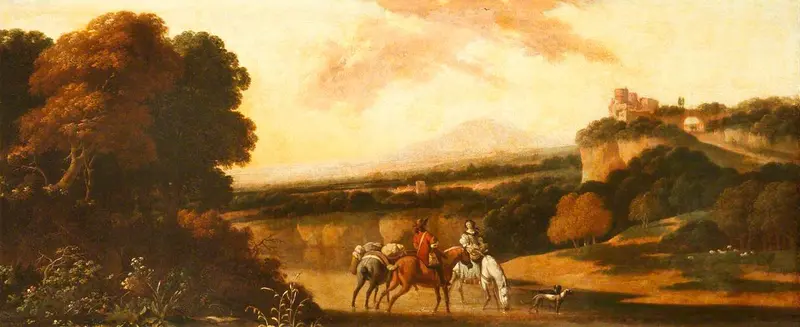
Landscape with Travellers
Abraham Jansz. Begeyn
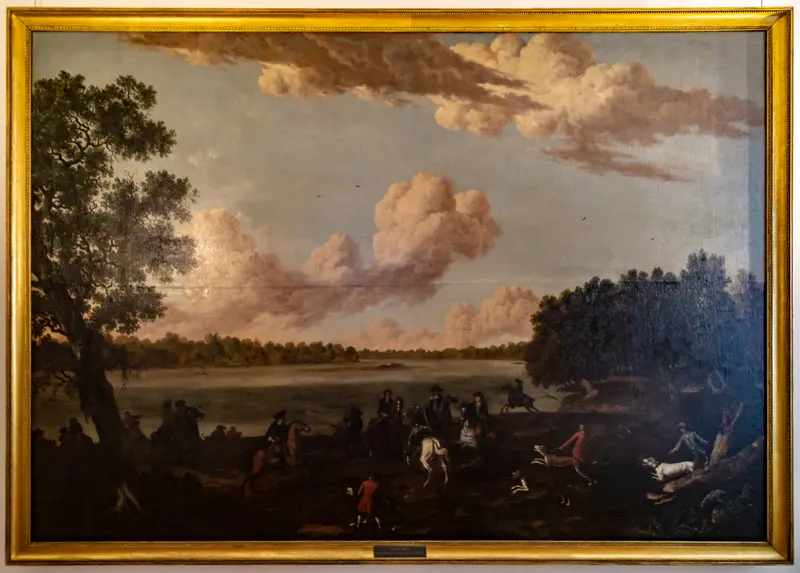
Prince Elector Frederick III of Prussia hunting at the Havel
Abraham Jansz. Begeyn
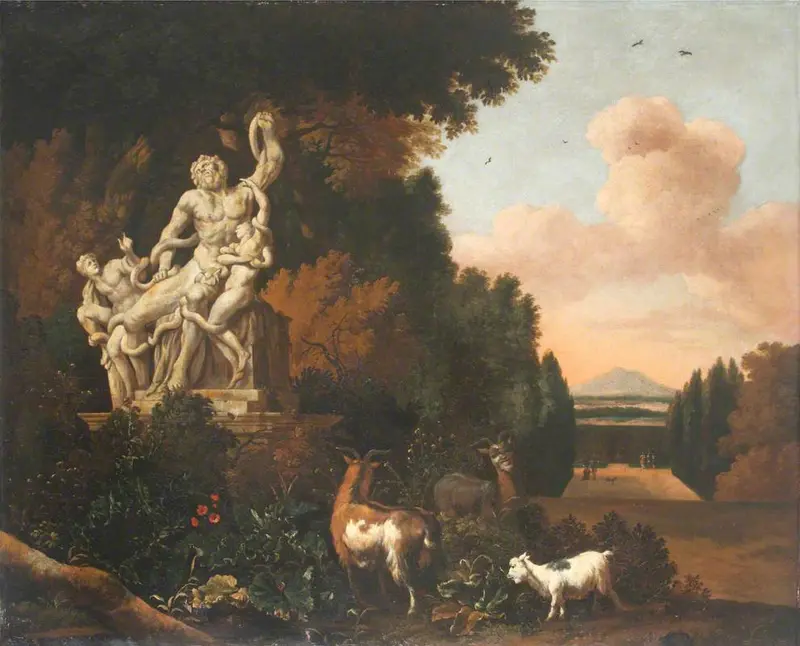
Landscape with Goats and a Statue of Laocoön
Abraham Jansz. Begeyn
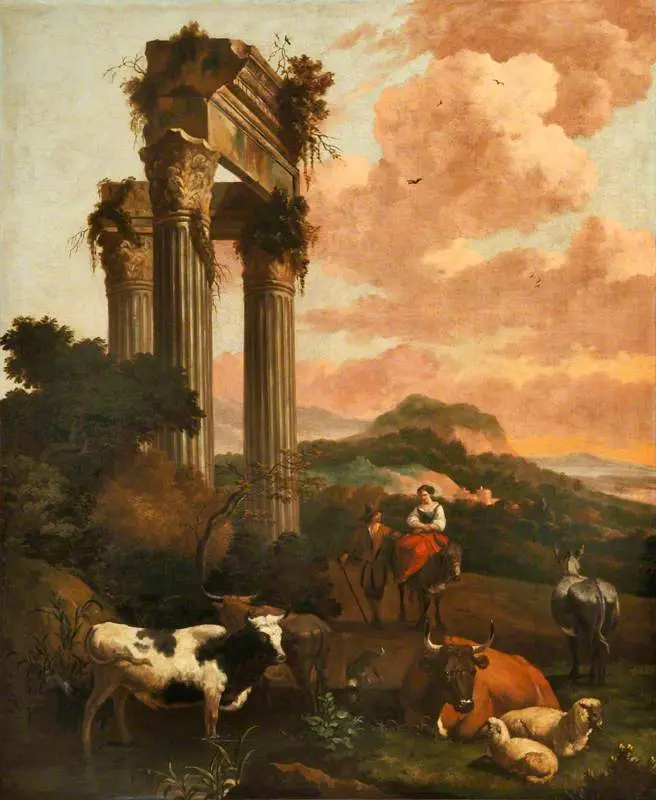
Landscape with Figures, Cattle and Sheep among Classical Ruins
Abraham Jansz. Begeyn
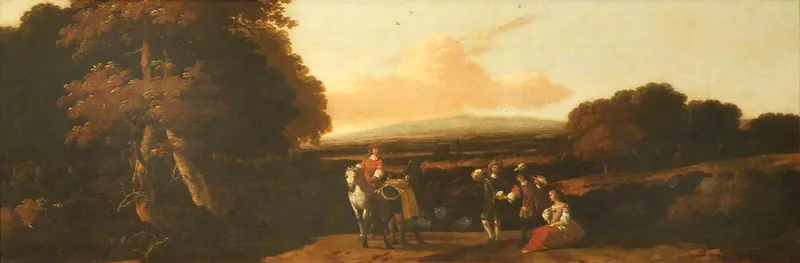
Landscape with Figures on a Road
Abraham Jansz. Begeyn
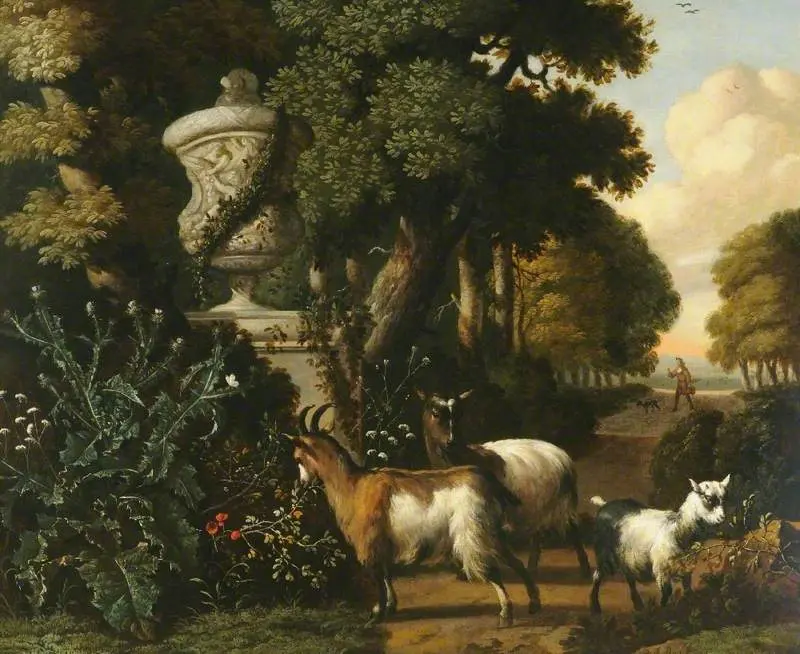
Landscape with Goats
Abraham Jansz. Begeyn
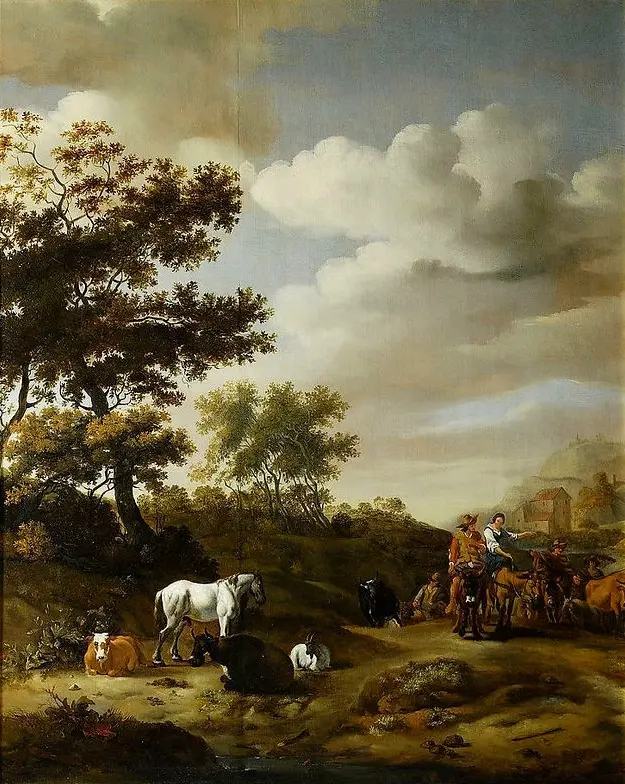
Landscape with travelers and cattle.
Abraham Jansz. Begeyn
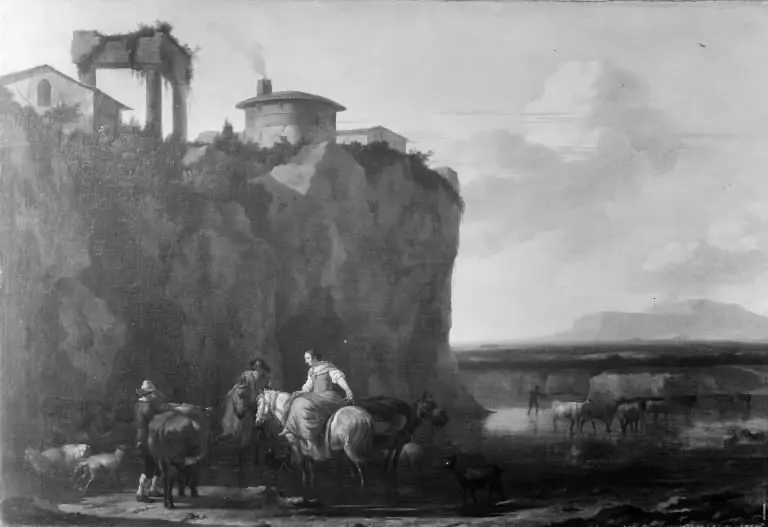
The Ford
Abraham Jansz. Begeyn





