
The Ford — History & Facts
A traveler pauses at the edge of a shallow stream, caught between the shadow of a rocky bluff and the open sweep of distant plains. The eye is drawn first to the central figure on horseback, whose calm posture and fine dress set a tone of quiet authority. Around him, animals and herders cluster, their movement and glances guiding us from the foreground’s earthy solidity toward the luminous water and the hazy horizon beyond.
Above, the architecture—part ruin, part sturdy roundhouse—crowns the cliff and hints at histories layered atop one another. Light falls unevenly, spotlighting the human drama below and leaving the upper reaches in a gentle, mysterious half-shadow. The Ford belongs to a world in which landscape painting was newly ascendant, a genre that Dutch and Flemish artists of the seventeenth century made their own. Scenes like this, painted between 1652 and 1697, were prized by collectors eager for visions of an idealized countryside—places of passage and encounter, where the everyday mingled with the monumental.
These works often served as reminders of nature’s scale and the rhythms of rural life, even for city-dwellers who might never ford such a stream themselves. Today, housed in the SMK collection, this painting invites us to linger at the water’s edge and imagine the stories that pass quietly through such a landscape.
More Artworks by Abraham Jansz. Begeyn

Landscape with people and cattle
Abraham Jansz. Begeyn
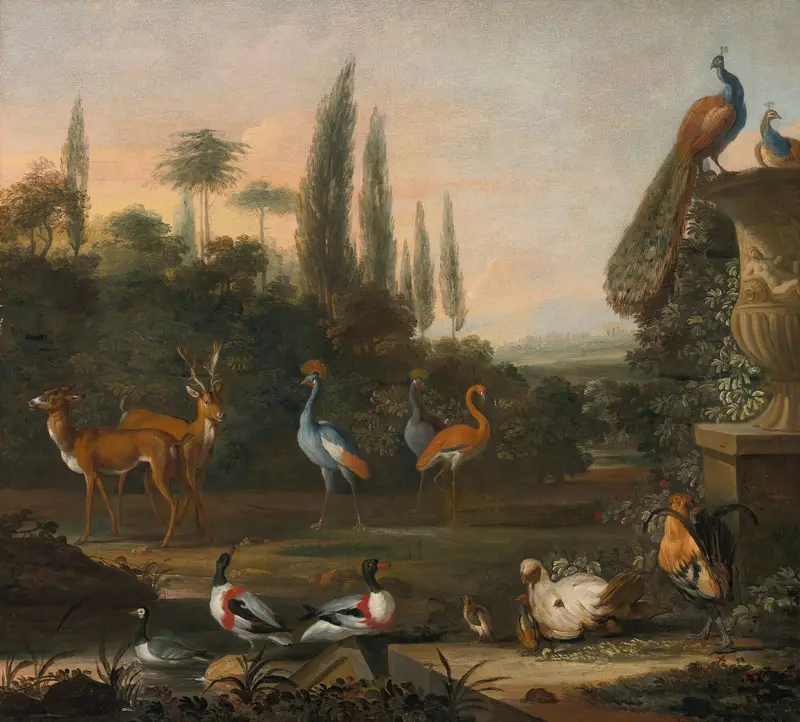
Landscape with deer and exotic birds
Abraham Jansz. Begeyn
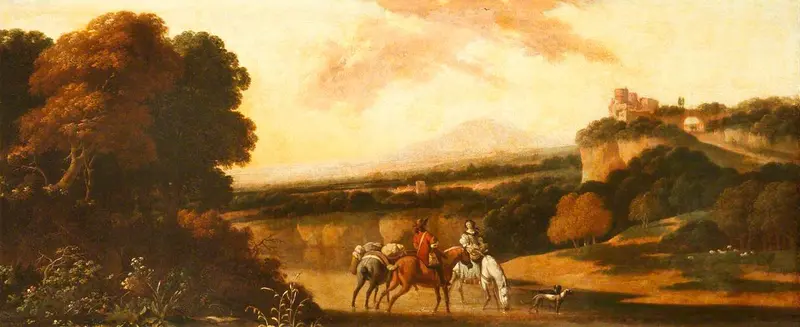
Landscape with Travellers
Abraham Jansz. Begeyn
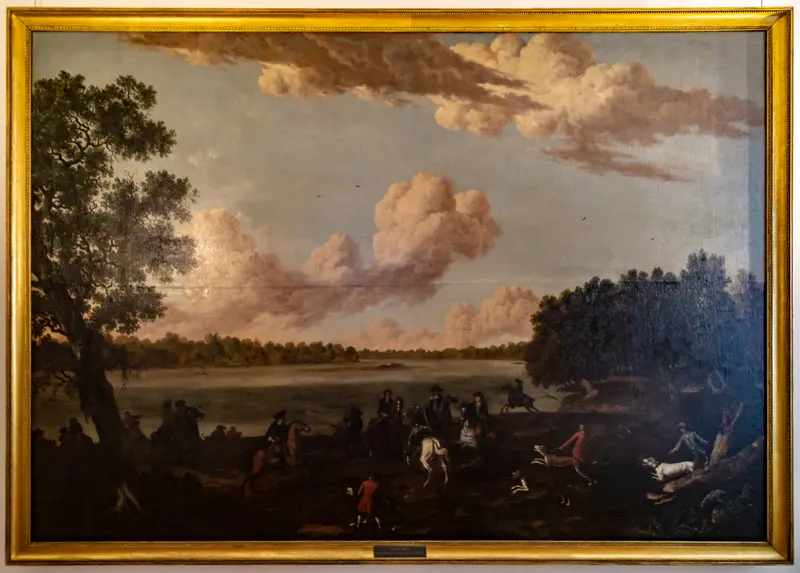
Prince Elector Frederick III of Prussia hunting at the Havel
Abraham Jansz. Begeyn
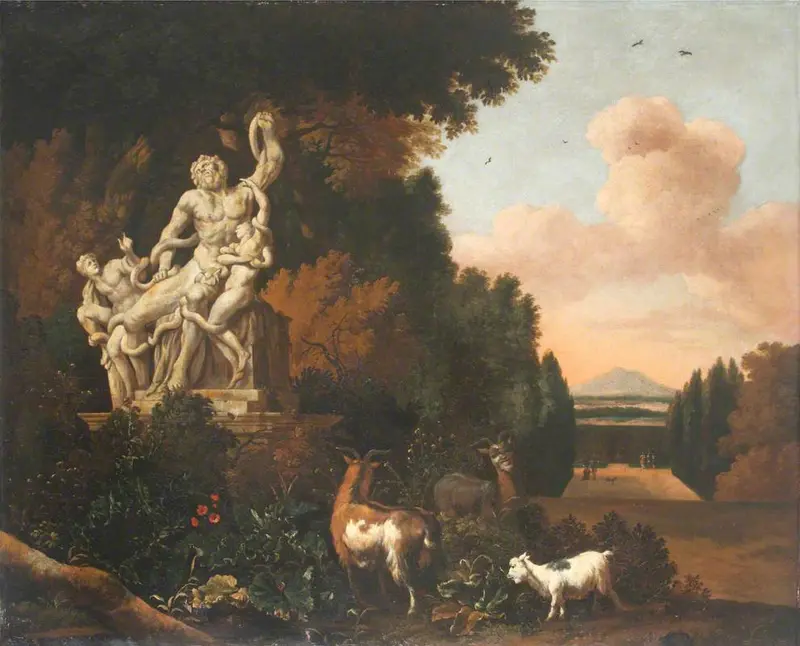
Landscape with Goats and a Statue of Laocoön
Abraham Jansz. Begeyn
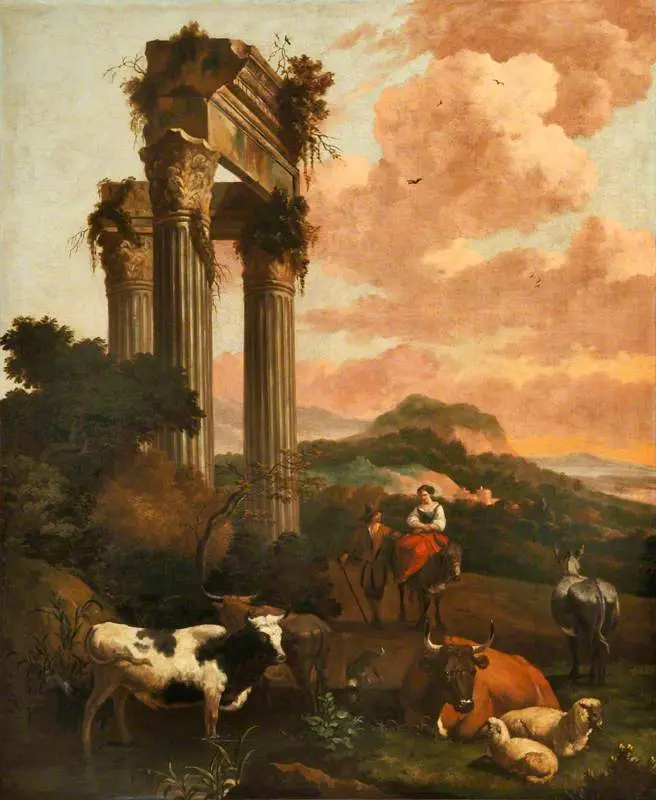
Landscape with Figures, Cattle and Sheep among Classical Ruins
Abraham Jansz. Begeyn
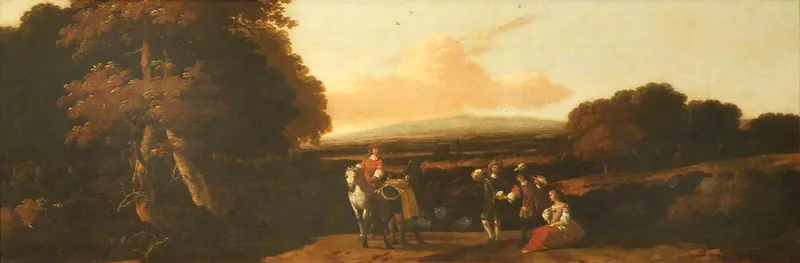
Landscape with Figures on a Road
Abraham Jansz. Begeyn
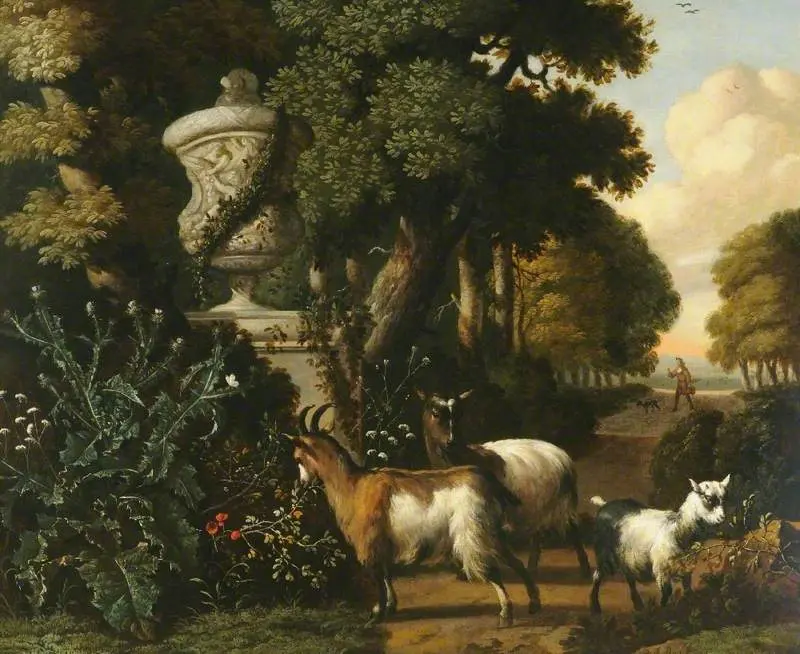
Landscape with Goats
Abraham Jansz. Begeyn
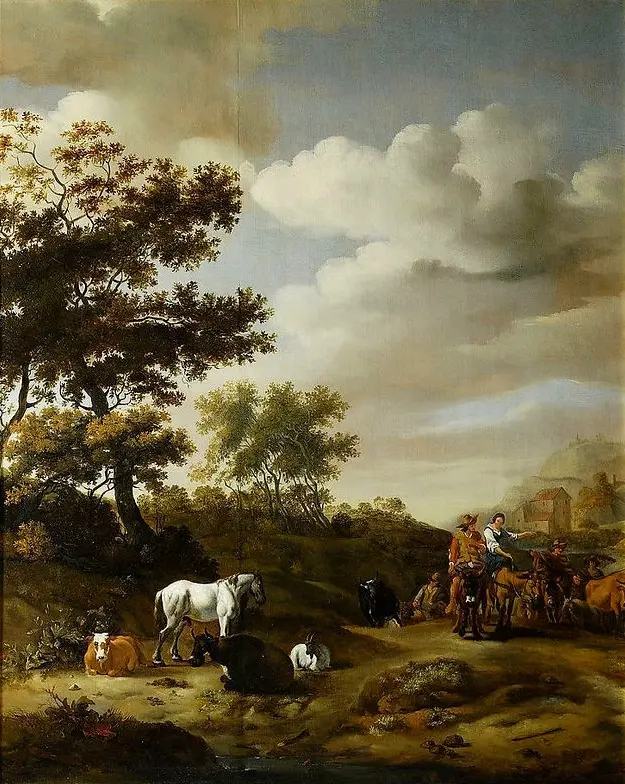
Landscape with travelers and cattle.
Abraham Jansz. Begeyn
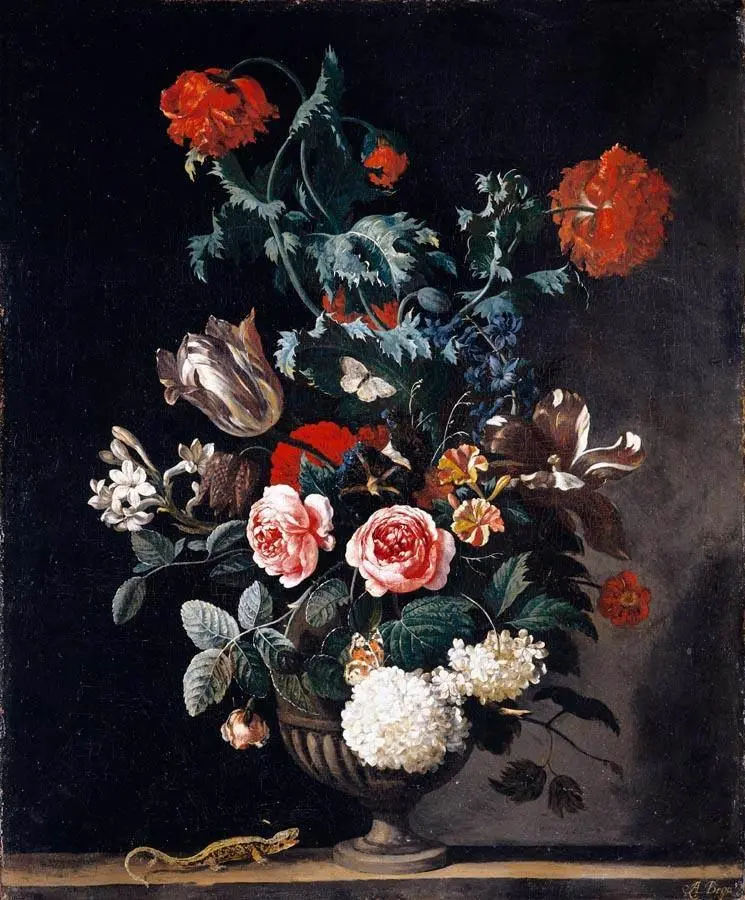
Flowers in a Stone Vase
Abraham Jansz. Begeyn
More Landscape Art

The Starry Night
Vincent van Gogh

View of Delft
Johannes Vermeer

Water Lilies
Claude Monet

The Grand Canal, Venice, looking north-west from the Ca' Corner to the Ca' Contarini degli Scrigni, with the campanile of Santa Maria della Carità
Canaletto

Windsor Castle
Canaletto

The Grand Canal looking North-East from the Palazzo Dolfin-Manin to the Rialto Bridge
Canaletto