
Landscape with Goats — History & Facts
The eye is drawn first to the unruly tangle of thistles and wildflowers, where a trio of goats pause at the edge of a sun-dappled path. In Landscape with Goats, Abraham Jansz. Begeyn creates a world where the animals’ idle grazing is as carefully staged as the grand stone urn looming behind them, half-swallowed by ivy and shadow.
The goats’ alert postures and the crisp, almost tactile rendering of their coats invite a closer look, while the urn, a relic of human ambition, stands as a silent witness to the slow encroachment of nature. A lone figure in the distance, dwarfed by avenues of trees and the swelling sky, hints at a human story just out of reach—perhaps a goatherd, perhaps a wanderer—his presence balancing the scene between wildness and order. Works like this, painted between 1665 and 1697, belong to a Dutch tradition that delighted in the careful observation of the countryside, yet rarely left things to chance. Landscapes of this period, often destined for prosperous urban homes, were designed to evoke both the pleasures of rural life and the ideals of cultivated taste.
The inclusion of classical urns and lush, almost theatrical foliage reflects the era’s fascination with Arcadian themes, where even the unruliest goat or weed is part of a larger harmony. Though little is recorded about the specific journey of this painting before its place in the Art UK collection, its careful balance of wild and tamed, animal and artifact, invites viewers to linger over every detail, searching for the stories that lie half-hidden in the undergrowth.
More Artworks by Abraham Jansz. Begeyn

Landscape with people and cattle
Abraham Jansz. Begeyn
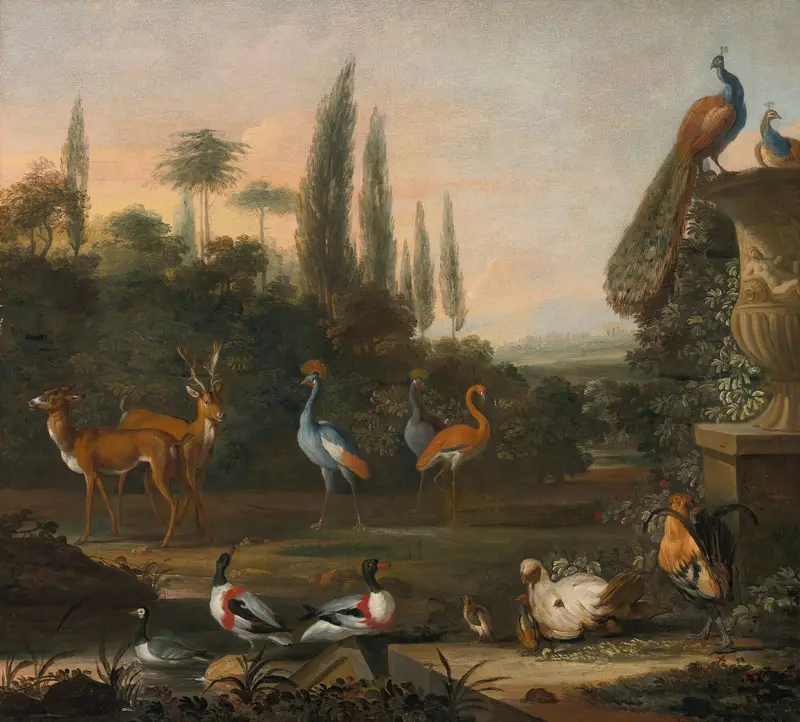
Landscape with deer and exotic birds
Abraham Jansz. Begeyn
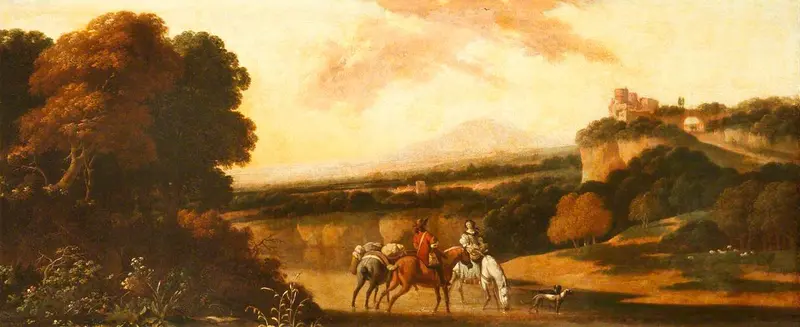
Landscape with Travellers
Abraham Jansz. Begeyn
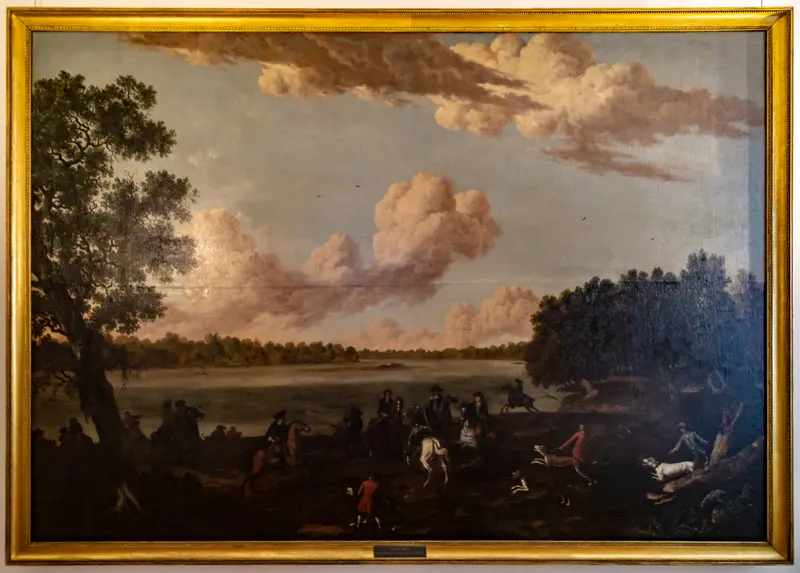
Prince Elector Frederick III of Prussia hunting at the Havel
Abraham Jansz. Begeyn
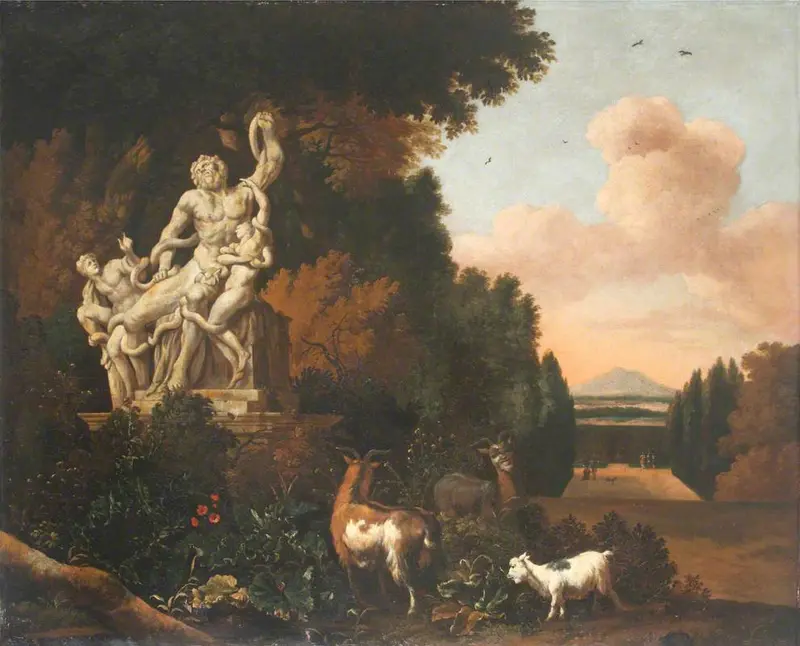
Landscape with Goats and a Statue of Laocoön
Abraham Jansz. Begeyn
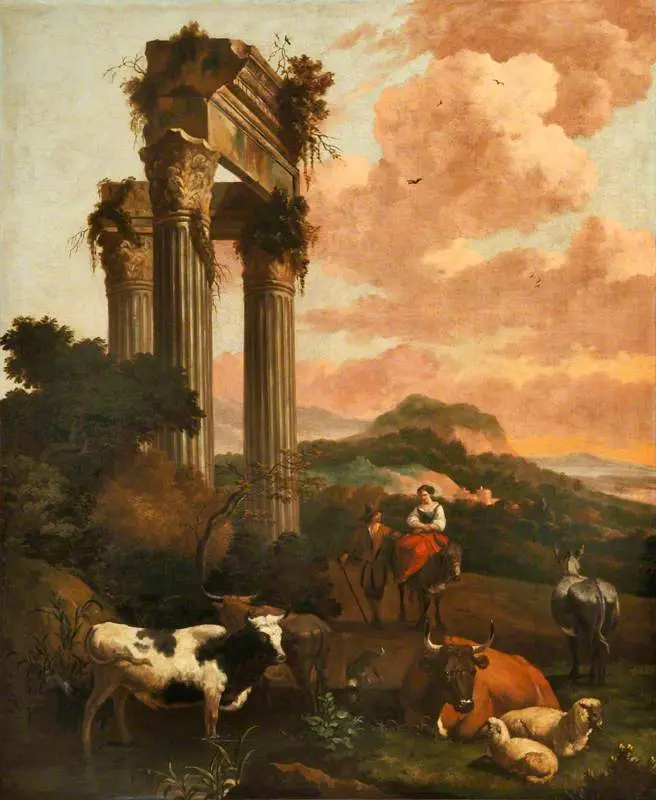
Landscape with Figures, Cattle and Sheep among Classical Ruins
Abraham Jansz. Begeyn
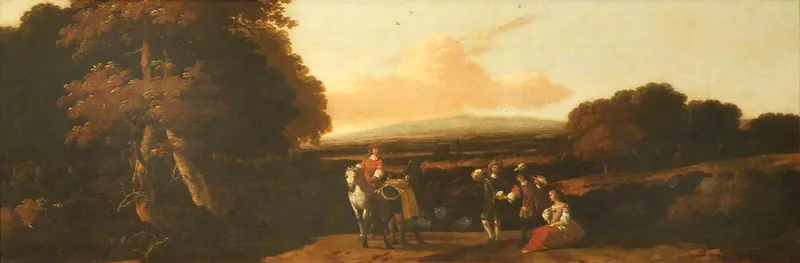
Landscape with Figures on a Road
Abraham Jansz. Begeyn
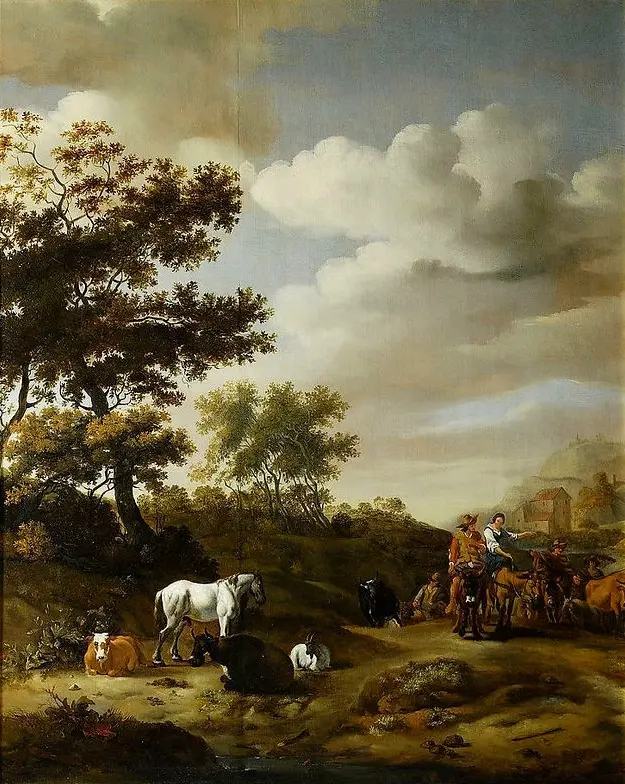
Landscape with travelers and cattle.
Abraham Jansz. Begeyn
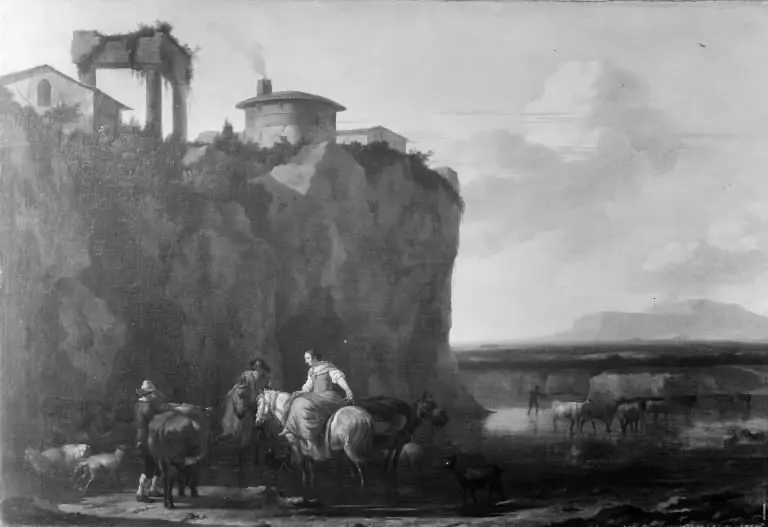
The Ford
Abraham Jansz. Begeyn
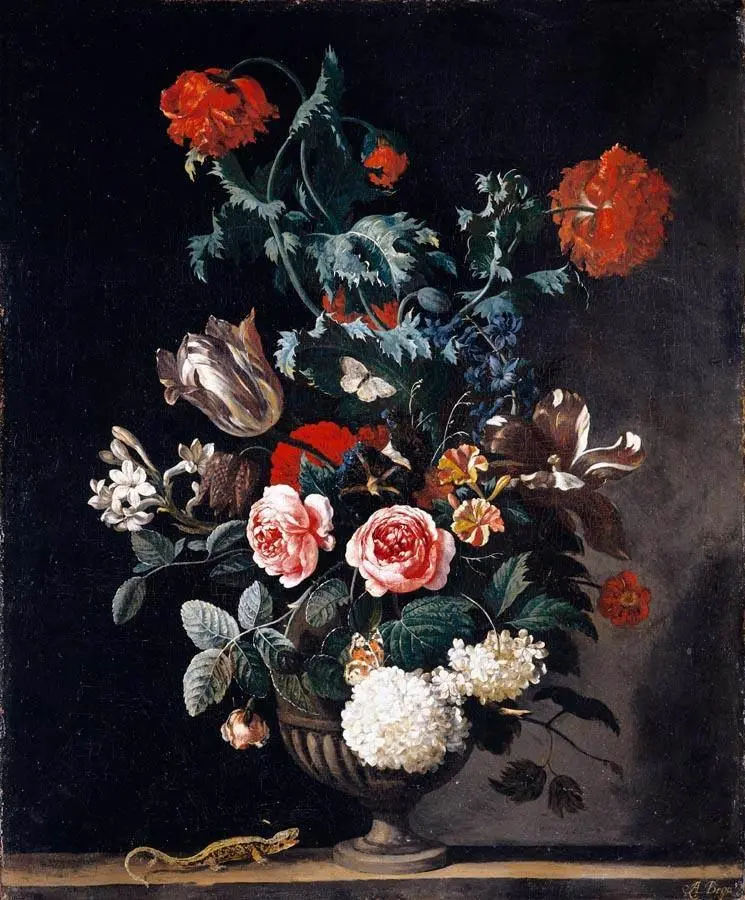
Flowers in a Stone Vase
Abraham Jansz. Begeyn
More Landscape Art

The Starry Night
Vincent van Gogh

View of Delft
Johannes Vermeer

Water Lilies
Claude Monet

The Grand Canal, Venice, looking north-west from the Ca' Corner to the Ca' Contarini degli Scrigni, with the campanile of Santa Maria della Carità
Canaletto

Windsor Castle
Canaletto

The Grand Canal looking North-East from the Palazzo Dolfin-Manin to the Rialto Bridge
Canaletto