Quiberville — History & Facts
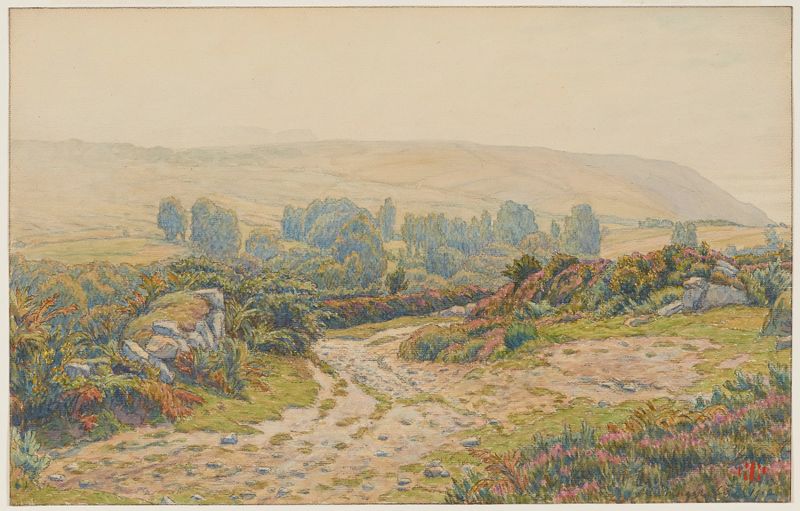
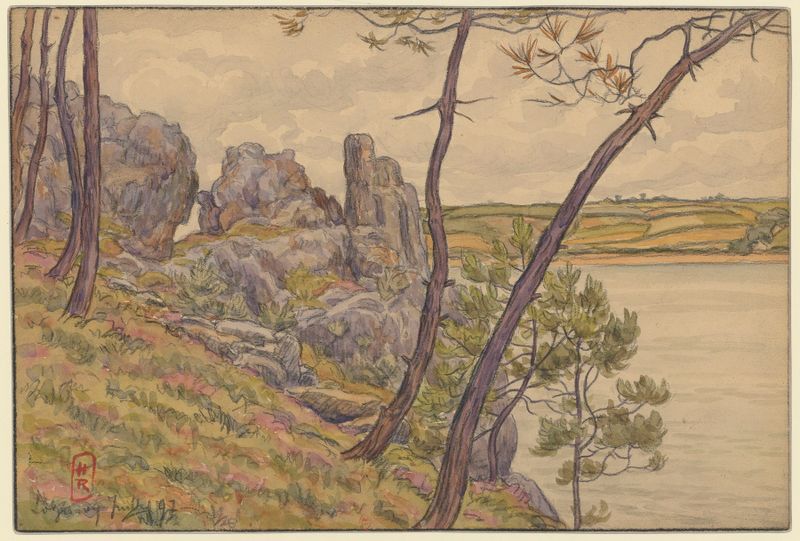
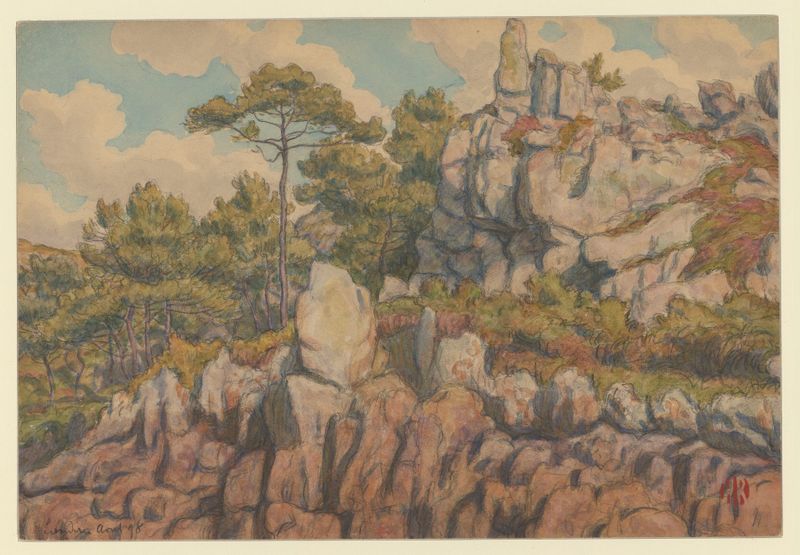
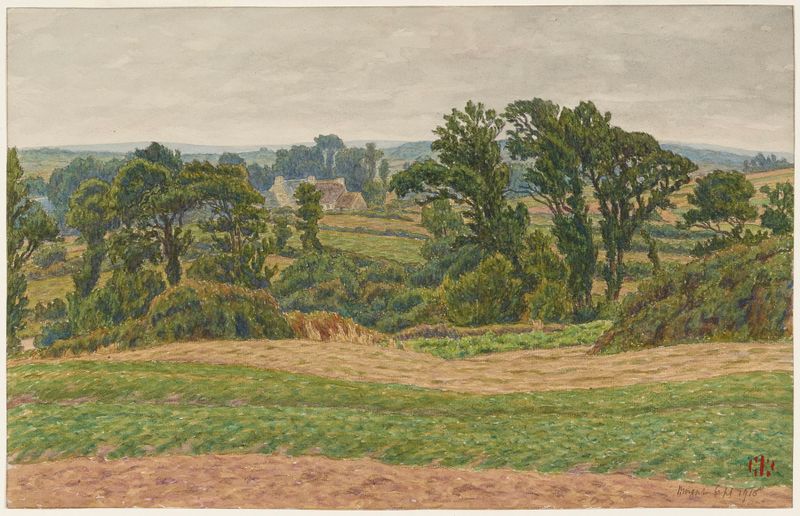
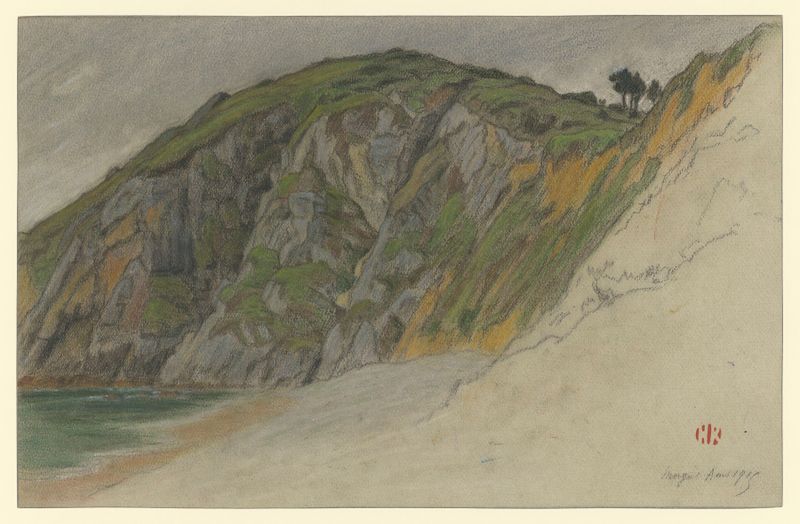
In the stillness of creation, madness finds its voice, whispering through colors and forms that defy simplicity. It beckons us to explore the depths of emotion hidden within the vibrant chaos. Look to the center of the canvas, where a tumult of hues converges, each brushstroke swirling into the next. The lively greens and blues pulsate with energy, while darker undertones lurk at the edges, suggesting an undercurrent of unease.
The composition draws the eye inward, inviting you to navigate the labyrinthine paths created by the artist’s hand. Notice how the contrasting colors not only delineate space but also evoke a sense of urgency and madness, creating an atmosphere that is both alluring and unsettling. In this work, we witness the juxtaposition of serenity and turmoil, as the tranquil landscape is disrupted by frenetic lines and shapes that challenge perception. Small details, like the almost surreal alignment of the horizon or the fragmented forms of nature, evoke the cognitive disarray that madness can bring.
Together, these elements serve as metaphors for internal struggles, illustrating how beauty can emerge even from chaos. Created in 1925, Quiberville emerged during a time of great experimentation in the art world, as artists began to explore beyond traditional boundaries. Rivière, influenced by the post-impressionist movement and the rise of abstraction, sought to capture emotional landscapes rather than mere representations. Living in France, amidst a world grappling with the aftermath of the Great War, he channeled his experiences and observations into a work that speaks to the duality of existence—a reflection of both madness and the pursuit of beauty.