
Raabs im Waldviertel — History & Facts
Is this a mirror — or a memory? In Raabs im Waldviertel, the hush of stillness cloaks the landscape, evoking a world captured between time and thought. Focus first on the tranquil waters that stretch across the canvas, their surface like glass reflecting the muted greens and browns of the surrounding trees. Look to the left, where the towering trunks stand as sentinels, their gnarled branches reaching out as if to share a secret with the viewer. The artist employs a delicate palette, blending earthy tones that breathe life into each leaf and ripple.
The precise brushwork creates textures so real that one can almost feel the coolness of the breeze sliding through the forest. Yet, within this serene tableau, an emotional tension simmers beneath the surface. The stillness can be interpreted as a pause in the narrative of life, suggesting both peace and an undercurrent of solitude. The sharp contrast between the vibrant greenery and the tranquil water hints at a deeper connection between nature and the human experience.
Are we mere spectators in this quiet moment, or does the landscape reflect our own inner stillness and unvoiced thoughts? Eduard Zetsche painted this work in 1900, during a time when the art world was shifting towards more introspective themes. Living in Vienna, he was influenced by the burgeoning movement of modernism, which encouraged artists to explore their own emotional landscapes. This piece resonates with the quiet beauty of his surroundings while also reflecting a period of transition — both personally and within the broader context of European art.
More Artworks by Eduard Zetsche
Browse all →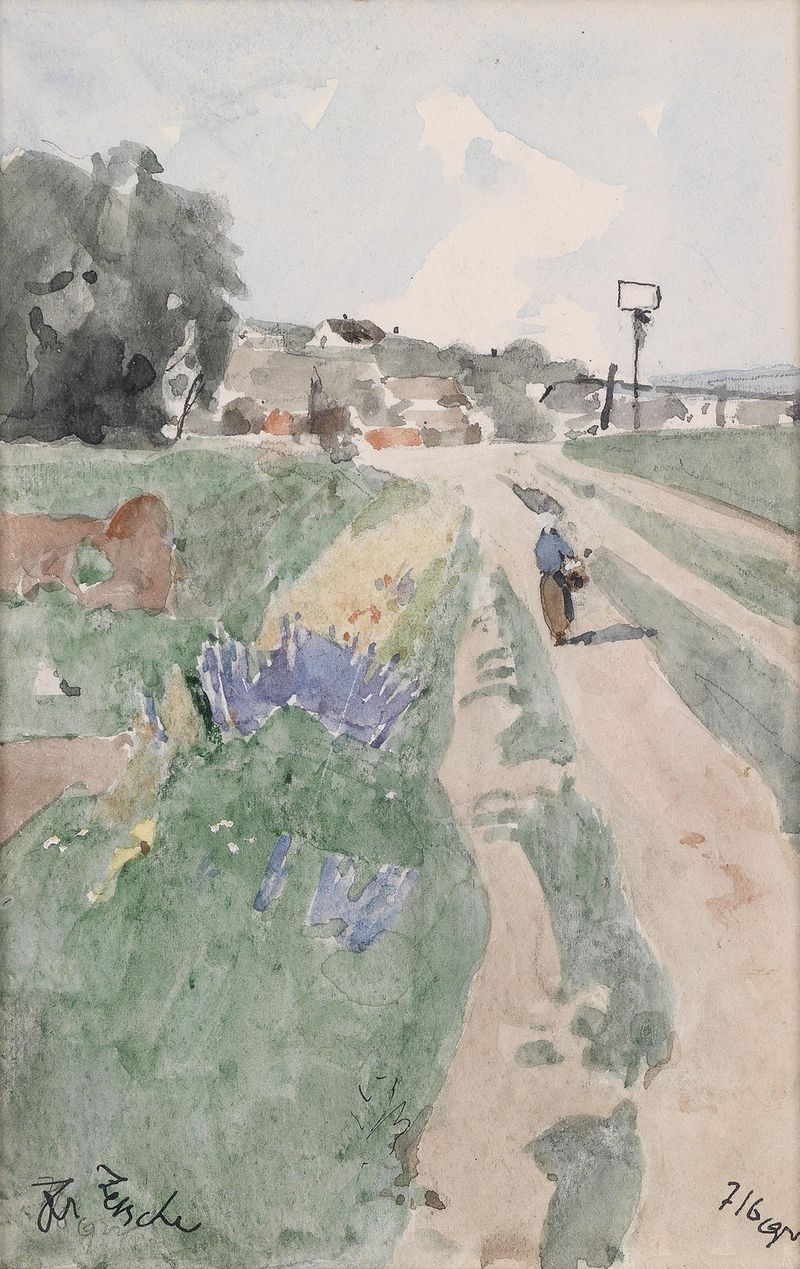
Weg bei Hadersdorf
Eduard Zetsche
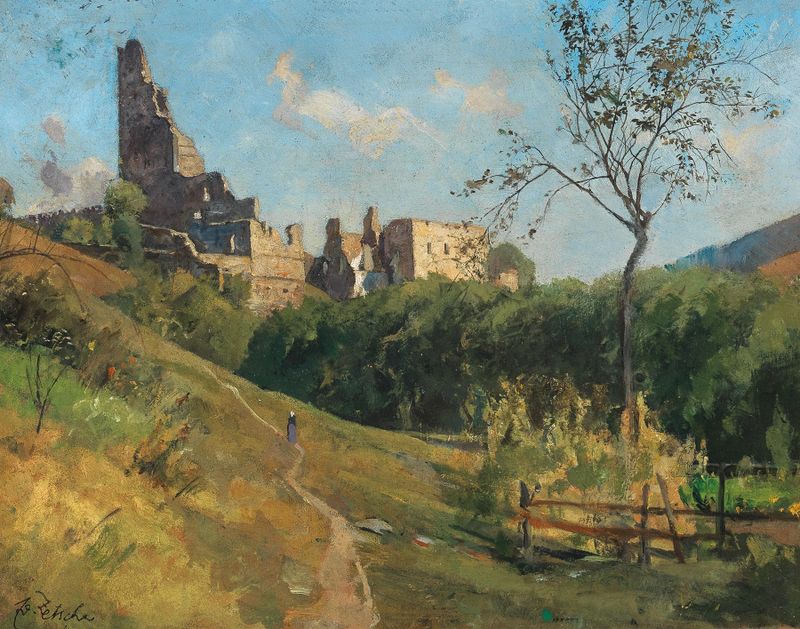
Ruins in the Wachau region
Eduard Zetsche
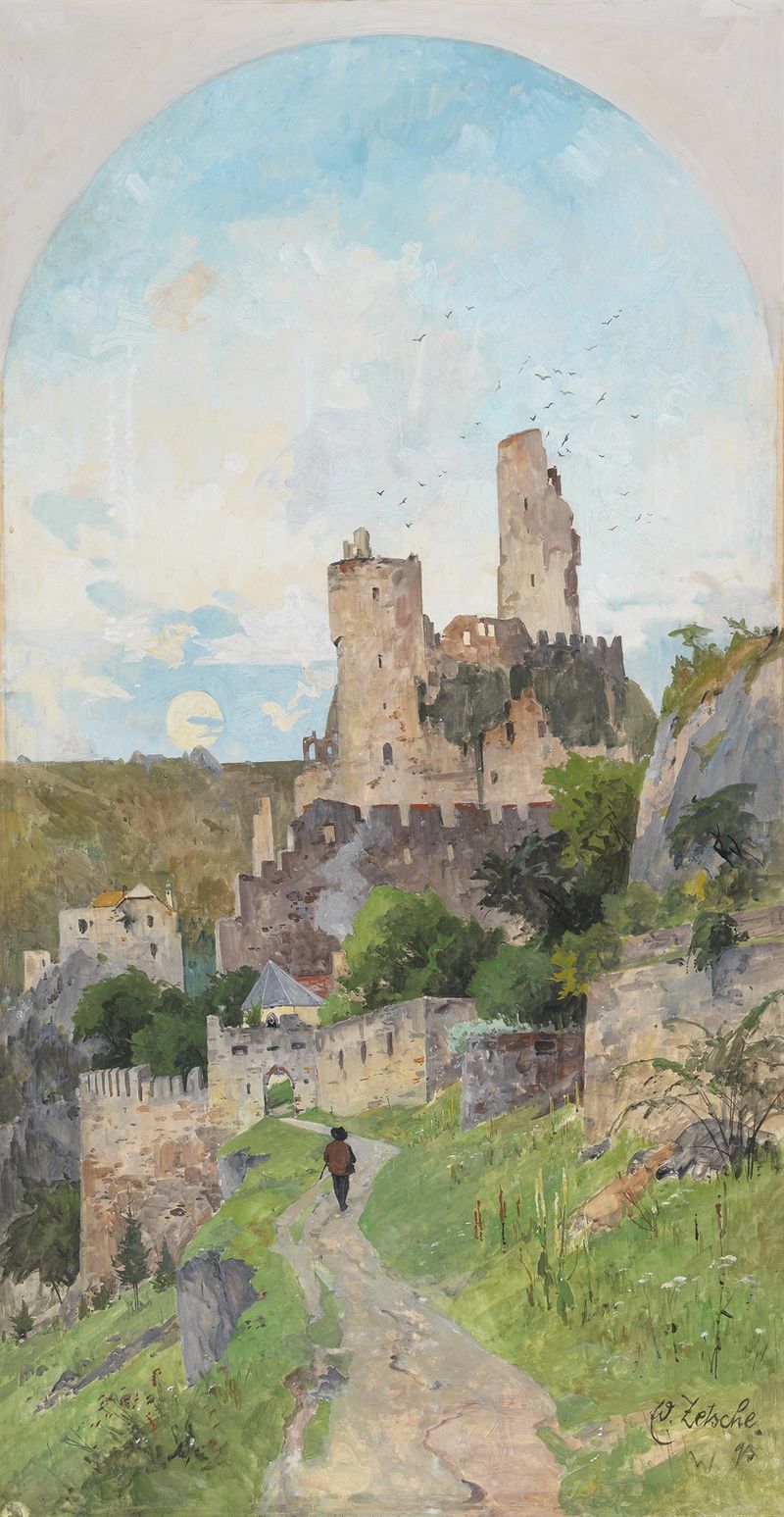
Blick auf die Ruine Dürnstein
Eduard Zetsche
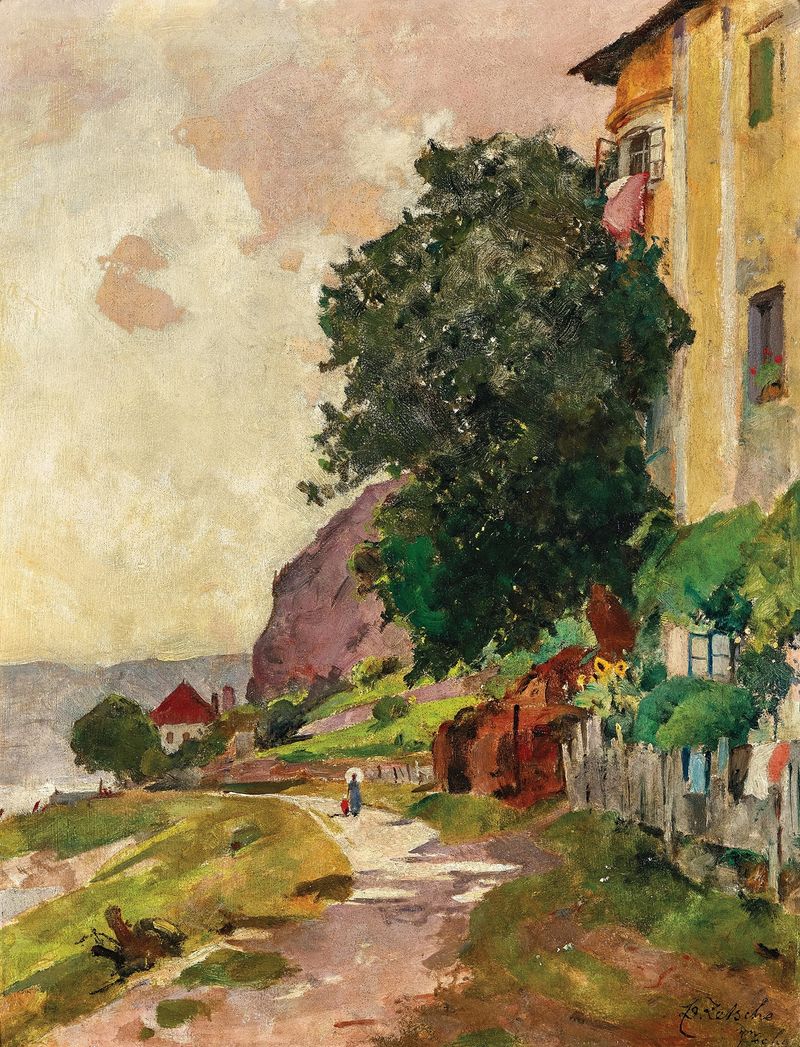
Beim Förthof, Ramsau
Eduard Zetsche
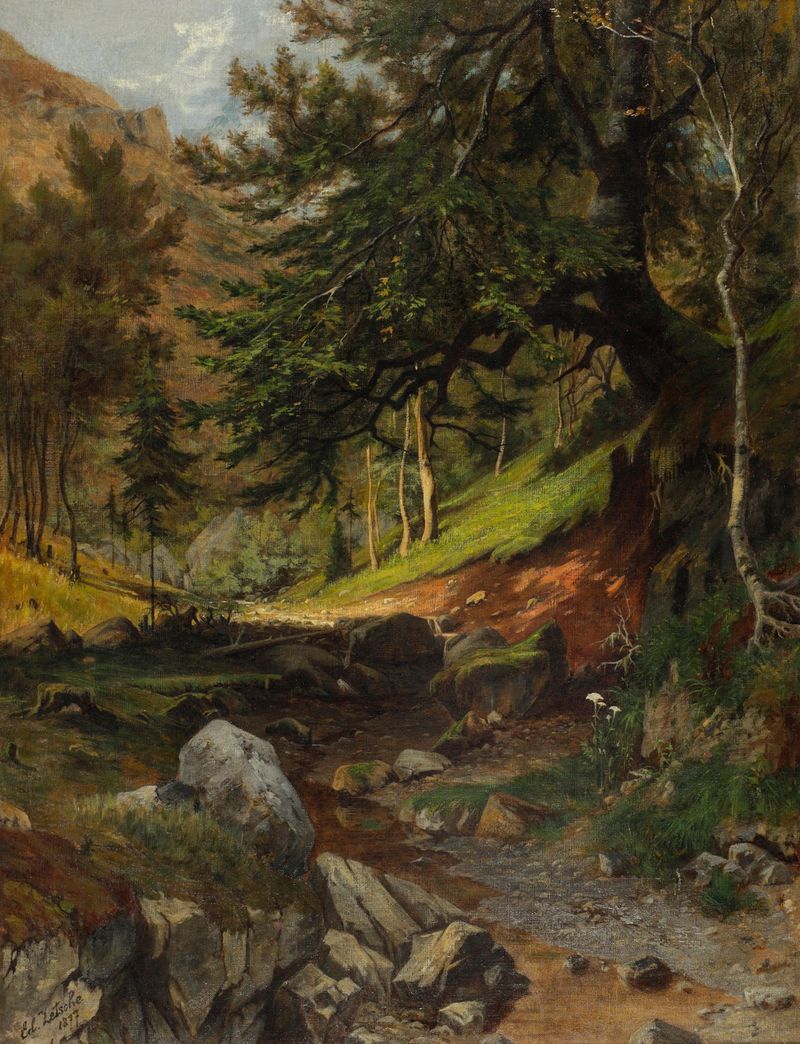
Waldpartie mit Bachlauf
Eduard Zetsche
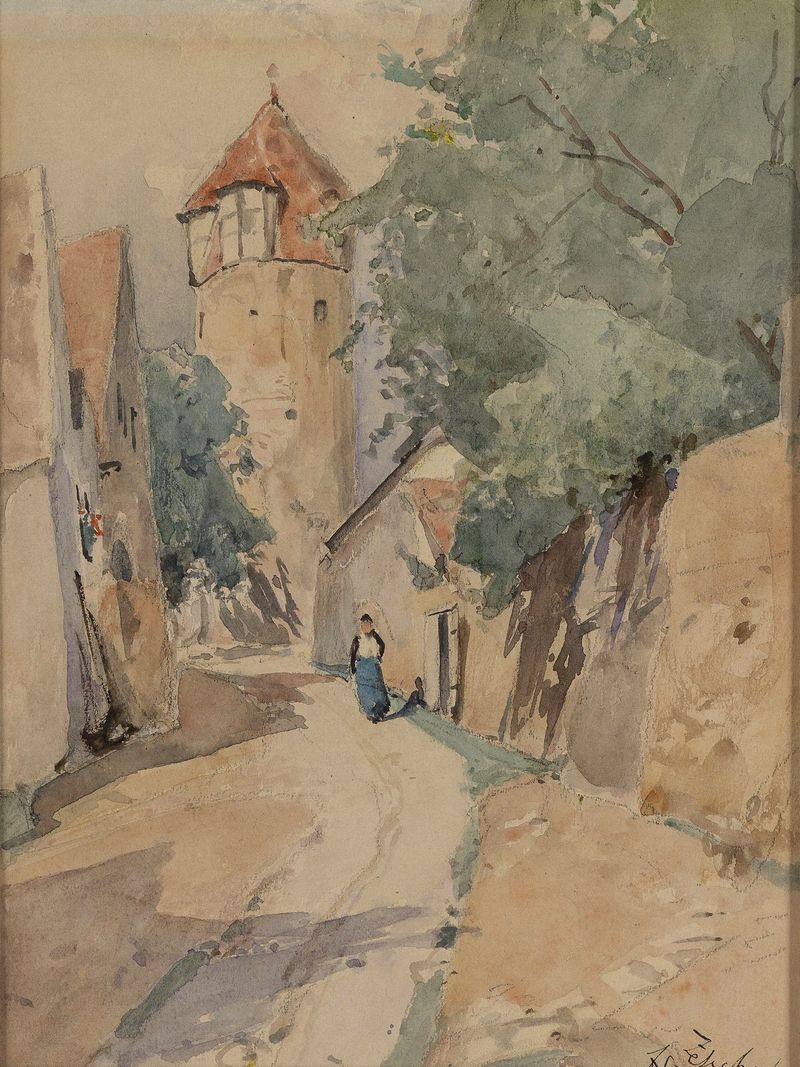
Sulzbach
Eduard Zetsche

Praterpartie
Eduard Zetsche
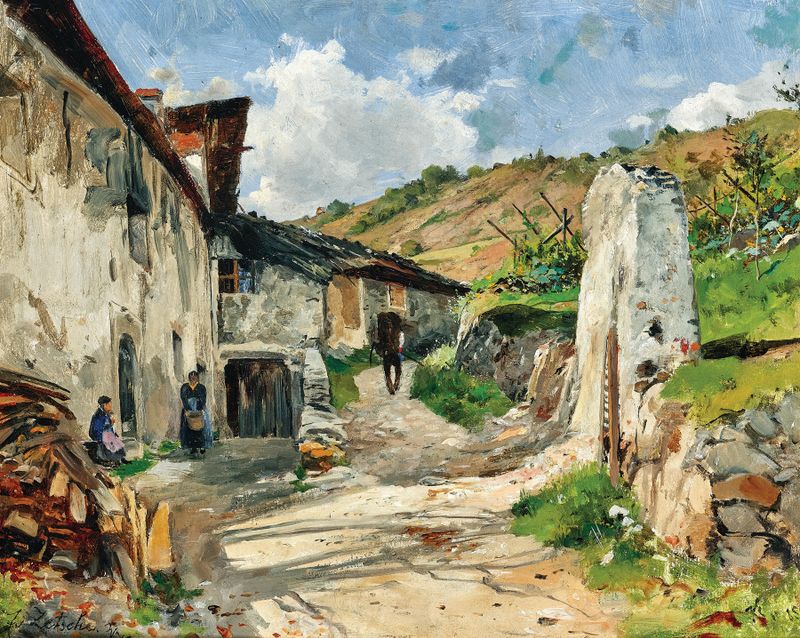
Wachau region, a path to a vineyard near a village
Eduard Zetsche

Motiv bei Lichtenwörth
Eduard Zetsche
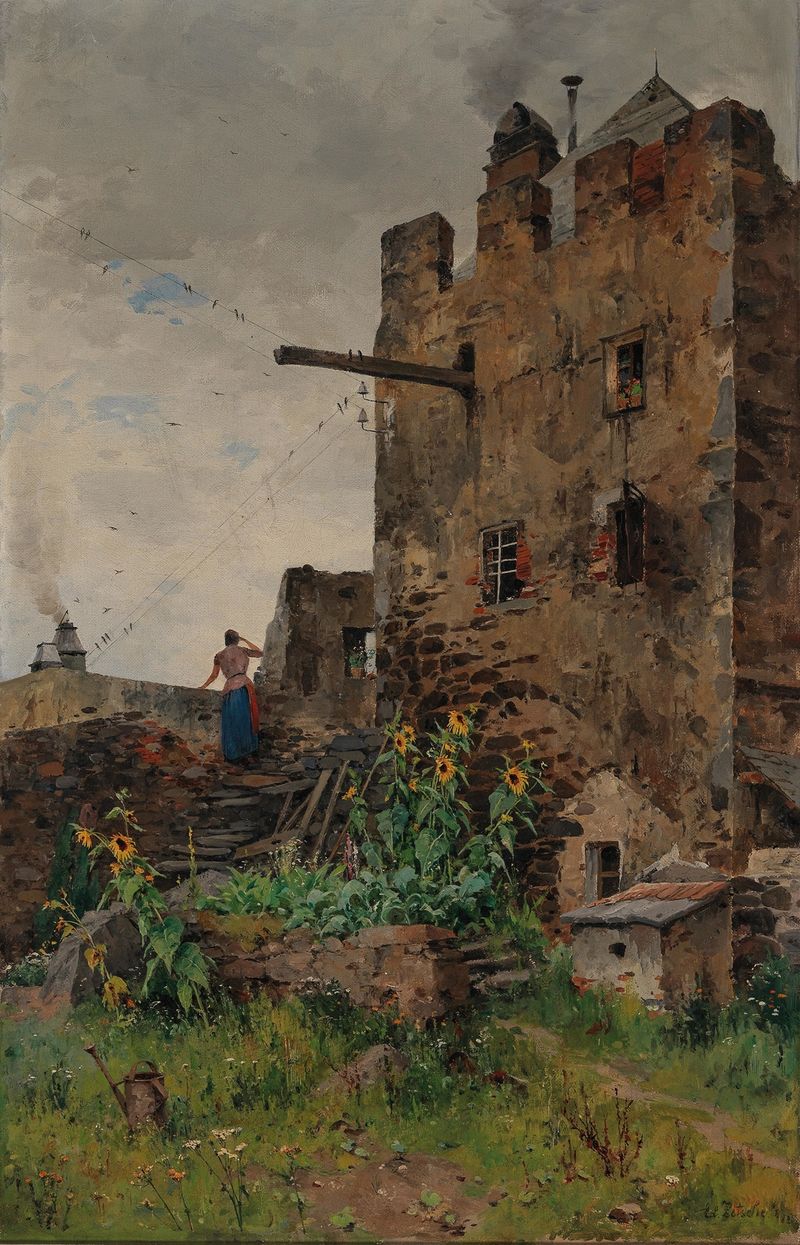
Wachau, Scene of Dürnstein, by the Old Town Wall
Eduard Zetsche





