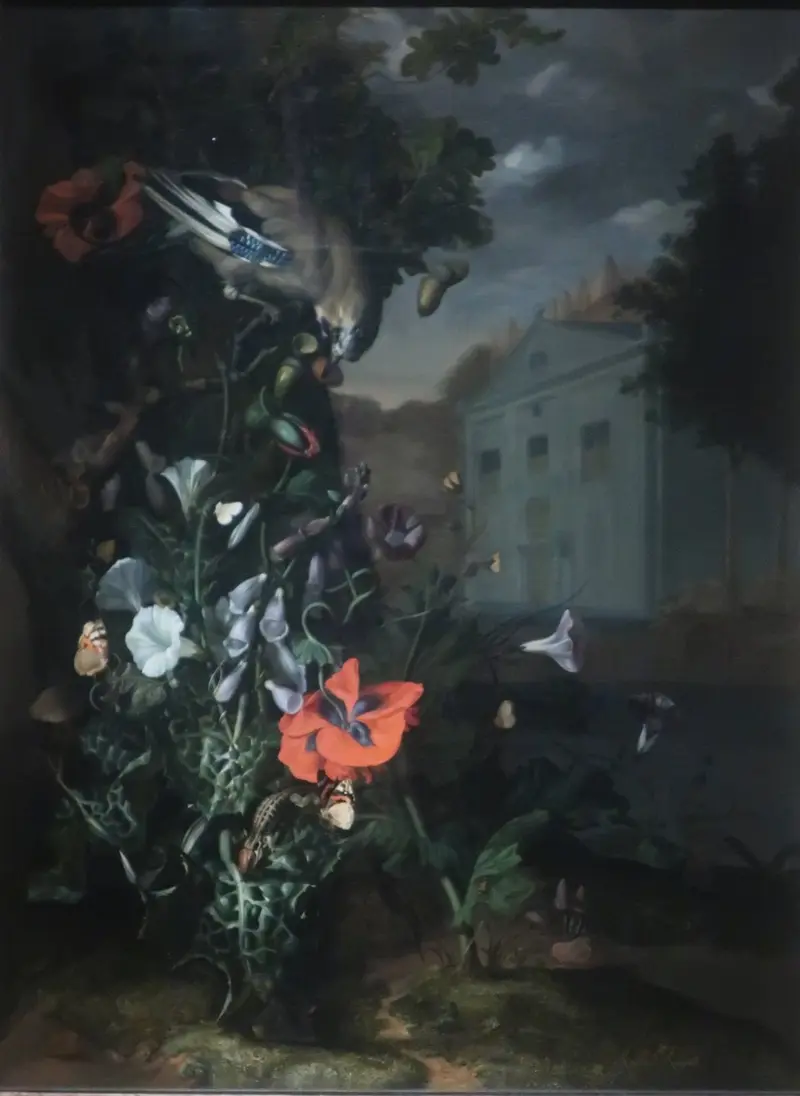
Rachel-Ruysch-National-Gallery-Ireland — History & Facts
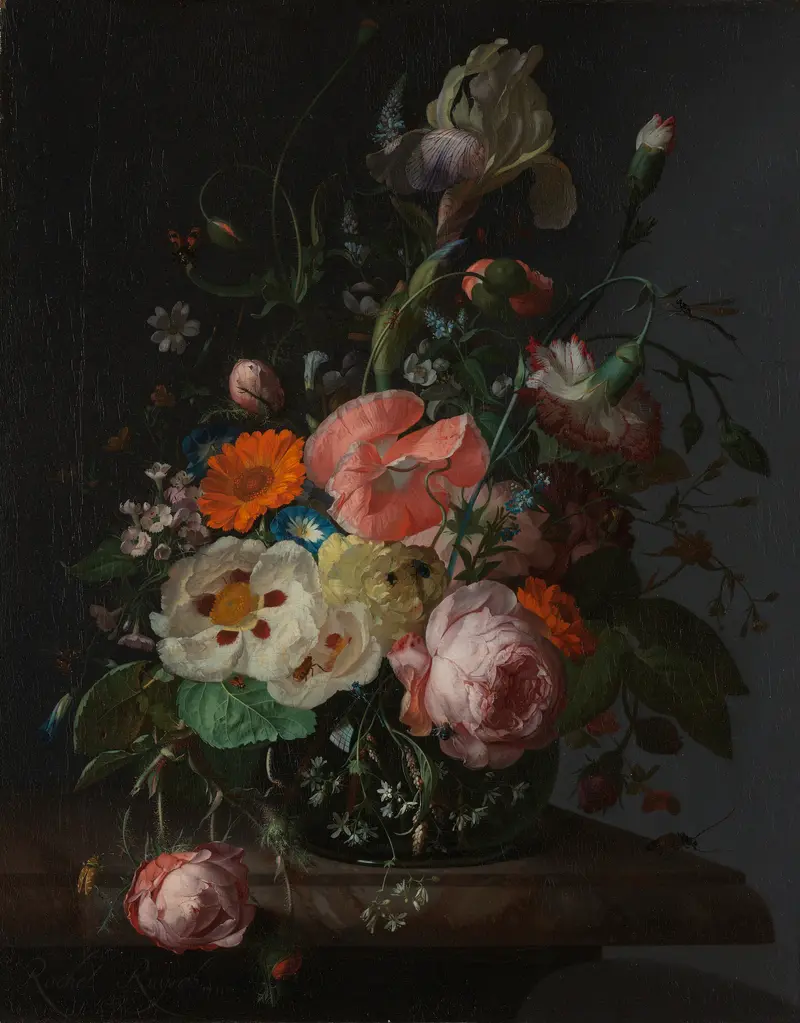
A single ear of corn, half-shucked and nestled among roses and tulips, catches the eye and unsettles the usual order of a floral painting. In Vase of flowers, Rachel Ruysch invites viewers to linger over the unexpected: petals edged with decay, a curling leaf, the glint of a corn kernel. Each element is rendered with such clarity that the bouquet seems to pulse with life, yet the shadows and the cool, controlled light remind us of the fleeting nature of these blooms.
The arrangement is no casual gathering; every twist and overlap of stem and petal is a deliberate invitation to look closer, to notice the blue forget-me-nots peeking from beneath a rose, or the way a single petal droops, heavy with its own beauty. Painted in 1742, this work belongs to a tradition that flourished in the Dutch Golden Age and lingered into the eighteenth century, when still life was both a celebration of abundance and a meditation on impermanence. Such paintings were prized by collectors eager to display both their wealth and their taste for nature’s marvels, and artists like Ruysch—one of the few women to gain renown in her field—were celebrated for their technical skill and botanical knowledge. The presence of this painting in the National Gallery of Ireland today is a quiet testament to the enduring fascination with these lush, carefully observed bouquets, where every detail, down to the humble ear of corn, rewards a second look.