Das Künstlerehepaar Juriaen Pool und Rachel Ruysch mit Sohn, 1708– — History & Facts
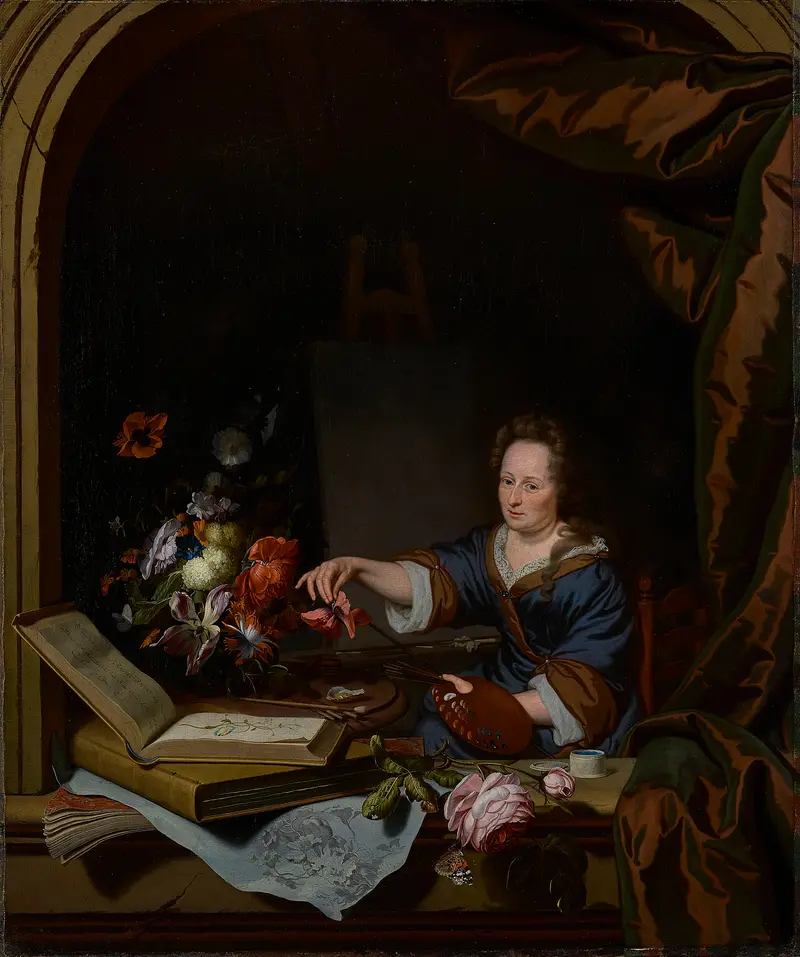
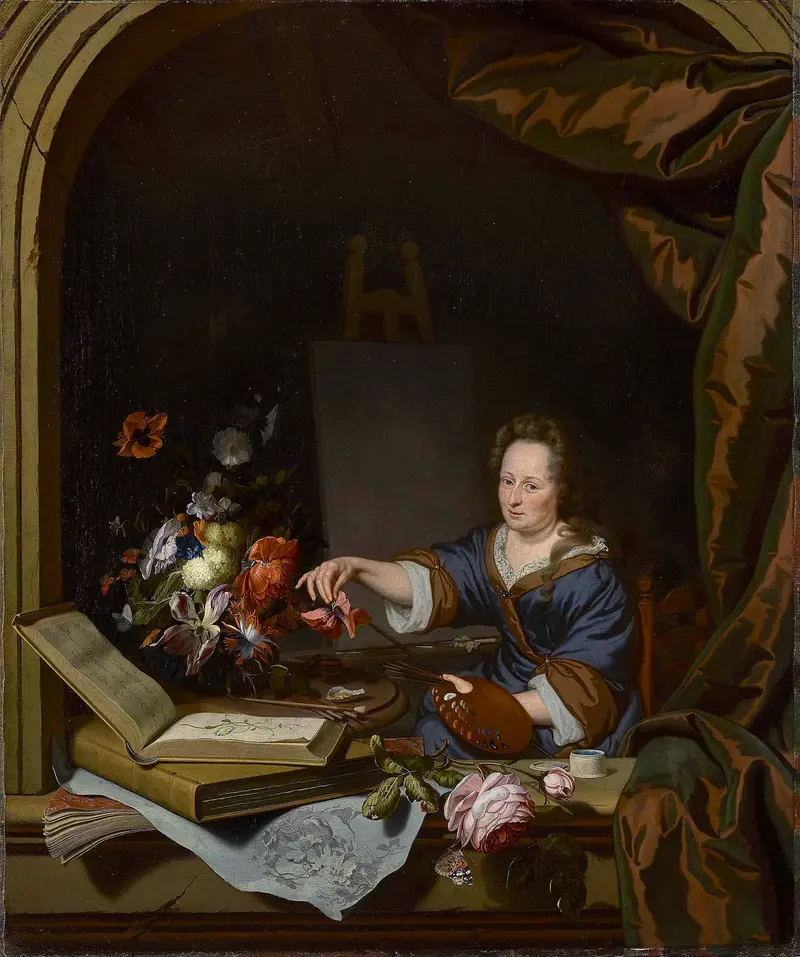
A quiet intimacy radiates from this family portrait, where the artist’s gaze lingers not on grandeur but on the bonds that hold three lives together. The light falls gently on Rachel Ruysch, her posture relaxed and her expression open, while her husband Juriaen Pool stands behind her, his hand resting with subtle pride. Their young son, seated on his mother’s lap, looks upward with a playful, trusting smile, clutching a painter’s palette—a gesture that hints at the creative legacy running through this household.
The lush bouquet to the left is no mere decoration: it is a nod to Rachel Ruysch’s celebrated skill as a painter of flowers, and perhaps her own hand shaped these blossoms on canvas and in life. The careful arrangement of figures and objects draws the viewer into a world where art and affection are inseparable. This painting belongs to the early eighteenth century, a time when portraiture served both as a record and a declaration of identity for artists and their families. Unlike the formal, distant poses of aristocratic sitters, here the mood is one of domestic ease and mutual respect—a reflection of the growing status of artists as both craftsmen and intellectuals.
Rachel Ruysch, famed for her botanical still lifes and recognized as court painter in 1708, appears at home among the tools and symbols of her trade. The work’s origin in the collection of Schloss Benrath, dated around 1716, roots it in a period when family portraits were cherished tokens of legacy and ambition. Look again at the interplay of glances and hands: this is a portrait not only of faces, but of the quiet conversation between generations.