
Rachel Ruysch in her studio — History & Facts
A shaft of light falls across the table, catching the delicate veins of petals and the glint of a glass vase, but it is the artist’s poised hand that commands attention. In this imagined moment, Rachel Ruysch sits amidst the lush evidence of her craft, her gaze steady and direct, as if inviting the viewer to witness the transformation of nature into art. The open sketchbook, scattered blossoms, and painter’s tools are not just props—they are clues to a mind at work, a studio alive with observation and invention.
Everything here is arranged for the eye’s delight: the velvet drape frames the scene, the flowers tumble toward us, and the unfinished canvas hints at ongoing creation. Painted in 1692, this work belongs to the world of the Dutch Golden Age, when still life painting flourished and artists like Ruysch were celebrated for their technical skill and botanical knowledge. Women painters were rare, but Ruysch’s reputation for intricate, lifelike bouquets earned her commissions from courts and collectors alike. Paintings like this one were prized for their ability to capture fleeting beauty and for the quiet drama of their surfaces—a single petal, a glistening drop of water, a butterfly poised for flight.
History has kept few traces of this specific painting’s early journey, but today it resides in the collection of the Metropolitan Museum of Art, where it continues to reward close looking and curiosity about the world it so carefully observes.
More Artworks by Rachel Ruysch
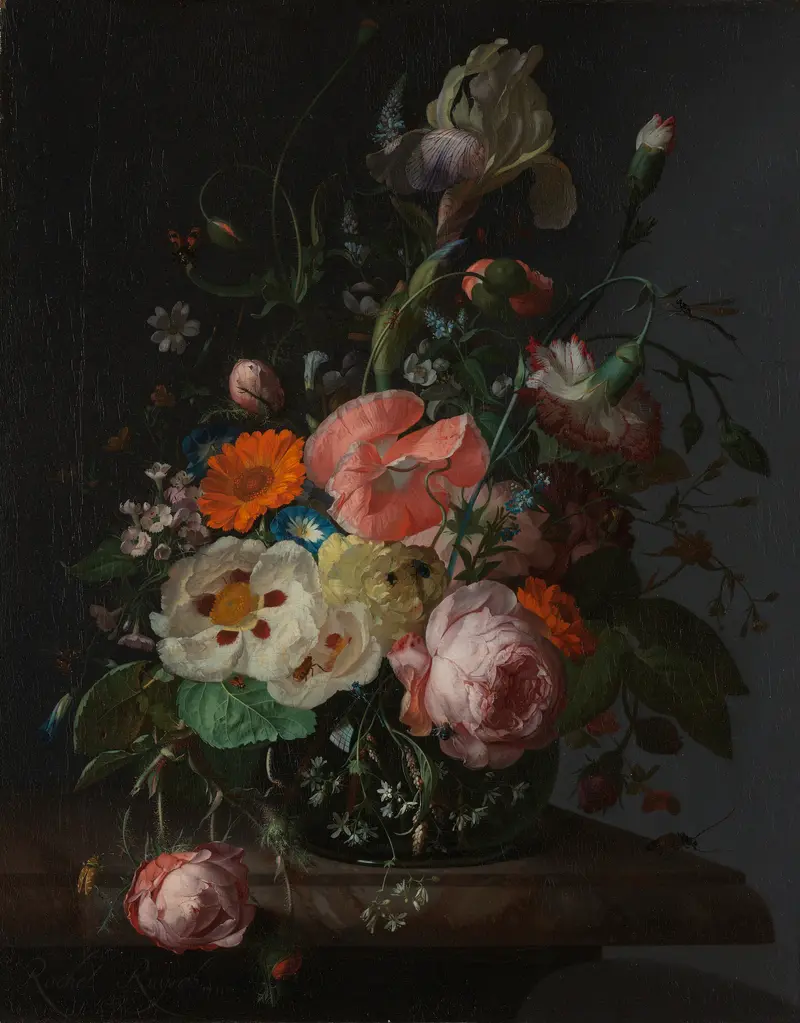
Still Life with Flowers on a Marble Tabletop
Rachel Ruysch
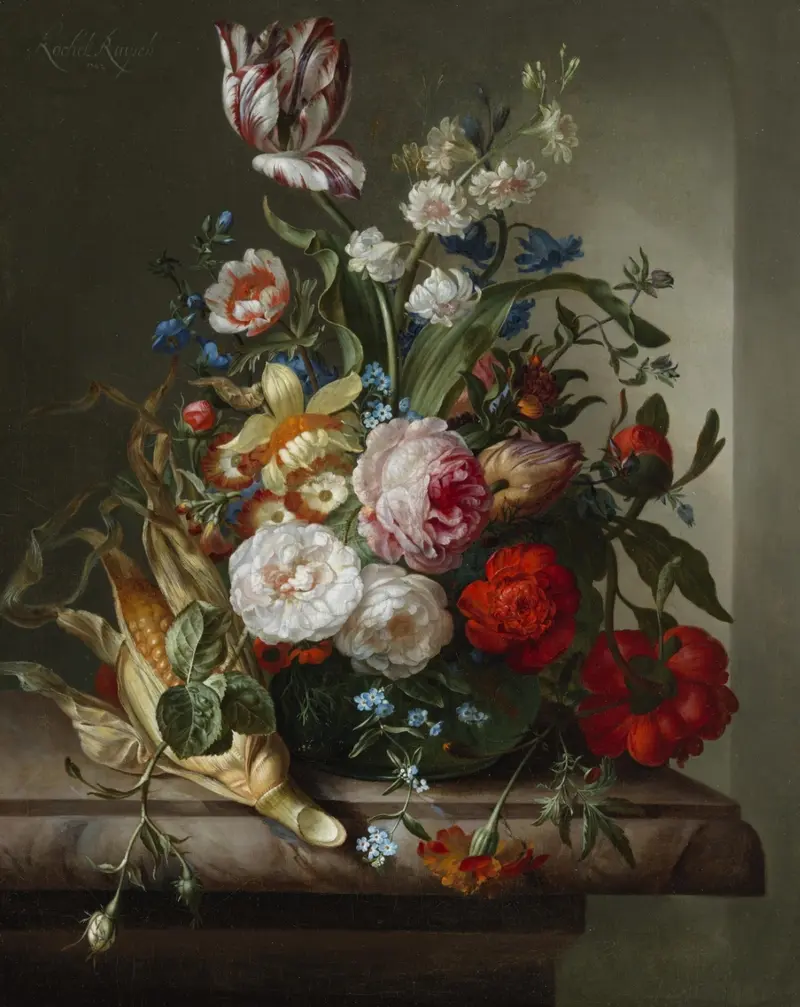
Rachel-Ruysch-National-Gallery-Ireland
Rachel Ruysch
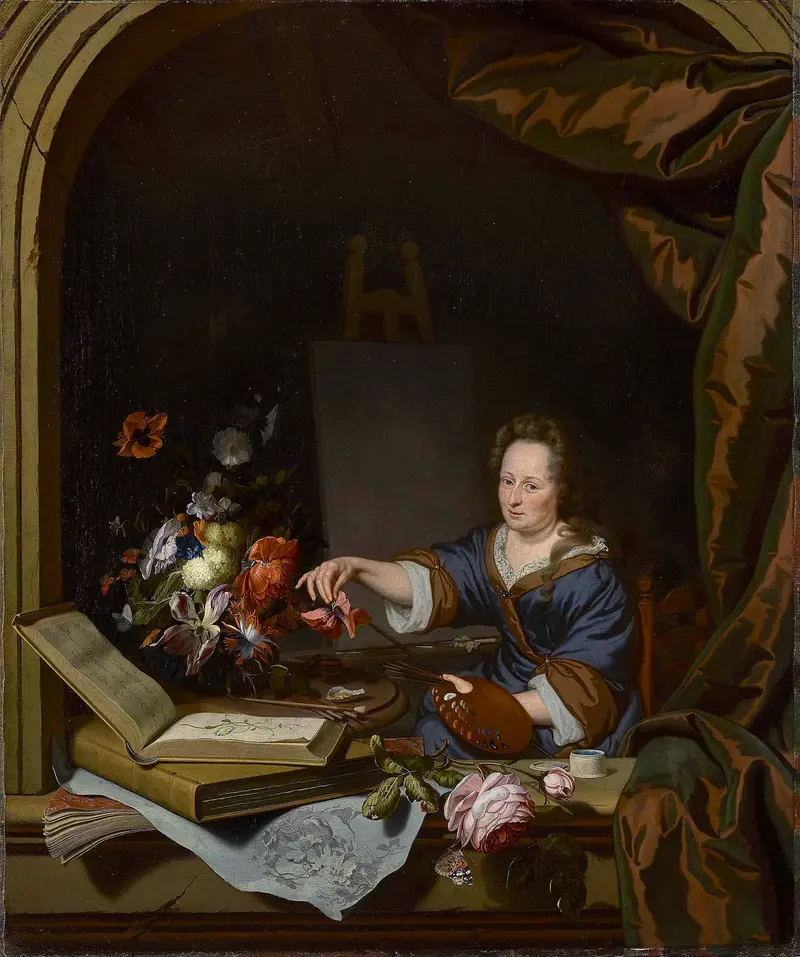
Rachel Ruysch (1664–1750)
Rachel Ruysch
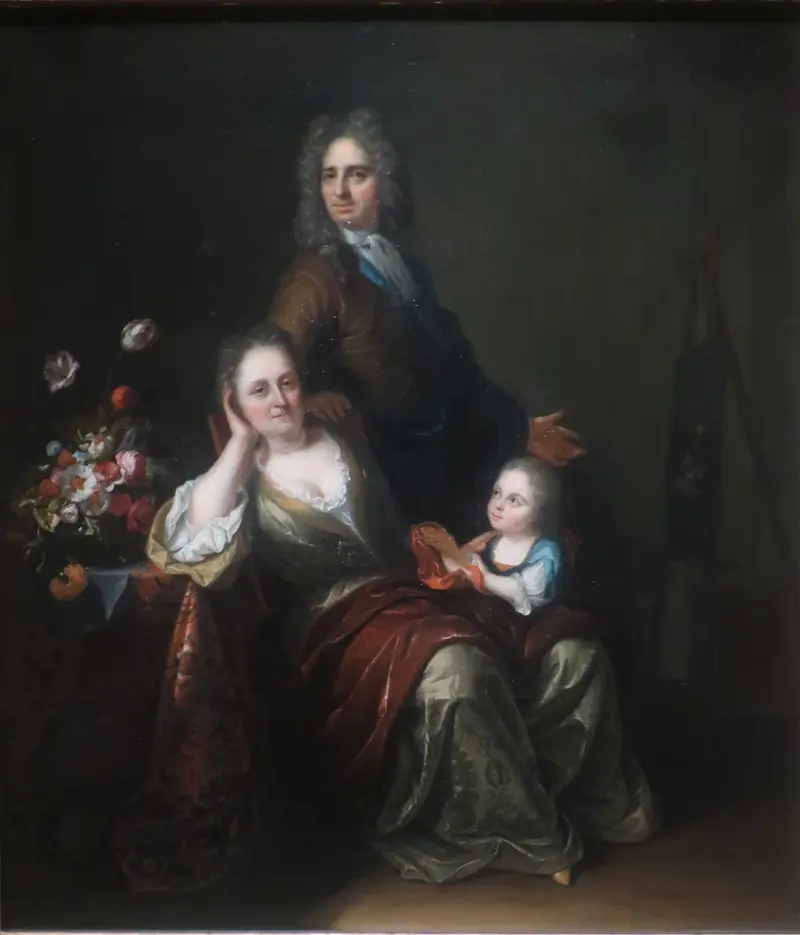
Das Künstlerehepaar Juriaen Pool und Rachel Ruysch mit Sohn, 1708–
Rachel Ruysch
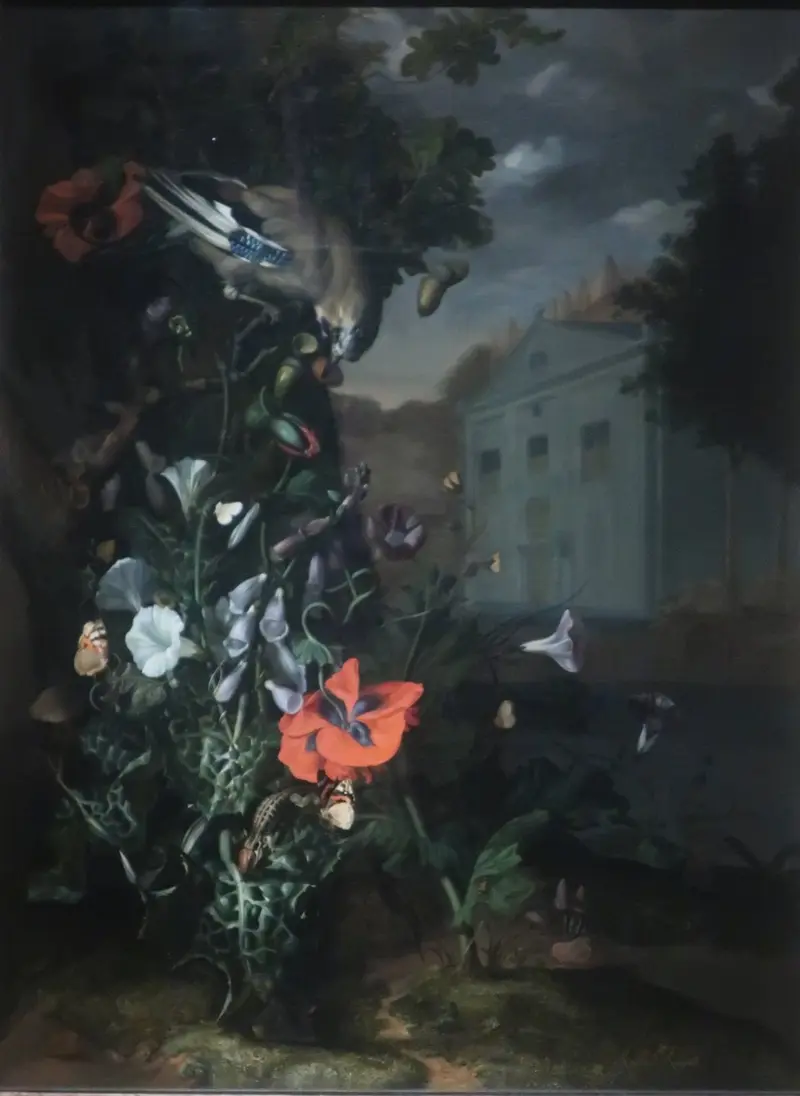
Forest Floor with a Classical Façade Beyond by Rachel Ruysch, c.
Rachel Ruysch



