
Rachel Ruysch (1664–1750) — History & Facts
A woman pauses mid-gesture, her hand hovering delicately over a lush bouquet, as if caught in the act of translating nature’s fleeting beauty to canvas. The open sketchbook and scattered blossoms draw the viewer into her process, inviting us to witness both the labor and the intimacy of creation. Light glances off the folds of her blue gown and the soft petals, while the shadowed background frames her concentration, making the studio itself feel like a stage.
Every object on the table — the palette, brushes, and botanical studies — is arranged not just for realism but to narrate the artist’s dual mastery of observation and invention. The parted curtain at the right suggests both privacy and revelation, as if we are privileged to glimpse a world usually hidden. This painting belongs to the late seventeenth-century Dutch tradition, when artists like Rachel Ruysch were celebrated for their technical brilliance and their ability to elevate still life into a genre of intellectual and sensory delight. In 1692, the year given for this work, the Dutch Republic was a center of scientific curiosity and artistic innovation, and flower painting was both a fashionable pursuit and a testament to the era’s fascination with nature’s order and variety.
Women artists, though rare, found recognition in this world, and Ruysch’s reputation for botanical accuracy and luminous color made her a sought-after figure among collectors. Today, the painting resides in the Metropolitan Museum in New York, a reminder of how the quiet drama of the studio could rival any grand historical scene — and how a single moment of creation can still hold us in its spell.
More Artworks by Rachel Ruysch
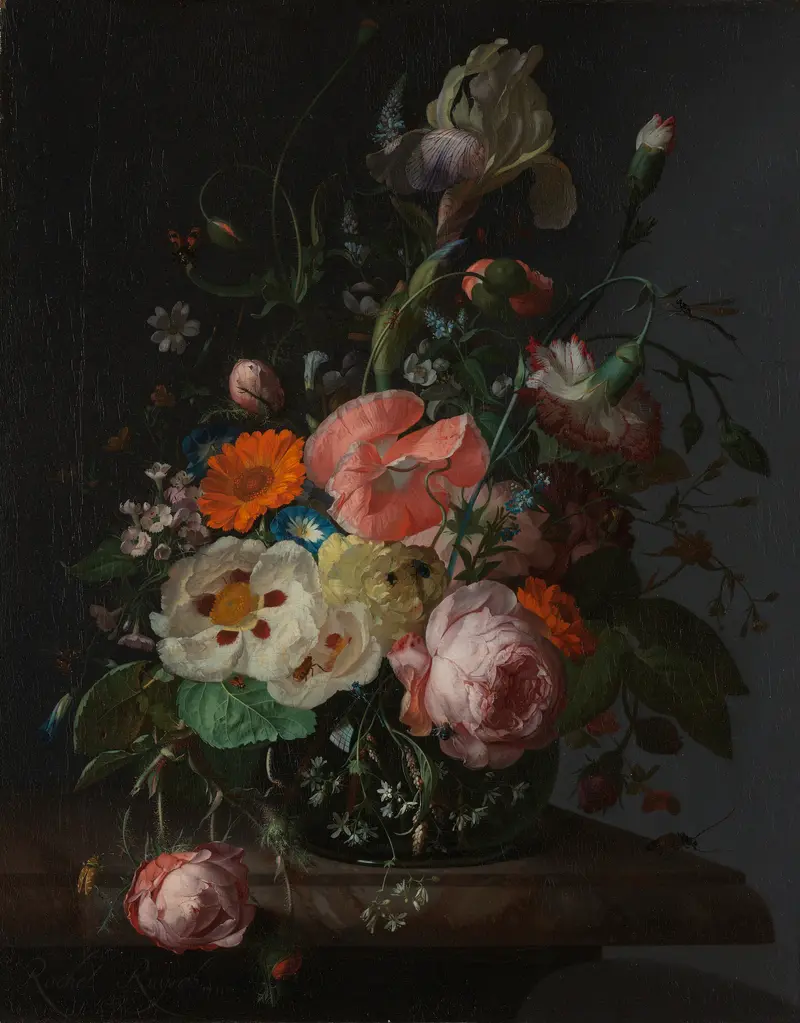
Still Life with Flowers on a Marble Tabletop
Rachel Ruysch
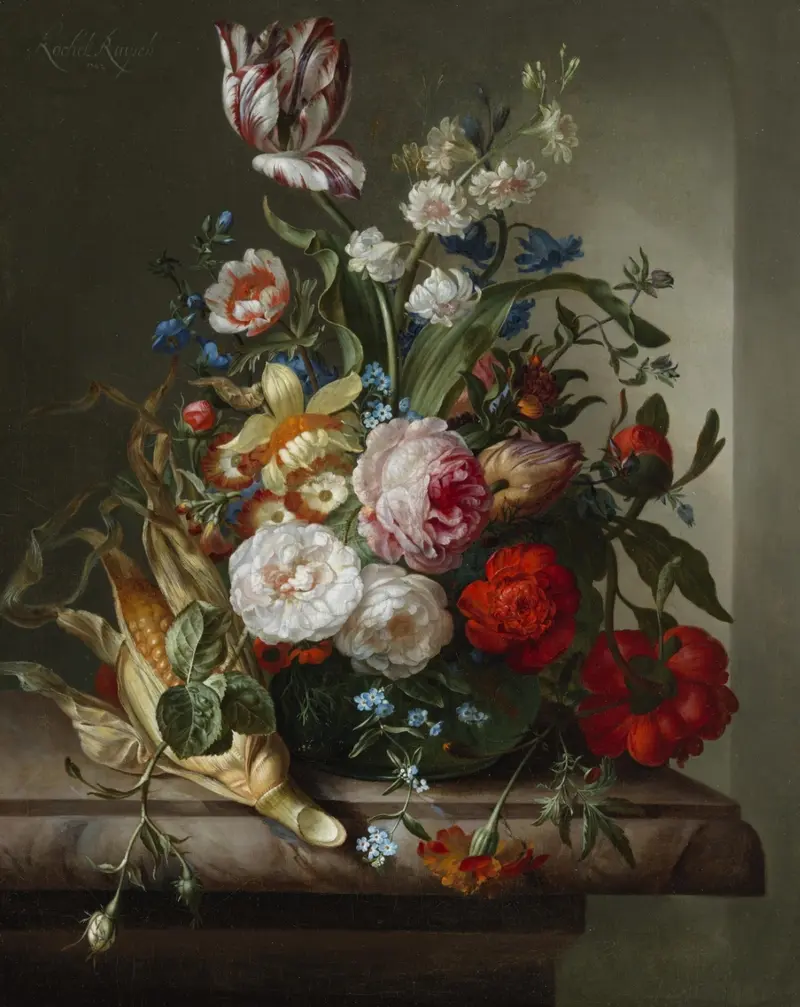
Rachel-Ruysch-National-Gallery-Ireland
Rachel Ruysch
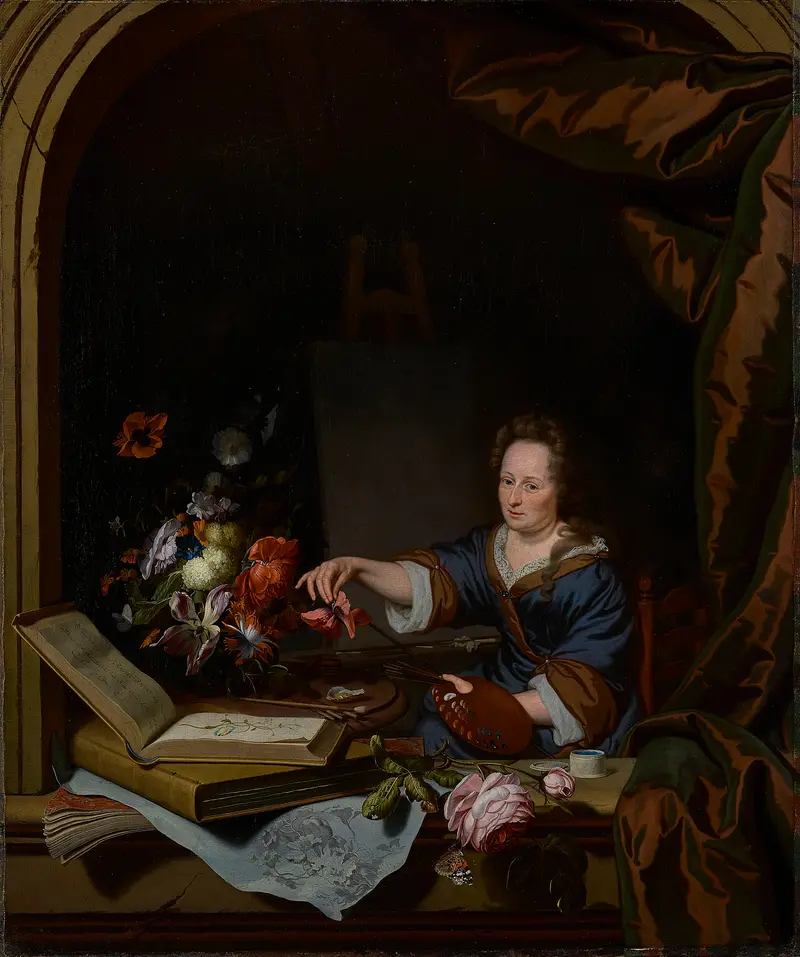
Rachel Ruysch in her studio
Rachel Ruysch
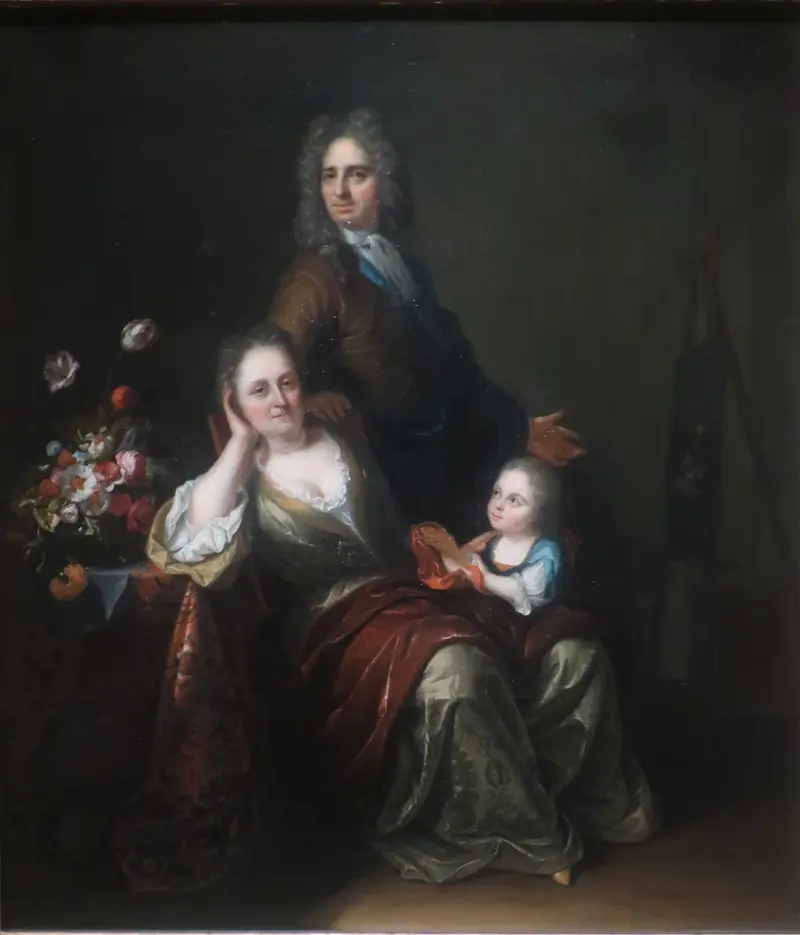
Das Künstlerehepaar Juriaen Pool und Rachel Ruysch mit Sohn, 1708–
Rachel Ruysch
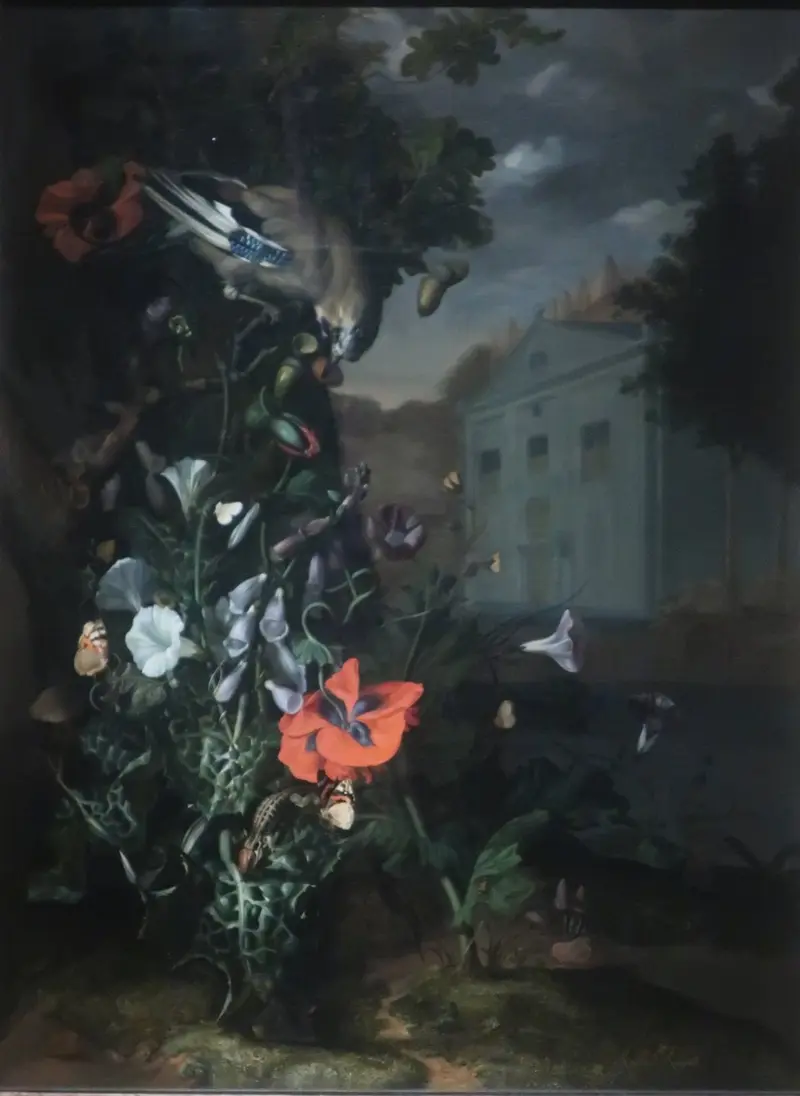
Forest Floor with a Classical Façade Beyond by Rachel Ruysch, c.
Rachel Ruysch



