
Récréation Des Prisonniers À Saint-Lazare; La Partie De Ballon — History & Facts
In the embrace of leisure, one can find the shadow of mortality lurking beneath the surface. The essence of human fragility reveals itself in the delicate balance between fleeting joy and the inevitable end that awaits us all. Look to the center of Récréation Des Prisonniers À Saint-Lazare; La Partie De Ballon and notice the vibrant, sunlit scene where prisoners engage in a spirited game of ball. The juxtaposition of their carefree gestures against the somber backdrop of the prison reflects a tension that is both jubilant and poignant.
The rich colors and dynamic composition invite the viewer's eye to dance among the figures, while the soft, golden light bathes the scene in an almost ethereal glow, enhancing the contrast between the lightness of play and the weight of their confinement. Delve deeper into the painting and observe the subtle expressions on the men's faces—some exhibit joy, while others hint at an undercurrent of longing or despair. The presence of lush greenery surrounding the courtyard serves as a reminder of the beauty of life outside prison walls, starkly juxtaposing the confines of their reality. This duality encapsulates the ephemeral nature of happiness, highlighting how moments of levity can coexist with the burdens of existence and the specter of mortality. In 1794, when this work emerged from the hands of Robert, the artist was navigating the complex socio-political landscape of post-revolutionary France.
Amidst the upheaval, the artist sought to capture the fleeting moments of joy and camaraderie that could still be found in oppressive circumstances. His choice to portray an ordinary yet poignant scene reflects a broader commentary on the human experience, echoing the era's struggles while celebrating the resilience of the spirit.
More Artworks by Hubert Robert
Browse all →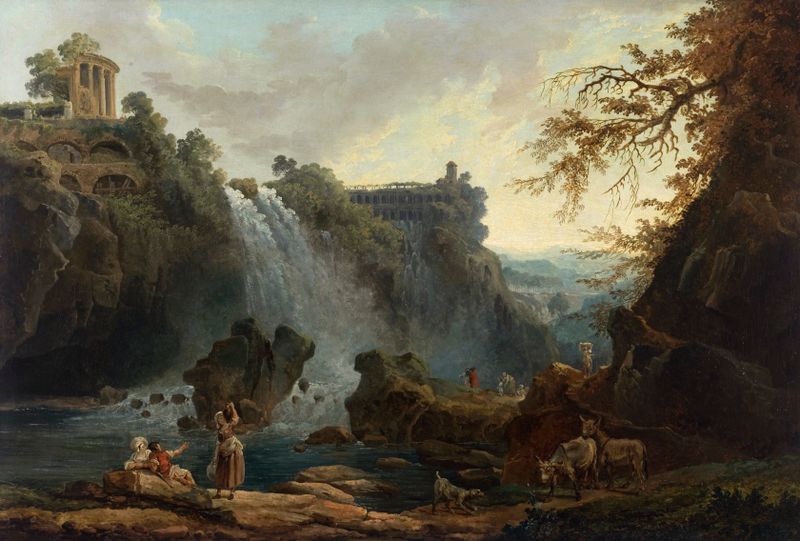
Les Cascatelles de Tivoli
Hubert Robert
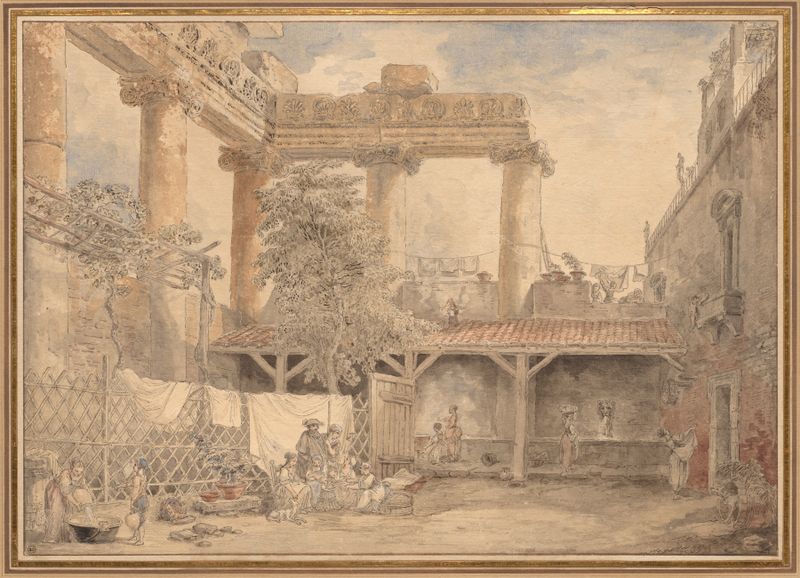
Roman Ruins, Villa Pamfili
Hubert Robert

The Rustic Bridge, Château de Méréville, France
Hubert Robert

The Portico of a Country Mansion
Hubert Robert

Architectural Capriccio
Hubert Robert

The Obelisk
Hubert Robert
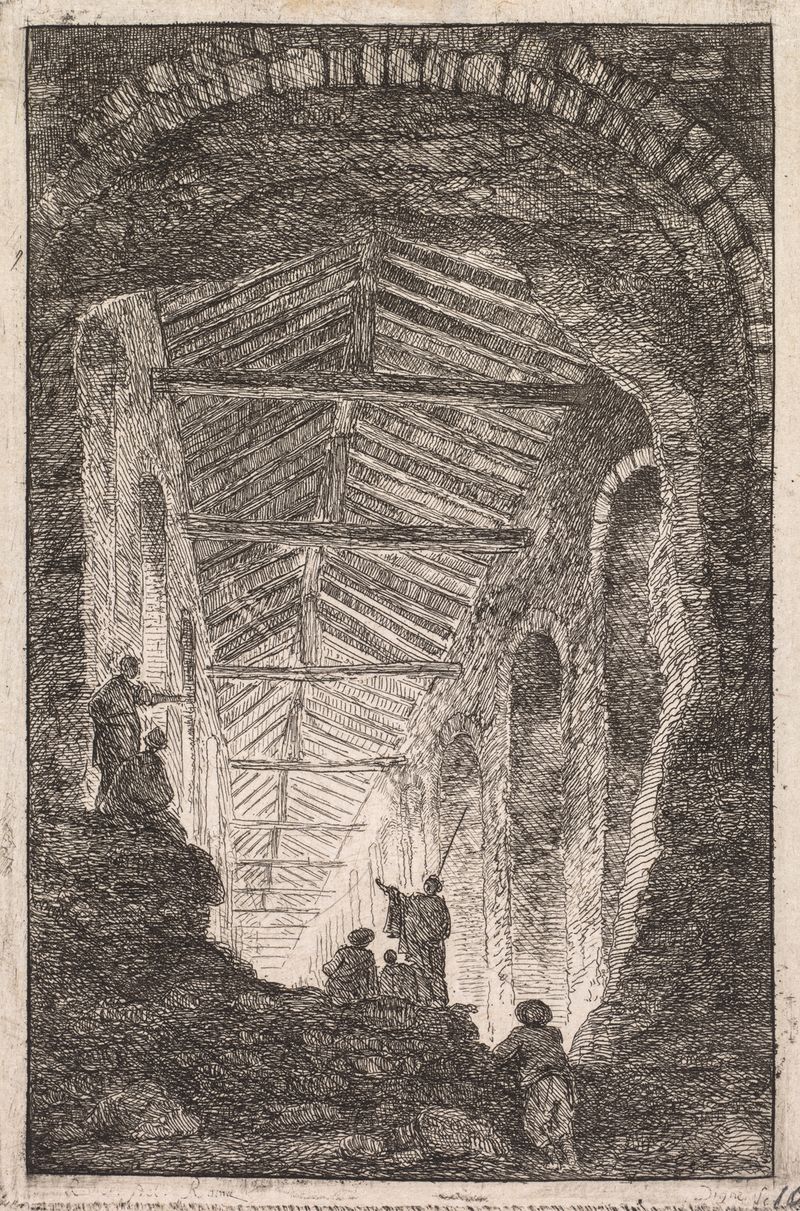
The Antique Gallery
Hubert Robert

L’incendie de l’Opéra, vu des jardins du Palais-Royal, le 8 juin 1781
Hubert Robert
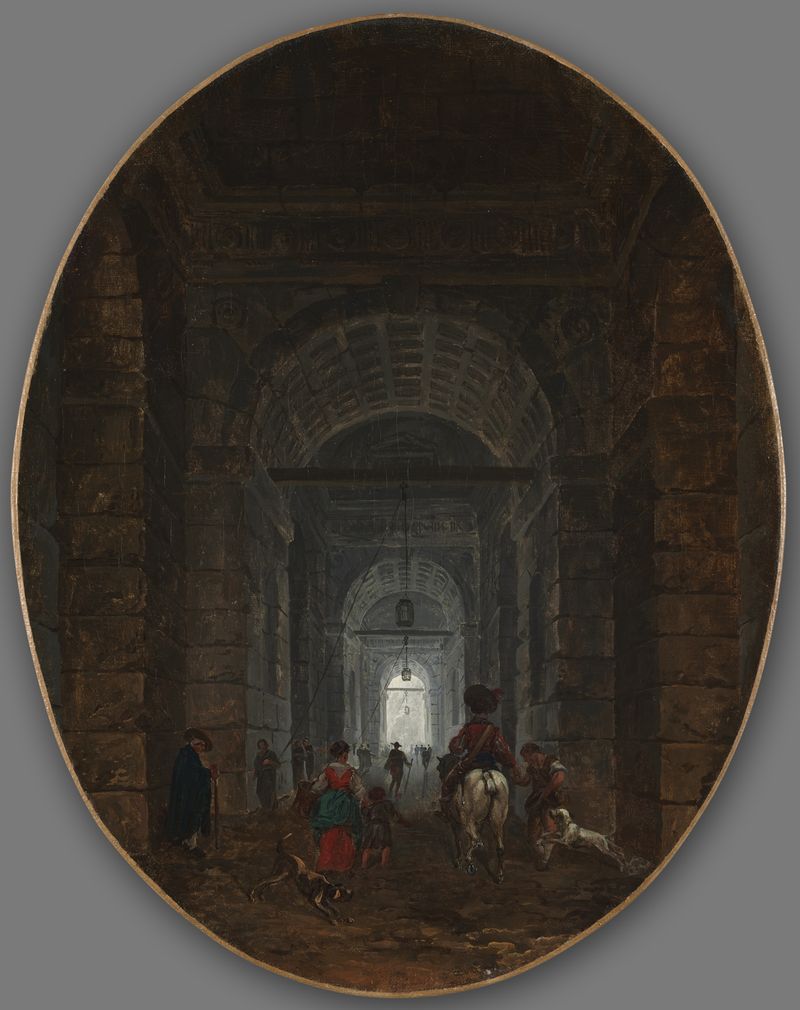
The Grotto of Posillipo
Hubert Robert

Architectural Capriccio with ruins of the Temple of Saturn and the Colosseum in the background
Hubert Robert





