
Red Bridge at Vernon — History & Facts
What secret hides in the quiet of the canvas? Beneath the vibrant strokes of blue and green, a world of dreams awaits, whispering stories only the heart can hear. Focus on the foreground, where the striking red bridge arcs gracefully over the serene water, its reflection rippling softly beneath. Notice how the light dances on the surface, illuminating the watercolor hues that blend seamlessly, creating a dreamlike atmosphere. The composition draws the eye along the bridge’s path, leading us into the lush landscape that envelops it, inviting exploration into the depth of nature's beauty. Yet, there is tension woven into this tranquility.
The bridge, a bold focal point, suggests connection and transition, while the surrounding trees loom in deep shadow, hinting at secrets that remain hidden. The contrast of warm reds against cool greens evokes a duality—between human endeavor and nature's enduring silence. Each brushstroke seems to breathe life into the scene, yet there’s an underlying sense of solitude, a longing for the unseen that lingers in the air. Theodore Earl Butler painted this work in 1909, while living in France, where he became deeply influenced by the Impressionists.
This period in his life was marked by profound artistic exploration and personal encounters, as he aimed to capture the poetic beauty of the landscapes around him. Against a backdrop of a rapidly changing art scene, Butler’s work sought to harmonize the vibrancy of color with the subtleties of nature, revealing the delicate balance between reality and imagination.
More Artworks by Theodore Earl Butler
Browse all →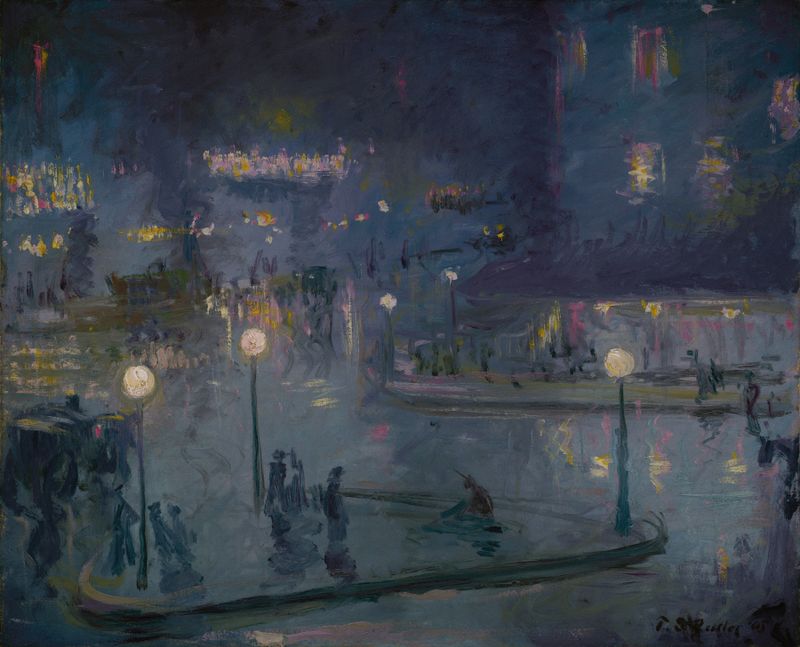
Place de Rome at Night
Theodore Earl Butler
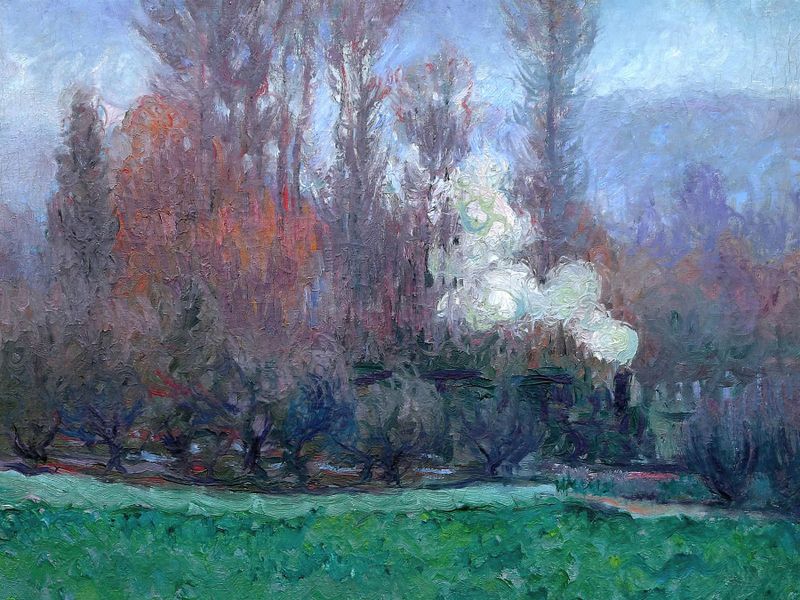
Le Train à Giverny
Theodore Earl Butler
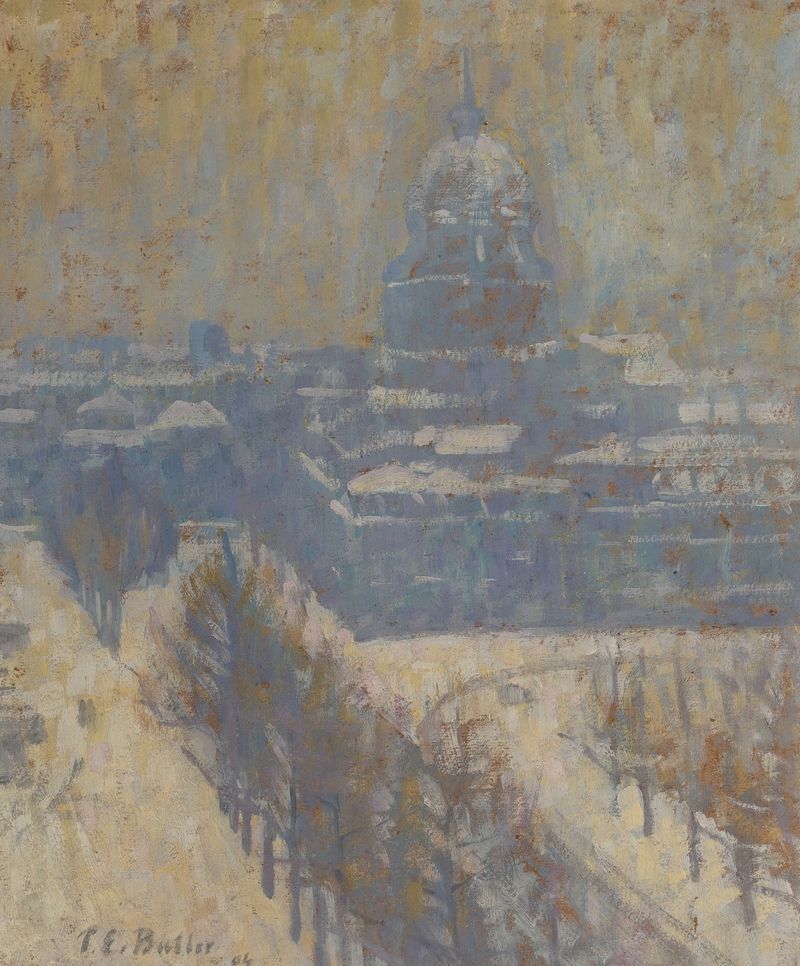
Les Invalides, Paris
Theodore Earl Butler
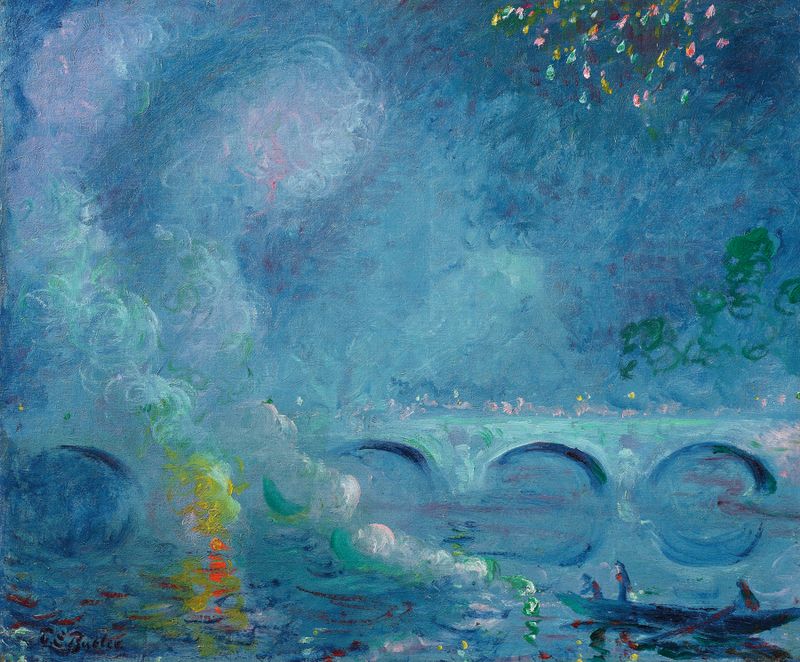
Fireworks, Vernon Bridge
Theodore Earl Butler

Flower Garden
Theodore Earl Butler
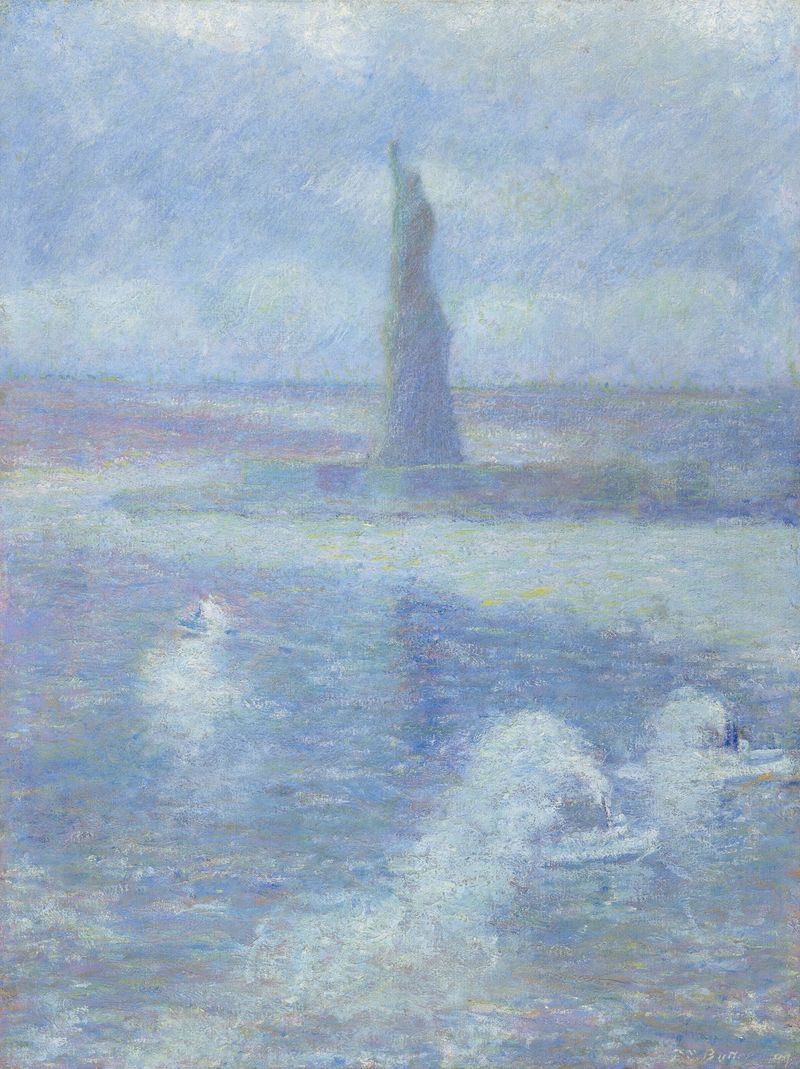
Statue of Liberty, N.Y. in Mist
Theodore Earl Butler
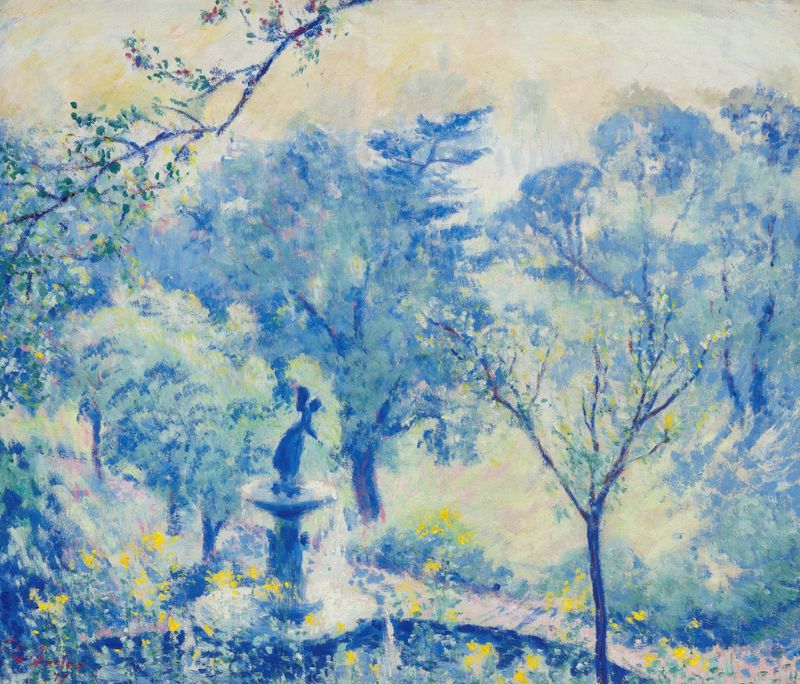
Bethesda Fountain, Central Park, New York
Theodore Earl Butler
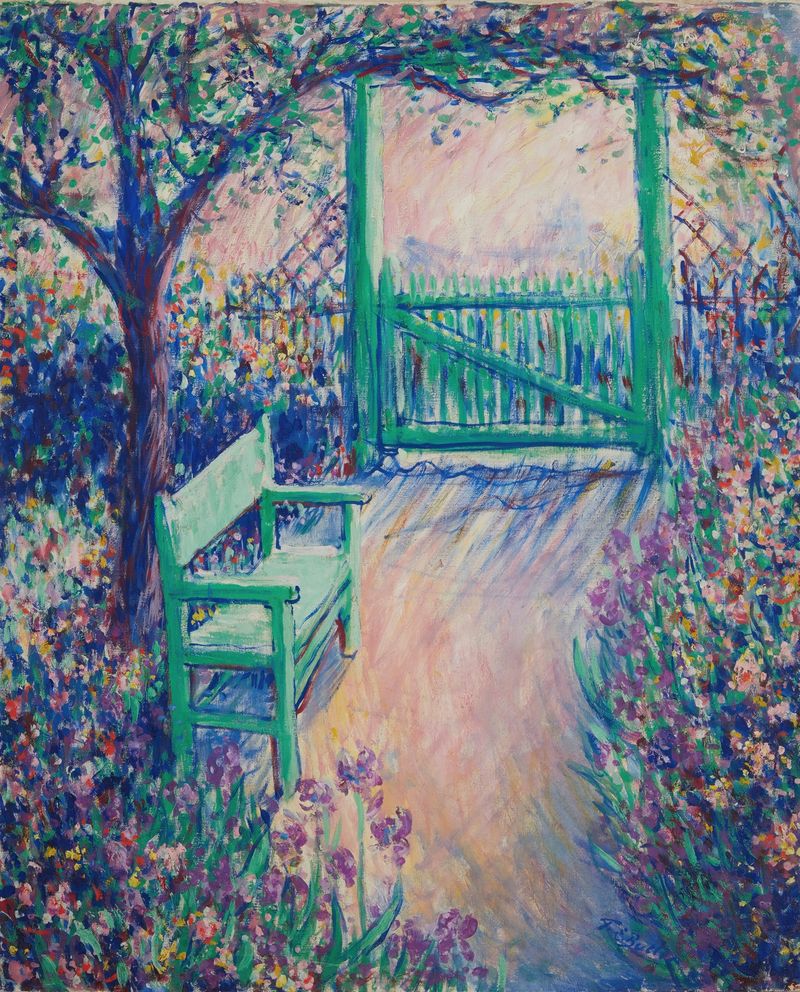
The Artist’s Garden (The Green Chair)
Theodore Earl Butler

Château-Gaillard, Les Andelys, on the Seine
Theodore Earl Butler

Les Déserts, Giverny
Theodore Earl Butler





