
Place de Rome at Night — History & Facts
Can beauty exist without sorrow? In Place de Rome at Night, a quiet tenderness mingles with an undercurrent of wistfulness, inviting reflection on the interplay of innocence and melancholy. Look to the left at the delicate glow of gas lamps, their warm light spilling onto the cobblestones below. Notice how the reflections shimmer in the wet pavement, creating a dance of light and shadow that brings the scene to life. The composition is masterfully balanced, with the silhouettes of trees framing the square, while a gentle haze envelops the distant buildings.
The palette of blues and yellows evokes a serene twilight, imbued with a sense of longing and nostalgia. The emotional tension in this piece lies in its juxtaposition of tranquility and potential unease. The empty square speaks of solitude, yet the soft illumination hints at lives lived, stories shared. Each brushstroke captures fleeting moments of innocence, suggesting that beauty is often interwoven with a subtle sadness—a reminder of what was and what might never return. During the summer of 1905, Theodore Earl Butler painted this work in the vibrant artistic atmosphere of Paris.
At that time, he was influenced by the Impressionist movement and its focus on capturing light and atmosphere. Butler, an American expatriate, was establishing his identity while navigating a world of innovation and change in the realm of art. The city around him buzzed with creativity, and in this painting, he distilled an intimate moment that resonates with the heart's quiet yearnings.
More Artworks by Theodore Earl Butler
Browse all →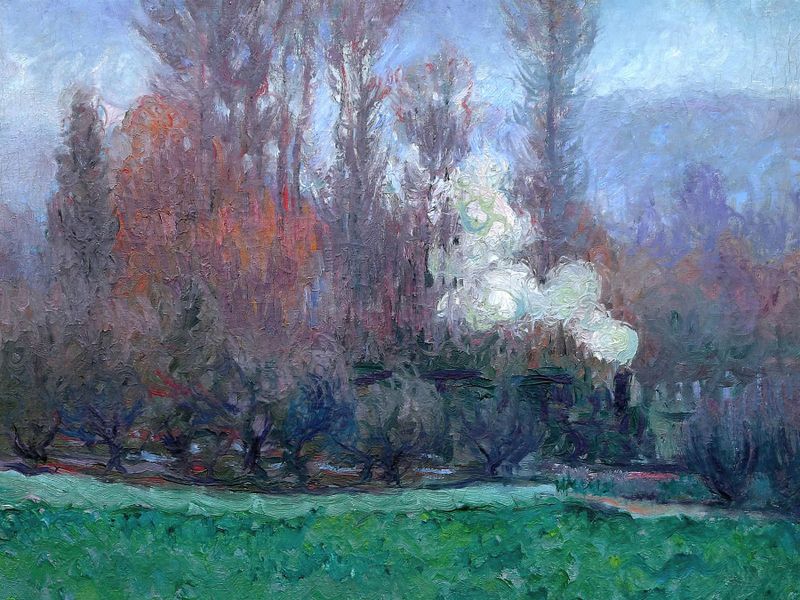
Le Train à Giverny
Theodore Earl Butler
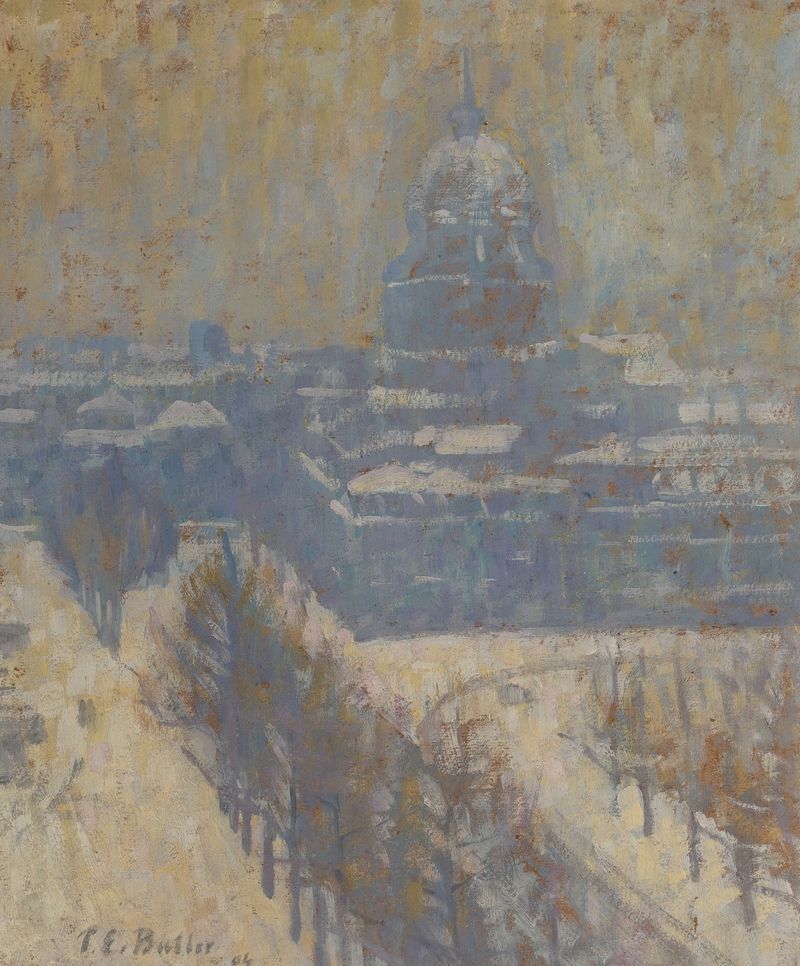
Les Invalides, Paris
Theodore Earl Butler
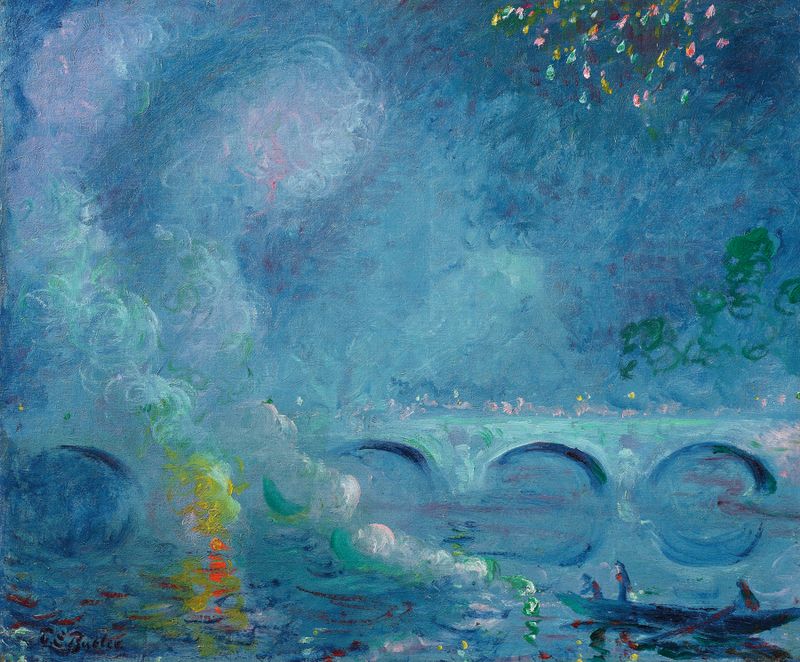
Fireworks, Vernon Bridge
Theodore Earl Butler

Flower Garden
Theodore Earl Butler
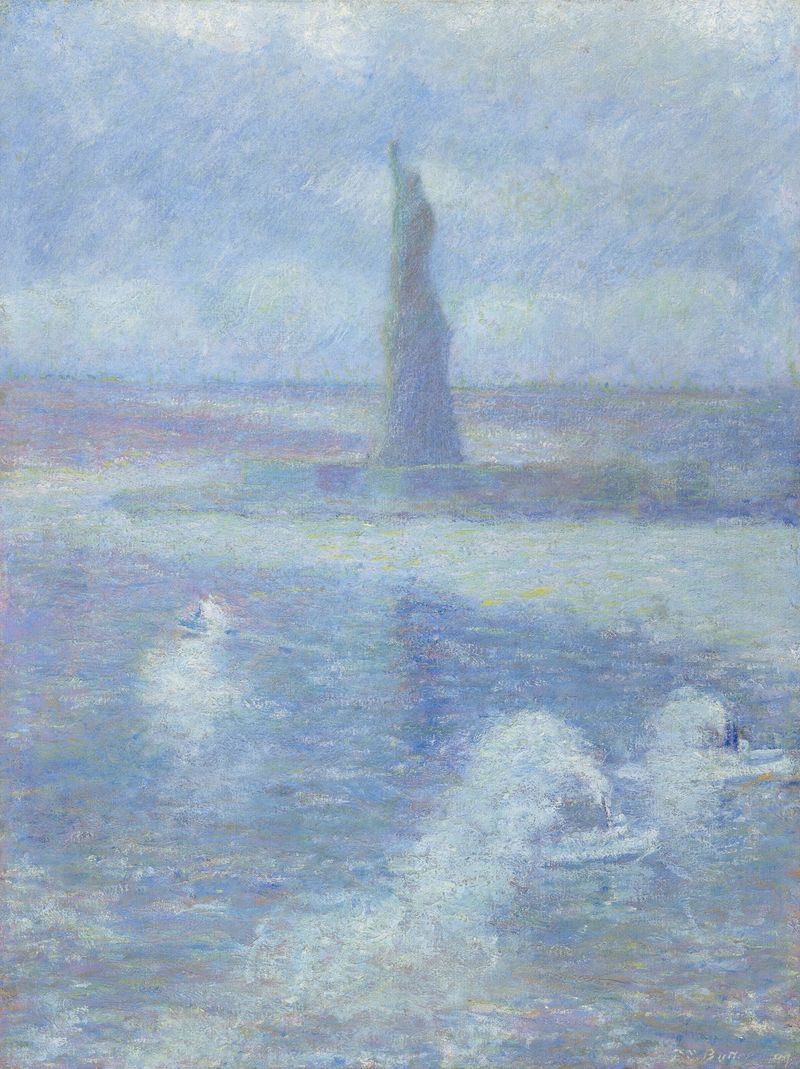
Statue of Liberty, N.Y. in Mist
Theodore Earl Butler
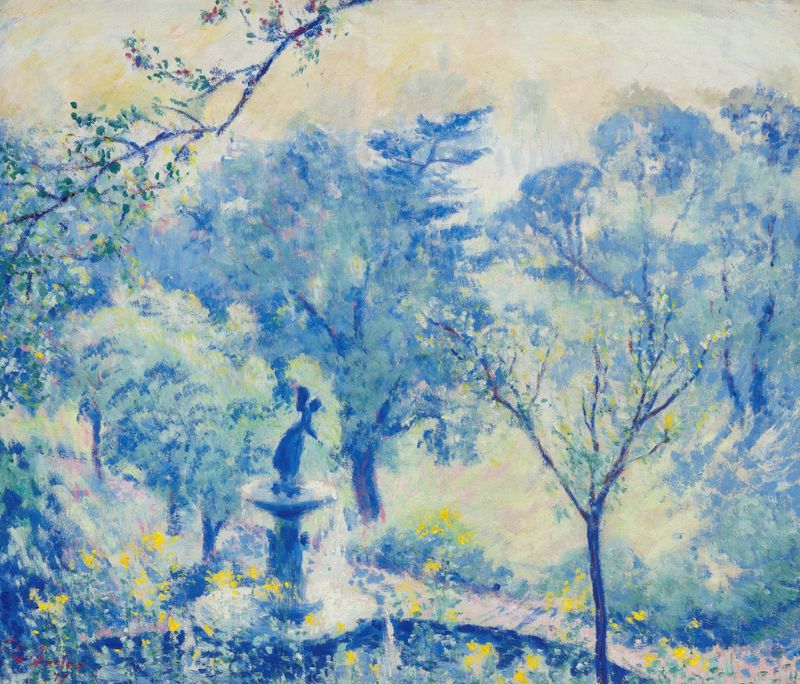
Bethesda Fountain, Central Park, New York
Theodore Earl Butler
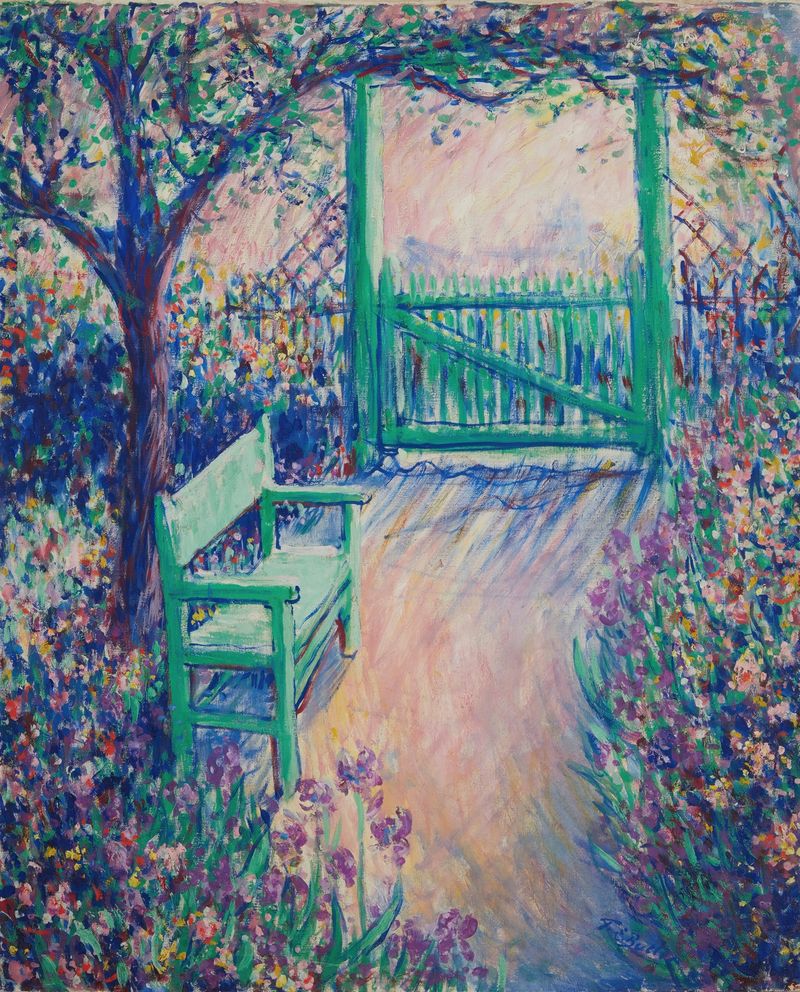
The Artist’s Garden (The Green Chair)
Theodore Earl Butler

Château-Gaillard, Les Andelys, on the Seine
Theodore Earl Butler

Les Déserts, Giverny
Theodore Earl Butler

Le Port de New York
Theodore Earl Butler





