Redgreen and Violet-Yellow Rhythms — History & Facts
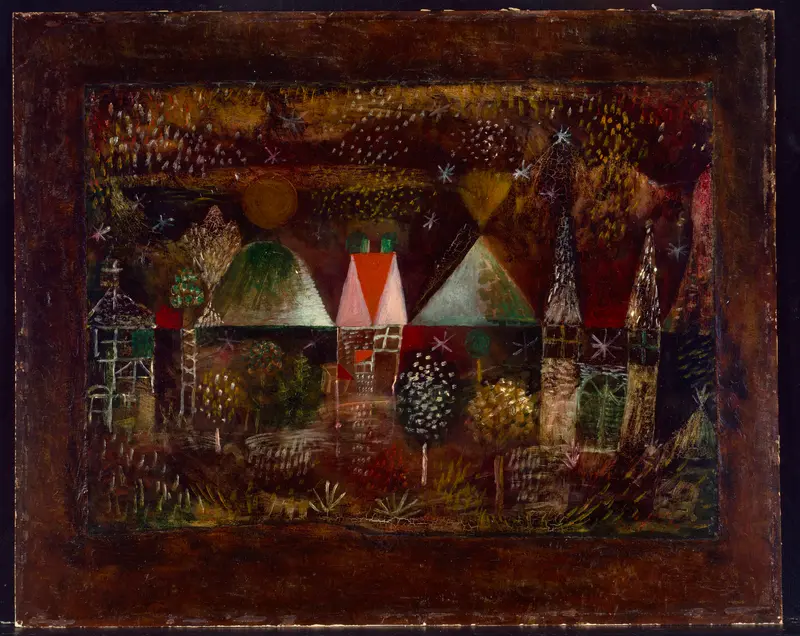
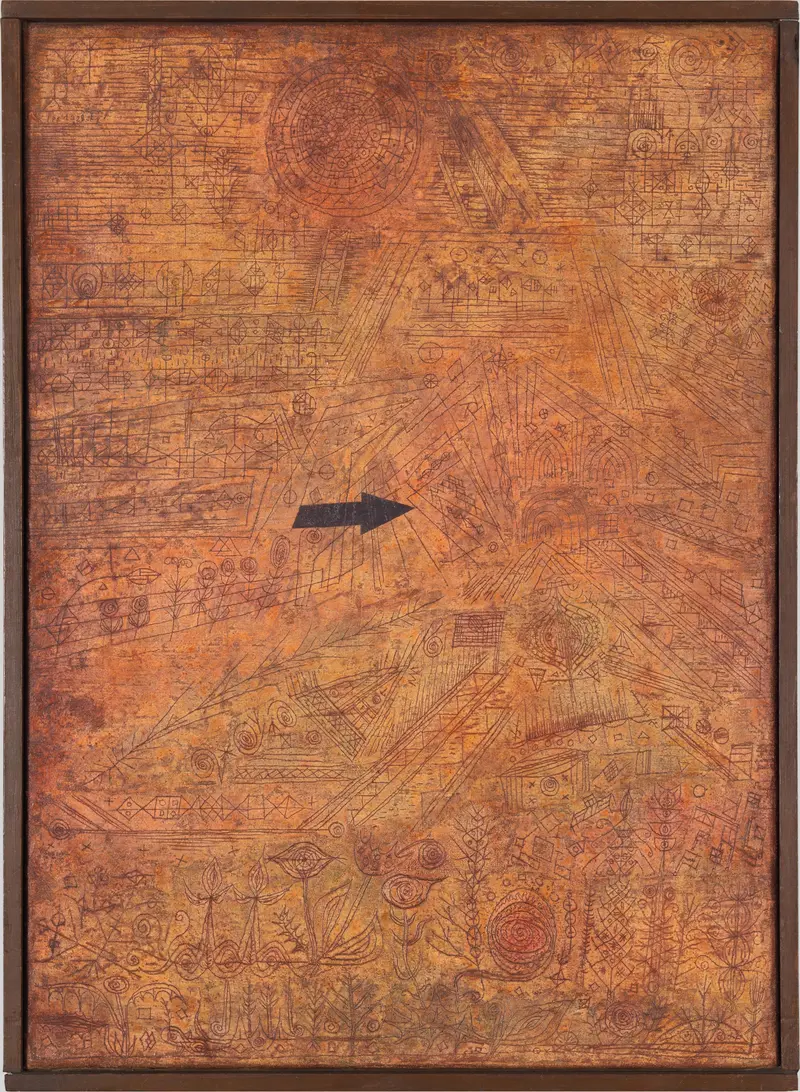
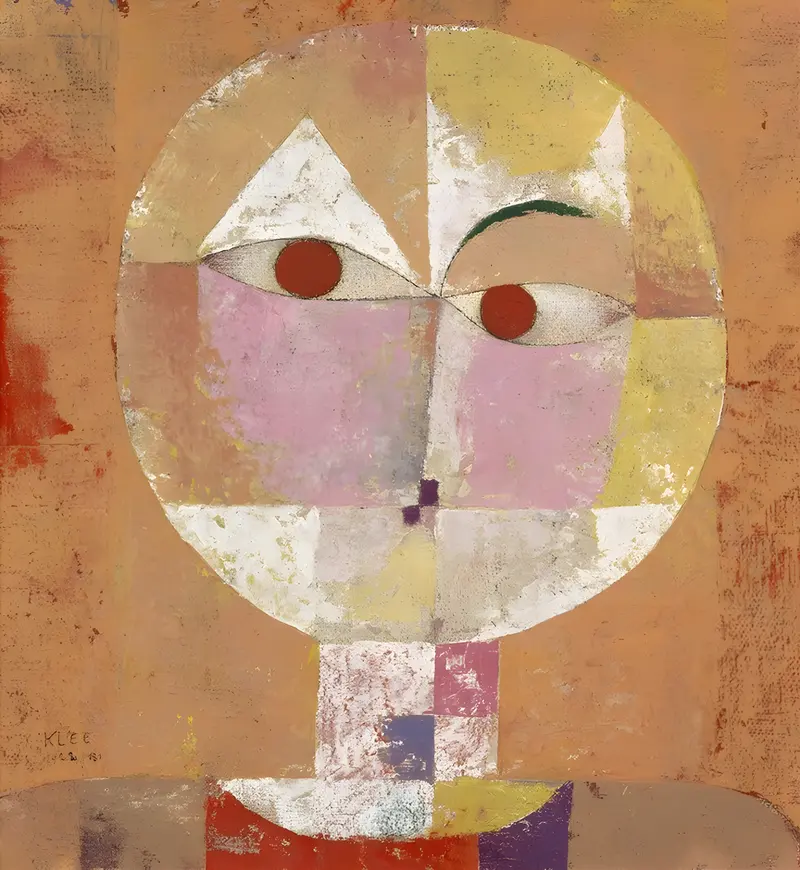
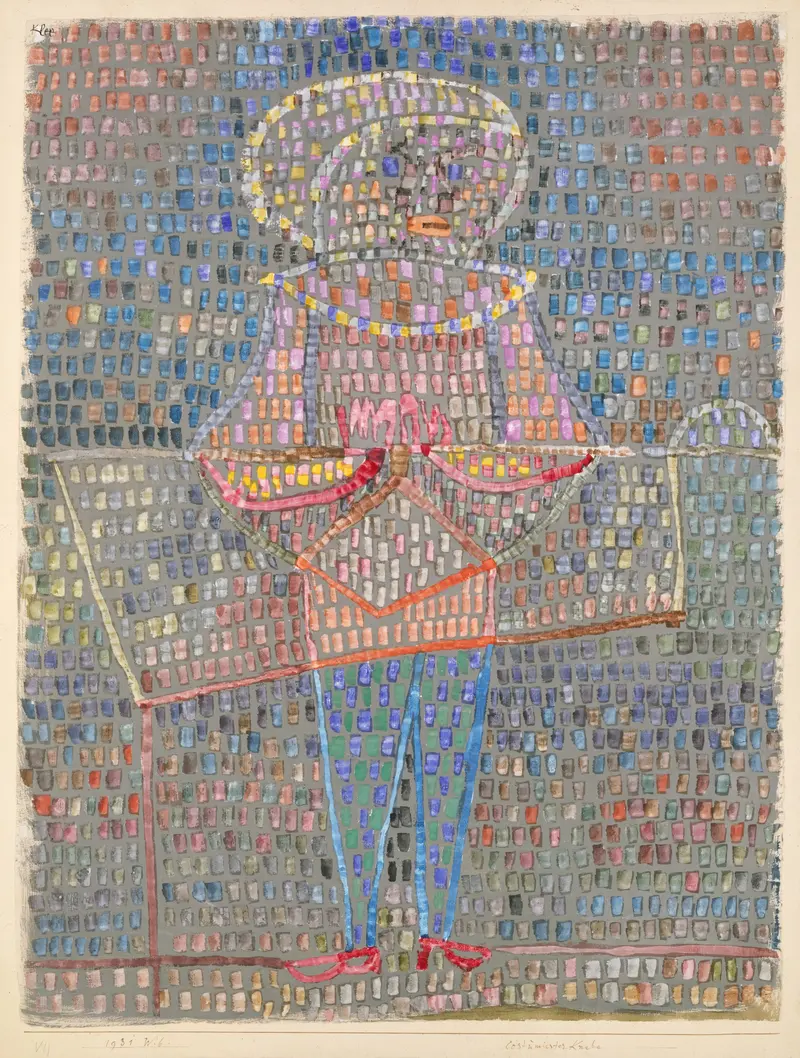
In Redgreen and Violet-Yellow Rhythms, vibrant colors dominate the canvas, with striking contrasts between reds, greens, violets, and yellows. The composition is abstract, featuring geometric shapes and rhythmic patterns that create a sense of movement. These colors interact dynamically, drawing the viewer's eye across the surface.
The overall effect is lively and engaging, inviting interpretation and exploration. The painting is executed in oil on canvas, showcasing Paul Klee's unique approach to color and form. The use of bold, flat areas of color is characteristic of Klee's style, emphasizing the emotional resonance of hues. The rhythmic arrangement of shapes suggests a musical quality, reflecting Klee's interest in the relationship between visual art and music.
Viewers can appreciate the meticulous brushwork and layering that contribute to the depth of the piece. Paul Klee, a key figure in the development of modern art, often explored themes of abstraction and color theory. Redgreen and Violet-Yellow Rhythms exemplifies his innovative use of color to evoke emotion and movement. Interestingly, Klee was also a musician, and his works frequently reflect a connection to musical rhythms and structures.
This painting, created in the 1920s, captures the essence of his artistic philosophy during a transformative period in art history.