Reinecke Fuchs — History & Facts
Did the painter know this moment would outlive them? The scene encapsulates a delicate balance between whimsy and madness, inviting viewers to pause and ponder the fragility of existence. Look to the center where a fox, vividly painted in rich orange and deep browns, stands alert amid a verdant landscape. The artist’s masterful brushwork captures not just the creature's fur, but the tension in its poised stance, a silent embodiment of nature’s cunning. Surrounding it, lush greens and soft earth tones create a harmonious backdrop, while bursts of color draw the eye, suggesting both the vibrancy of life and the lurking chaos beneath. The juxtaposition of the fox’s playful posture against the surrounding foliage hints at a deeper, almost existential struggle.
Notice the subtle distortions in the trees and flowers — they sway in unnerving, unnatural angles, echoing the madness that simmers beneath the surface. This tension between the serene and the chaotic evokes a sense of unease, encouraging contemplation of the wildness that exists both in nature and within humanity. In 1932, Oskar Laske painted this piece during a time of growing disillusionment in Europe. Amidst the rise of political strife and economic uncertainty, the artist turned to nature for inspiration, seeking refuge in the beauty of the wild.
This work reflects his desire to capture the essence of life amid turmoil, illustrating how art can serve as a thoughtful response to the madness surrounding it.
More Artworks by Oskar Laske
Browse all →
Faschingsumzug am Stock im Eisen Platz
Oskar Laske

Schönbrunn (Winter)
Oskar Laske
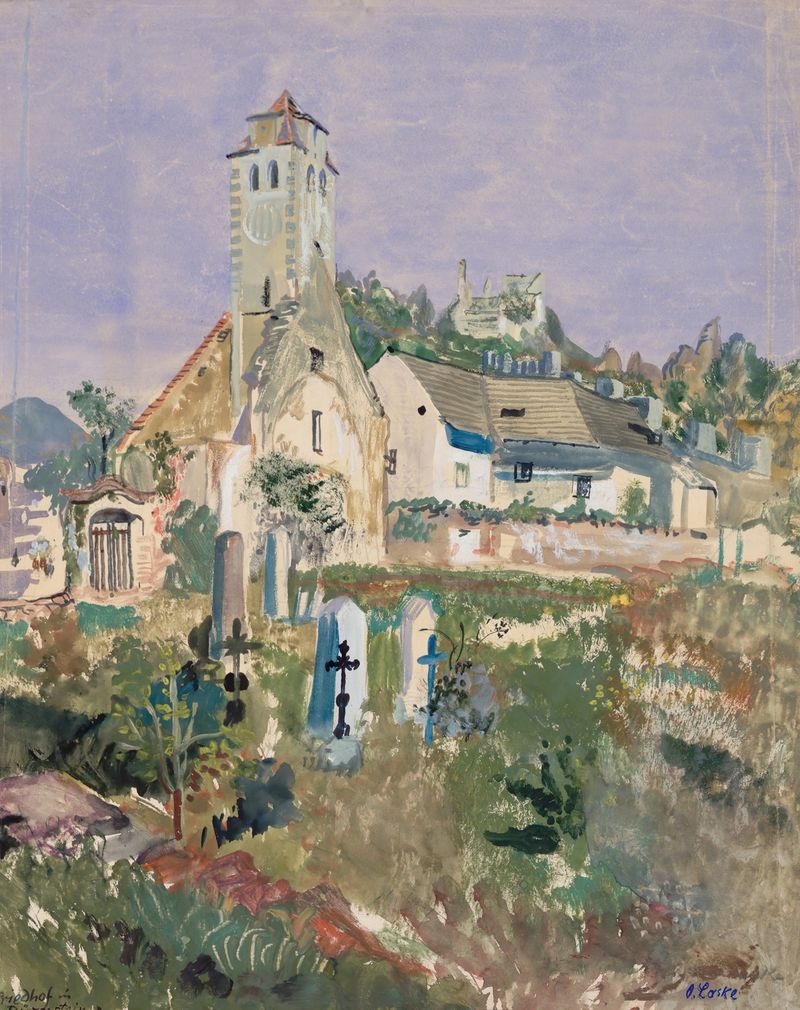
Friedhof in Dürnstein
Oskar Laske

Pratermotiv an der alten Donau
Oskar Laske

Frühjahrsnebel in Niederösterreich
Oskar Laske

Begräbnis des Wiener Bürgermeisters Dr. Karl Lueger
Oskar Laske

Maria Theresien-Denkmal mit Blick gegen das Burgtor
Oskar Laske
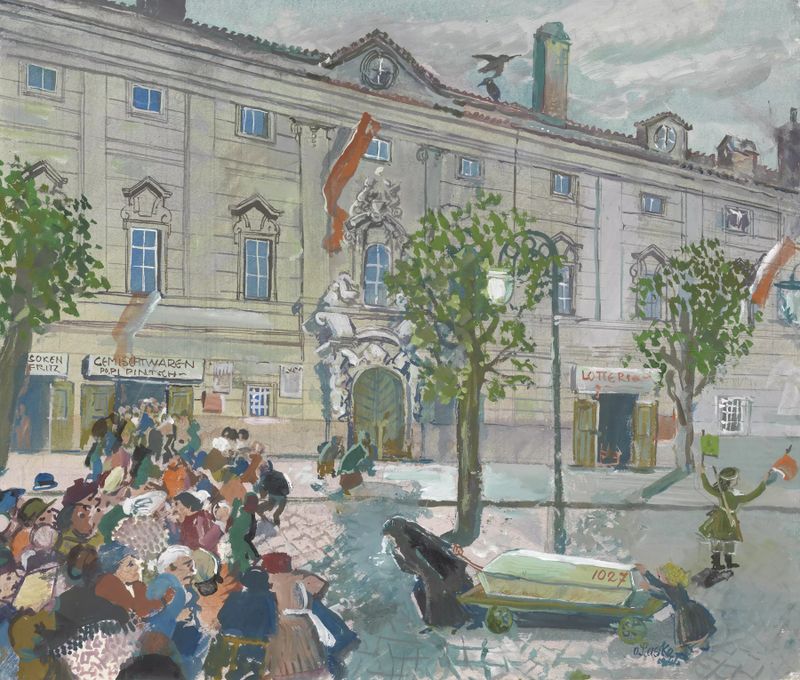
Wiener Straßenbild vom Mai 1945
Oskar Laske

Winterlandschaft in Pressbaum
Oskar Laske

Ansicht von Positano
Oskar Laske