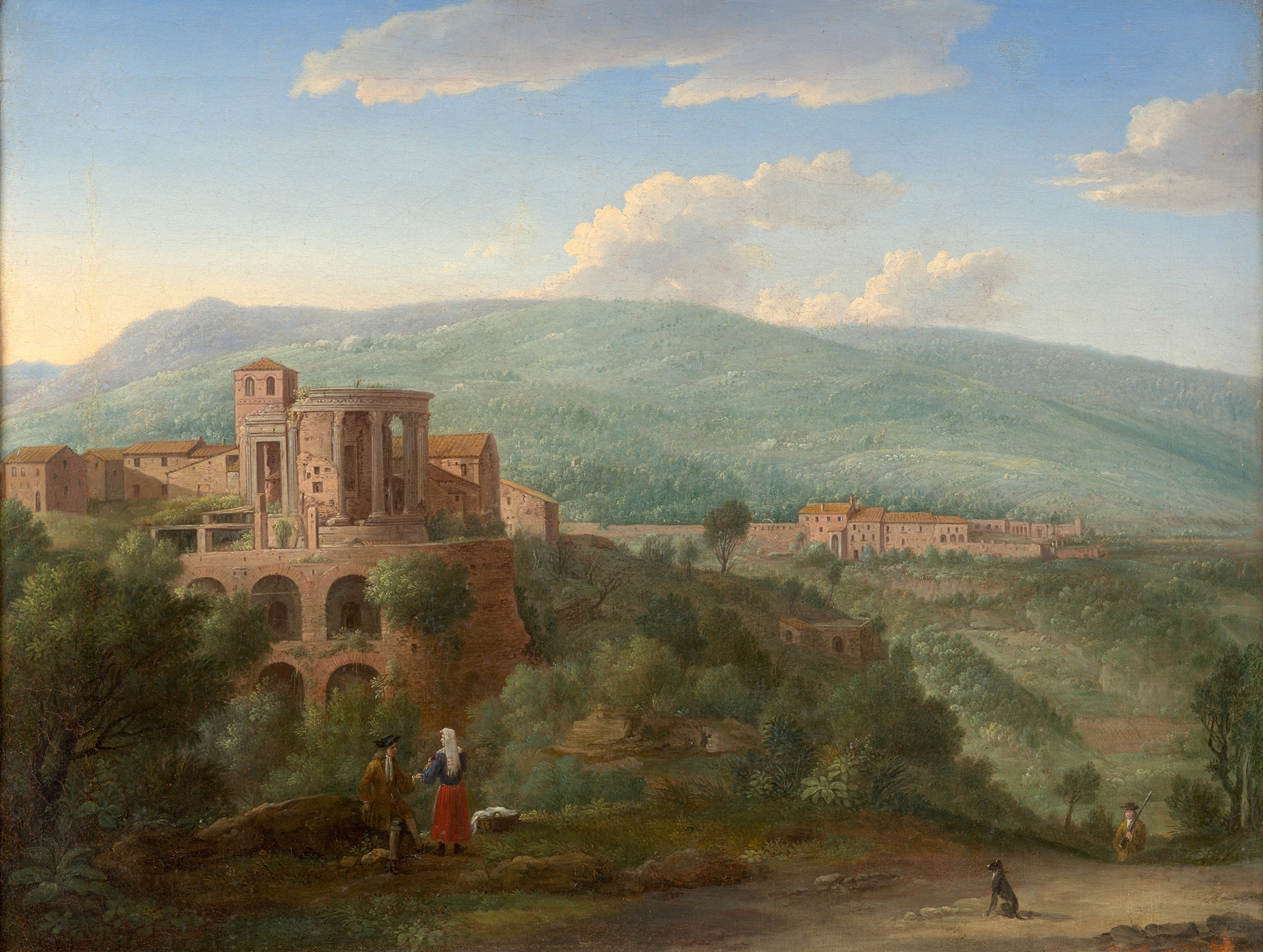
Rencontre d’un gentilhomme et d’une lingère à Tivoli — History & Analysis
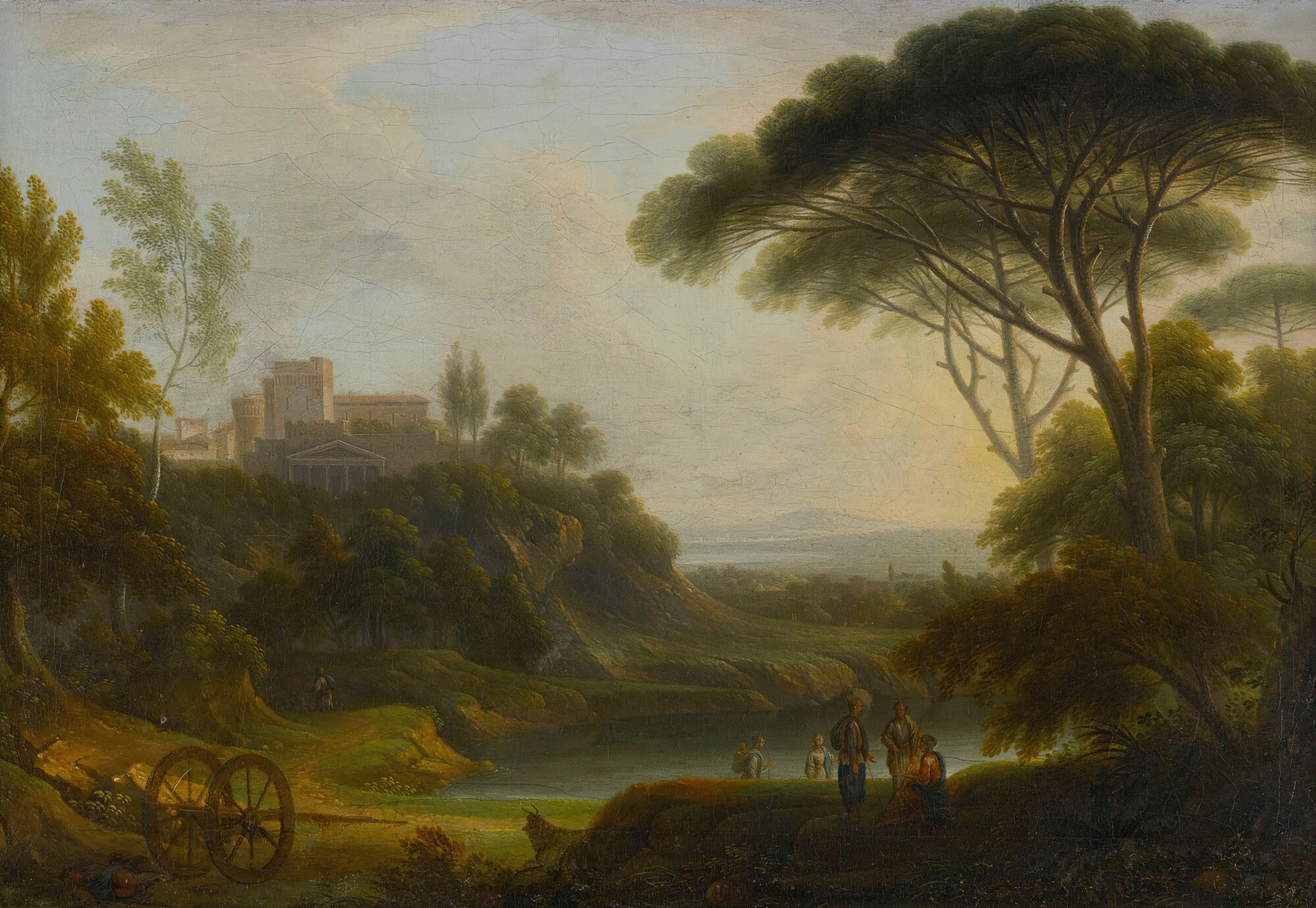
Where does light end, and longing begin? In the delicate interplay of illumination and shadow, we find the essence of obsession woven into the fabric of desire. Look to the left where two figures stand, locked in a moment of unspoken connection. A gentleman, with a slight bow, leans toward a maid, the light catching the soft fabric of her dress and illuminating the intricate textures of the scene.
The warm palette invites you to linger, while the lush greenery surrounding them acts as a vibrant frame, emphasizing their intimacy against the lively backdrop of Tivoli’s gardens. The artist’s brushstrokes breathe life into every leaf and petal, almost as if the setting itself conspires to cradle their fleeting encounter. As your gaze wanders deeper into the composition, notice the subtle expressions that hint at deeper narratives—a smile held back, a gaze that lingers too long. The gentle tension between the two figures conveys a world of emotional complexity, revealing the yearning and the hesitation that accompany such clandestine meetings.
The contrasting textures—the smooth silk of the gentleman's attire versus the modest linen of the maid's dress—speak to social boundaries yet unbroken, while the vibrant flowers in the foreground symbolize the transient nature of love and desire. Created in the 18th century, this work reflects the artist’s time in Italy, where he immersed himself in the vibrant cultural milieu of the era. The pursuit of beauty and sensuality in art was paramount, as Romantic themes began to emerge. Van Lint, influenced by this shifting artistic landscape, captured not just a scene but a moment imbued with longing and intimacy, echoing the societal dynamics of his day.