
Residence at Grange Grove Estate, Tacarigua — History & Facts
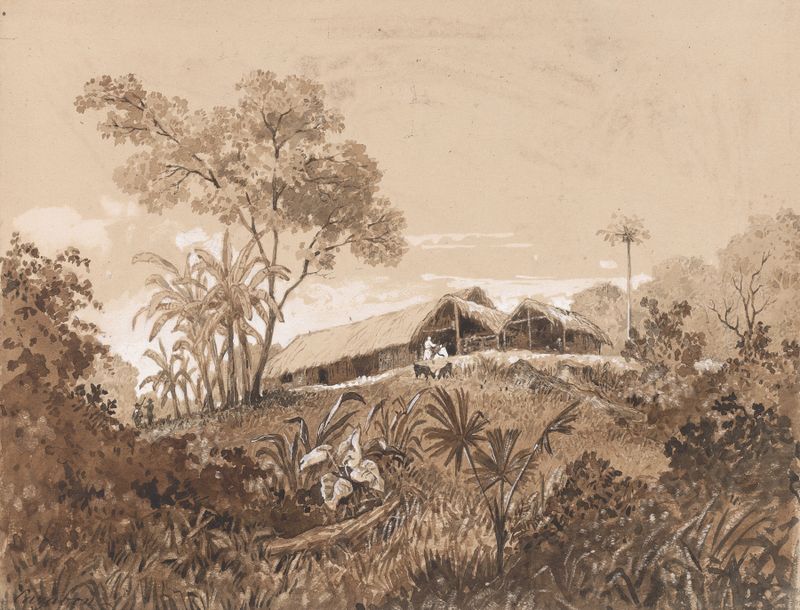
In the stillness of a colonial estate, whispers of revolution linger in the air, inviting contemplation beneath the vibrant hues of a tropical landscape. Look to the lower right, where lush green foliage frames the structured grandeur of the estate, drawing your eye to the meticulously rendered architecture. The composition is a harmonious blend of soft earth tones and vibrant greens, evoking the lushness of the Caribbean. Notice how the light dances upon the building’s facade, illuminating intricate details that speak of both elegance and entrapment. Upon closer inspection, the contrast between the opulence of the residence and the natural wildness surrounding it raises questions of power and oppression.
The vibrant colors suggest life and abundance, yet they are juxtaposed with the stillness that hints at unrest. This duality reflects the complexities of colonial existence and the unspoken tensions brewing beneath the surface. Created in 1857, this piece emerged during a period when the artist, influenced by the socio-political landscape of Trinidad, sought to capture the nuances of his environment. Cazabon was one of the first Caribbean artists to gain recognition, and at this time, he was navigating the shifting tides of colonialism while pursuing a new artistic identity that embraced both local subjects and European techniques.
The painting stands as a testament to the era's struggles and the artist's unique vision.
More Artworks by Michel Jean Cazabon
Browse all →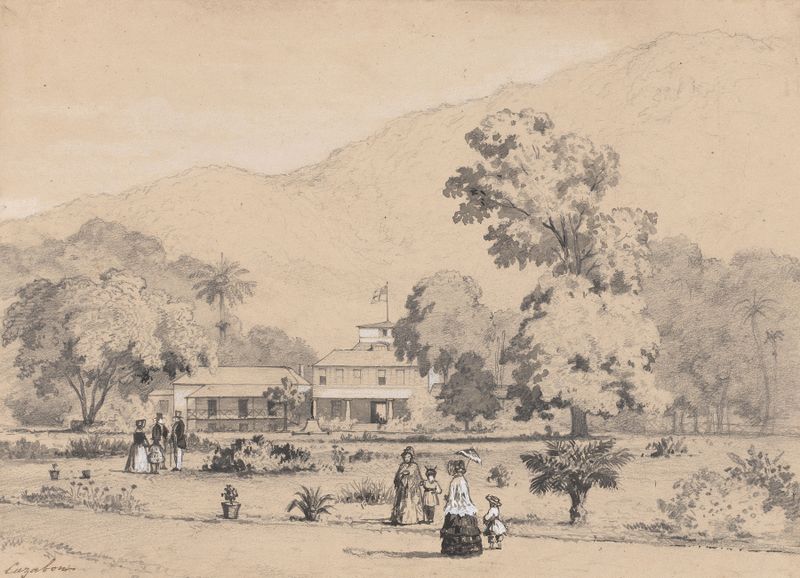
Governor’s Residence St. Ann’s
Michel Jean Cazabon

The Road to Pitch Lake
Michel Jean Cazabon
Cedar Point, Tamana
Michel Jean Cazabon

Maraccas Waterfall
Michel Jean Cazabon
View from Laventille Hill
Michel Jean Cazabon

Garden Estate, Arouca
Michel Jean Cazabon

Bamboos St. Ann
Michel Jean Cazabon
Caledonia and Craig Islands
Michel Jean Cazabon

St. Ann’s Waterfall
Michel Jean Cazabon
Cottage at Tamana
Michel Jean Cazabon
More Architecture Art
Browse all →
The statue of Liberty
Frédéric Auguste Bartholdi

View of Houses in Delft, Known as ‘The Little Street’
Johannes Vermeer

View of Houses in Delft, Known as ‘The Little Street’
Johannes Vermeer

The Cathedral in Rouen. The portal, Grey Weather
Claude Monet

The yellow house
Vincent van Gogh

The Church in Auvers-sur-Oise, View from the Chevet
Vincent van Gogh