
Rest during the hay harvest — History & Facts
The first thing to catch the eye in Rest during the hay harvest is the quiet pause: three figures, rakes set aside, gather among haystacks as the sky glows with the last light of day. The castle ruins on the horizon anchor the scene, their silhouette softened by the golden wash of sunset and the drifting clouds. The painter’s gaze lingers on the ordinary moment—work paused, bodies at ease—yet the vastness of the landscape and the looming architecture lend the gathering a sense of reflection.
Notice how the haystacks echo the rounded forms of the clouds, connecting earth and sky, while the figures’ bright garments draw the viewer’s attention back from the distant ruins to the intimacy of rest. Painted in 1834, this work belongs to the world of early nineteenth-century Romanticism, a time when artists like Caspar David Friedrich sought meaning in landscape and the lives of ordinary people. Such paintings were rarely mere records of rural labor; they invited viewers to contemplate nature, memory, and the passage of time. In German lands, scenes like this were collected by both private patrons and public institutions, valued for their blend of local scenery and quiet emotion.
Once held in Dresden’s Staatliche Kunstsammlungen, this painting’s present whereabouts are unknown, a reminder that history keeps some stories close and lets others drift into mystery. Yet the image endures, inviting us to linger a moment longer in the fading light.
More Artworks by Caspar David Friedrich
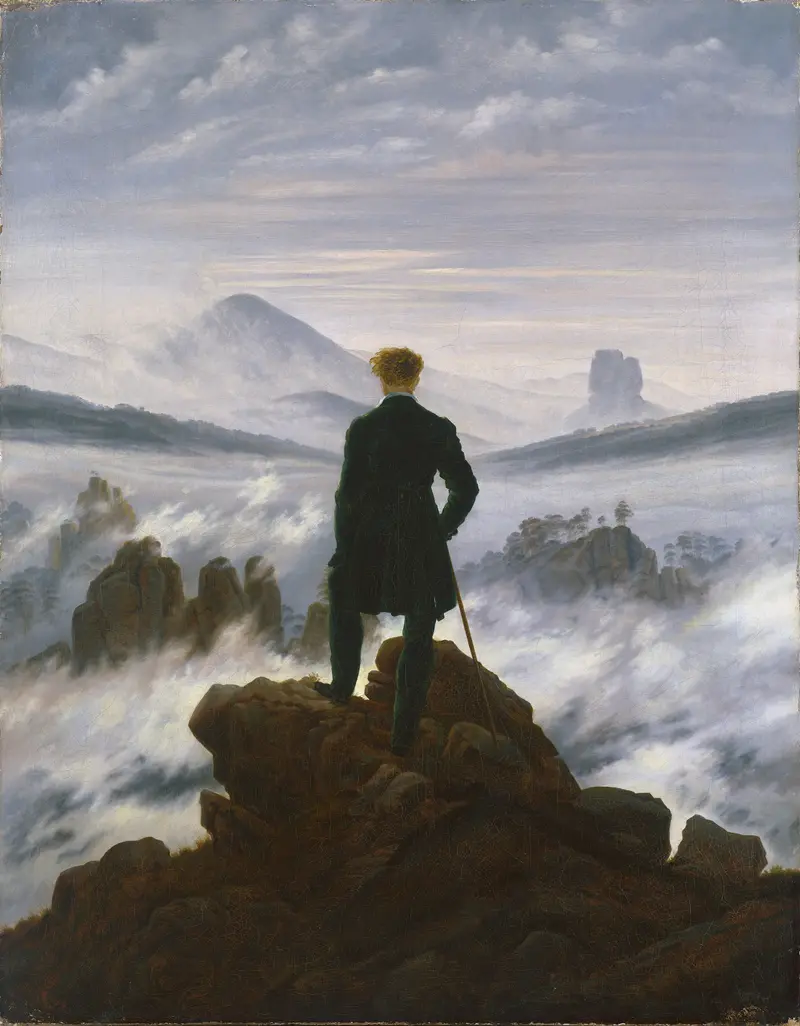
Wanderer above the Sea of Fog
Caspar David Friedrich

The Sea of Ice
Caspar David Friedrich
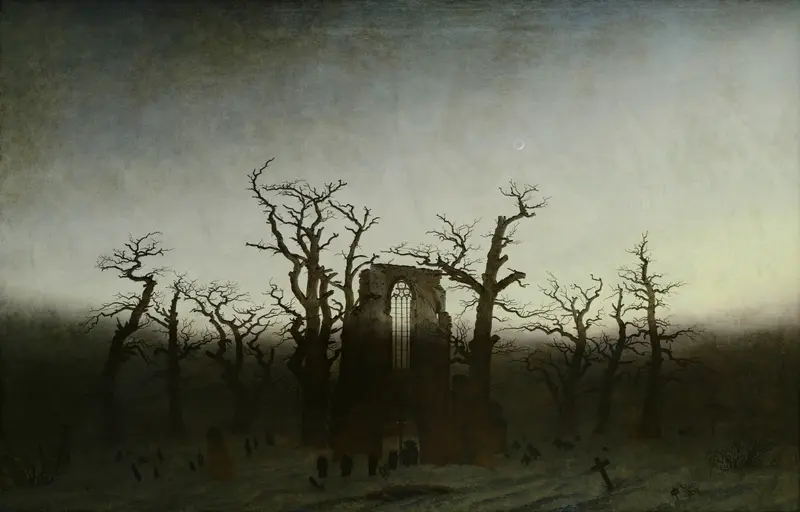
The Abbey in the Oakwood
Caspar David Friedrich
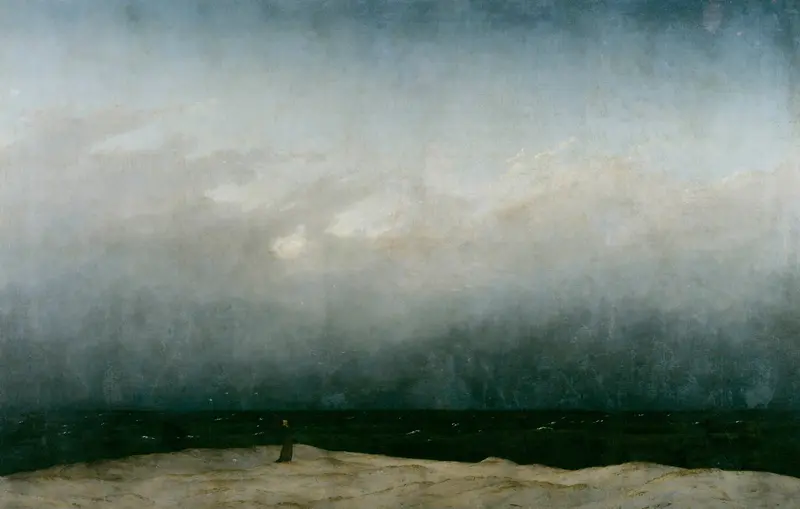
The Monk by the Sea
Caspar David Friedrich
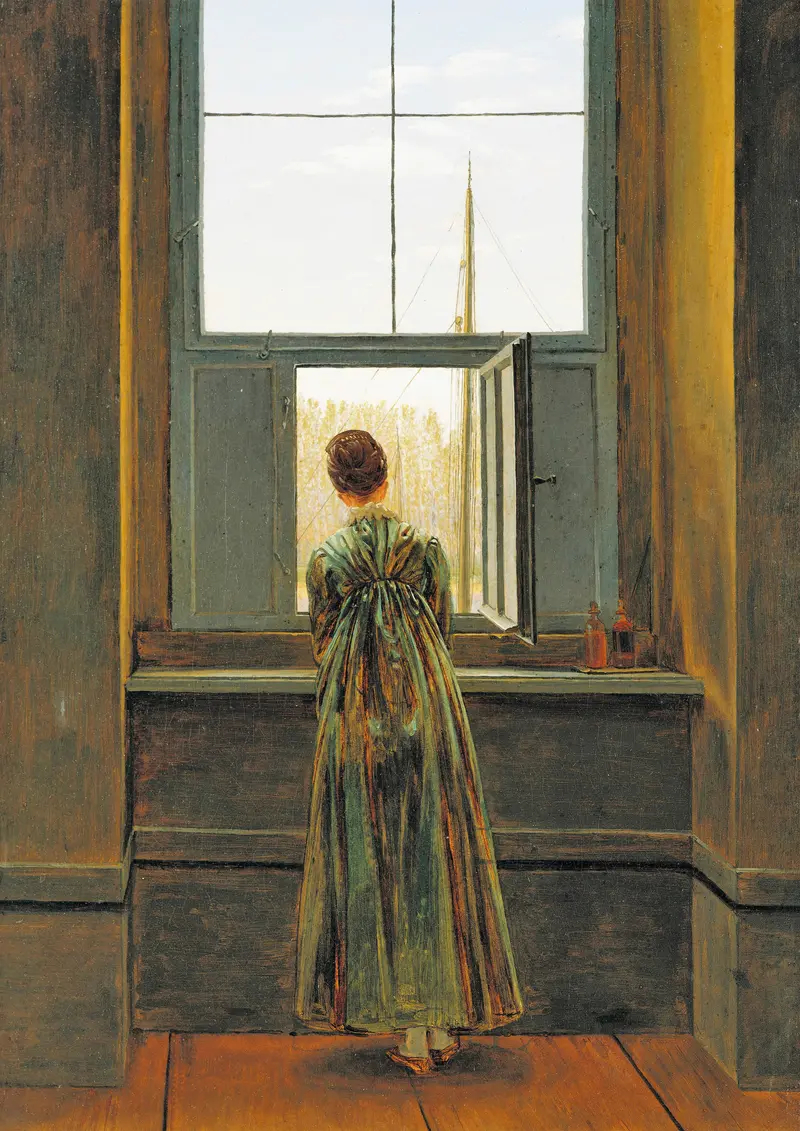
Woman at a Window
Caspar David Friedrich
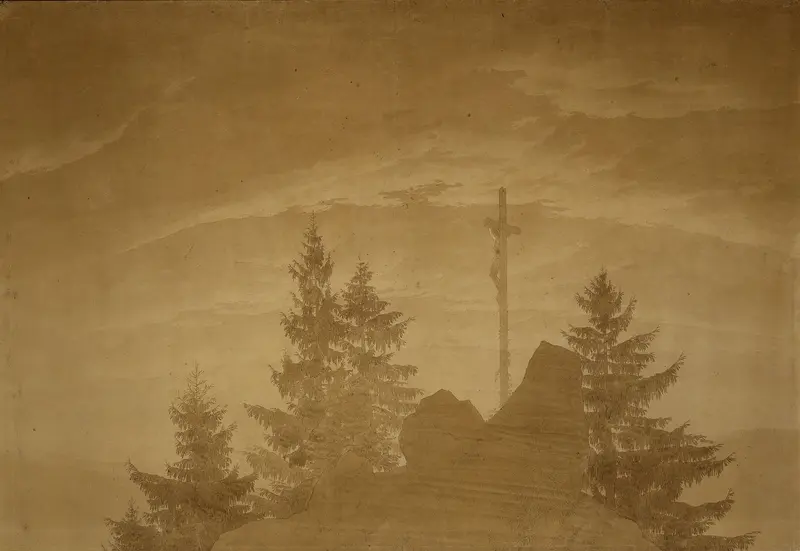
Cross in the Mountains
Caspar David Friedrich
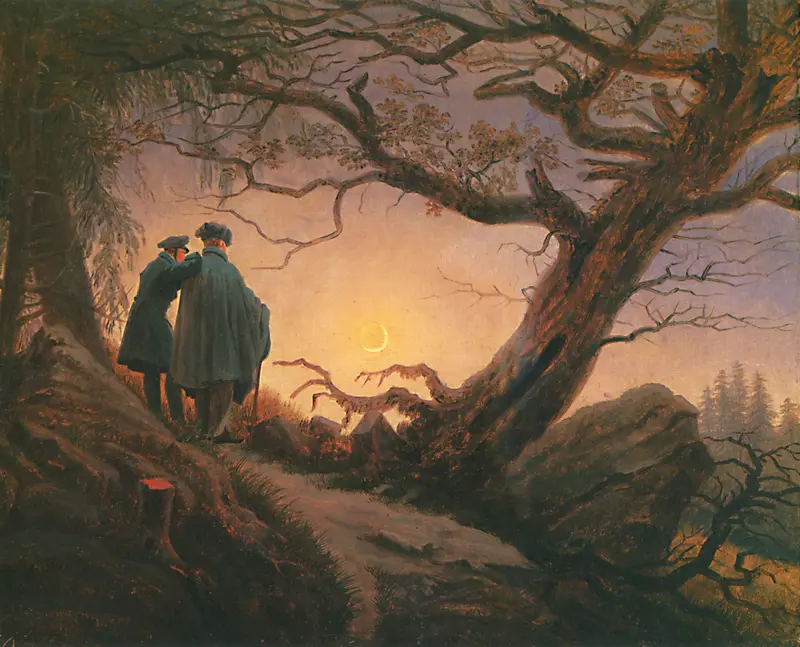
Two Men Contemplating the Moon
Caspar David Friedrich
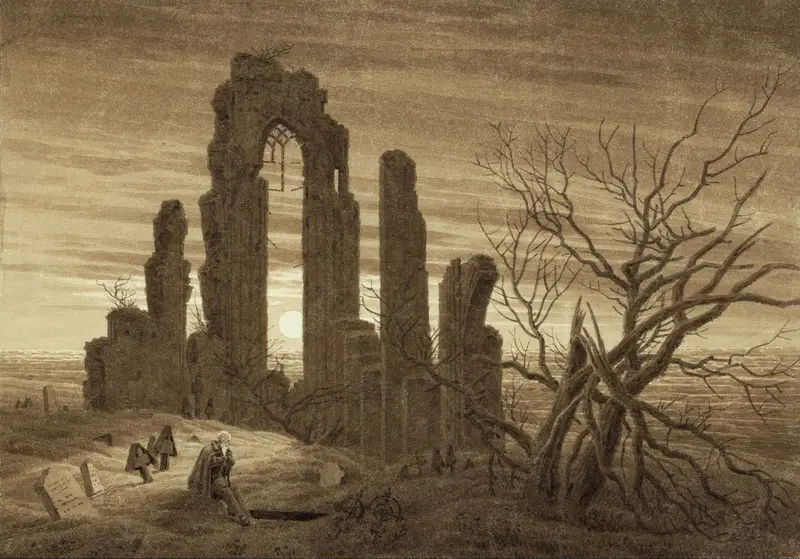
Winter – Night – Old Age and Death (from the times of day and ages of man cycle of 1803)
Caspar David Friedrich
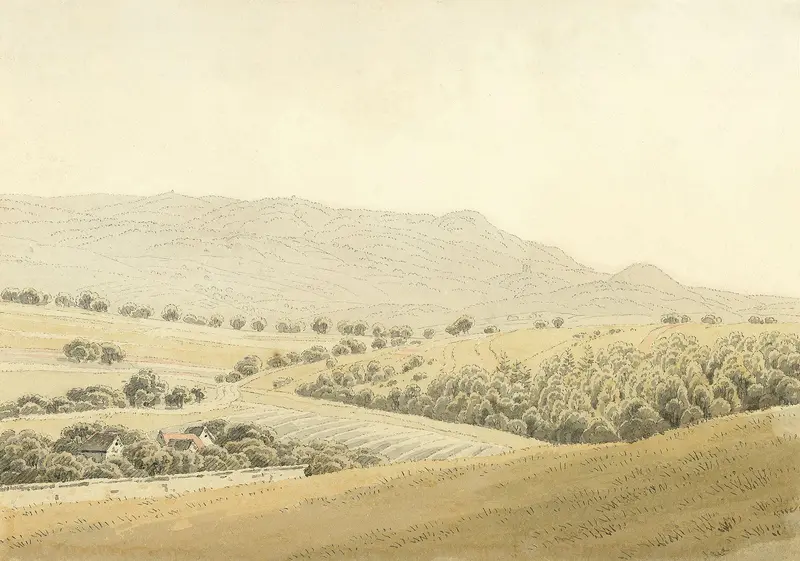
Mittelgebirgslandschaft
Caspar David Friedrich

Landschaft mit gebirgsee, morgen
Caspar David Friedrich
More Landscape Art

The Starry Night
Vincent van Gogh

View of Delft
Johannes Vermeer

Water Lilies
Claude Monet

The Grand Canal, Venice, looking north-west from the Ca' Corner to the Ca' Contarini degli Scrigni, with the campanile of Santa Maria della Carità
Canaletto

Windsor Castle
Canaletto

The Grand Canal looking North-East from the Palazzo Dolfin-Manin to the Rialto Bridge
Canaletto