
Resting at a Tavern — History & Facts
What if silence could speak through light? In Resting at a Tavern, that silence resonates deeply, inviting viewers to pause and reflect on the innocence captured in a tranquil moment. Look to the left at the dimly lit interior, where a lone figure sits at a table, their posture relaxed yet contemplative. Notice how the soft light spills from a nearby window, illuminating the dust motes suspended in the air, creating a dreamlike quality that envelops the scene. The palette of earthy tones—warm browns and muted yellows—anchors the viewer in a moment of intimacy, while the subtle brushwork evokes the texture of worn wood and the fabric of simple attire, grounding the ethereal in everyday life. Delve deeper into the painting's layers, and you'll find a poignant contrast between the stillness of the figure and the vibrant life outside, hinted at through the tavern window.
This duality of innocence—inside, a moment of peace; outside, the bustling world—suggests a yearning for refuge amidst chaos. The tavern, often a place of revelry, here becomes a sanctuary, inviting reflections on solitude, simplicity, and the human desire for connection. Jan van Goyen painted Resting at a Tavern in the early 17th century, a period marked by the Dutch Golden Age, when genre scenes flourished. Living in Leiden during this time, he navigated an art world increasingly captivated by the nuances of quotidian experiences, offering viewers a window into the profound beauty found in ordinary moments.
As societal changes unfolded, his work resonated with themes of everyday life, capturing the essence of human emotion and interaction.
More Artworks by Jan van Goyen
Browse all →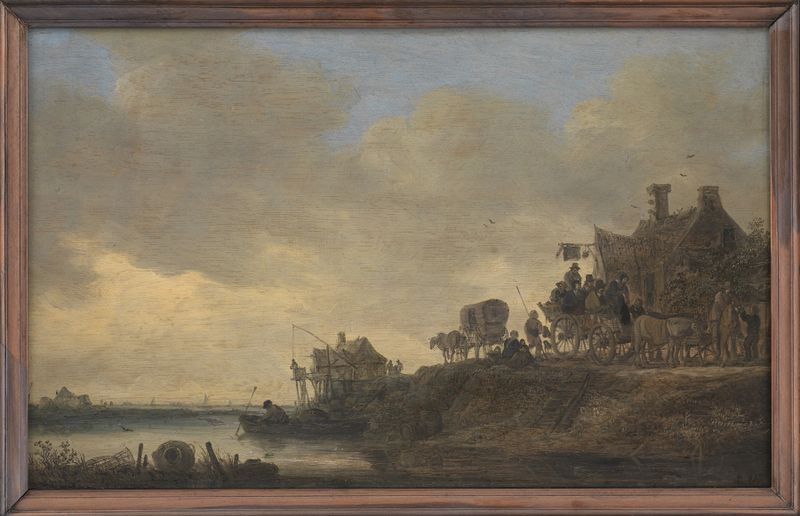
River Scene with the ‘Swan’ Tavern
Jan van Goyen

The Valkhof in Nijmegen
Jan van Goyen
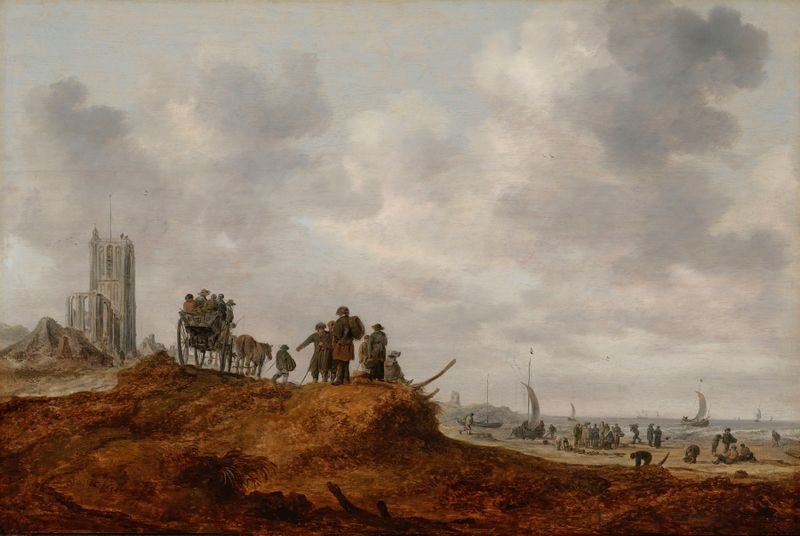
The Old Church at Egmond aan Zee
Jan van Goyen
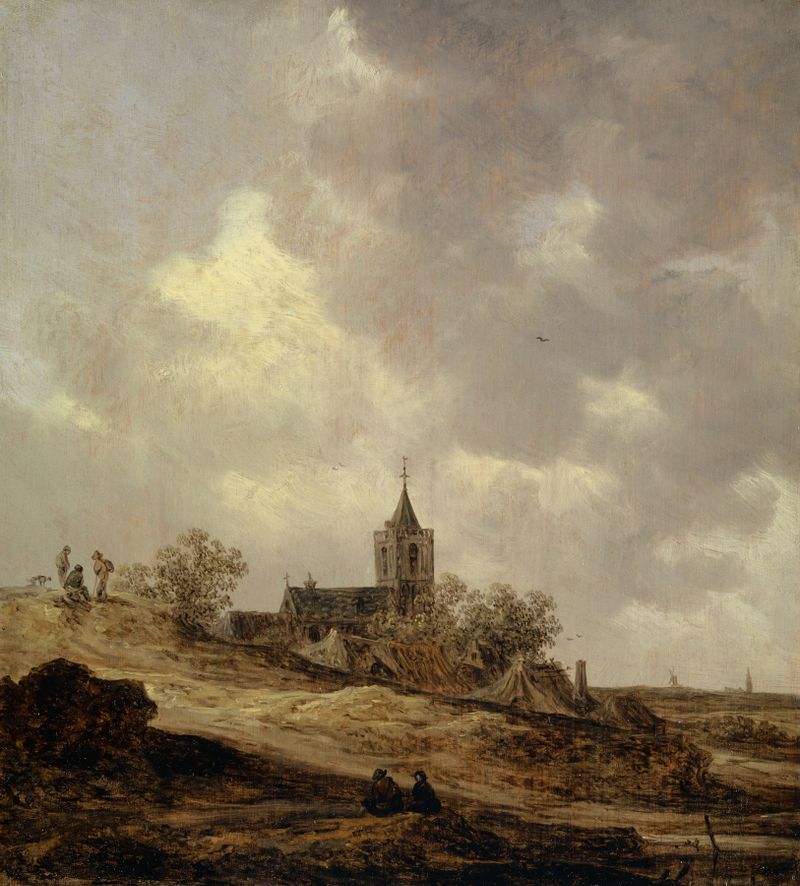
Village Church seen from the Dunes
Jan van Goyen
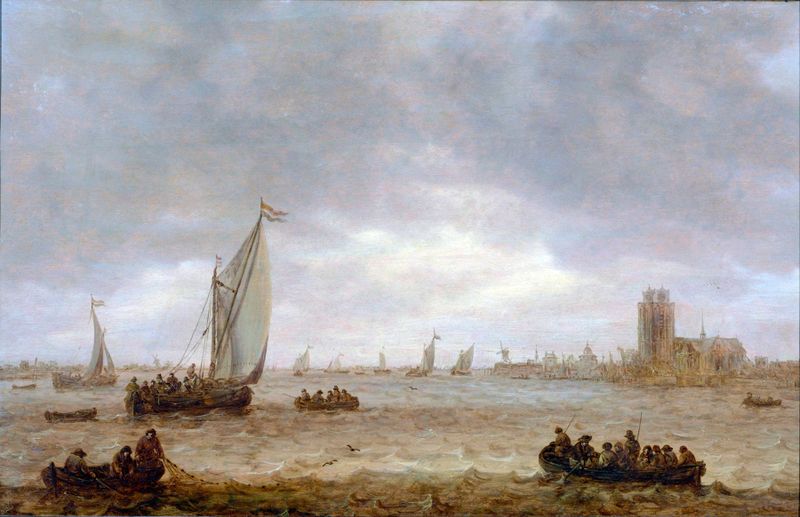
Mouth of the Meuse
Jan van Goyen

River Landscape with the Pellecussen Gate near Utrecht
Jan van Goyen
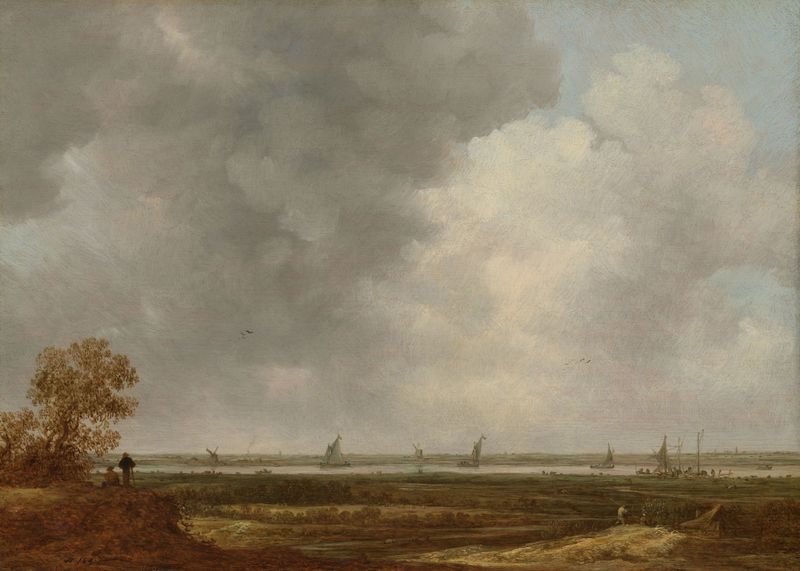
Panoramic View of a River with Low-lying Meadows
Jan van Goyen
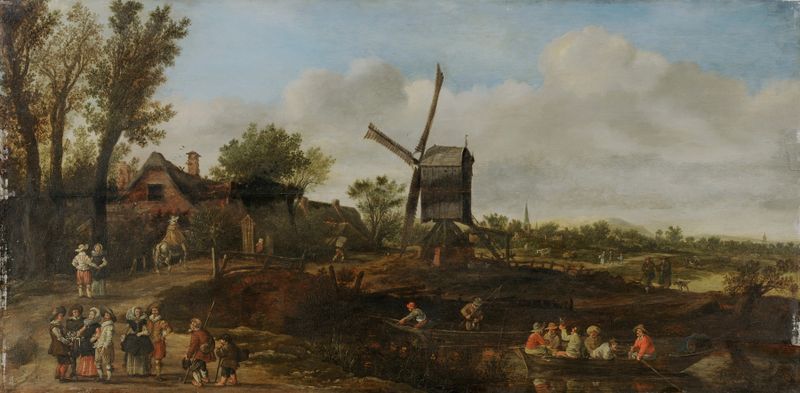
Dutch Landscape
Jan van Goyen
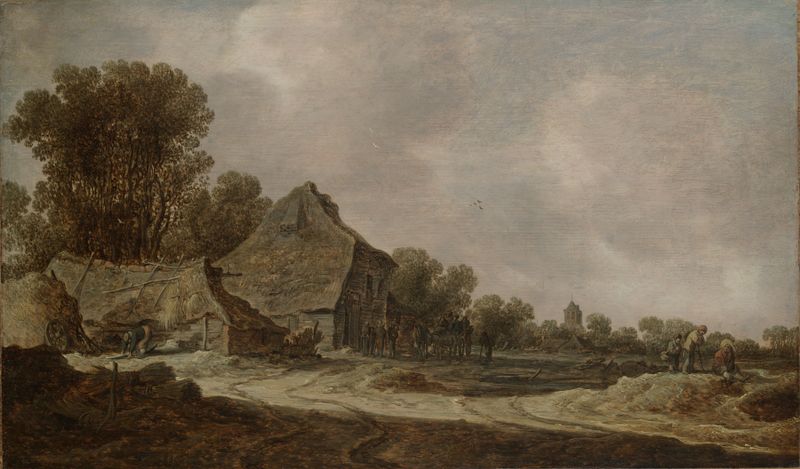
A Sandy Road with Thatched Cottages
Jan van Goyen
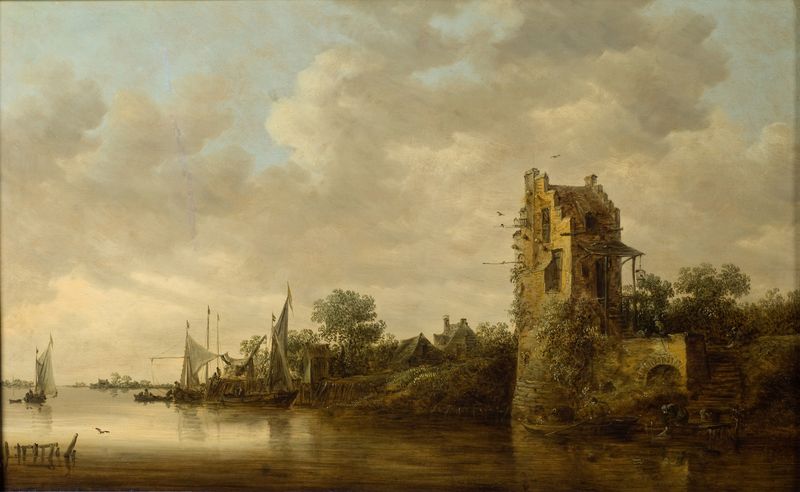
Riverside with an Old Tower
Jan van Goyen





