
Rhine landscape — History & Facts
What first catches the eye in Rhine landscape is the golden, weathered timber of the central house, its steep roof rising like a memory against the blue haze of distant hills. The painter, Adrian Ludwig Richter, draws you up the winding path, past scattered boulders and a lone rider on a pale horse, toward the quiet bustle of rural life. A woman leans from a window, her gaze meeting the traveler, while another figure rests in the foreground, half-hidden in the brush.
The light is purposeful: it warms the house and the path, guiding us through a scene where every gesture—the turned head, the smoke rising from the chimney—suggests a world in motion, yet held in a moment of calm. Works like this, created between 1803 and 1884 and now held in the National Museum of Art, Architecture and Design, belong to a tradition that flourished as Romanticism swept through Europe. Artists such as Richter found inspiration in the landscapes of the Rhine, capturing not just the terrain but the rhythms of daily life and the quiet drama of ordinary encounters. These paintings were often commissioned by a rising middle class eager for images that celebrated both nature’s grandeur and the dignity of rural existence.
History has kept few traces of the individual stories behind such scenes, but the painting’s careful detail and gentle palette invite us to imagine ourselves into its world—pausing, perhaps, beside that winding path as the day’s light fades.
More Artworks by Adrian Ludwig Richter

Landschaft bei den Sabiner Bergen (Rocca di Mezzo)
Adrian Ludwig Richter

The Fountain at Grottaferrata
Adrian Ludwig Richter
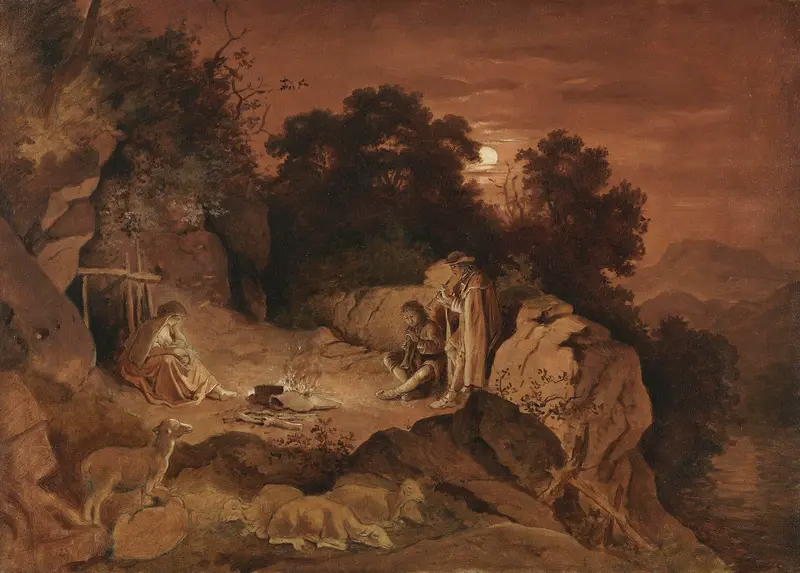
Hirten am Feuer (Abendlandschaft)
Adrian Ludwig Richter
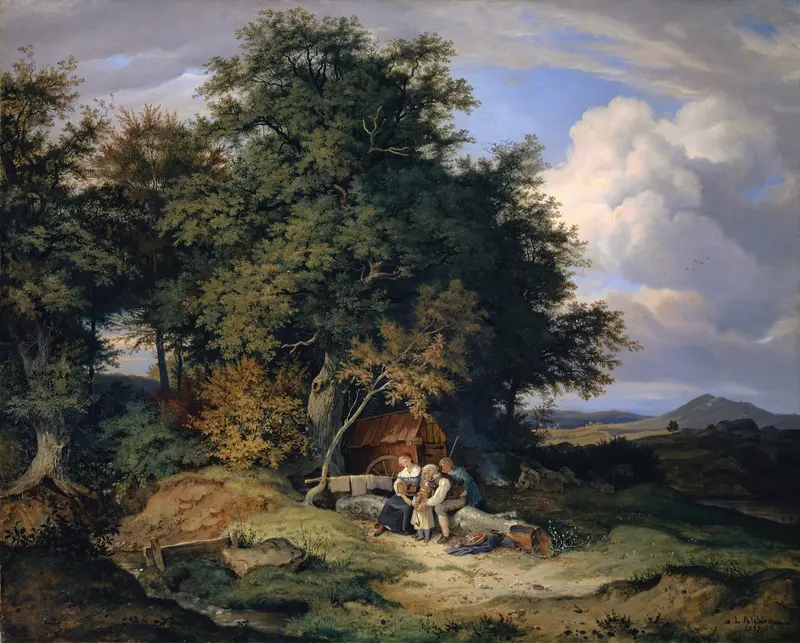
Herbstlicher Wald mit Schäferfamilie
Adrian Ludwig Richter
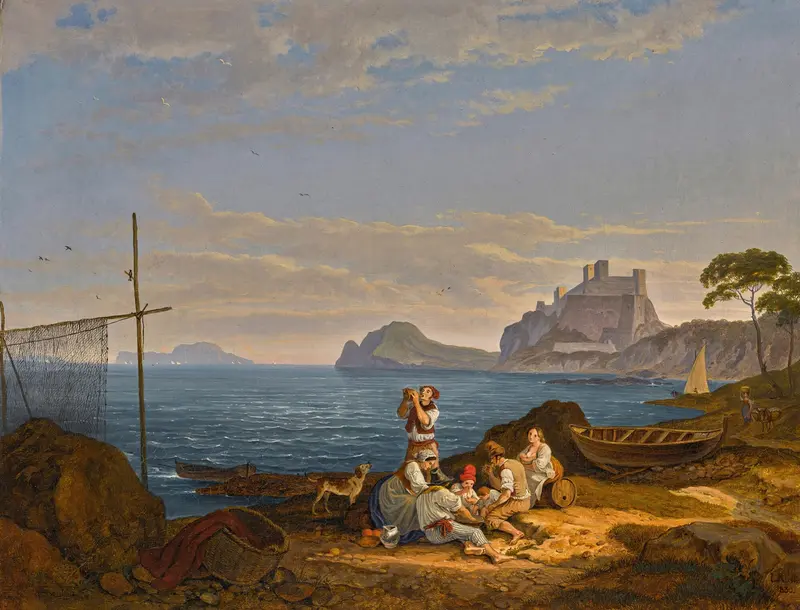
The Bay Of Naples, Capri Beyond
Adrian Ludwig Richter
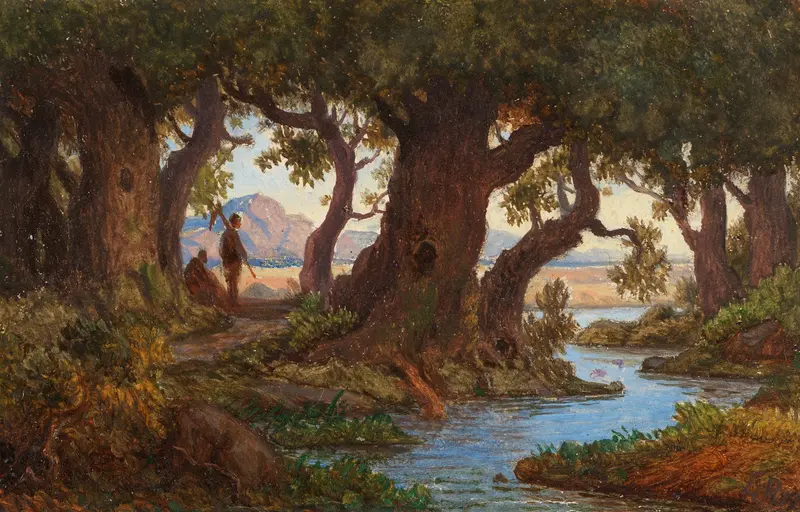
Italienische Flusslandschaft
Adrian Ludwig Richter
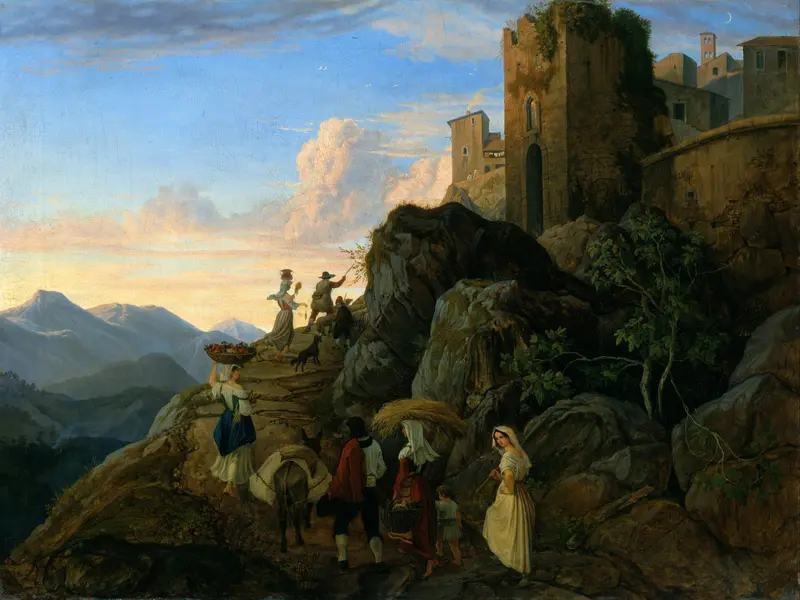
Civitella
Adrian Ludwig Richter
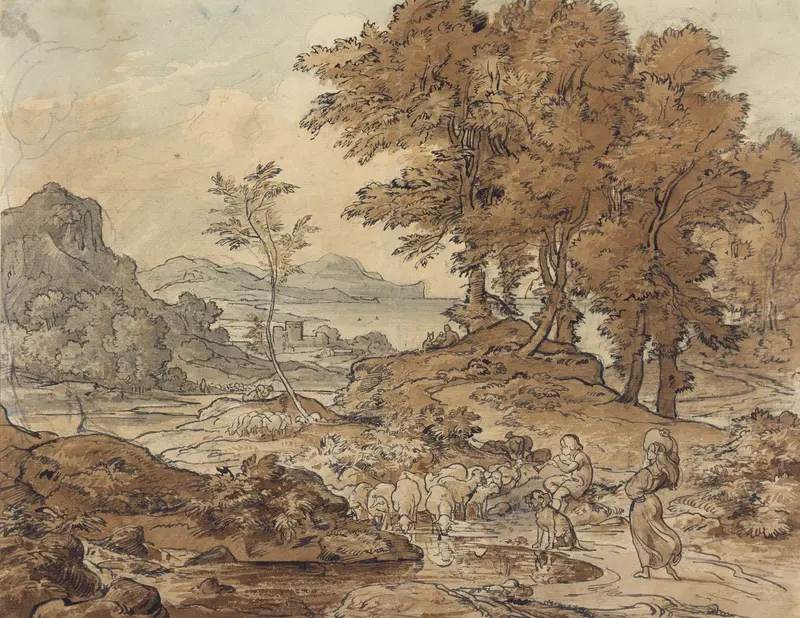
Italienische Landschaft mit Schafherden
Adrian Ludwig Richter
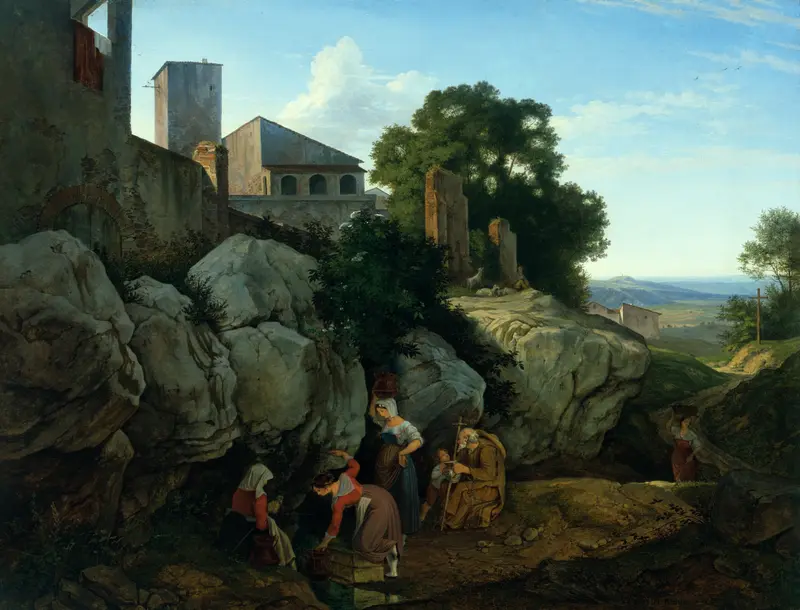
Ariccia
Adrian Ludwig Richter
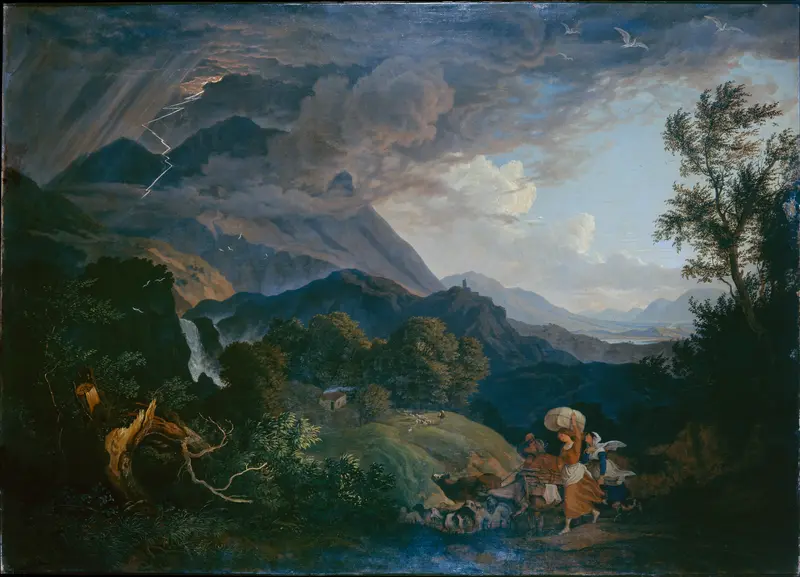
Thunderstrom over Monte Scalambra near Olevano in the Sabine Mountains
Adrian Ludwig Richter
More Landscape Art

The Starry Night
Vincent van Gogh

View of Delft
Johannes Vermeer

Water Lilies
Claude Monet

The Grand Canal, Venice, looking north-west from the Ca' Corner to the Ca' Contarini degli Scrigni, with the campanile of Santa Maria della Carità
Canaletto

Windsor Castle
Canaletto

The Grand Canal looking North-East from the Palazzo Dolfin-Manin to the Rialto Bridge
Canaletto