
Riesengebirgslandschaft — History & Facts
A sweep of open sky dominates Riesengebirgslandschaft, drawing the viewer’s gaze upward and outward before it ever settles on the land below. The horizon sits low, as if the painter wanted to grant the heavens the first word, while the gentle slopes and rounded hills of the Riesengebirge unfurl in quiet succession. A stone bridge, rendered with careful arches, leads the eye across the middle ground, inviting a silent crossing from the shadowed foreground to the sunlit distance.
Trees cluster at intervals, their forms both framing and softening the landscape, while a small structure—perhaps a chapel or wayside pavilion—anchors the right, a human touch dwarfed by the expanse. Painted in 1798, this landscape belongs to a moment when artists in German-speaking lands were turning their attention away from grand historical scenes and toward the poetry of nature itself. The period’s fascination with solitude and reflection finds a gentle echo here: there are no figures, only the suggestion of passage and pause. Little is recorded about this specific work’s journey, except for its later appearance in the 1931 collection Verlorene Meisterwerke Deutscher Romantiker in Munich.
Yet the painting’s calm, measured light and spacious composition speak to the era’s longing for the infinite within the familiar. Stand before it, and let your gaze follow the line of the bridge, wondering where it might lead.
More Artworks by Caspar David Friedrich
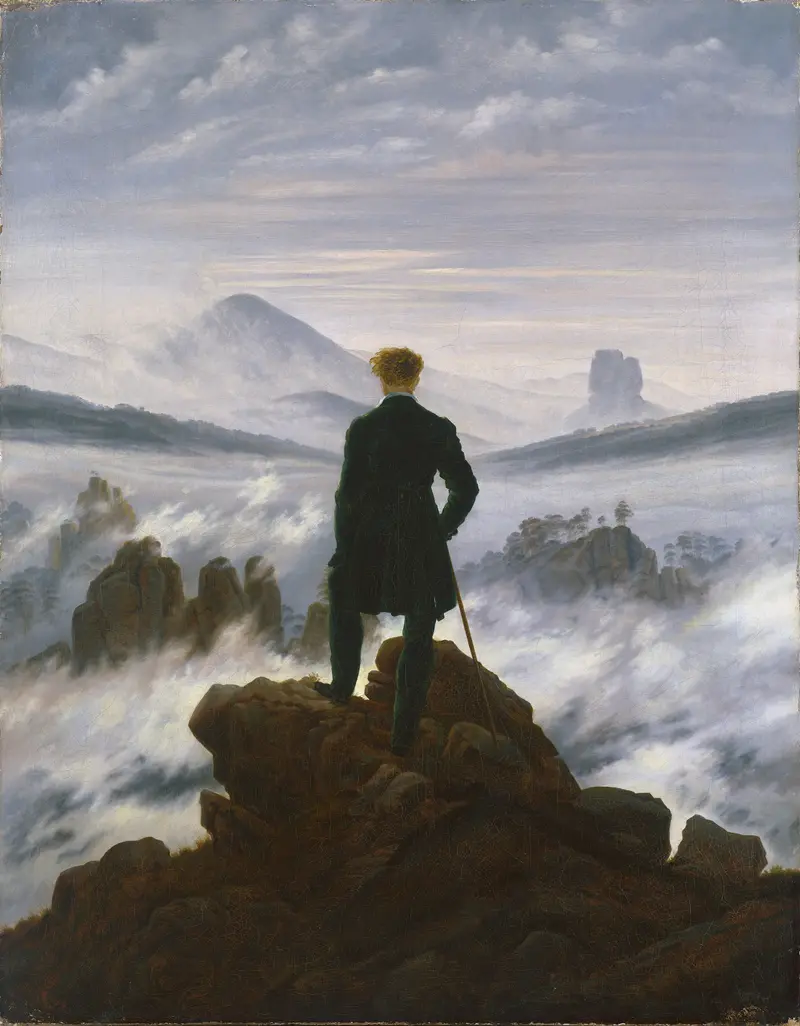
Wanderer above the Sea of Fog
Caspar David Friedrich

The Sea of Ice
Caspar David Friedrich
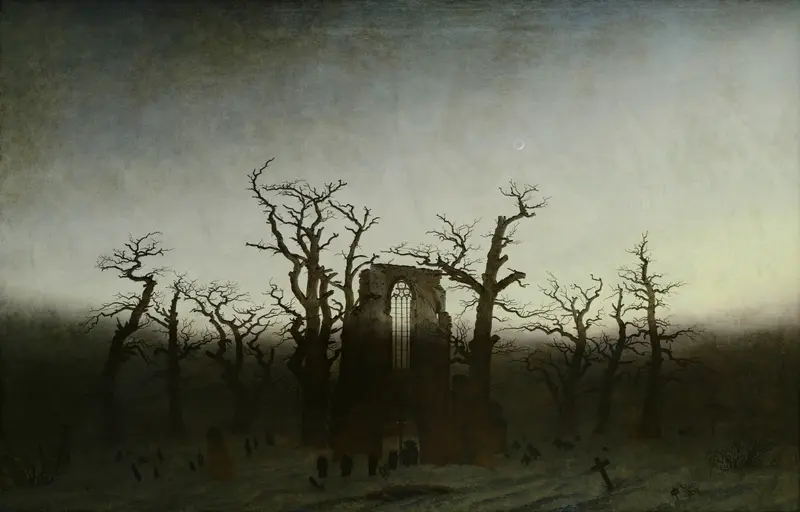
The Abbey in the Oakwood
Caspar David Friedrich
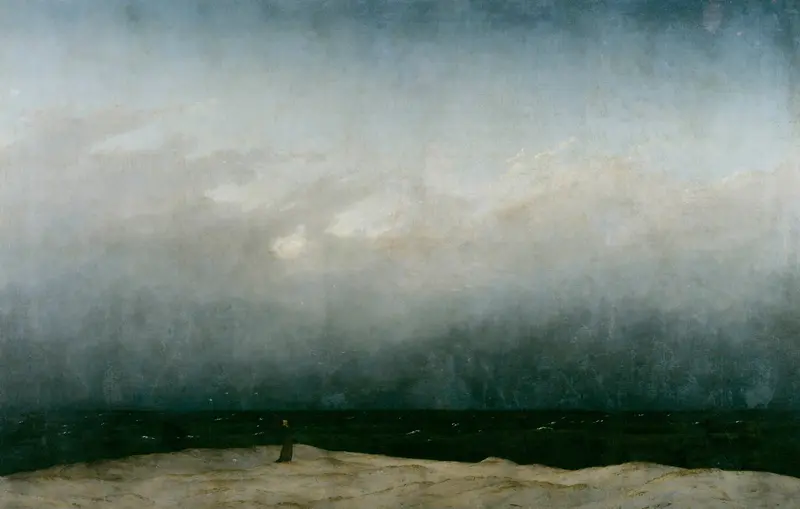
The Monk by the Sea
Caspar David Friedrich
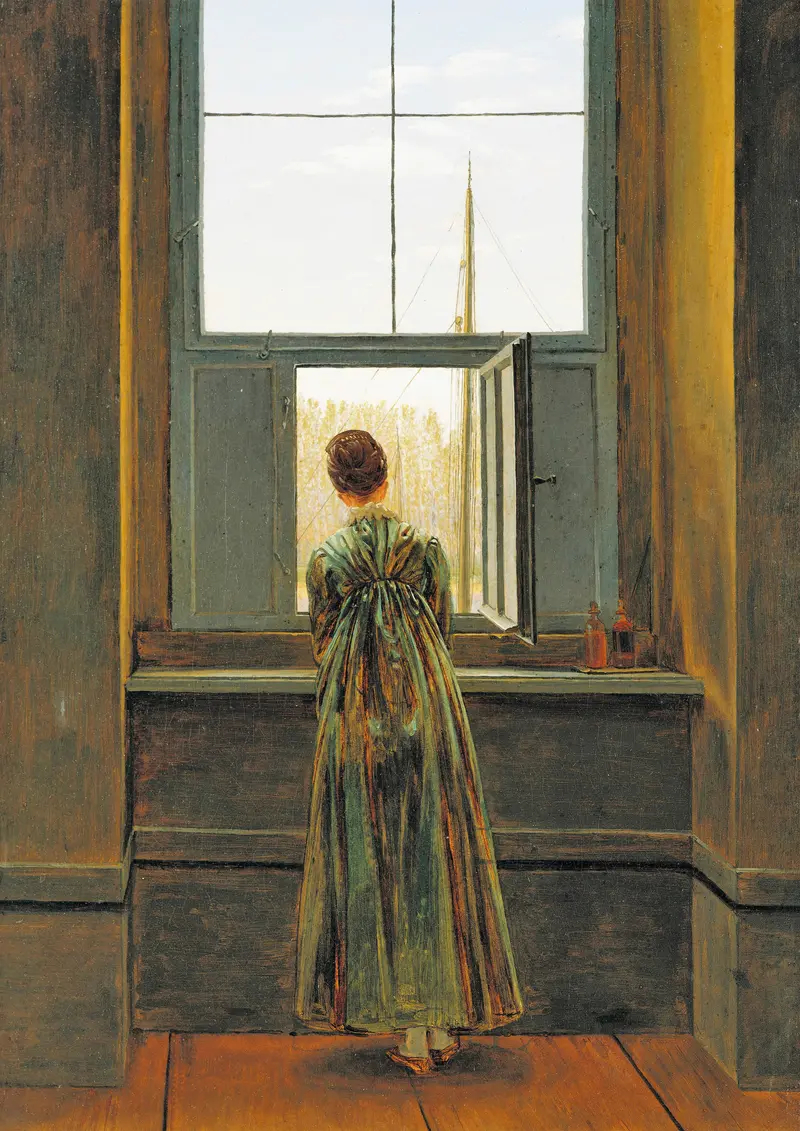
Woman at a Window
Caspar David Friedrich
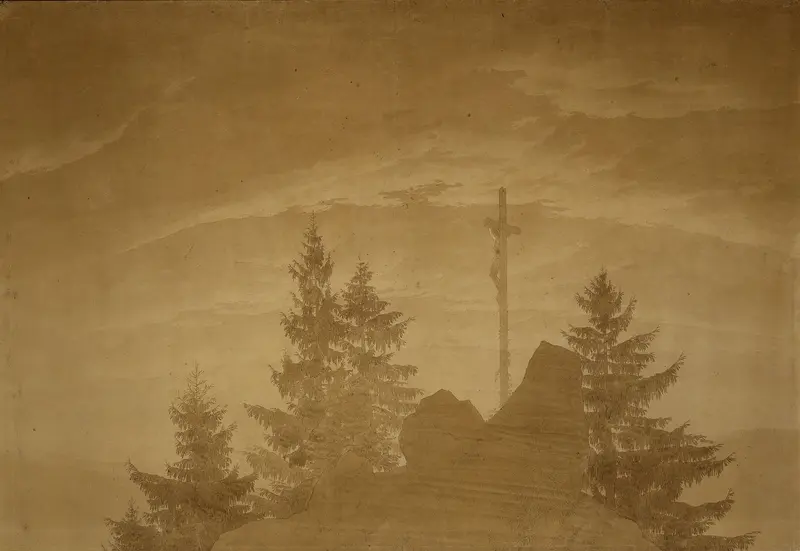
Cross in the Mountains
Caspar David Friedrich
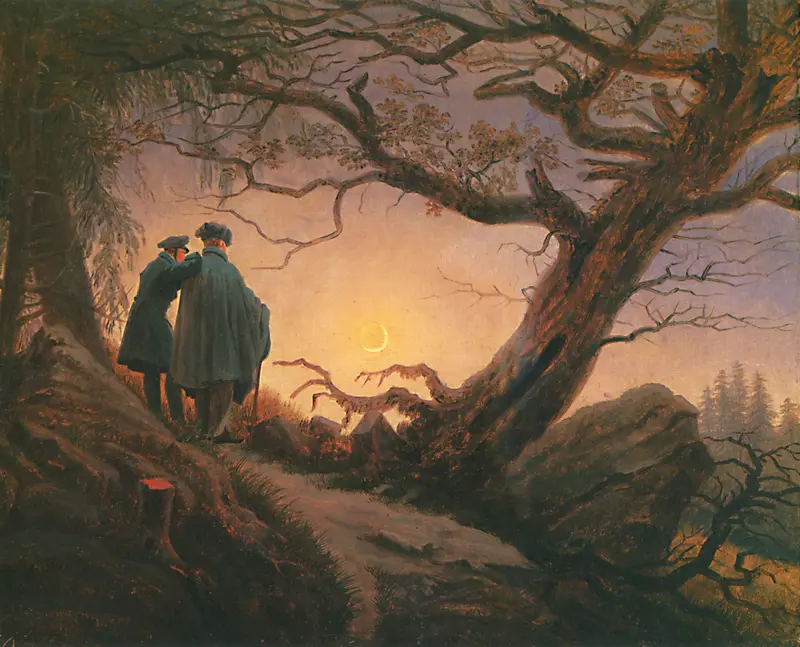
Two Men Contemplating the Moon
Caspar David Friedrich
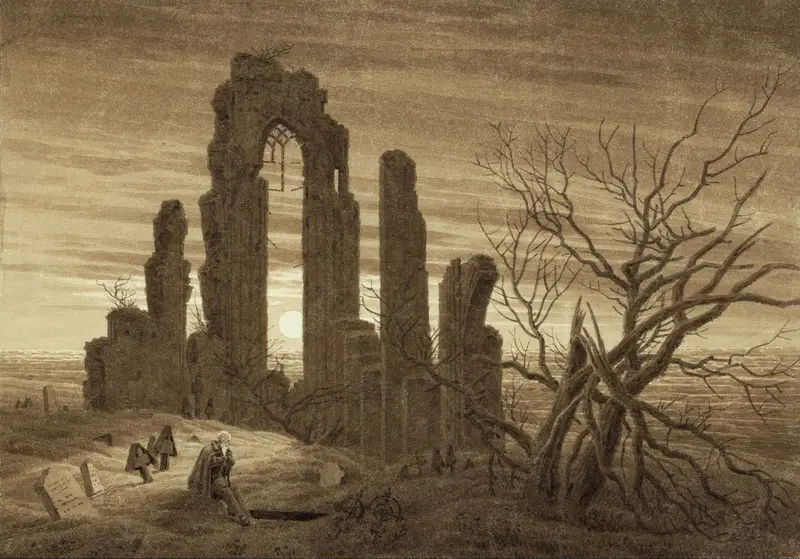
Winter – Night – Old Age and Death (from the times of day and ages of man cycle of 1803)
Caspar David Friedrich
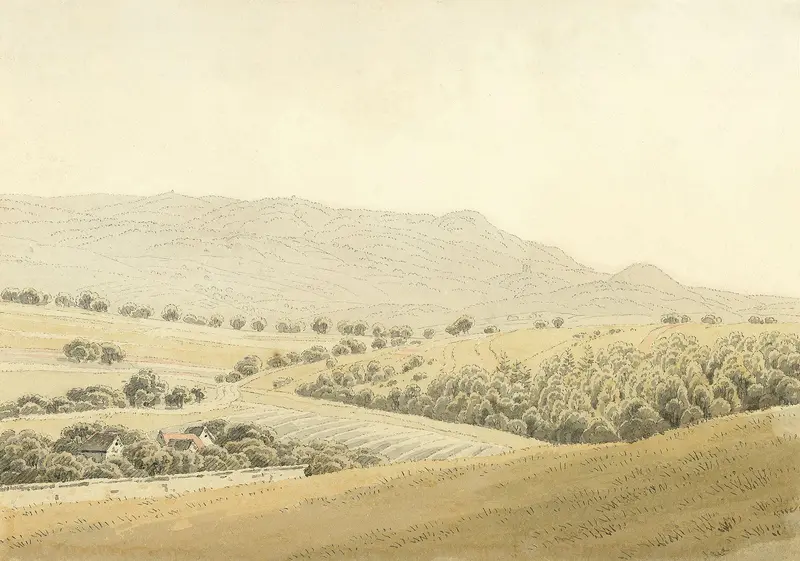
Mittelgebirgslandschaft
Caspar David Friedrich

Landschaft mit gebirgsee, morgen
Caspar David Friedrich
More Landscape Art

The Starry Night
Vincent van Gogh

View of Delft
Johannes Vermeer

Water Lilies
Claude Monet

The Grand Canal, Venice, looking north-west from the Ca' Corner to the Ca' Contarini degli Scrigni, with the campanile of Santa Maria della Carità
Canaletto

Windsor Castle
Canaletto

The Grand Canal looking North-East from the Palazzo Dolfin-Manin to the Rialto Bridge
Canaletto