
River landscape near Haarlem with windmill and the ruins of Brederode — History & Facts
What if beauty was never meant to be finished? In a world where nature continually reclaims its territory, hope lies in the delicate balance between decay and renewal. Focus on the swirling clouds in the sky, where muted grays flirt with hints of golden light. Notice how the windmill stands resolute against the backdrop of lush greenery, its blades poised, ready to catch the breath of a gentle breeze. The ruins of Brederode emerge softly from the landscape, ghostly but inviting, as if whispering stories of a past life.
The artist's brush captures the intricate interplay of light and shadow, drawing the viewer’s gaze from the vibrant foreground into the serene distance. Within this tranquil scene, contradictions abound. The windmill, typically a symbol of industriousness, stands guard over ruins that signify loss, while the vibrant river flows unfazed, representing the persistence of life. Each blade of grass sways, embodying resilience amid the memory of a forgotten era.
This juxtaposition creates an emotional tension, inviting contemplation on how time shapes both the beauty and fragility of our surroundings. Andreas Schelfhout painted this work in 1839 while living in The Hague, a time when the Romantic movement was flourishing in Europe. His focus on natural landscapes reflected a broader artistic shift towards the sublime, emphasizing emotional resonance and dramatic contrasts. The artist was deeply inspired by the Dutch landscape, and this piece encapsulates his vision of hope rooted in nature's enduring spirit, even amidst reminders of decay.
More Artworks by Andreas Schelfhout
Browse all →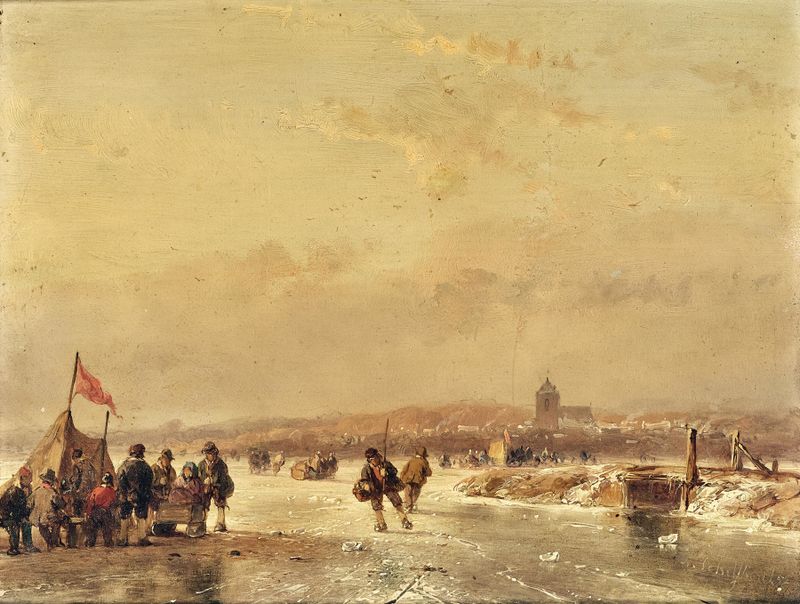
Winter Pleasures
Andreas Schelfhout
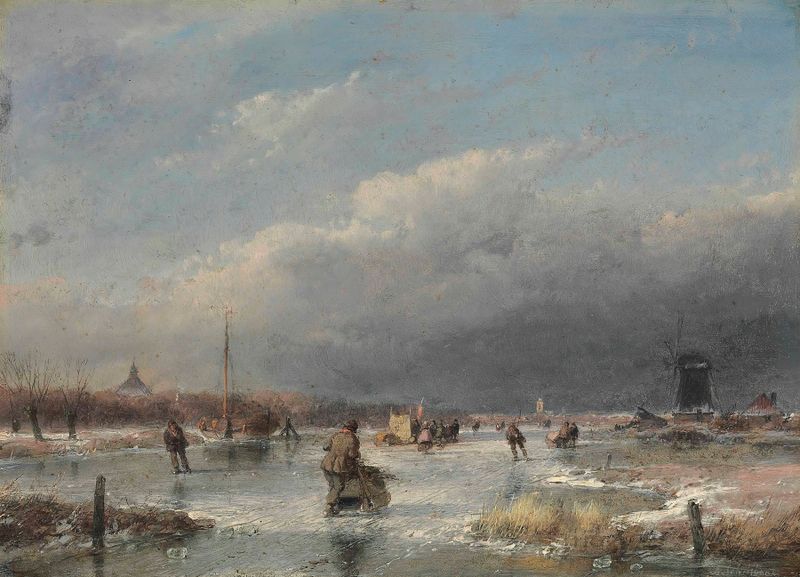
Skaters On A Frozen River
Andreas Schelfhout
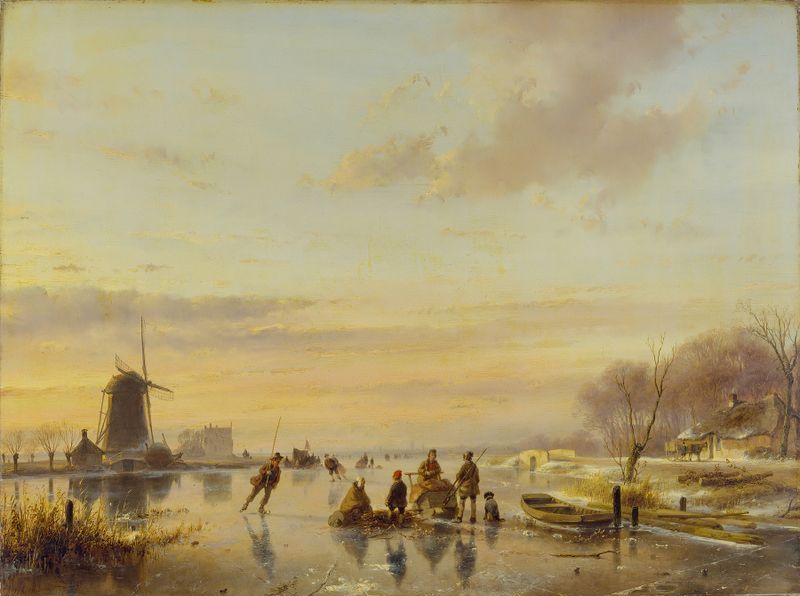
Winter in Holland
Andreas Schelfhout
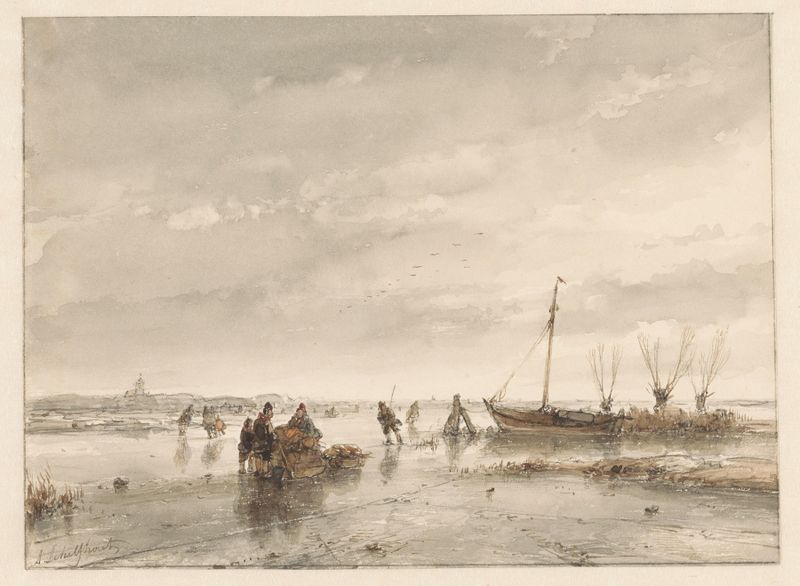
Winterlandschap met bevroren meer
Andreas Schelfhout

Landschap met schaatsenrijders
Andreas Schelfhout

A Frozen Waterway With Skaters By A Refreshment Stall
Andreas Schelfhout

Holländische Winterlandschaft
Andreas Schelfhout

Windmill beside a frozen river
Andreas Schelfhout

A Frozen Canal near the River Maas
Andreas Schelfhout

Winter landscape with skaters and a koek-en-zopie
Andreas Schelfhout





