
River Rapids by Wooded Cliffs — History & Facts
Can beauty exist without sorrow? In the embrace of nature, where turbulent waters churn beneath towering cliffs, reflection meets chaos in a delicate dance—a reminder of life’s duality. Look to the left at the rushing river, its frothy waves capturing light as they cascade over the stones below. Notice how Châtelet employs a palette of deep greens and blues to contrast with the pale sunlight illuminating the cliffs, casting long shadows that deepen the sense of drama. The vertical composition, with the cliffs rising sharply against the horizontal movement of the water, creates a tension that pulls the viewer into the scene, inviting contemplation of nature's power and grace. In this vivid portrayal, the river symbolizes both the relentless flow of time and a moment of stillness in the viewer's heart.
The cliffs, solid and unmoving, serve as a stark reminder of permanence in a world defined by change. Each droplet and wave encapsulates fleeting moments, while the looming heights suggest that beauty often coexists with peril. Here, the interplay of light and shadow strikes a chord, evoking an emotional resonance that invites deeper reflection. Claude-Louis Châtelet painted River Rapids by Wooded Cliffs around 1780, during a time of increasing interest in the natural world and the sublime in art.
Living in France, he was part of the transition from the Rococo style to the more introspective Romanticism. As an artist, he found inspiration in landscape painting, skillfully capturing the raw beauty of nature while contemplating its underlying tensions and complexities.
More Artworks by Claude-Louis Châtelet
Browse all →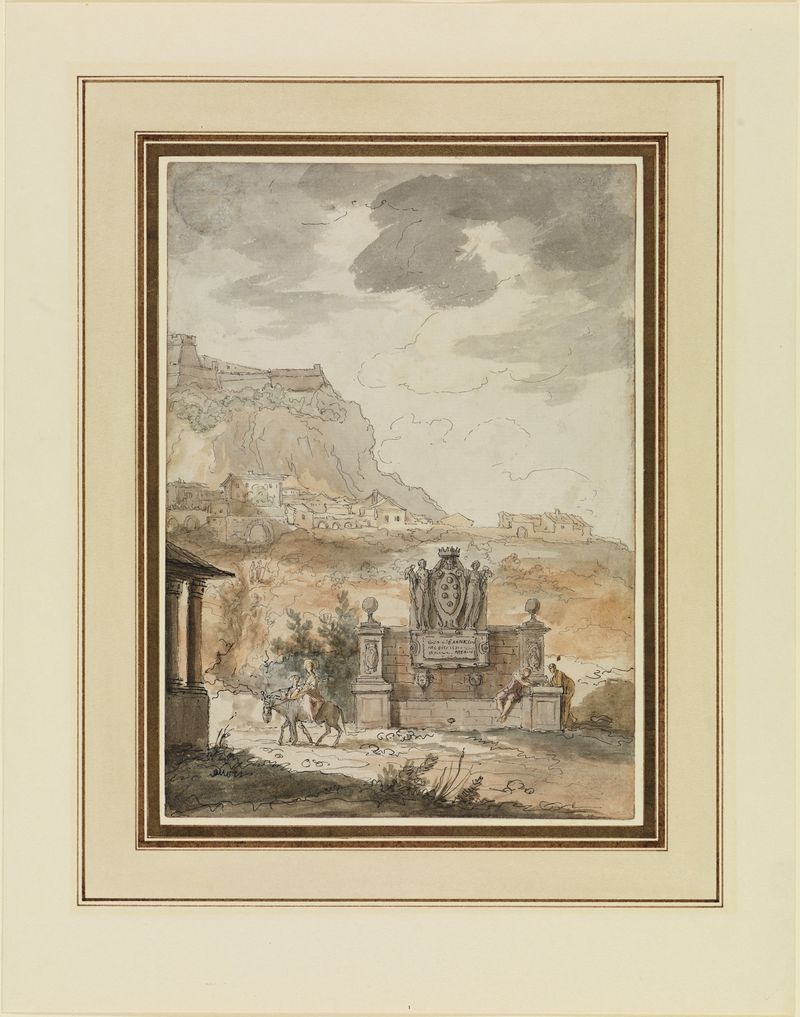
Italienische Landschaft mit Medici-Brunnen
Claude-Louis Châtelet
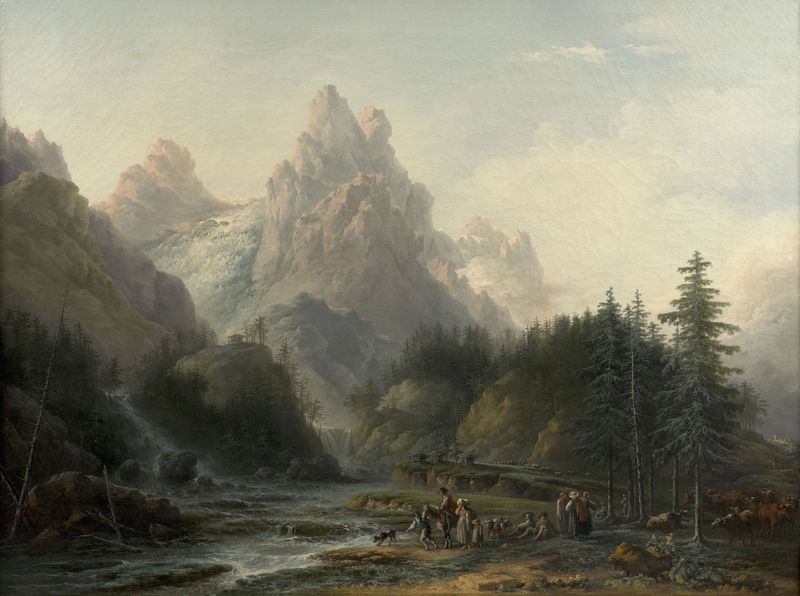
Vue du Wellhorn et du Wetterhorn prise de Rosenlaui vers Meiringen dans l’Oberland bernois
Claude-Louis Châtelet
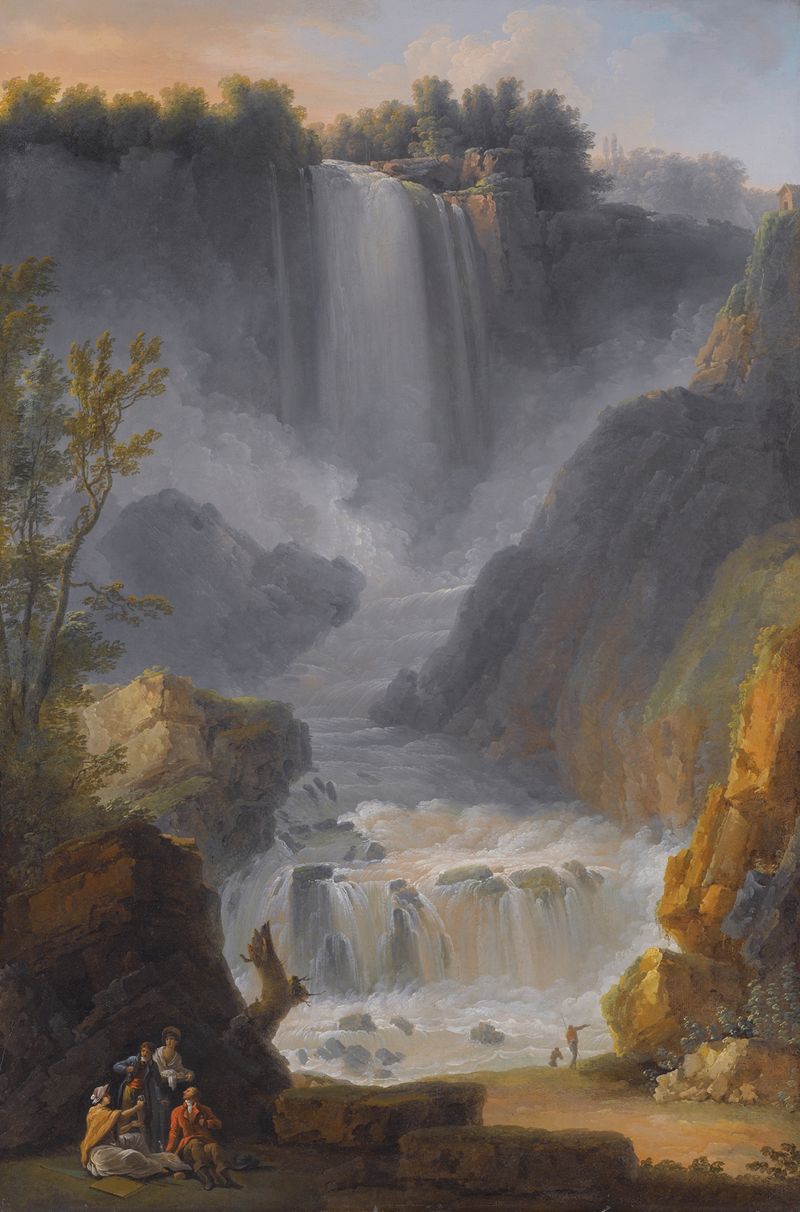
A View Of The Marmore Falls Near Terni
Claude-Louis Châtelet
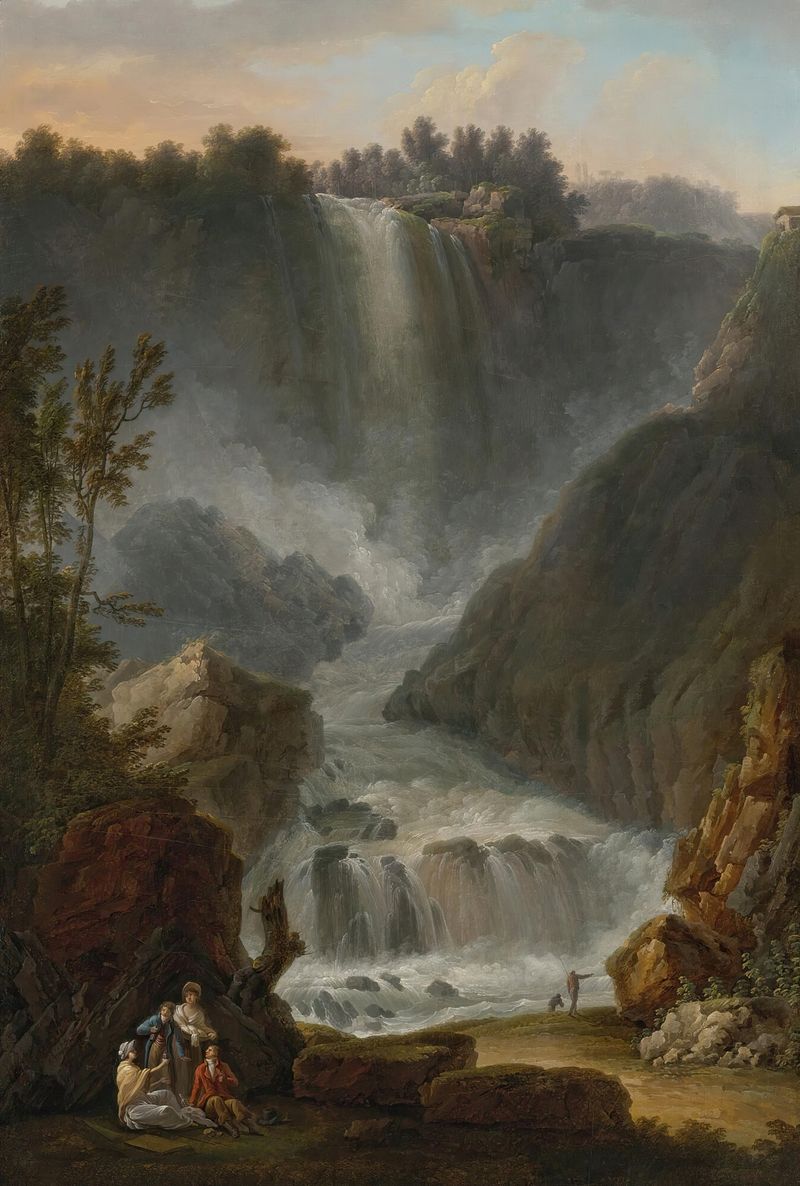
View Of The Cascade Del Marmore Near Terni
Claude-Louis Châtelet
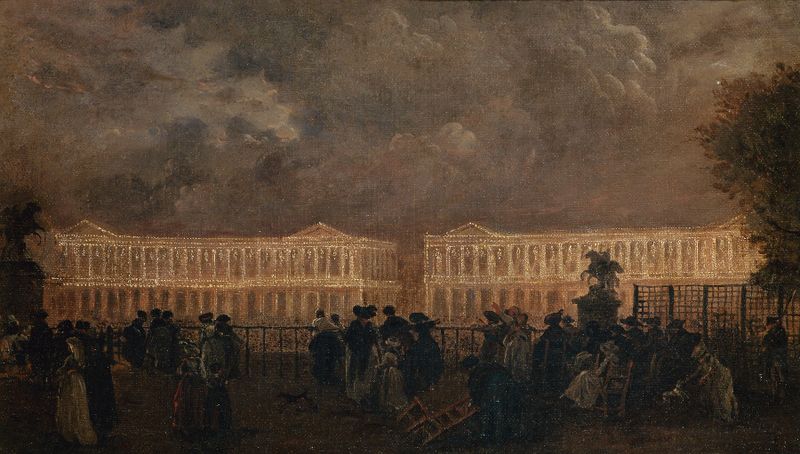
Illumination de la place Louis-XV à l’occasion de la naissance du dauphin, en octobre 1781
Claude-Louis Châtelet
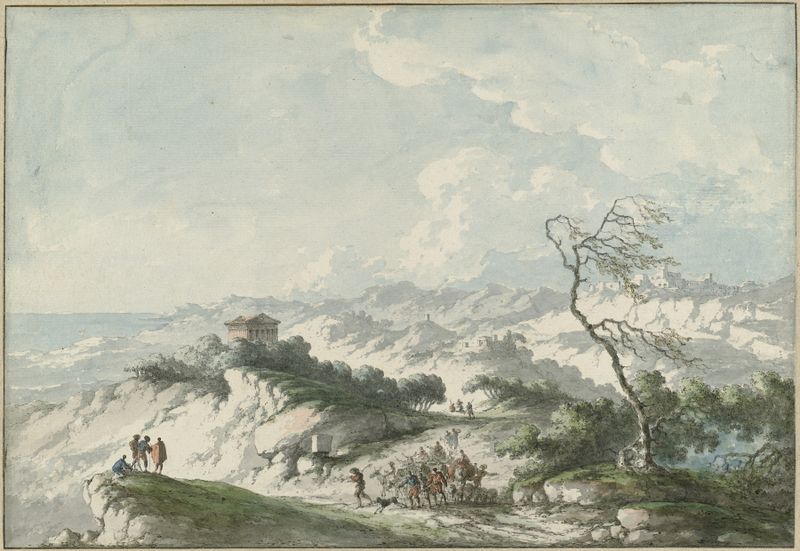
Second View of the Agrigento Countryside
Claude-Louis Châtelet
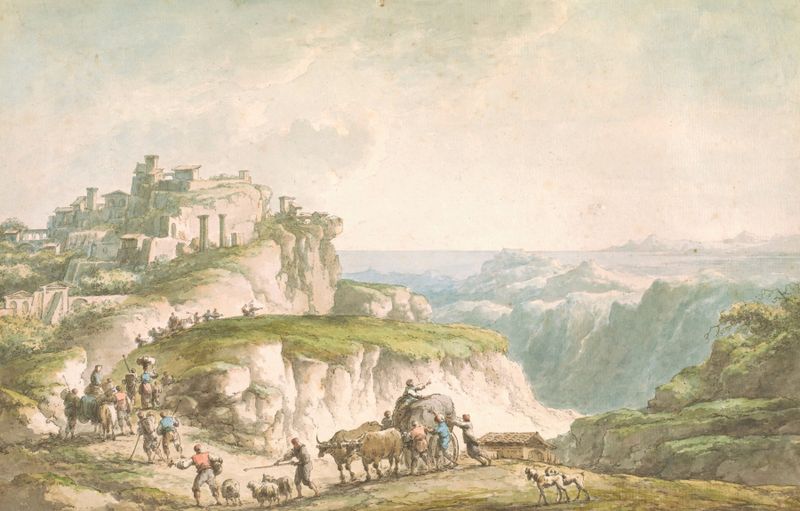
View of Catanzaro
Claude-Louis Châtelet





