
Road in the Woods — History & Facts
What if beauty was never meant to be finished? In Constant Troyon’s Road in the Woods, that tantalizing allure of the incomplete invites us to wander without destination, to yearn for what lies just beyond our sight. Look to the left where the winding path beckons, drawing the eye deeper into a lush, verdant embrace. Notice how the dappled sunlight filters through the towering trees, casting ephemeral patterns upon the earth, creating an interplay of light and shadow that dances with the leaves. The rich greens and earthy browns are a testament to Troyon’s understanding of nature’s palette, each stroke of paint a whisper of vitality, urging us to breathe in the tranquil essence of the forest. Within this peaceful scene lies a deeper tension: the road, though inviting, speaks to the journey of life, one filled with both promise and uncertainty.
The juxtaposition of the winding path against the sturdy trees evokes a sense of desire, suggesting a longing for exploration and the unknown. Troyon captures more than just a landscape; he conveys an emotional narrative of pursuits and possibilities, drawing us into contemplation about our own journeys. In the mid-1840s, Troyon painted this work at a time when the Barbizon School was blossoming in France, emphasizing the beauty of nature and the importance of plein air painting. This period in his life was marked by personal growth and a commitment to capturing the essence of rural landscapes, reflecting a time when artists were increasingly seeking inspiration in the natural world, moving away from the confines of the studio.
More Artworks by Constant Troyon
Browse all →
Landscape with Painter at Easel
Constant Troyon

The Marsh
Constant Troyon
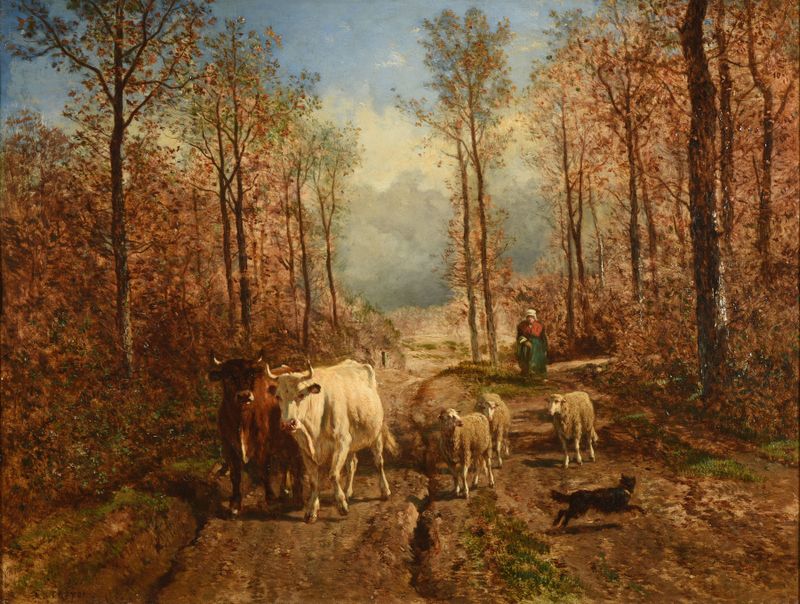
Rentrée de troupeau
Constant Troyon

Vaches sous bois
Constant Troyon

La gardeuse d’oies
Constant Troyon

Mill Stream with Fishermen
Constant Troyon
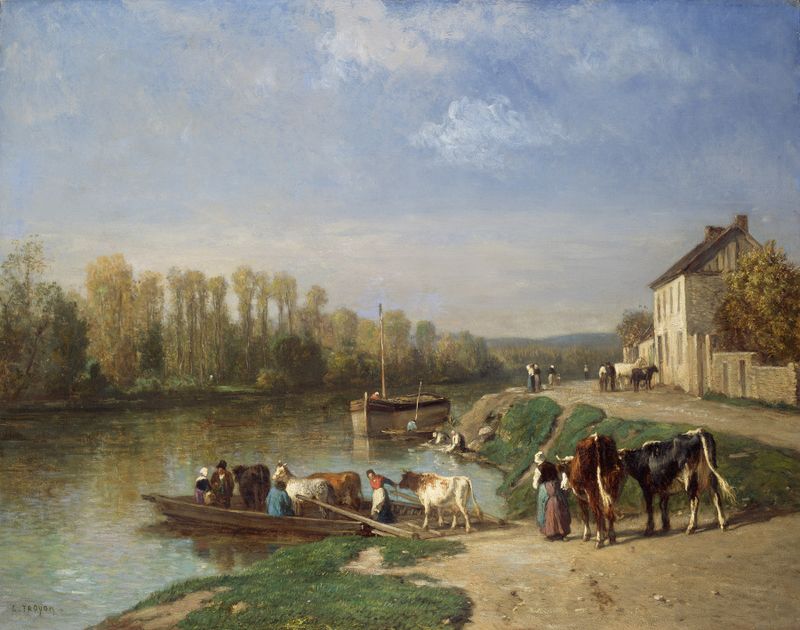
The Ferry Crossing
Constant Troyon

Landscape
Constant Troyon

Pasture in Normandy
Constant Troyon

Paysage
Constant Troyon





