
Rochers à Monte-Carlo — History & Facts
When did color learn to lie? The vibrant hues of Rochers à Monte-Carlo hint at a world bursting with life, yet beneath their surface lies a profound emptiness. This dynamic interplay invites viewers to question not only the canvas but also the very nature of perception itself. Look to the bottom left, where the rugged rocks rise defiantly from the shimmering sea. Notice the play of light as it dances across the water's surface, creating a mesmerizing contrast with the dark, shadowy crevices of the cliffs.
The brushwork, vigorous and textured, enhances the vitality of the scene, while the palette combines warm earth tones with cooler blues and greens, evoking a sense of both warmth and isolation. The composition draws your eye outward, as if urging you to explore the hidden depths of this coastal landscape. In this work, tension unfolds through the juxtaposition of vibrancy and desolation. The rocks, strong and imposing, seem to guard an emotional void, a silence that speaks louder than the crashing waves.
The radiant colors suggest life, yet their intensity feels almost deceptive, creating a sense of longing for connection amidst an unyielding natural world. It’s a visual commentary on the duality of beauty and solitude, igniting a meditative reflection on our own existence. Created in 1887, during his time in Monte Carlo, Guérard sought to capture the essence of this alluring coastline. At this juncture in his career, he was deeply influenced by the Impressionist movement, striving to render fleeting moments of light and atmosphere with immediacy.
The art world was transforming, and he embraced this evolution, using color not merely as a representation but as a means to express underlying feelings and truths.
More Artworks by Henri-Charles Guérard
Browse all →
Paris, la rue Cortot, Montmartre
Henri-Charles Guérard
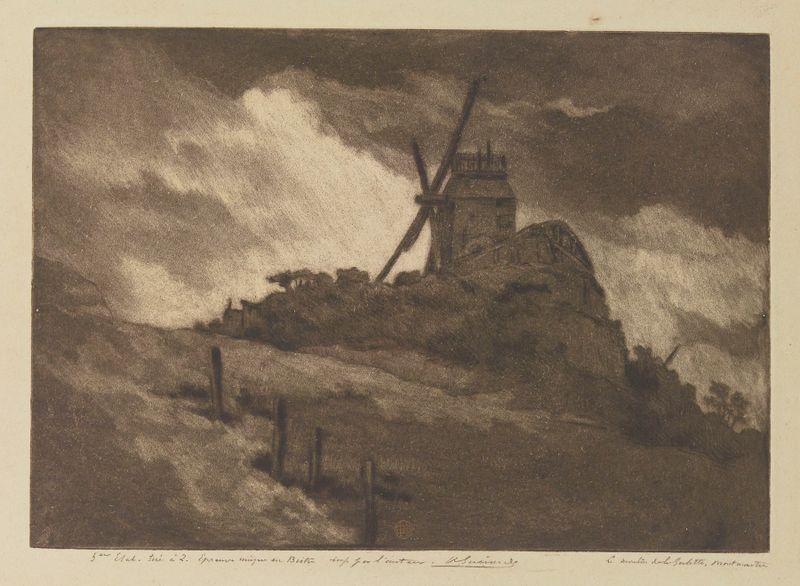
Le moulin de la Galette, Montmartre
Henri-Charles Guérard
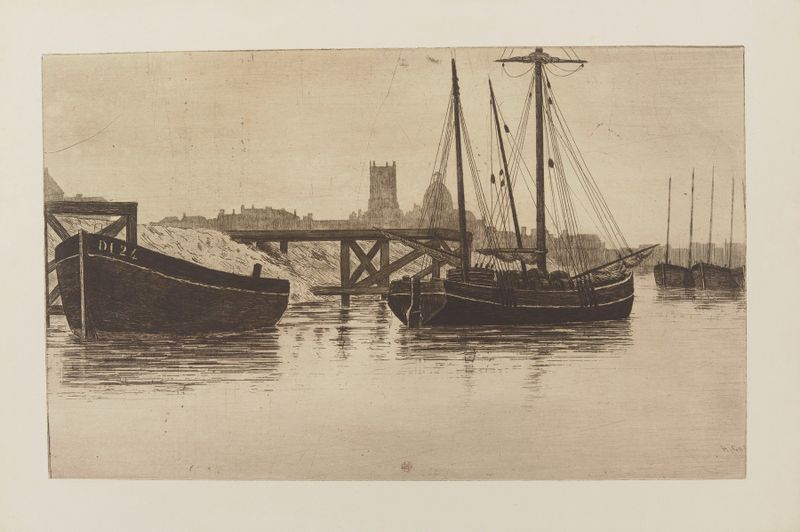
Débarquement de créosote, Retenue, Dieppe
Henri-Charles Guérard
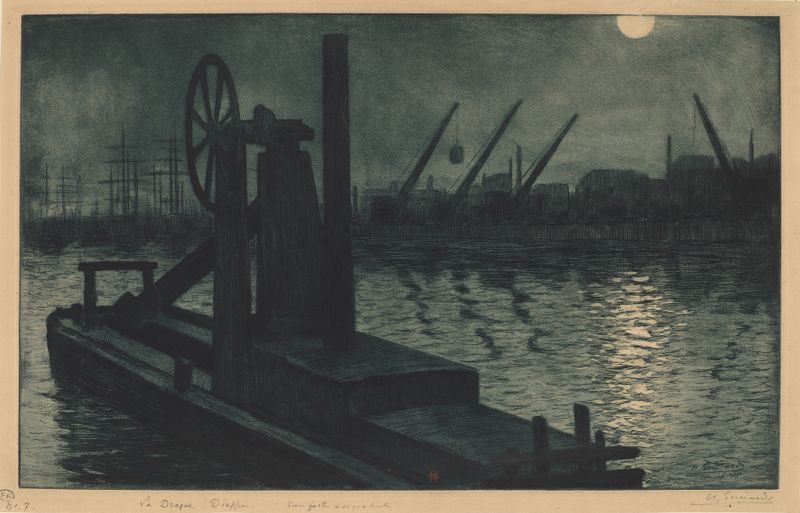
La Drague Dieppe (A Dredger in Dieppe Harbor by Moonlight)
Henri-Charles Guérard
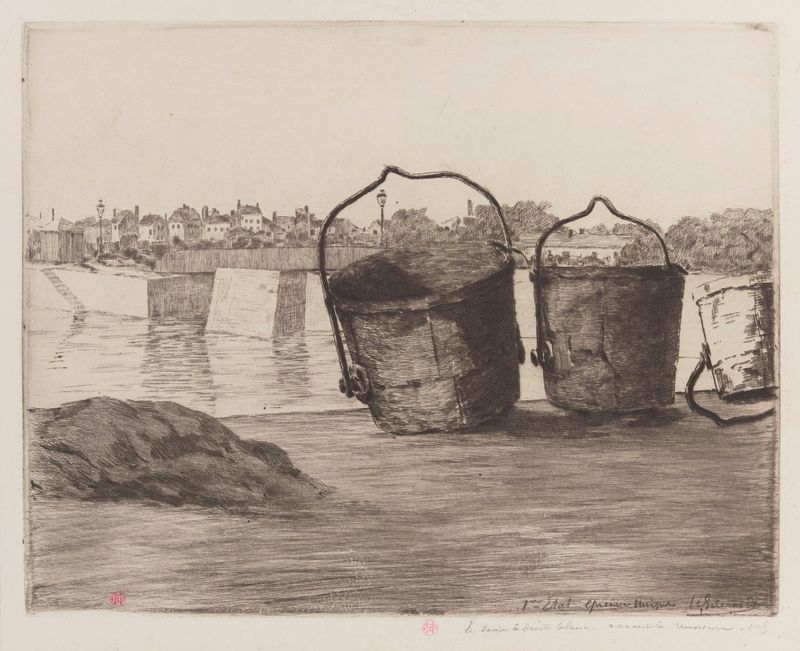
Quai au charbon, Honfleur
Henri-Charles Guérard
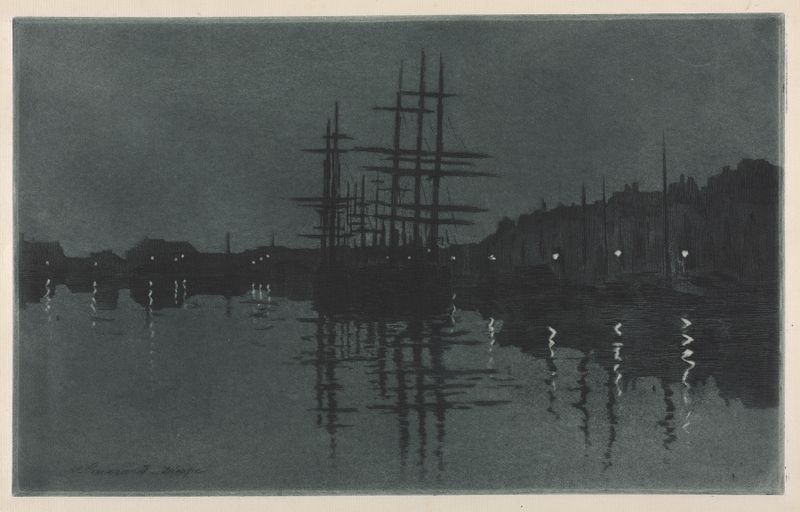
Effect of Moon at Dieppe
Henri-Charles Guérard

Escalier de la cale au Pollet, Dieppe
Henri-Charles Guérard

Venise (l’entrée du Grand canal, près de la Piazetta)
Henri-Charles Guérard

Le pêcheur au carrelet
Henri-Charles Guérard

Patineurs sur le lac d’Annecy
Henri-Charles Guérard





