
Rock cut tombs, Lycia — History & Facts
Could beauty survive in a century of chaos? Look closely at the artist's masterful brushwork where the rugged cliffs meet the serene sky. The intricate detailing of the rock-cut tombs contrasts sharply with the ethereal quality of the atmosphere surrounding them. Notice how the golden hues of the setting sun bathe the ancient structures, casting elongated shadows that evoke a sense of both reverence and mystery. As you explore the painting further, consider the emotional weight that lingers in the stillness of the scene.
The tombs, sturdy and timeless, stand as a testament to human creativity, resilience, and the desire for immortality amidst the eroding forces of nature. The juxtaposition of the harsh landscape against the delicate play of light creates a dynamic tension, inviting viewers to ponder the fragility of existence and the enduring nature of art. In 1843, during a significant phase of European art, Müller was immersed in the burgeoning Romantic movement, reflecting on themes of nature's sublimity and historical significance. Living in England but profoundly influenced by his travels to the Mediterranean, he sought to capture both the physical beauty of the landscape and the deeper narratives held within ancient ruins.
This piece reflects not only his artistic vision but also a broader discourse on the relationship between humanity and the timelessness of history.
More Artworks by William James Müller
Browse all →
Cleeve, Somerset, with Bridgewater Bay in the Distance
William James Müller

The Bridge at Llangollen
William James Müller

Cairo Bazaar
William James Müller
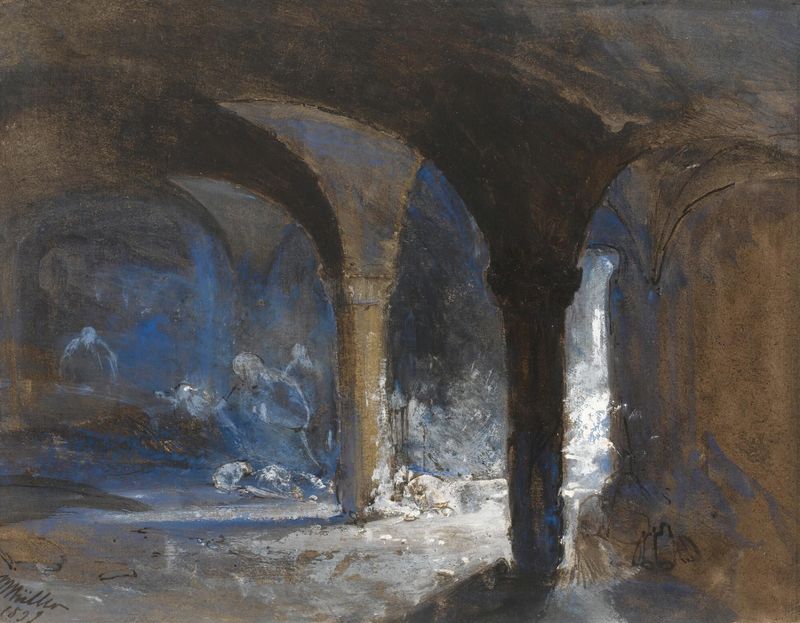
Crypt of the bishop’s palace during the Bristol riots
William James Müller

Near the Caravan Bridge, Smyrna
William James Müller
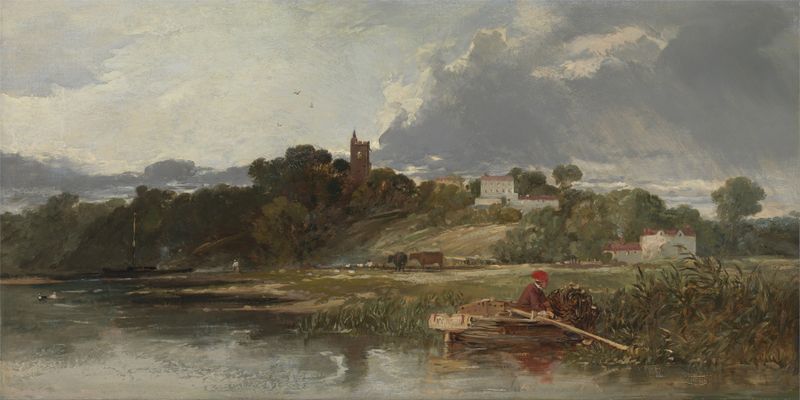
Gillingham on the Medway
William James Müller

The Church of the Holy Sepulchre
William James Müller

A View of Eton and the Fellows Eyot
William James Müller

Tripoli
William James Müller

A Mountain Torrent
William James Müller
More Architecture Art
Browse all →
The statue of Liberty
Frédéric Auguste Bartholdi

View of Houses in Delft, Known as ‘The Little Street’
Johannes Vermeer

View of Houses in Delft, Known as ‘The Little Street’
Johannes Vermeer

The Cathedral in Rouen. The portal, Grey Weather
Claude Monet

The yellow house
Vincent van Gogh

The Church in Auvers-sur-Oise, View from the Chevet
Vincent van Gogh