Rosa Centifolia Anglica Rubra — History & Facts
The eye is drawn instantly to the lush, layered bloom at the heart of Rosa Centifolia Anglica Rubra, where each petal seems to unfurl with deliberate precision. The rose, caught at the moment of fullest expression, dominates the composition—its rich pinks deepening toward the center, surrounded by a constellation of tightly closed buds. The stem, bristling with thorns, arcs gracefully, while the leaves below, veined and textured, anchor the flower with their muted greens.
Redouté’s watercolor technique brings a clarity and freshness to the subject, making the rose appear almost tangible, as if it could be plucked from the page. The artist’s scientific eye is always at work: every detail serves to reveal the plant’s structure, from the serrated leaf edges to the subtle gradations of color in the petals. This work belongs to a world where art and science were not rivals but partners, especially in the late eighteenth and early nineteenth centuries. Botanical illustration flourished as collectors, botanists, and aristocrats clamored for accurate, beautiful records of rare plants—often newly arrived from distant lands.
Pierre-Joseph Redouté became the most celebrated of these artist-naturalists, working for queens and empresses, his watercolors prized for their precision and grace. The piece seen here, now in a private collection and photographed at a Belgian auction in 2010, is part of that tradition: a visual document as much as a work of art, created for study, admiration, and the sheer pleasure of looking closely. In its careful balance of beauty and information, it invites us to linger, tracing each vein and thorn, as if discovering the rose for the first time.
More Artworks by Pierre-Joseph Redouté
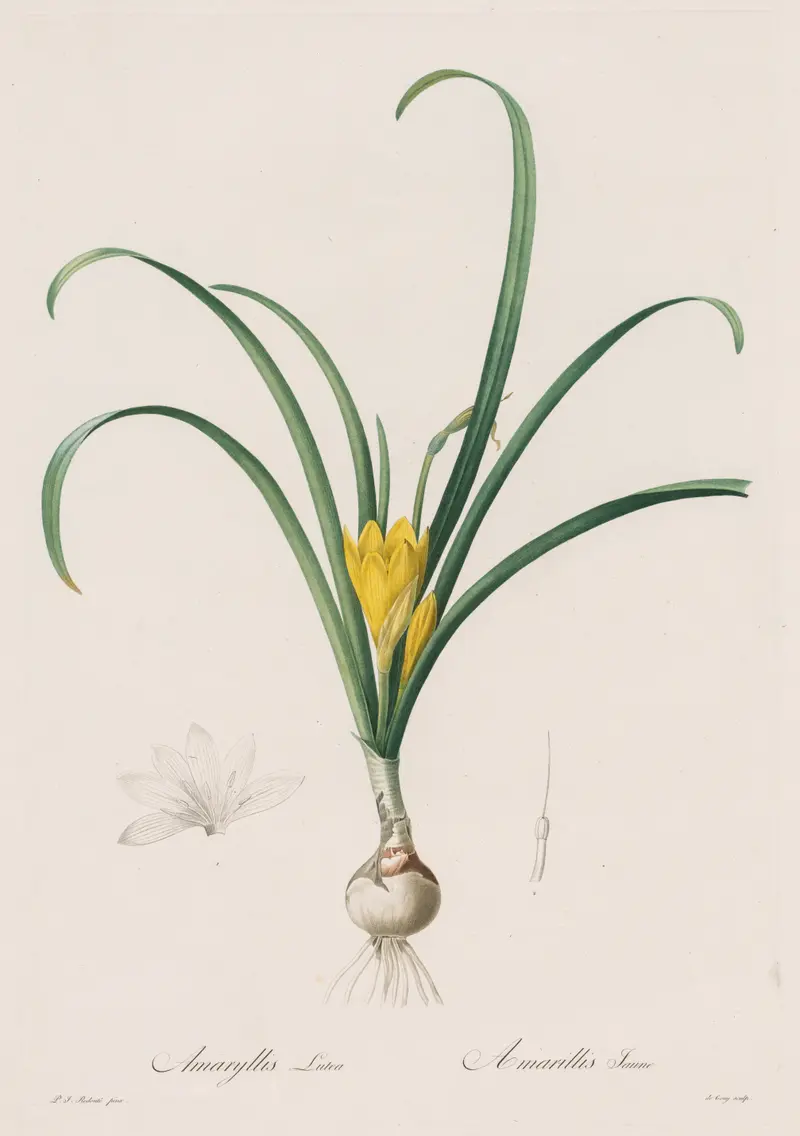
Amaryllis lutea (Les Liliacées)
Pierre-Joseph Redouté
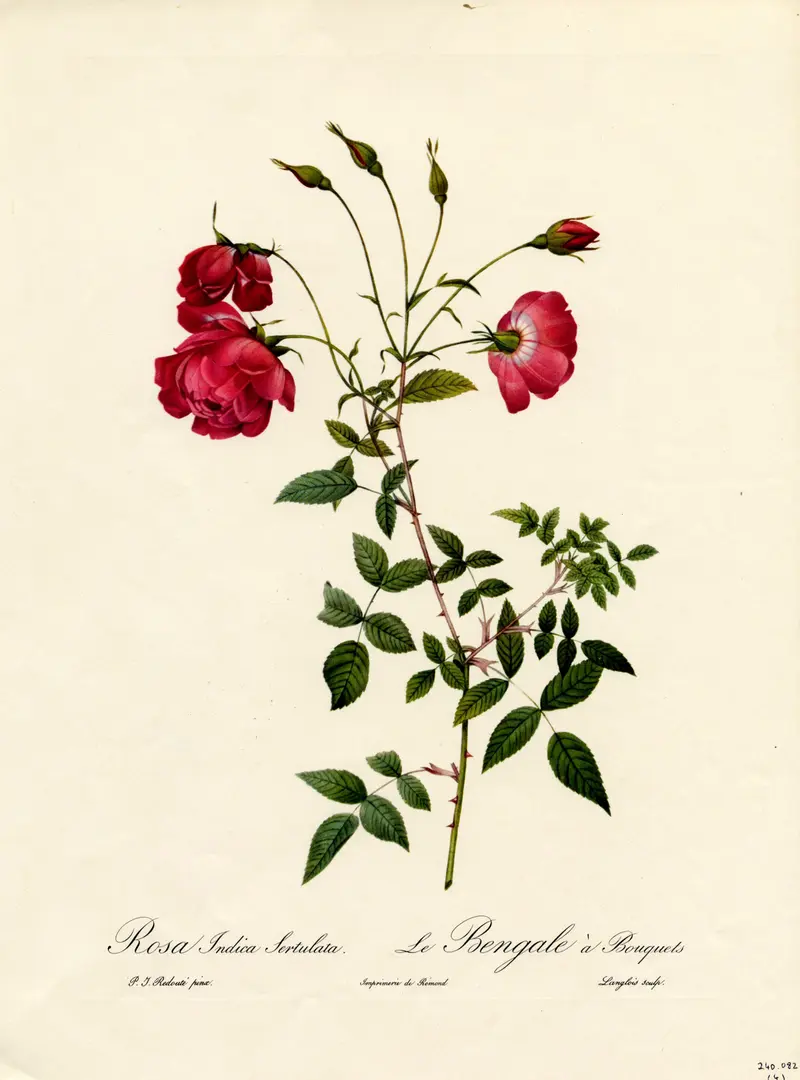
Rosa Indica Sertulata (Bengal Rose)
Pierre-Joseph Redouté

Rosa Centifolia Foliacea
Pierre-Joseph Redouté
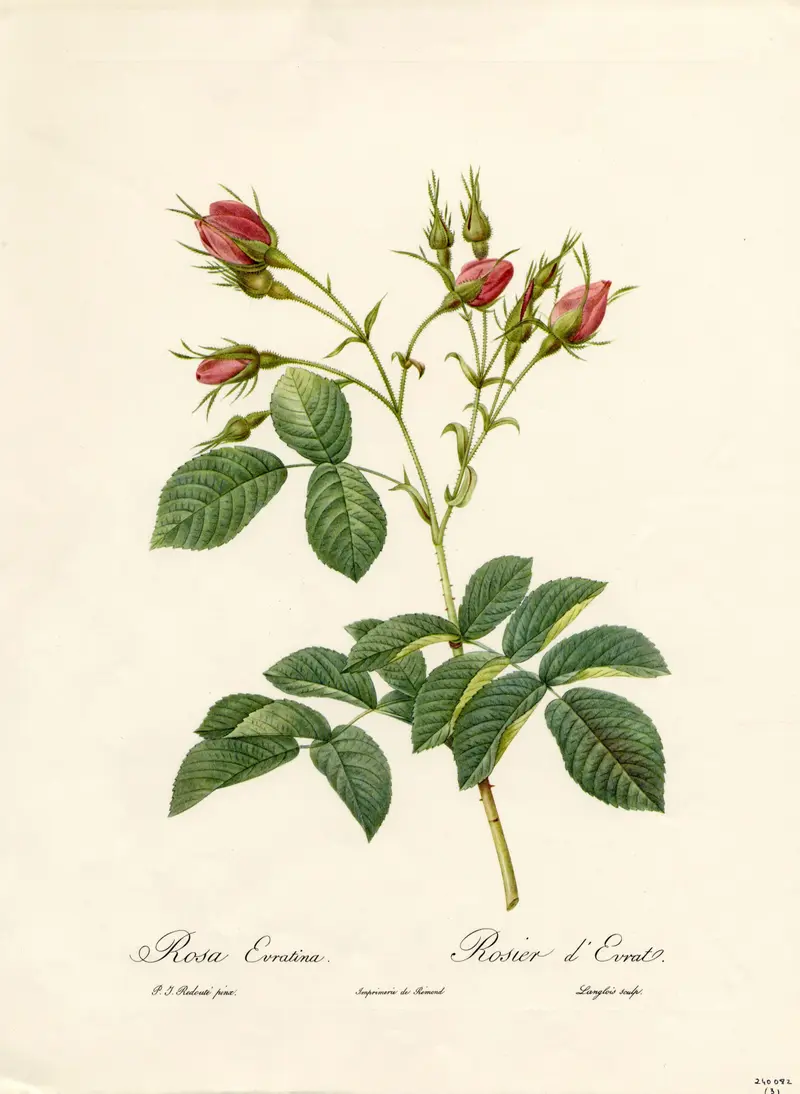
Rosa Evratina (Evrat's Rose)
Pierre-Joseph Redouté
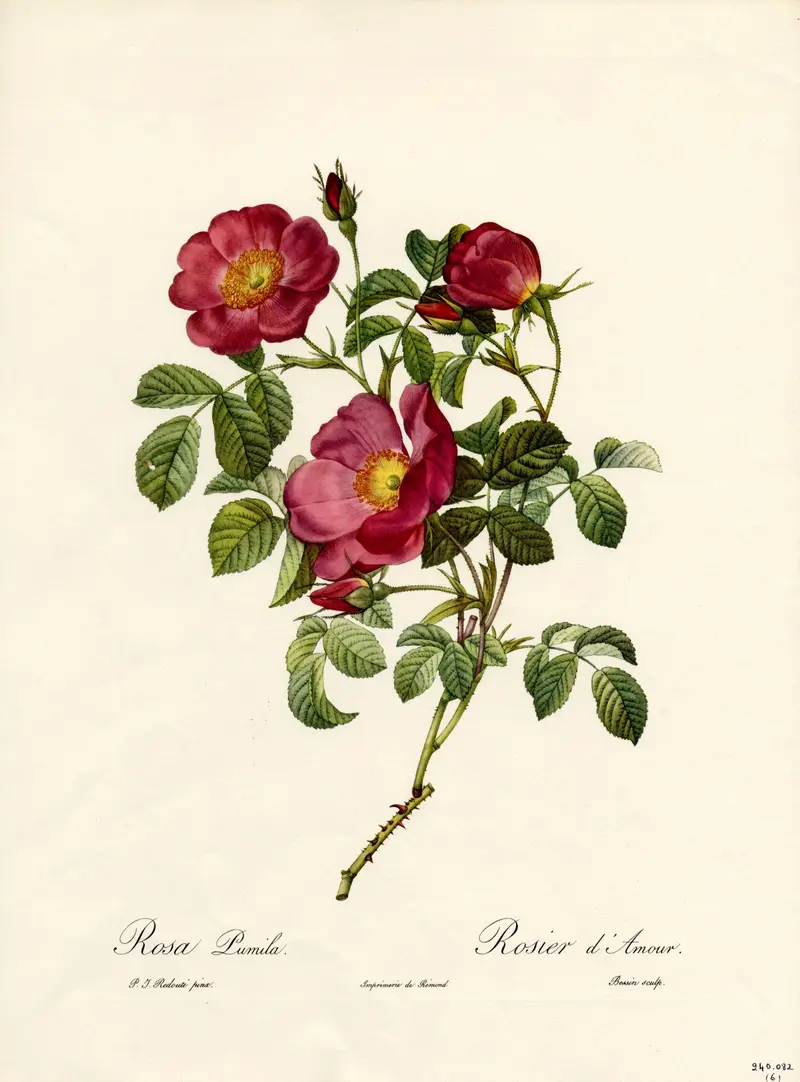
Rosa Pumila (Love Rose)
Pierre-Joseph Redouté
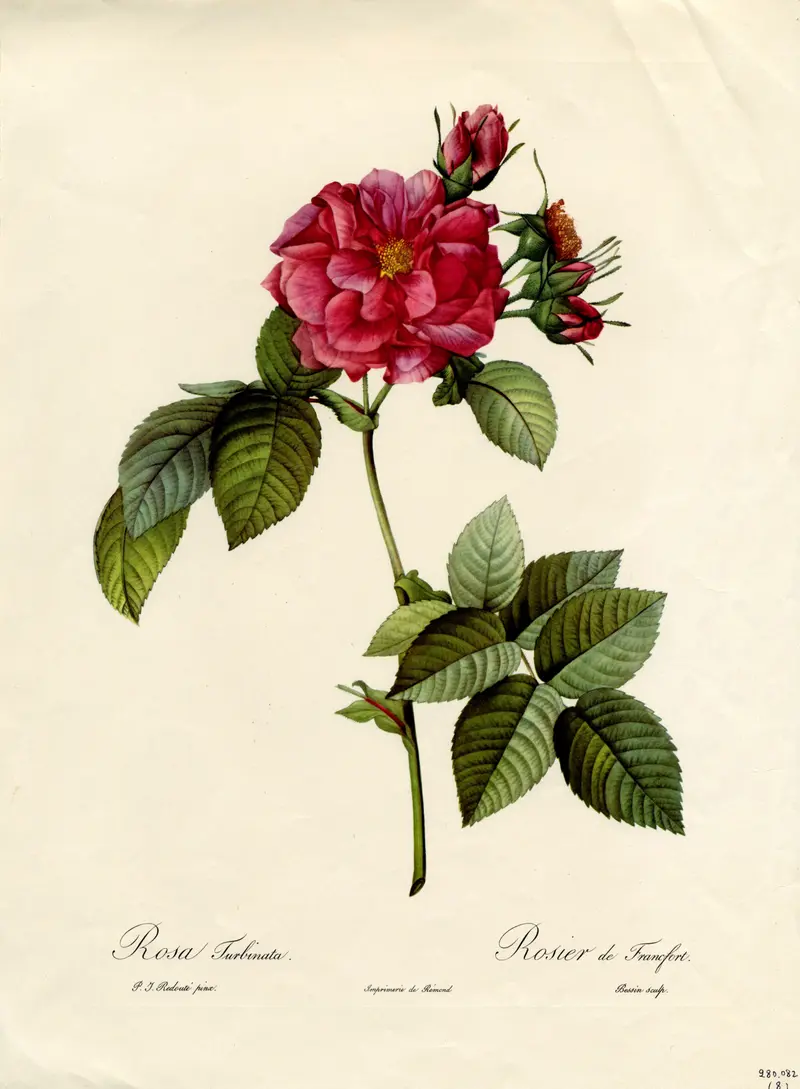
Rosa Turbinata (Frankfurt Rose)
Pierre-Joseph Redouté

Rosa Multiflora Carnea
Pierre-Joseph Redouté

Rosa Damascena Aurora
Pierre-Joseph Redouté
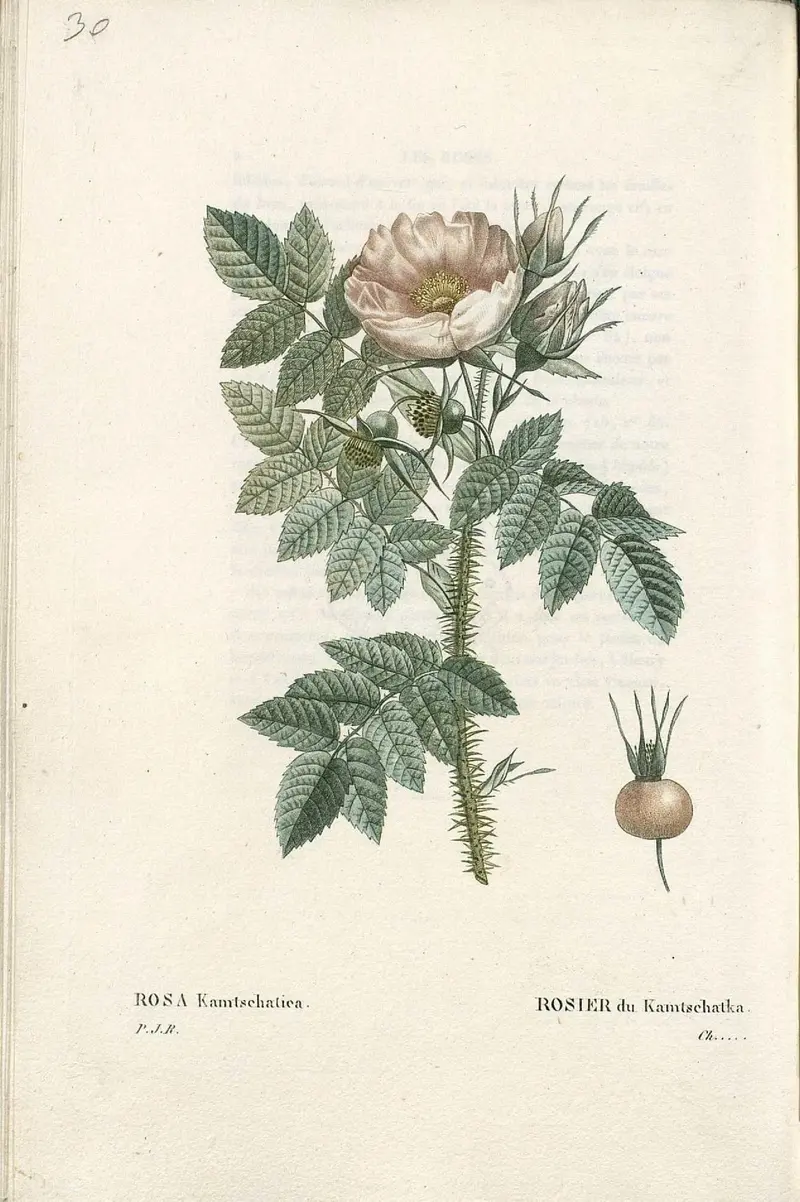
Rosa Kamtchatica (Kamchatka Rose)
Pierre-Joseph Redouté
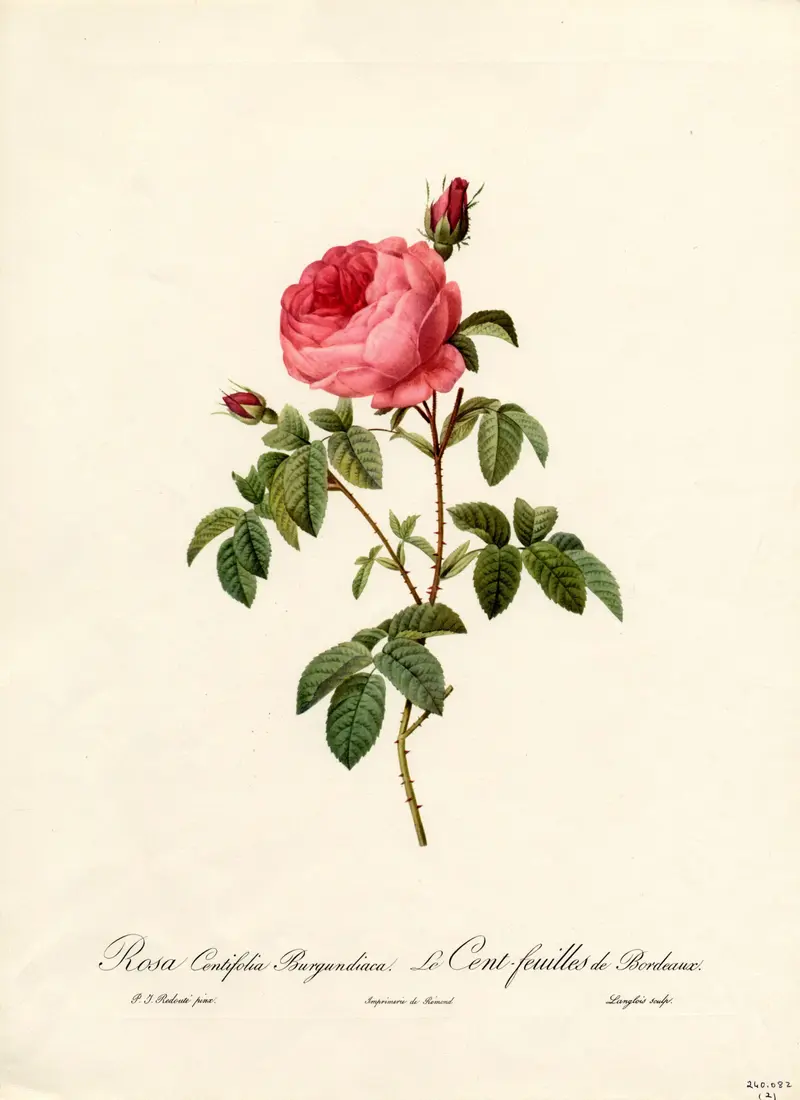
Rosa Centifolia Burgundiaca (Burgundy Rose)
Pierre-Joseph Redouté