
Rote Giebel, Rote Dächer — History & Facts
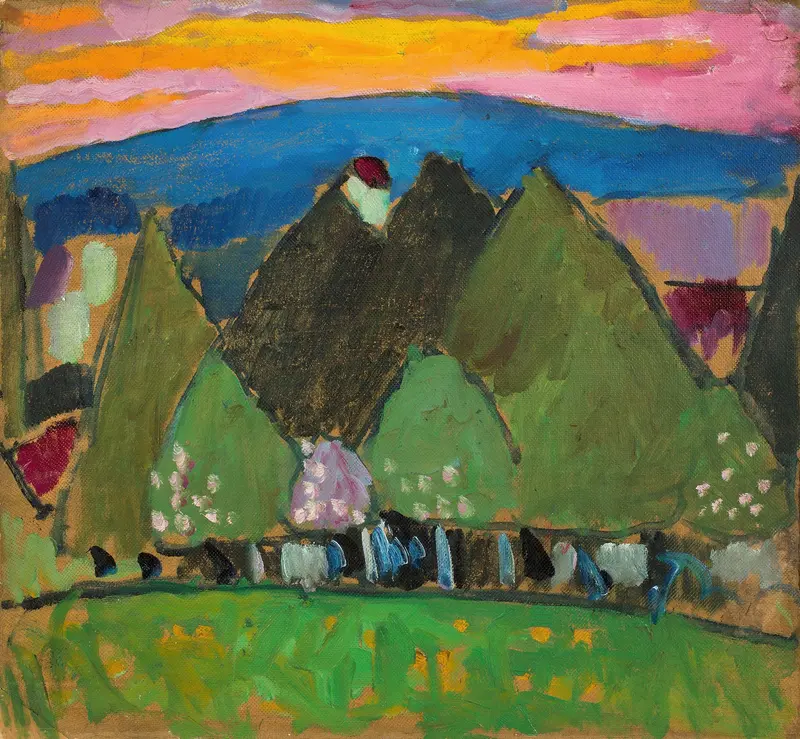
A flash of red leaps out from the tangle of green and gold, drawing the eye straight to the heart of the scene. The roof, impossibly vivid, seems to pulse with life against the jagged rhythm of the hills, as if the house itself were a living thing nestled in the wild. Around it, the mountains rise in sharp, angular forms, their edges thickly outlined, almost vibrating with energy.
The sky above is restless, streaked with blue and lavender, refusing to settle into calm. Every brushstroke feels urgent, as if Alexej von Jawlensky wanted to capture not a place, but the sensation of seeing it for the first time. In 1910, artists across Europe were breaking free from the old ways of seeing, and Jawlensky was among those leading the charge. Works like this, with their bold colors and simplified forms, belong to a moment when painters sought to express inner feeling rather than outward appearance.
The jagged geometry and raw color recall the experiments of the Expressionist movement, which flourished in Germany just as this piece was made. History has kept few traces of the journey of this particular painting, now recorded in the Bildarchiv Foto Marburg, but its energy is unmistakable: look again, and the red roof blazes even brighter.
More Artworks by Alexej von Jawlensky

Murnau
Alexej von Jawlensky
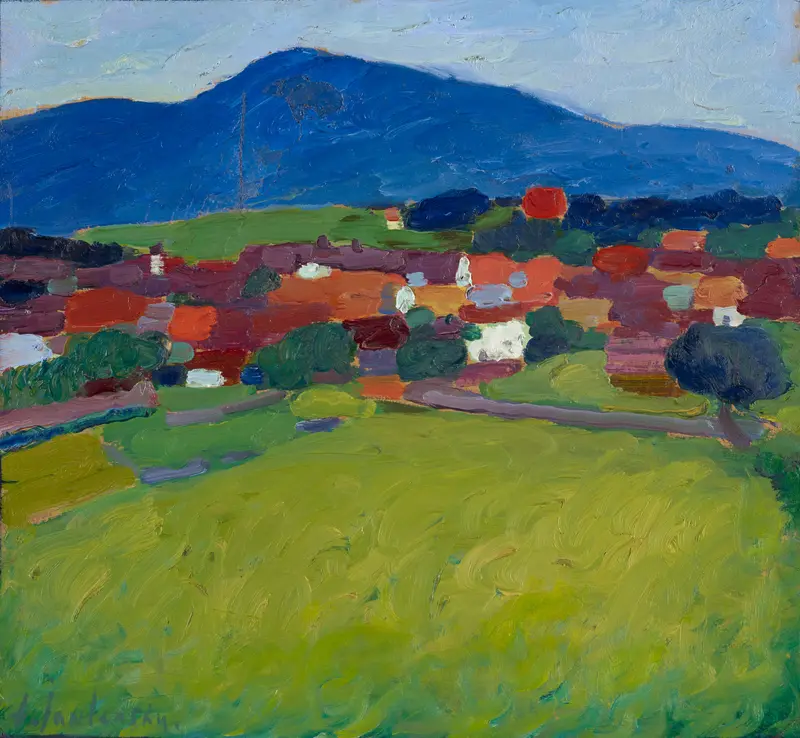
The Village Of Murnau
Alexej von Jawlensky
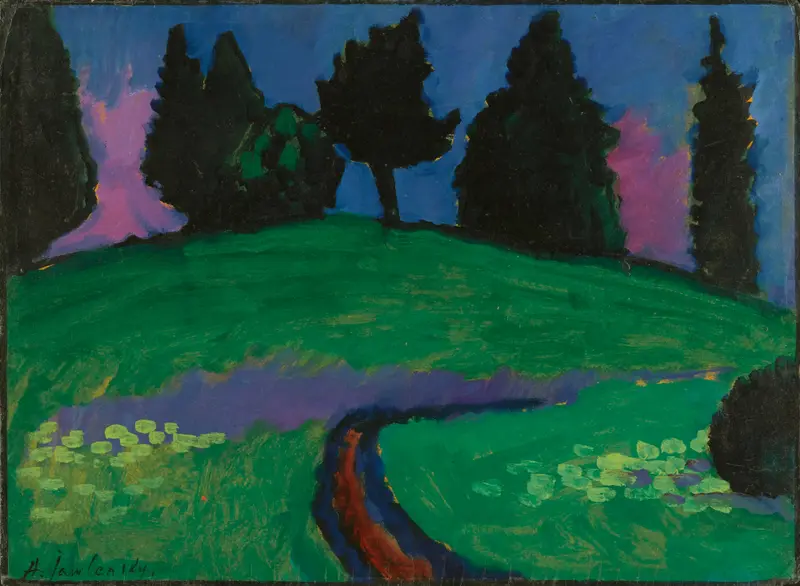
Dunkle Bäume über Grünem Hang (Dark Trees Over Green Slope)
Alexej von Jawlensky
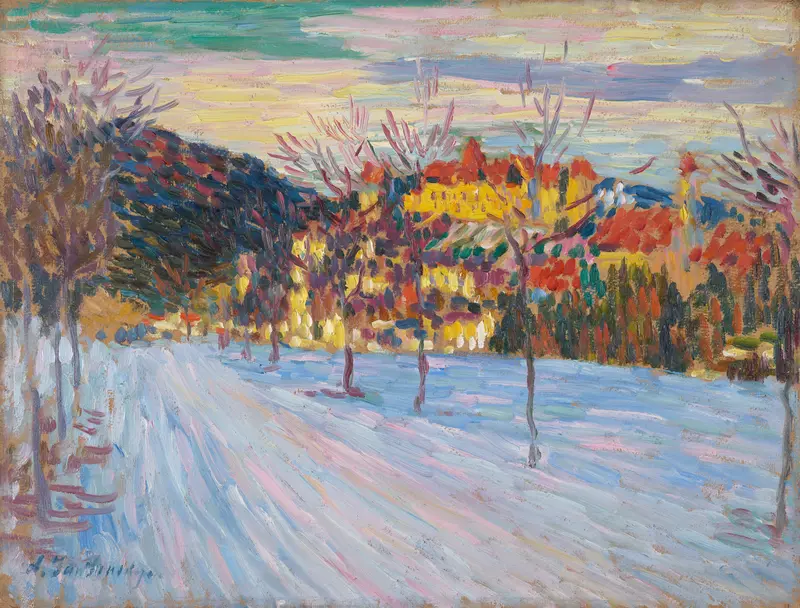
Füssen
Alexej von Jawlensky
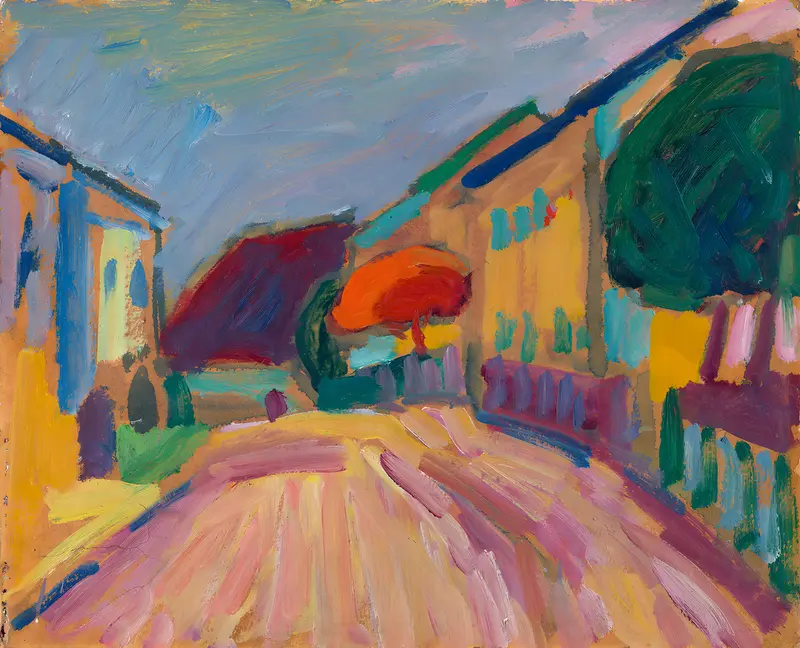
Sketch from Murnau
Alexej von Jawlensky
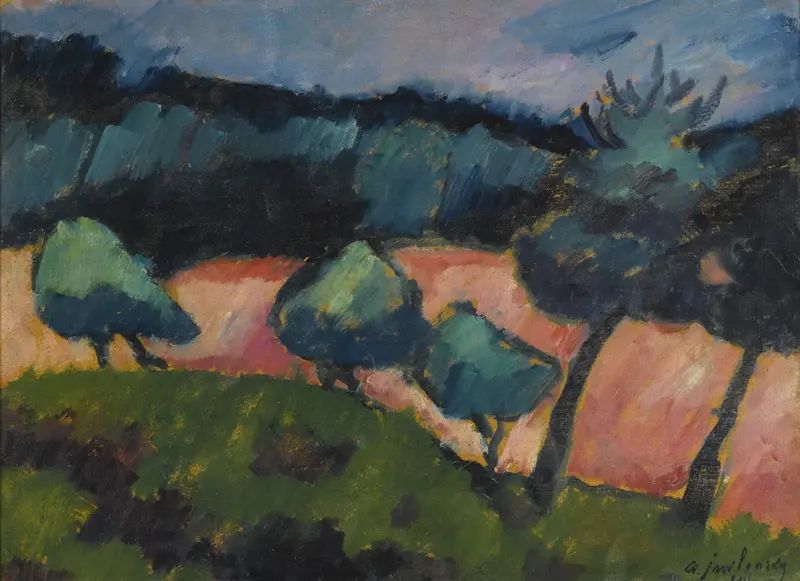
Bäume und Dünen in Prerow (Trees and dunes in Prerow)
Alexej von Jawlensky
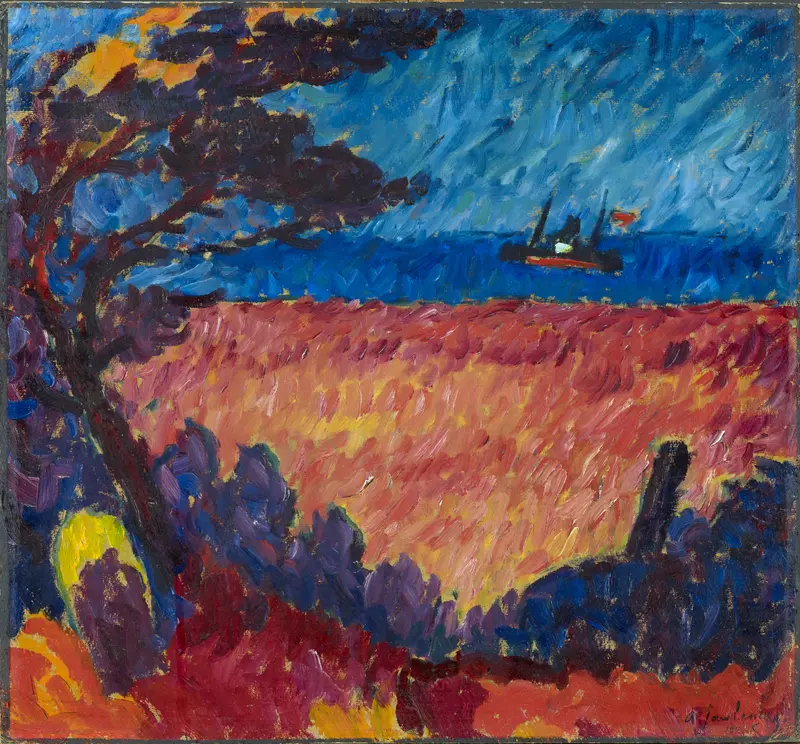
At The Baltic Sea
Alexej von Jawlensky
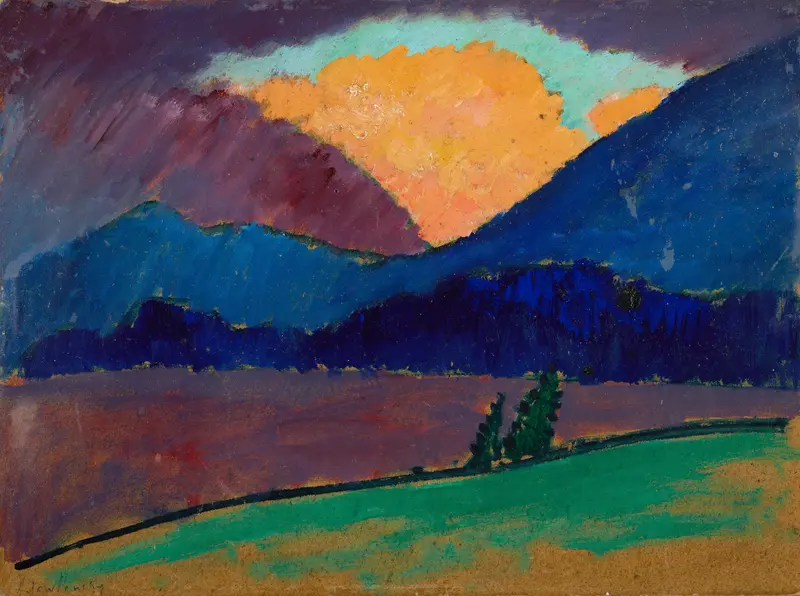
Summer evening in Murnau
Alexej von Jawlensky
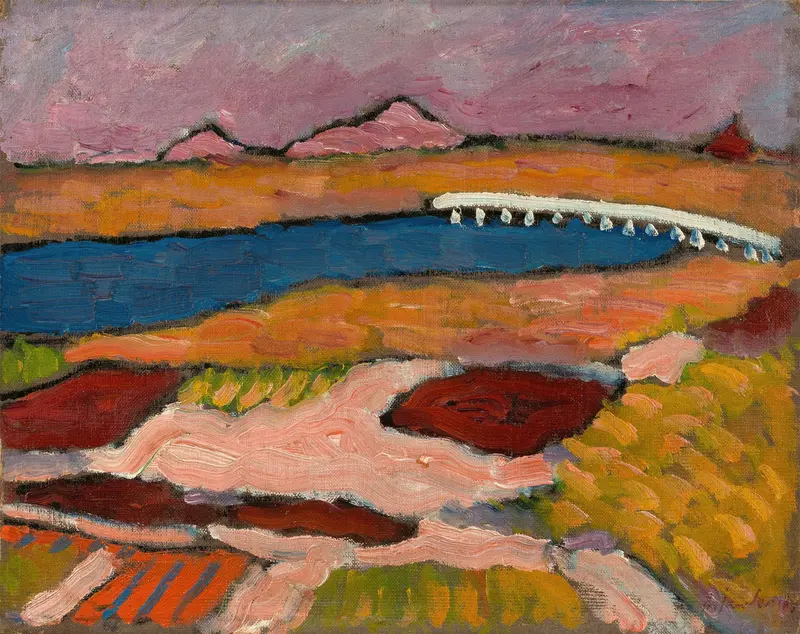
Prerow (Darß), Pommern
Alexej von Jawlensky
Landschaft mit Bäumen
Alexej von Jawlensky
More Landscape Art

The Starry Night
Vincent van Gogh

View of Delft
Johannes Vermeer

Water Lilies
Claude Monet

The Grand Canal, Venice, looking north-west from the Ca' Corner to the Ca' Contarini degli Scrigni, with the campanile of Santa Maria della Carità
Canaletto

Windsor Castle
Canaletto

The Grand Canal looking North-East from the Palazzo Dolfin-Manin to the Rialto Bridge
Canaletto