
Rue des Grands Augustins — History & Facts
What secret hides in the quiet of the canvas? Beneath the surface, an ecstasy simmers, wrapped in the stillness of a Parisian street. Look to the lower left corner, where cobblestones lead the eye, their subtly varied hues mapping a silent journey. The buildings rise on either side, their facades painted in warm ochres and soft grays, inviting whispers of histories long past. Notice how the light dances along the edges, casting delicate shadows that create a sense of depth and intimacy.
There’s a vibrant harmony in the brushwork, each stroke suggesting an unseen breeze that breathes life into the scene. In this serene moment, contrasts emerge: the static buildings against the ephemeral play of light and shadow, the simplicity of the everyday juxtaposed with the vibrancy of life just beyond the frame. Each window offers a glimpse of life, perhaps laughter spilling from a gathering or the solitary figure lost in thought, embodying solitude amid the crowd. This tableau resonates with a quiet longing, where the echoes of city life are felt more than seen, drawing viewers into its emotional landscape. F.
Séguin painted Rue des Grands Augustins in 1895, a time when the Impressionist movement was redefining perceptions of urban life. Living in Paris, he was deeply influenced by the city’s evolving character, transitioning from the grand to the intimate. As art began to reflect the essence of fleeting moments, this work captures not just a street, but the pulse of a city in transition, echoing the emotions of an entire era.
More Artworks by F. Séguin
Browse all →
Rue Brantôme. (anciennement rue des Petits Champs donnant rue Saint Martin et rue Beaubourg)
F. Séguin
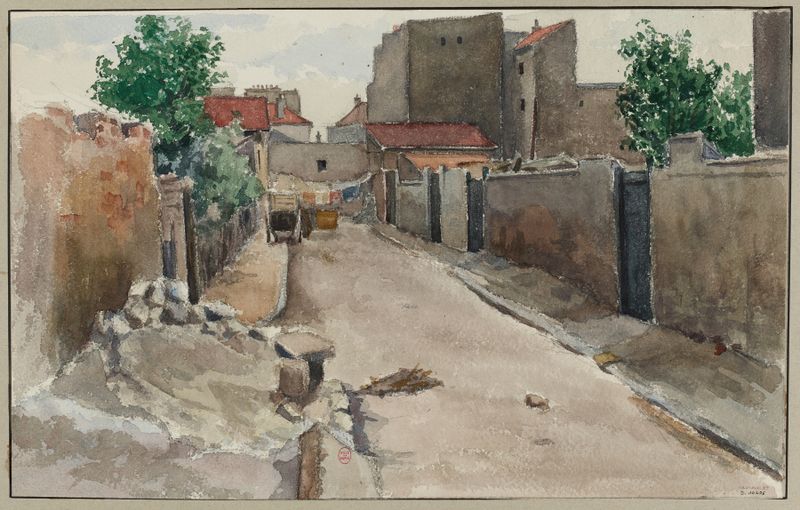
La rue de Chambéry, prise de la rue de Nice la Frontière
F. Séguin
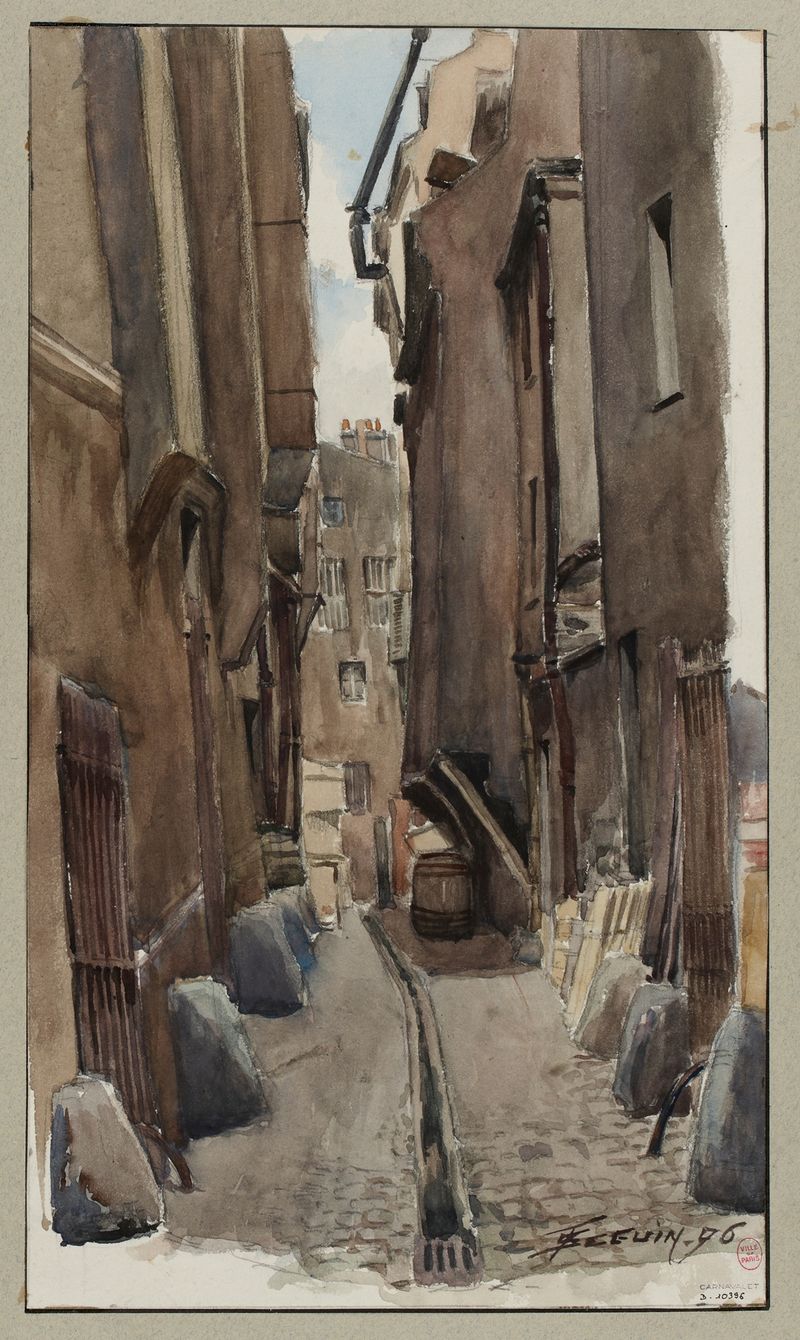
Le Cul de sac du Bœuf, (rue Saint Merri)
F. Séguin

Rue Descartes
F. Séguin
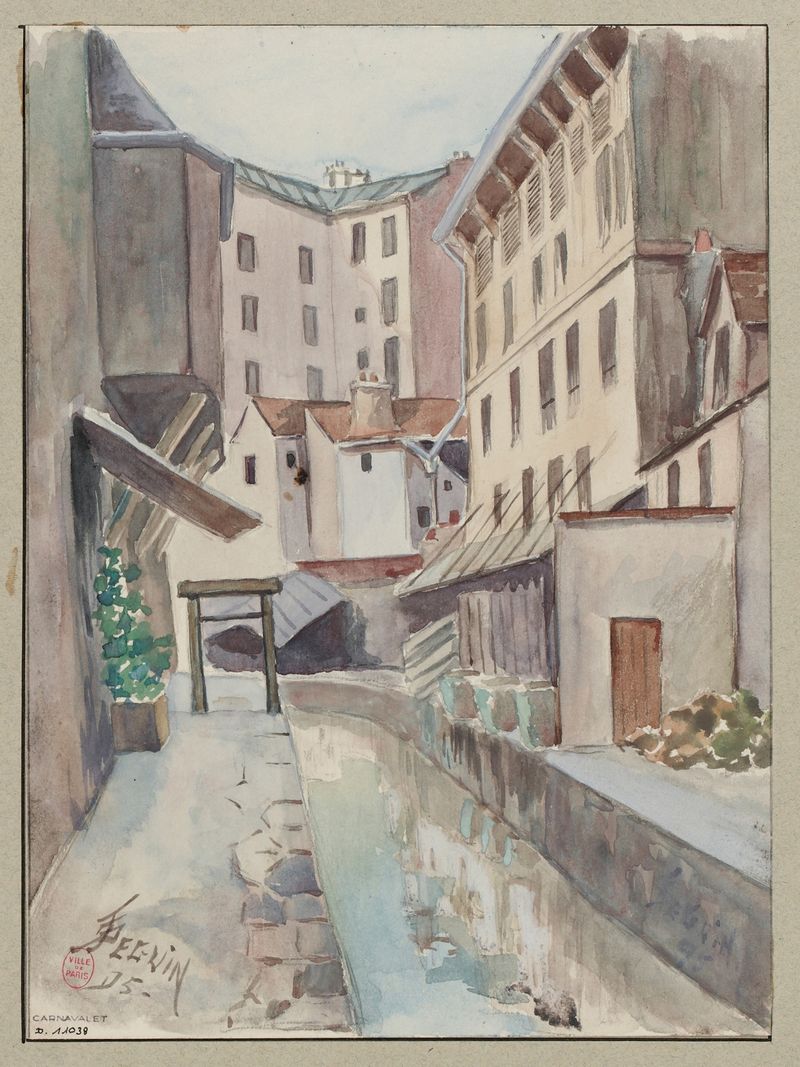
Le bord de la Bièvre à l’avenue des Gobelins
F. Séguin

Villa des Otages mur où furent fusillés les 52 derniers otages de la Commune, rue Haxo
F. Séguin
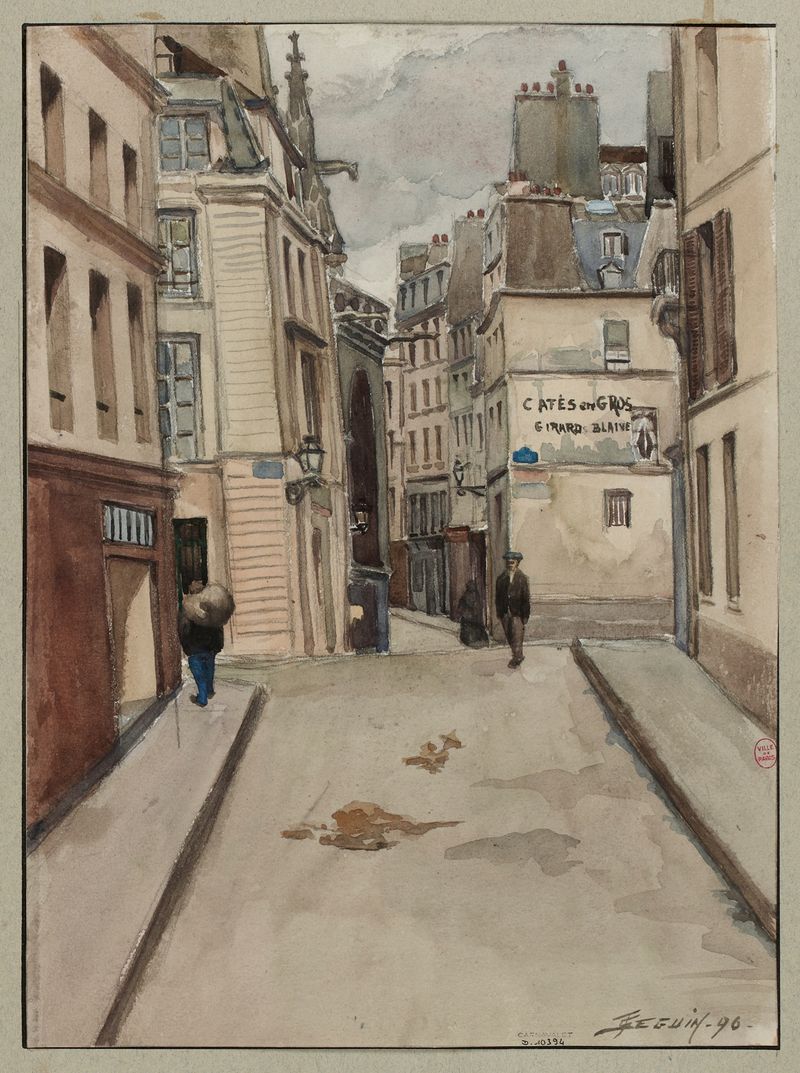
Rue du Cloître Saint Mérry, de la rue du Renard à la rue Saint Martin
F. Séguin
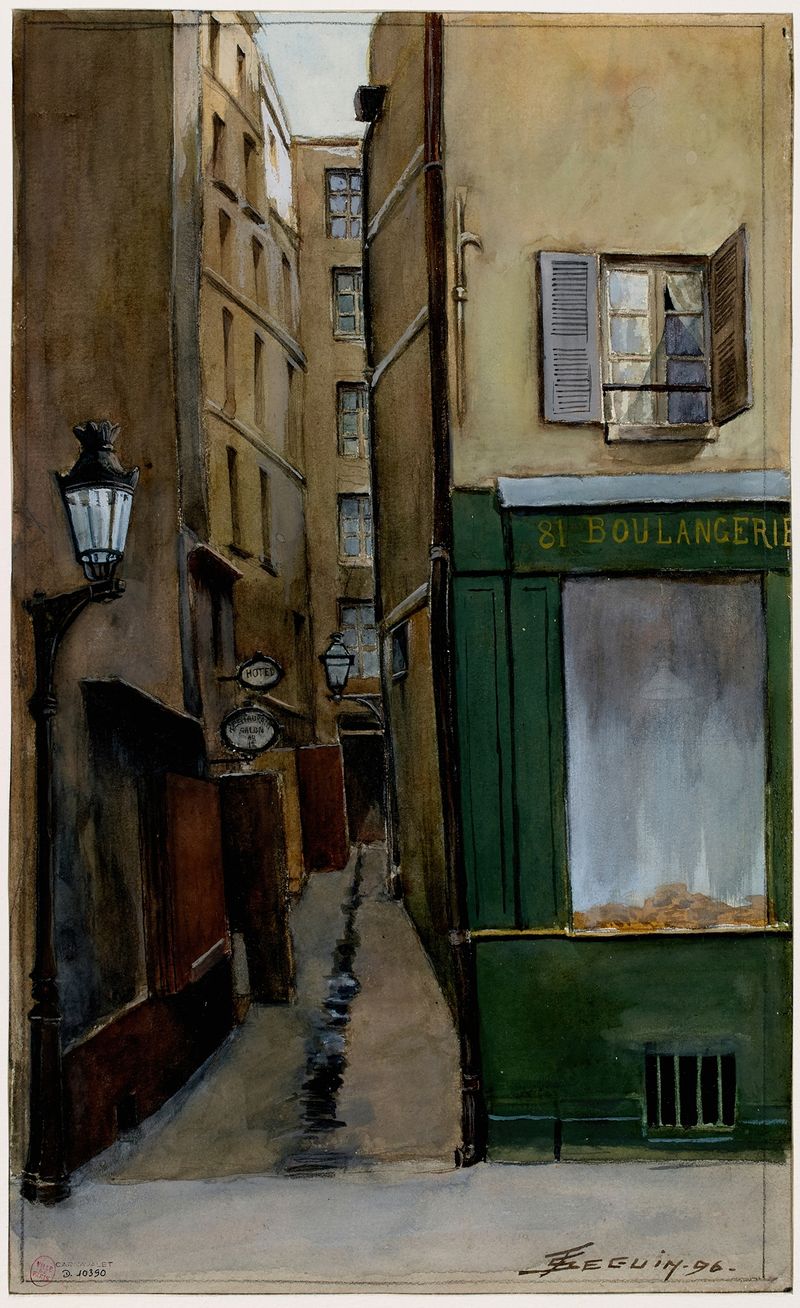
Cul de sac du Fiacre, 81 rue Saint Martin
F. Séguin
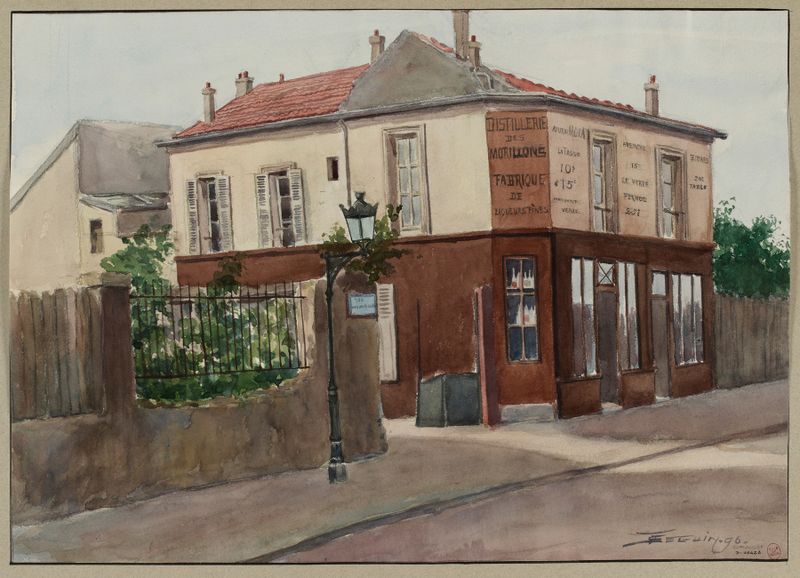
Angle de l’impasse Carlier et au 24 rue des Morillons, Vaugirard
F. Séguin
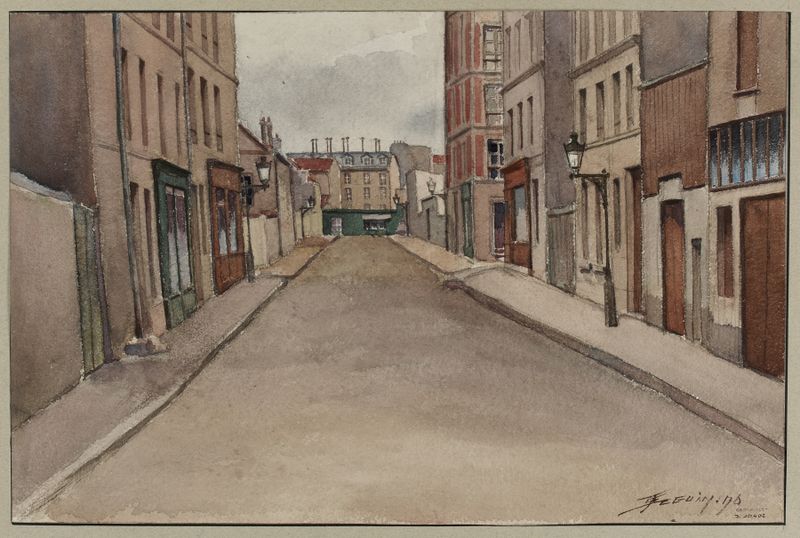
Rue Franquet
F. Séguin
More Architecture Art
Browse all →
The statue of Liberty
Frédéric Auguste Bartholdi

View of Houses in Delft, Known as ‘The Little Street’
Johannes Vermeer

View of Houses in Delft, Known as ‘The Little Street’
Johannes Vermeer

The Cathedral in Rouen. The portal, Grey Weather
Claude Monet

The yellow house
Vincent van Gogh

The Church in Auvers-sur-Oise, View from the Chevet
Vincent van Gogh