
Rue des Morillons — History & Facts
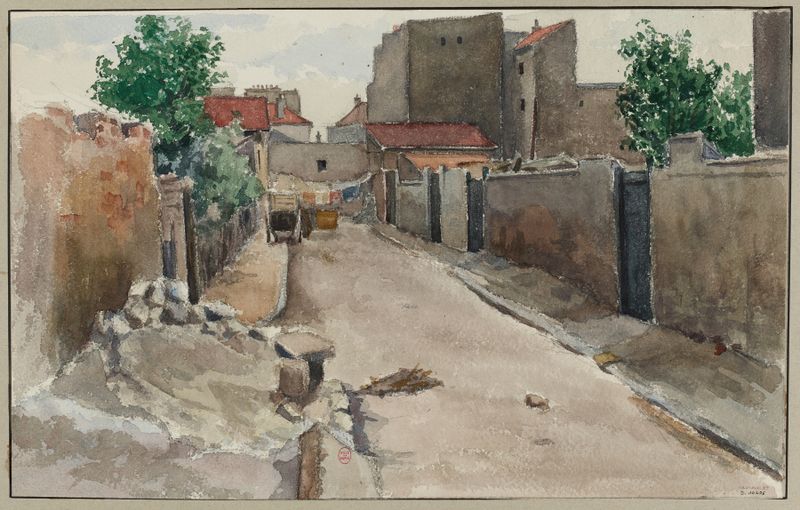
Did the painter know this moment would outlive them? In a world that rushes forward, captured fragments of life stand as testimonies to the beauty of the everyday, immortalizing its fleeting nature. Look to the center of the canvas where the narrow street unfurls, inviting the viewer into an intimate glimpse of life in Paris. The cobblestones glisten softly in the afternoon light, while the buildings loom, their façades painted in warm hues of ochre and terracotta. Notice how the gentle play of shadow and light creates a rhythm, accentuating the delicate details — the laundry hanging above, fluttering like whispers of past stories, and the small figures of pedestrians, almost merging into the architecture, yet distinctly alive. The emotional tension lies not only in the contrasting vibrancy of the street against the stillness of the architecture but also in the juxtaposition of movement and pause.
There’s a sense of nostalgia, a longing captured within the moment, as if each passerby carries their own narrative, echoing the relentless march of time. The rhythmic brushstrokes mirror the heartbeat of the city itself, celebrating the mundane while hinting at the impermanence of both people and place. F. Séguin painted this work in 1896 in Paris when the city was undergoing significant transformation and modernization.
In an era marked by artistic experimentation and the rise of impressionism, he sought to document the essence of urban life, preserving a moment that reflected both the joy and transience of day-to-day existence. This painting stands as a testament to the legacy of a time and place, inviting viewers to reflect on their own connection to the past.
More Artworks by F. Séguin
Browse all →
Rue Brantôme. (anciennement rue des Petits Champs donnant rue Saint Martin et rue Beaubourg)
F. Séguin
La rue de Chambéry, prise de la rue de Nice la Frontière
F. Séguin
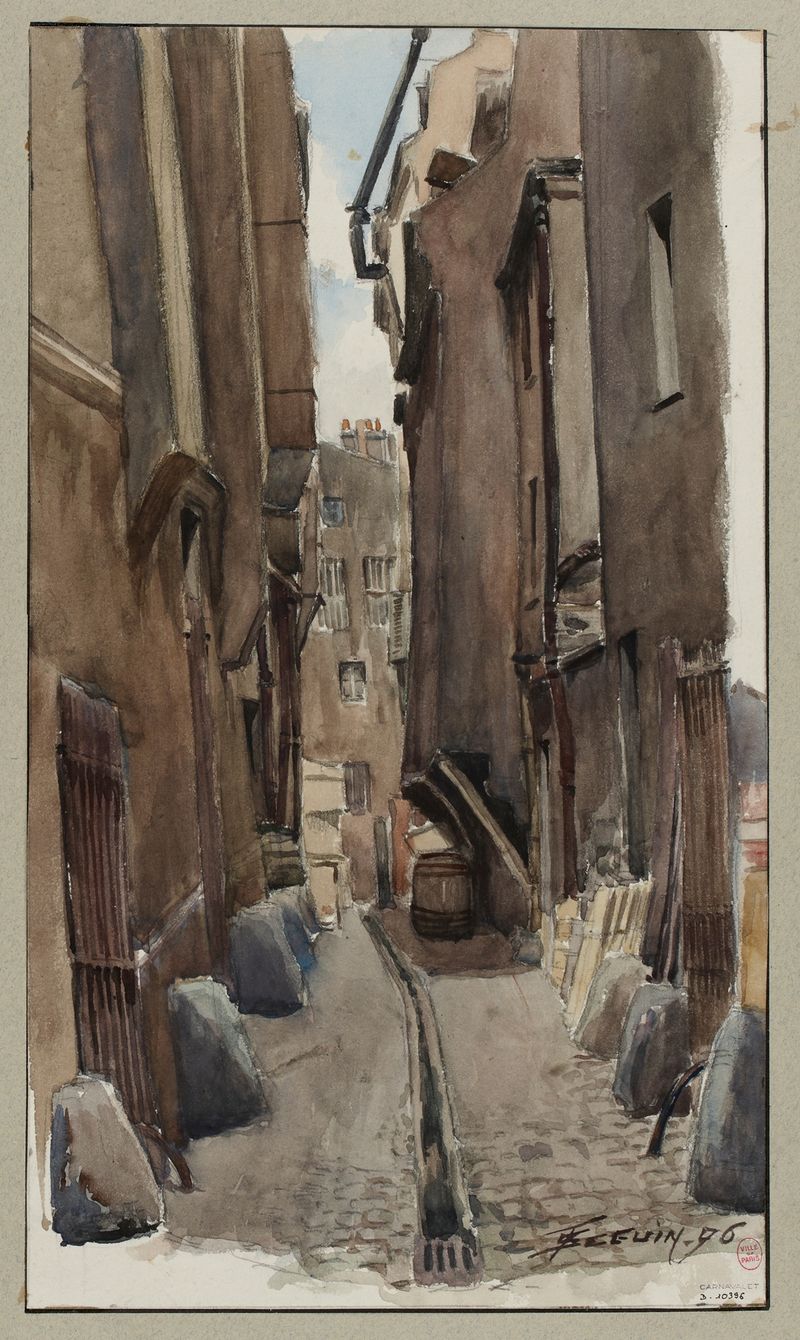
Le Cul de sac du Bœuf, (rue Saint Merri)
F. Séguin

Rue Descartes
F. Séguin
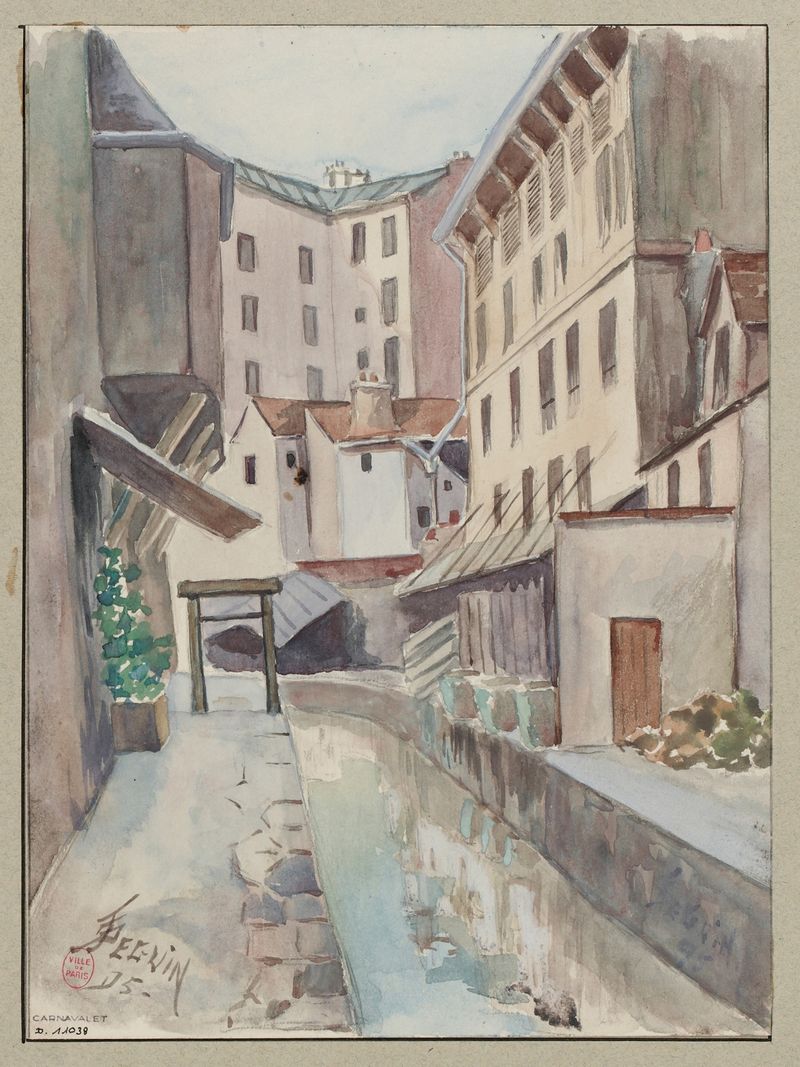
Le bord de la Bièvre à l’avenue des Gobelins
F. Séguin

Villa des Otages mur où furent fusillés les 52 derniers otages de la Commune, rue Haxo
F. Séguin
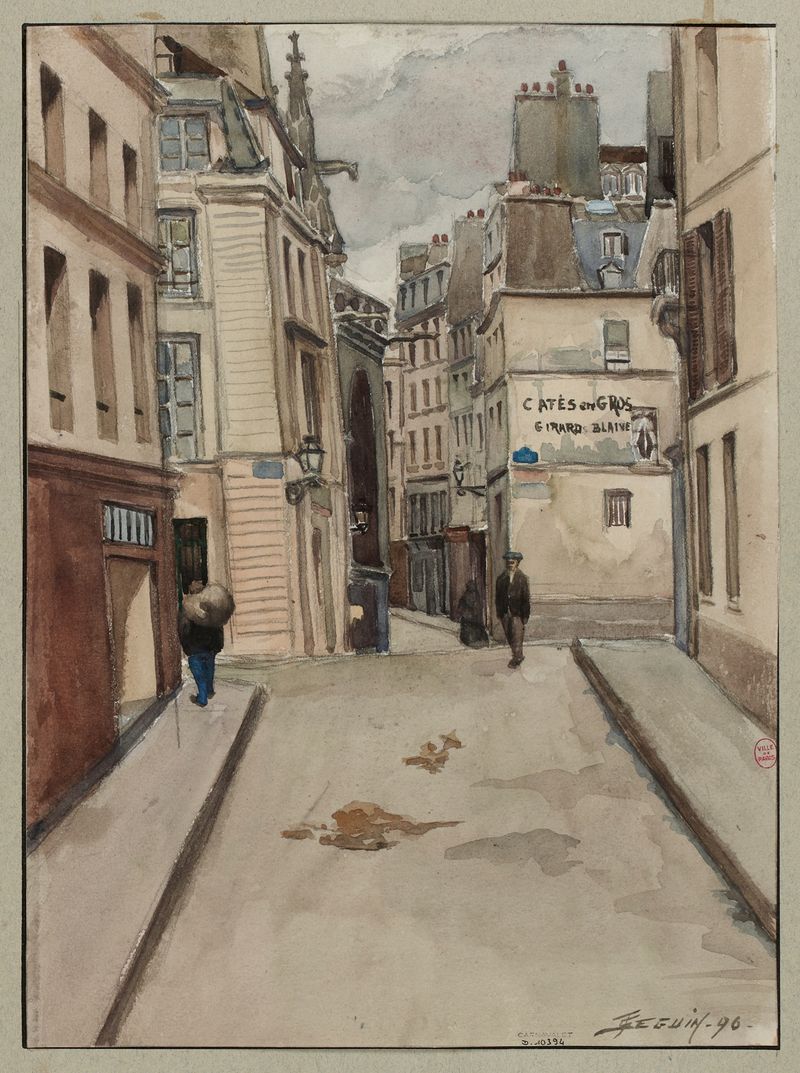
Rue du Cloître Saint Mérry, de la rue du Renard à la rue Saint Martin
F. Séguin
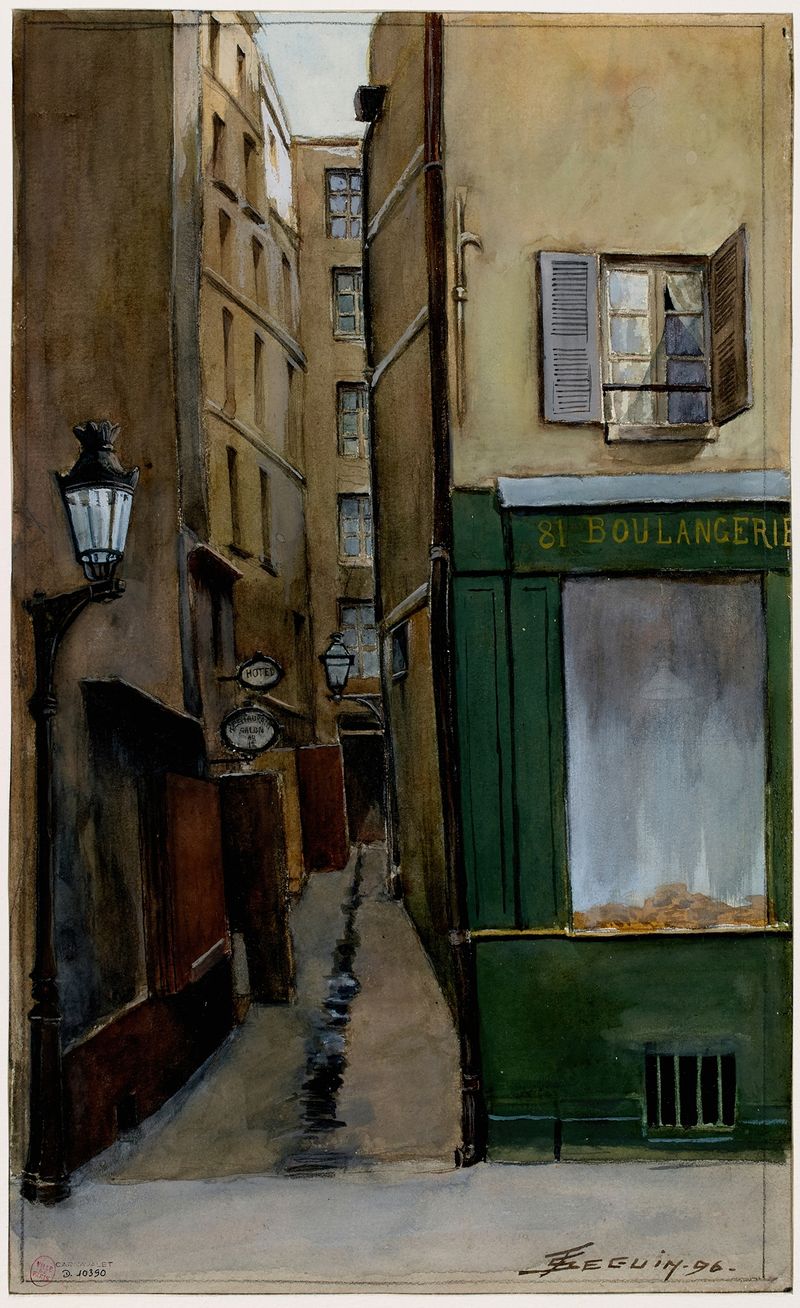
Cul de sac du Fiacre, 81 rue Saint Martin
F. Séguin
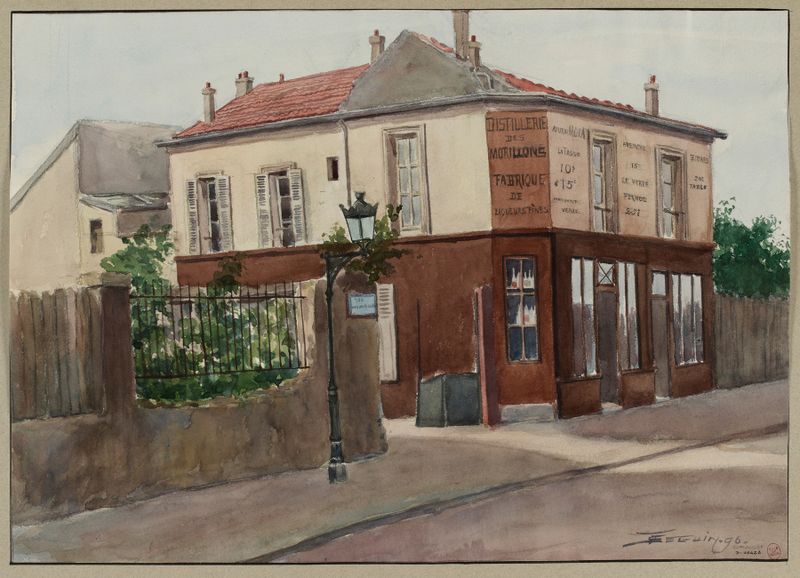
Angle de l’impasse Carlier et au 24 rue des Morillons, Vaugirard
F. Séguin
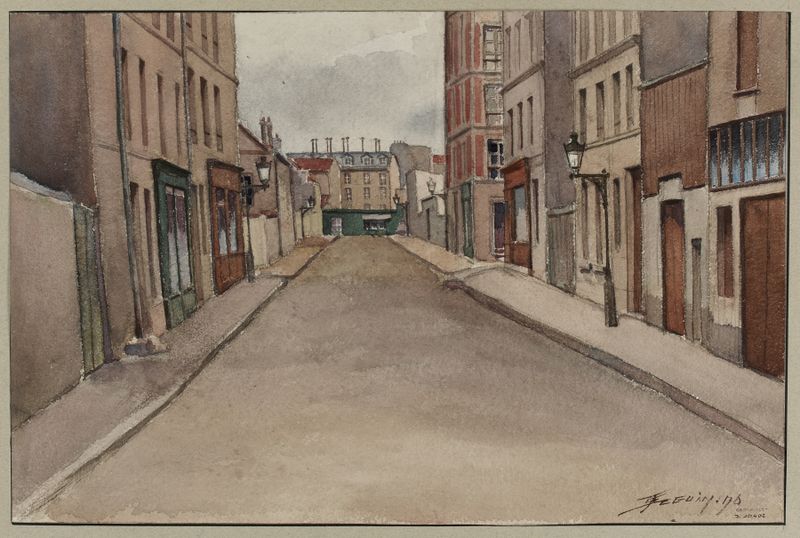
Rue Franquet
F. Séguin





