
Rue des Morillons, de la rue Labrouste — History & Facts
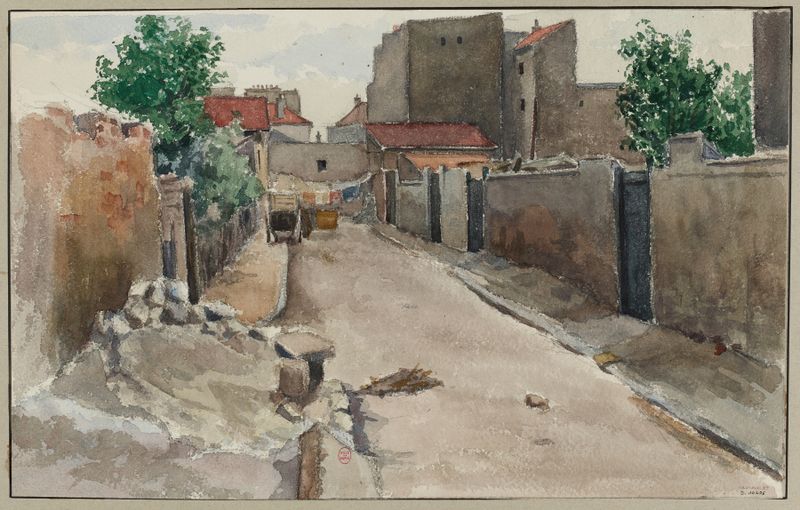
In the quiet embrace of a street corner, where the mundane meets the transcendent, one can almost hear the whispers of the past. This canvas invites viewers into a moment suspended in time, capturing the essence of existence beyond mere observation. Focus on the intricate interplay of light and shadow that bathes the cobblestones in muted tones. Look to the left, where the cool blues blend seamlessly with warm ochres, painting an atmospheric scene of solitude.
Notice how the buildings lean inwards, as if sharing secrets, and the gentle curve of the street beckons the eye to wander deeper into the composition. Each brushstroke is deliberate, a testament to the artist’s quest for capturing the palpable tension of everyday life. Hidden within this seemingly simple scene are layers of emotional complexity. The vacant street suggests both a physical absence and an emotional presence, evoking a sense of longing and nostalgia.
The juxtaposition of the sturdy architecture against the ethereal quality of light implies a dialogue between permanence and transience, challenging viewers to confront the passage of time in their own lives. Here, silence is not an absence but a profound declaration of existence. In 1896, F. Séguin painted this piece during a time of significant transformation in Paris, where the city was evolving into a modern metropolis.
Known for his depictions of urban life, Séguin's works often reflected the nuances of human experience amidst the changing landscape. His focus on light and atmosphere was part of a broader movement among artists seeking to capture the essence of their surroundings, making this painting a noteworthy exploration of transcendence within the ordinary.
More Artworks by F. Séguin
Browse all →
Rue Brantôme. (anciennement rue des Petits Champs donnant rue Saint Martin et rue Beaubourg)
F. Séguin
La rue de Chambéry, prise de la rue de Nice la Frontière
F. Séguin
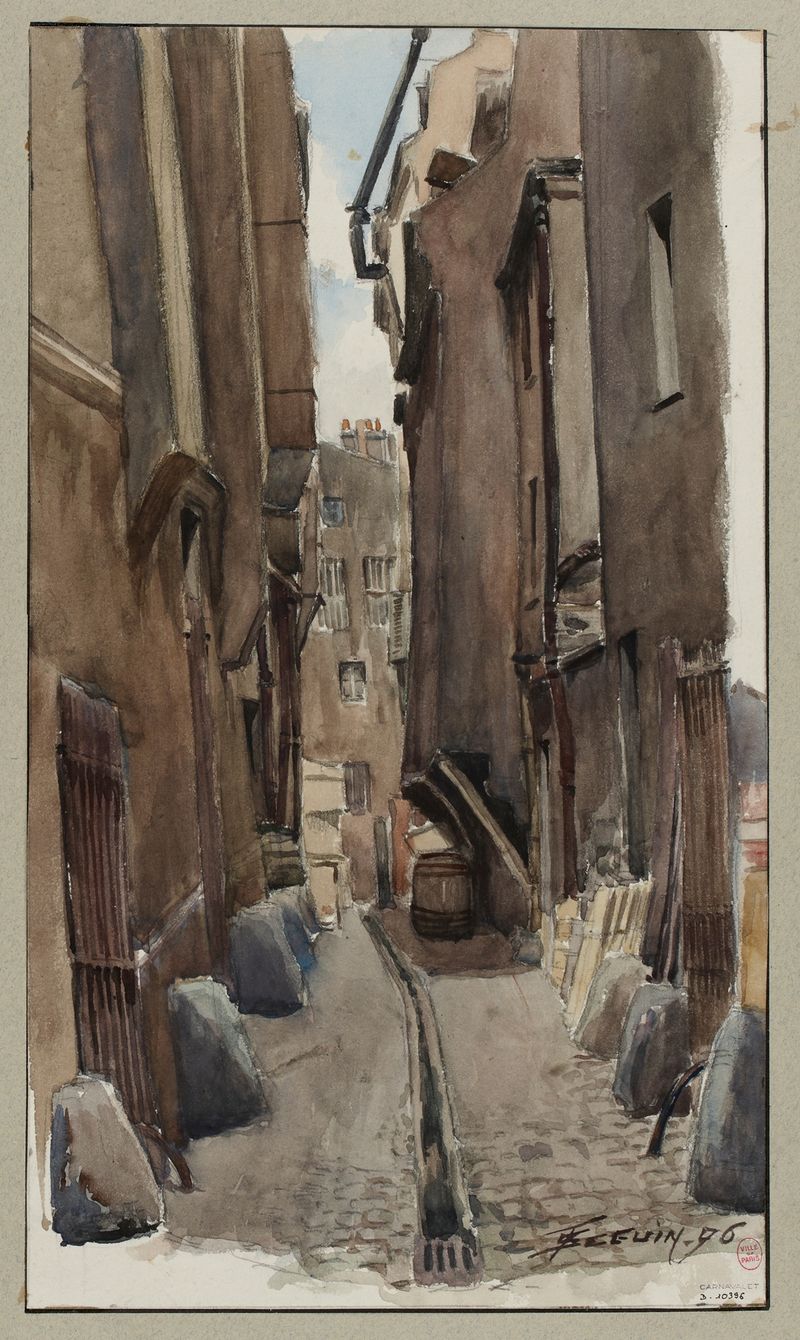
Le Cul de sac du Bœuf, (rue Saint Merri)
F. Séguin

Rue Descartes
F. Séguin
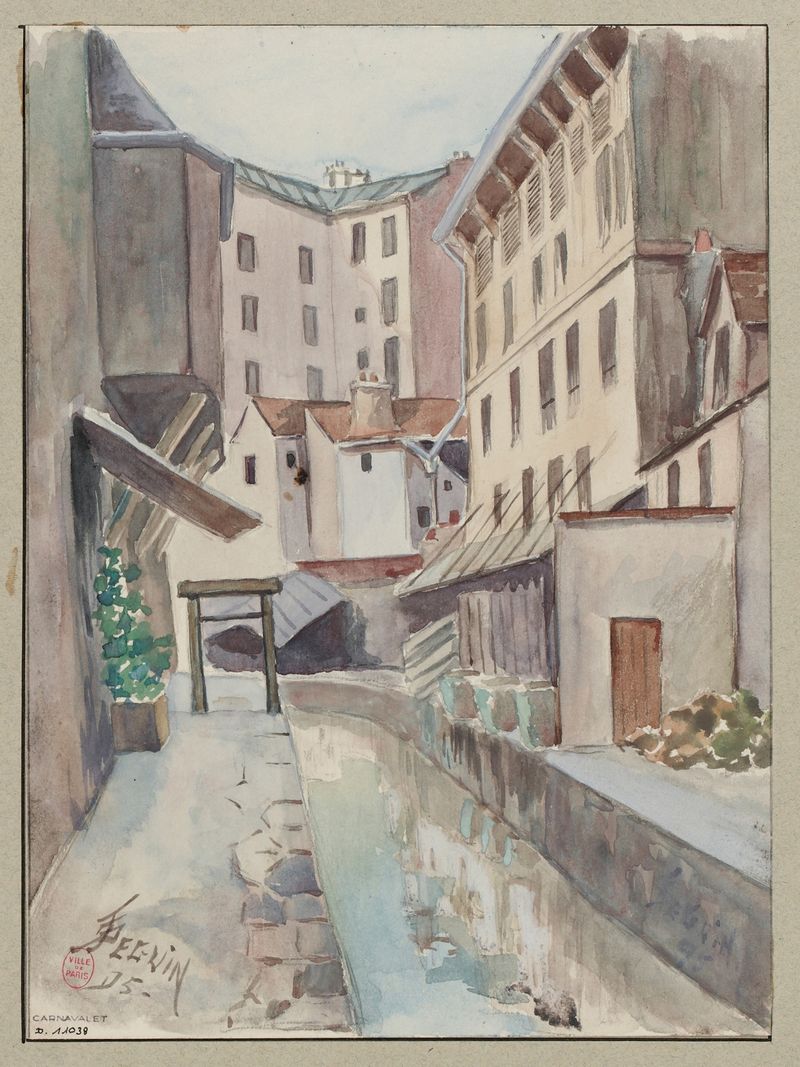
Le bord de la Bièvre à l’avenue des Gobelins
F. Séguin

Villa des Otages mur où furent fusillés les 52 derniers otages de la Commune, rue Haxo
F. Séguin
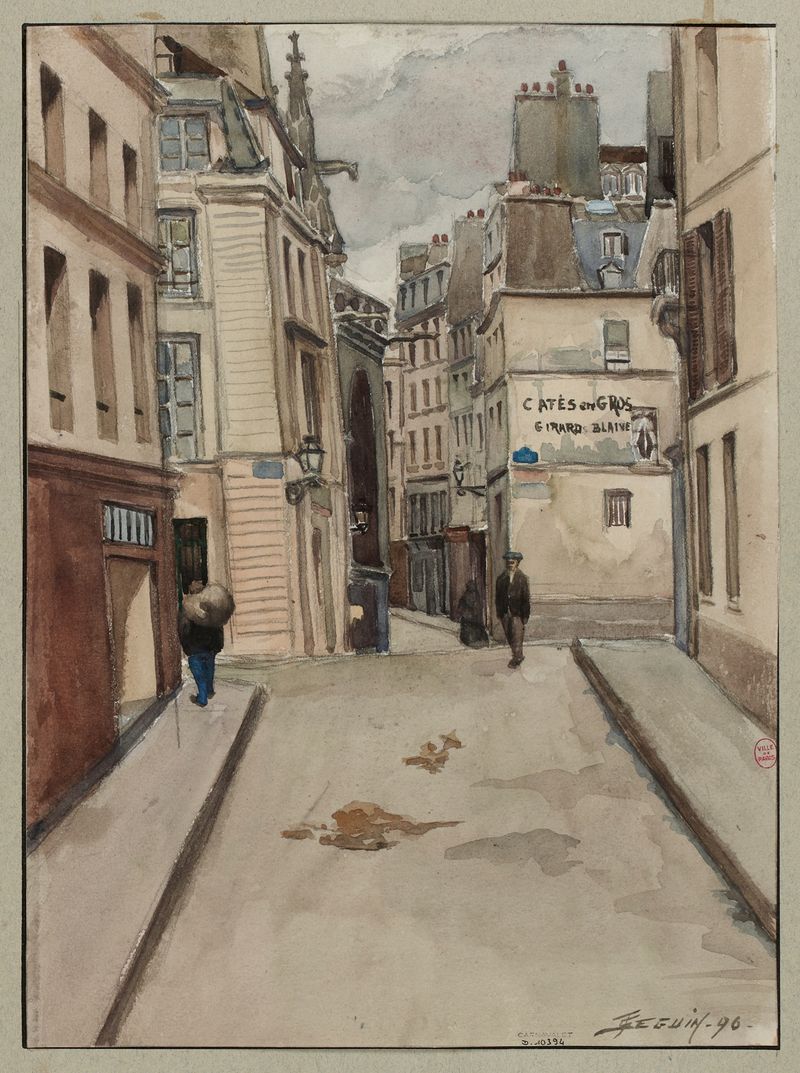
Rue du Cloître Saint Mérry, de la rue du Renard à la rue Saint Martin
F. Séguin
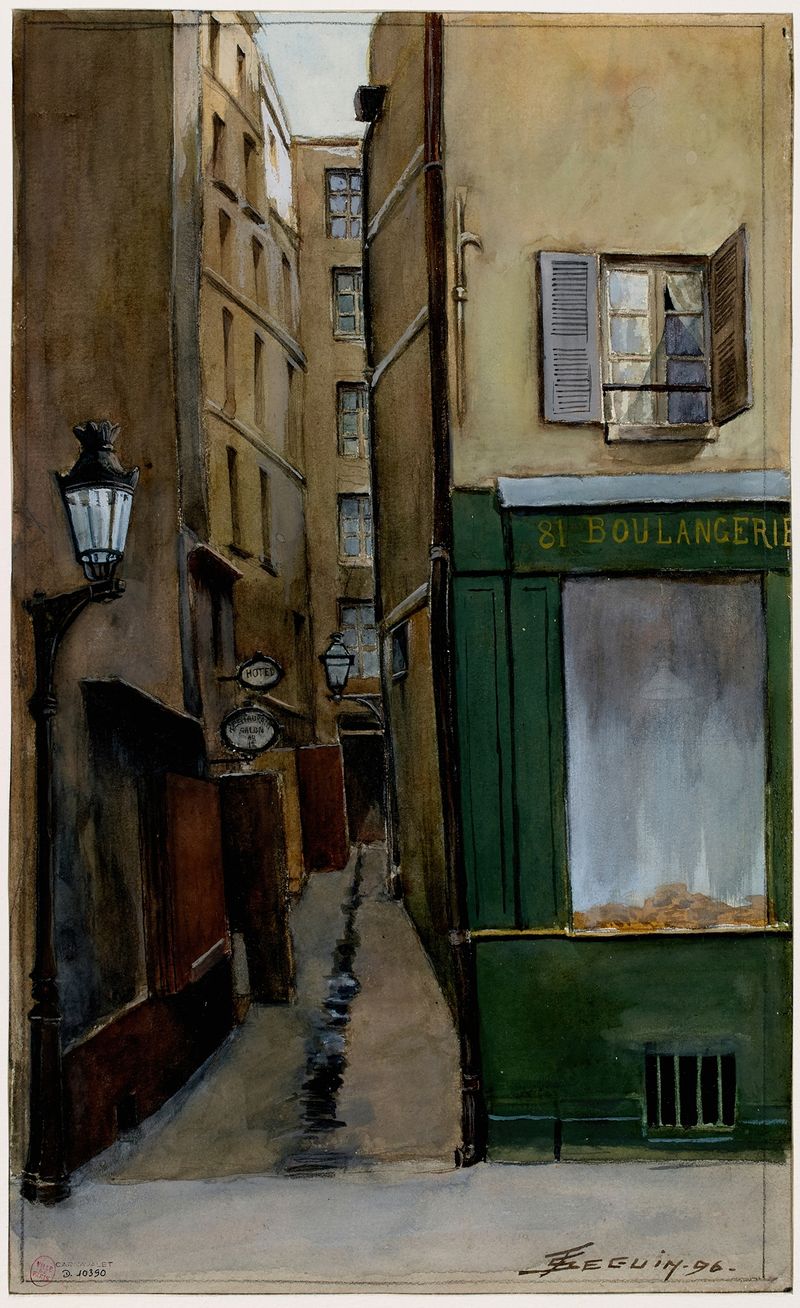
Cul de sac du Fiacre, 81 rue Saint Martin
F. Séguin
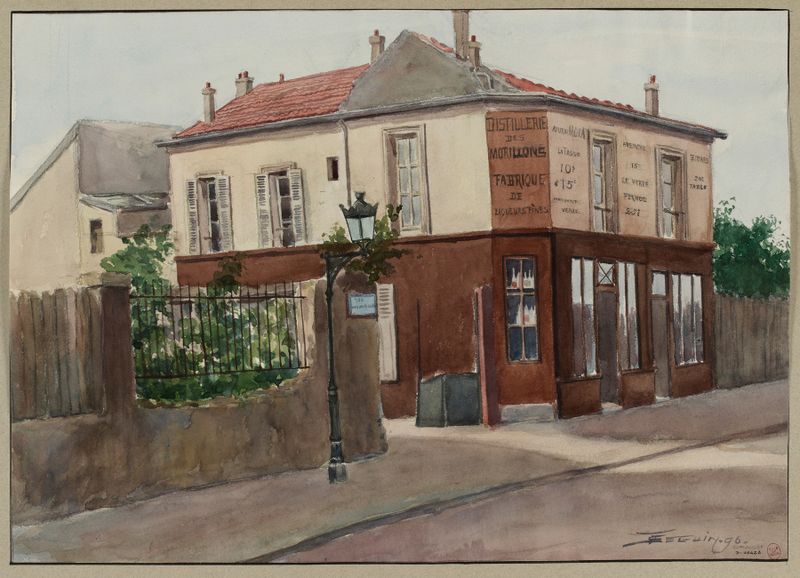
Angle de l’impasse Carlier et au 24 rue des Morillons, Vaugirard
F. Séguin
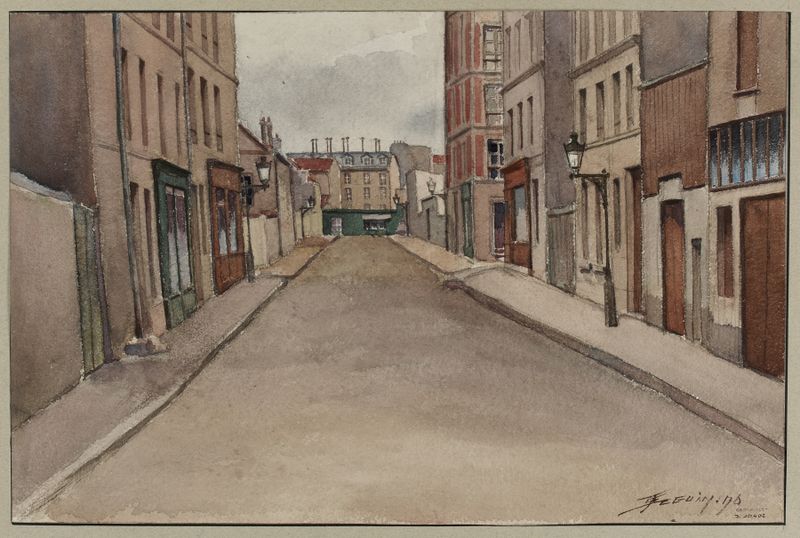
Rue Franquet
F. Séguin





