
Ruined wall near Albano — History & Facts
What if silence could speak through light? In the gentle illumination of a ruined wall, the echoes of history whisper tales of destiny and decay. Look to the left at the crumbling stone, its rough texture inviting the gaze to linger. The warm hues of ochre and muted greens breathe life into the piece, painting the remnants of a once-majestic structure. Notice how the light filters through the gaps, casting delicate shadows that dance across the surface, imbuing the scene with a poignant sense of transience.
Each brushstroke seems thoughtful, inviting contemplation of both the beauty of nature reclaiming its territory and the inevitable march of time. As you delve deeper, consider the interplay between the vibrant foliage and the barren wall. The vitality of the surrounding landscape starkly contrasts with the remnants of human creation, suggesting an emotional tension between life and decay. The wall, a symbol of past endeavors, stands as a stark reminder of mortality, while the greenery embodies resilience and hope.
This juxtaposition invites viewers to reflect on their own paths, on the destinies woven into the fabric of existence. In 1857, during a period of burgeoning Romanticism, this piece emerged from the brush of an artist grappling with the themes of nature’s supremacy over human constructs. Living in Italy amidst the echoes of classical ruins, he found inspiration in the landscapes around him. This work reflects a moment of introspection, capturing the dialogue between man and the natural world, while also participating in the broader narrative of art that sought to reconcile beauty with the passing of time.
More Artworks by Arthur Blaschnik
Browse all →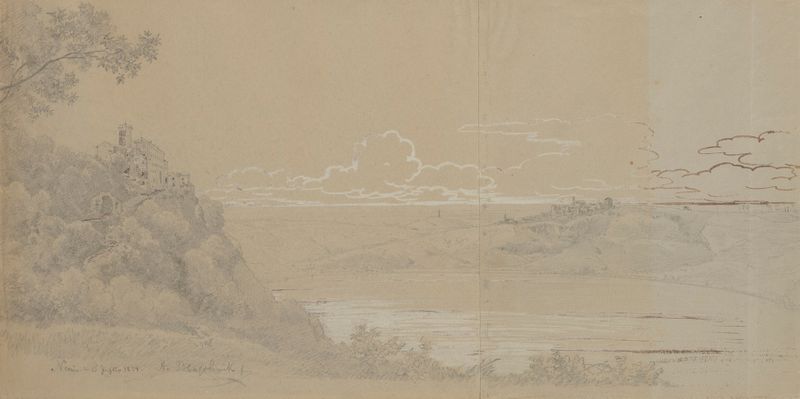
Palazzo Ruspoli by Lake Nemi, in the Distance the Town of Genzano di Roma
Arthur Blaschnik
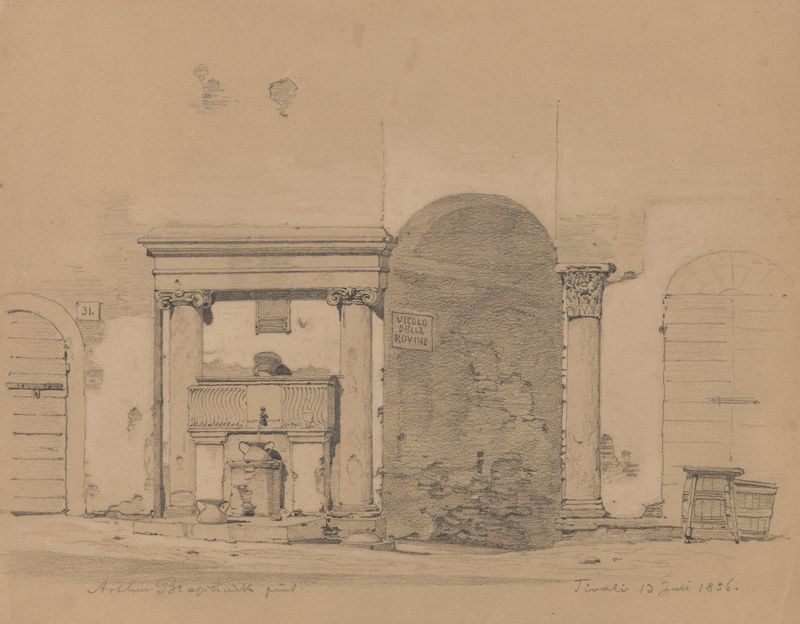
Gate Leading to Vicoli dei Grana near Piazza Palatina in Tivoli
Arthur Blaschnik
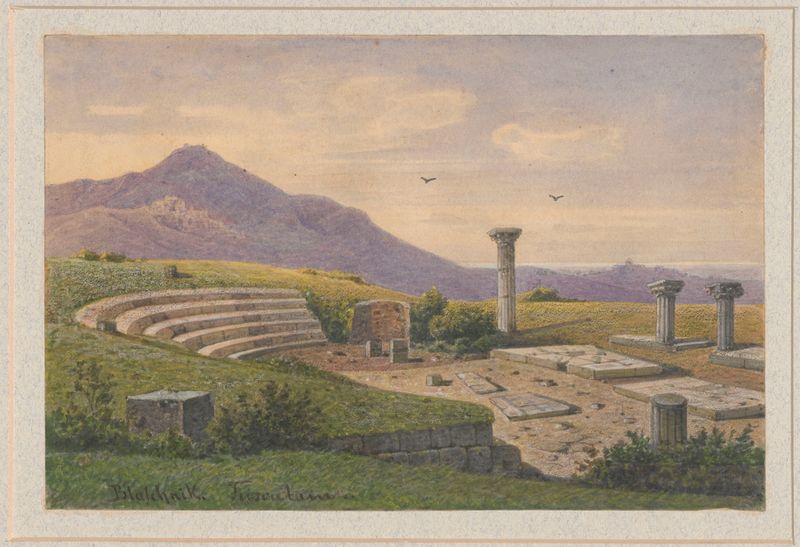
Amphitheatre in Tusculum
Arthur Blaschnik
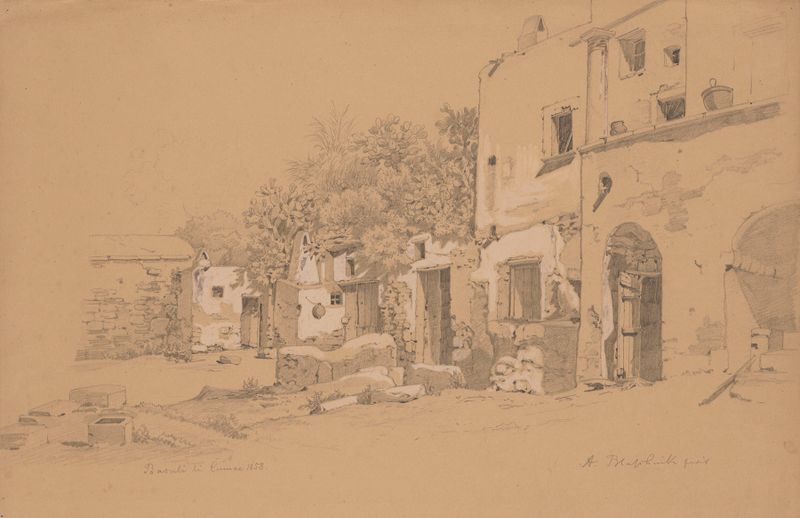
House and Outbuildings in Bacoli
Arthur Blaschnik
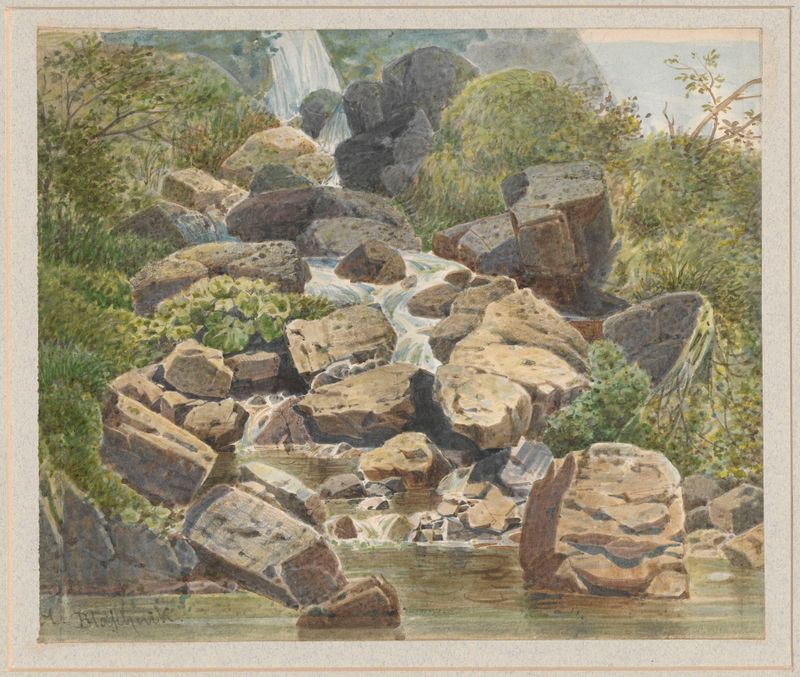
View of a small waterfall near Covigliaio, Tuscany
Arthur Blaschnik
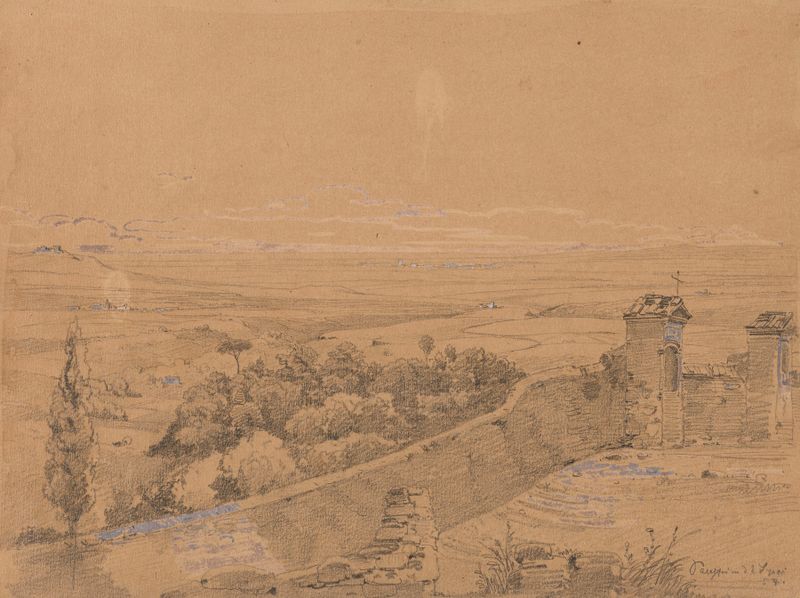
Landscape from the Vicinity of Palestrina
Arthur Blaschnik
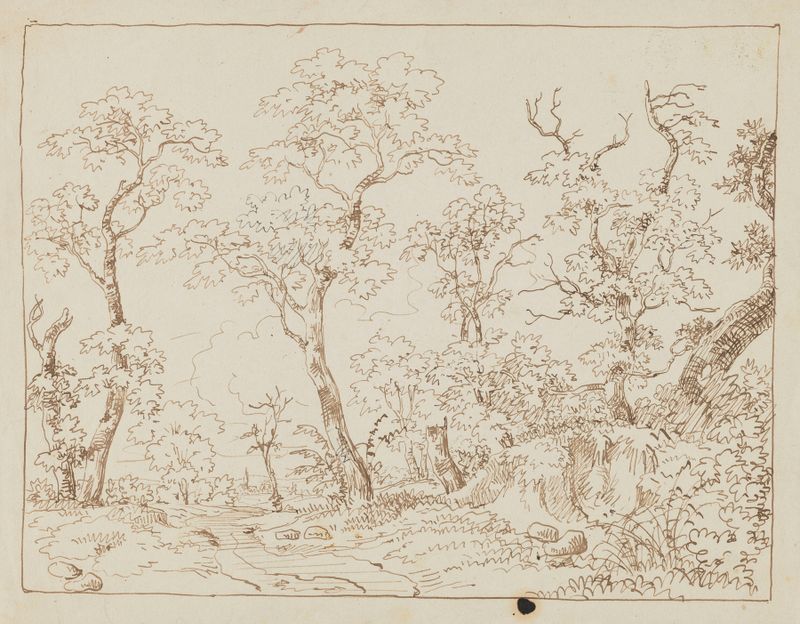
Studies of Trees, Landscape
Arthur Blaschnik
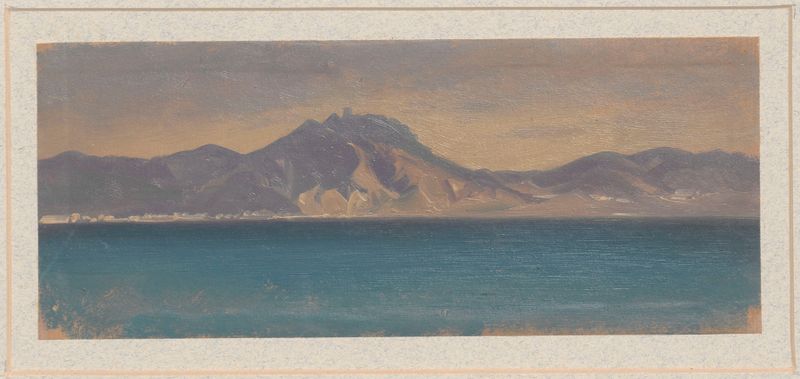
View of the Island of Capri
Arthur Blaschnik
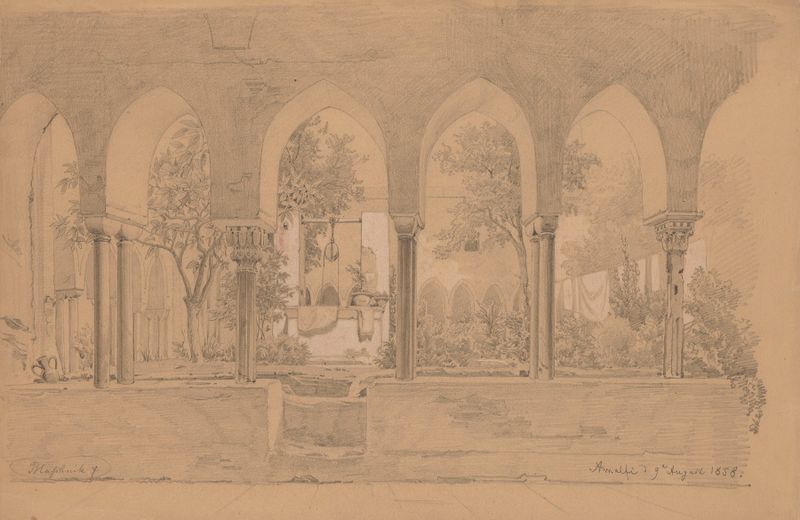
Cloister with Arcade Gallery in Amalfi
Arthur Blaschnik
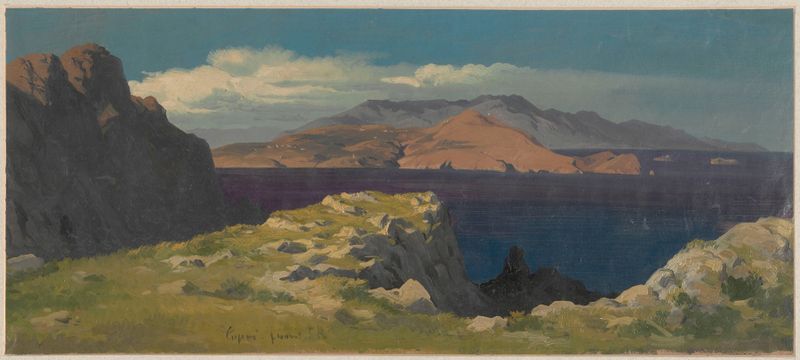
View of Capri
Arthur Blaschnik





