
Rural Landscape — History & Facts
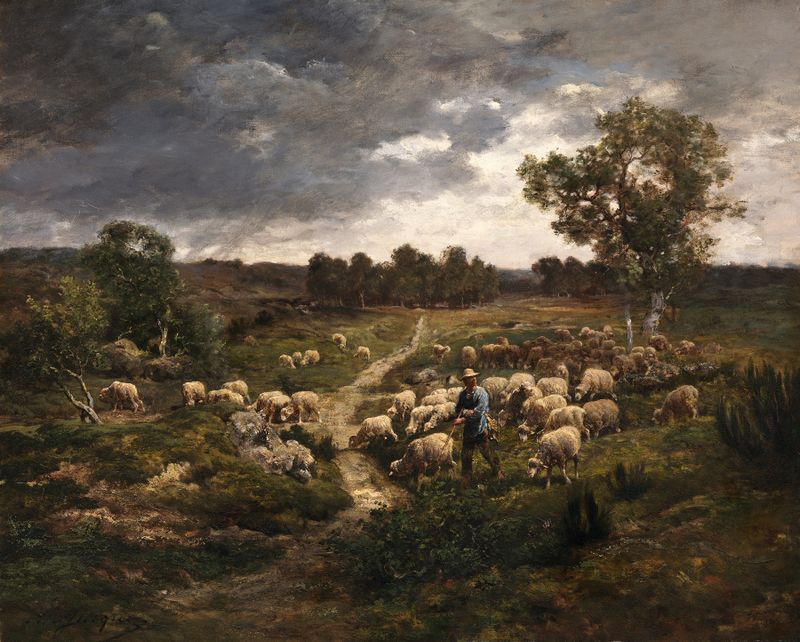
Who listens when art speaks of silence? In the quietude of Rural Landscape, an eloquent revelation unfolds, whispering secrets of nature and humanity intertwined. Focus on the verdant expanse that stretches across the canvas, where lush fields harmonize with the tranquil sky. Notice how the artist masterfully employs soft greens and warm earth tones, drawing you into a serene world filled with gentle brushwork. To the left, a weathered thatched cottage nestles amidst the rolling hills, its humble presence a testament to simpler times.
The light, dappled and golden, dances across the landscape, inviting an ambiance of peace and reflection. As you delve deeper into the scene, consider the contrasts at play: the fleeting moment of stillness against the looming weight of nature’s cycle. The winding path suggests a journey, perhaps one of solace or introspection, leading the observer into a dialogue with the environment. Here, the lushness of life coexists with the inevitable passage of time, evoking both comfort and contemplation. Charles Emile Jacque painted Rural Landscape in 1874 during a period marked by a growing interest in realism and the pastoral life.
Traveling through rural France, he sought to capture the authenticity of peasant life and the beauty of the countryside. This artwork reflects his commitment to portraying the simplicity and profundity of nature as industrialization loomed on the horizon, challenging the very essence of tranquil rural existence.
More Artworks by Charles Emile Jacque
Browse all →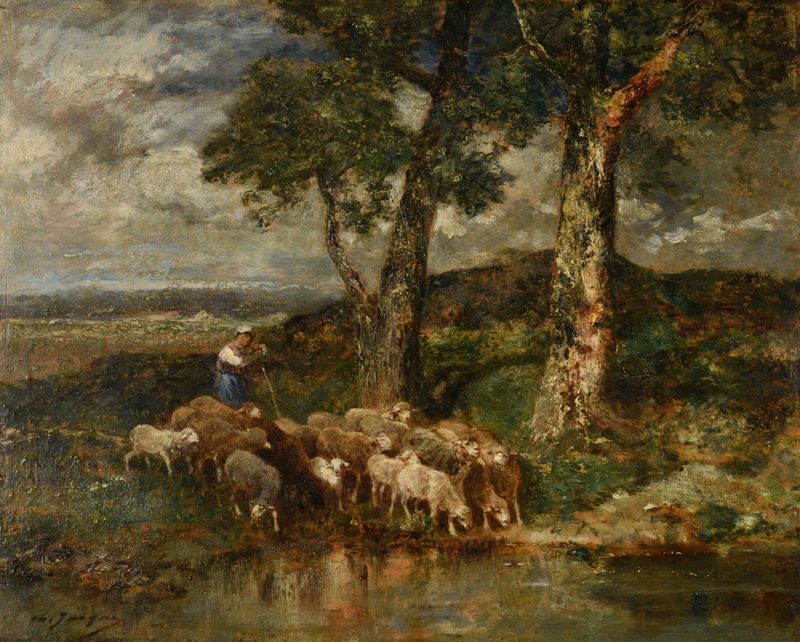
Moutons à l’abreuvoir
Charles Emile Jacque

The Sheepfold
Charles Emile Jacque
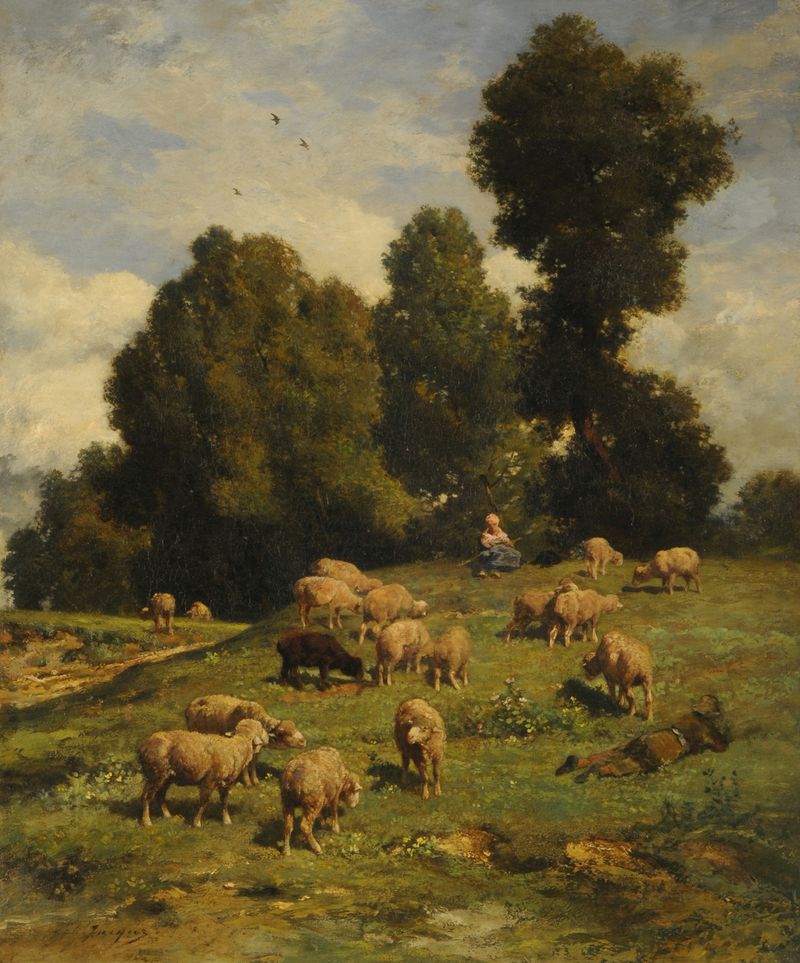
Moutons au pâturage
Charles Emile Jacque
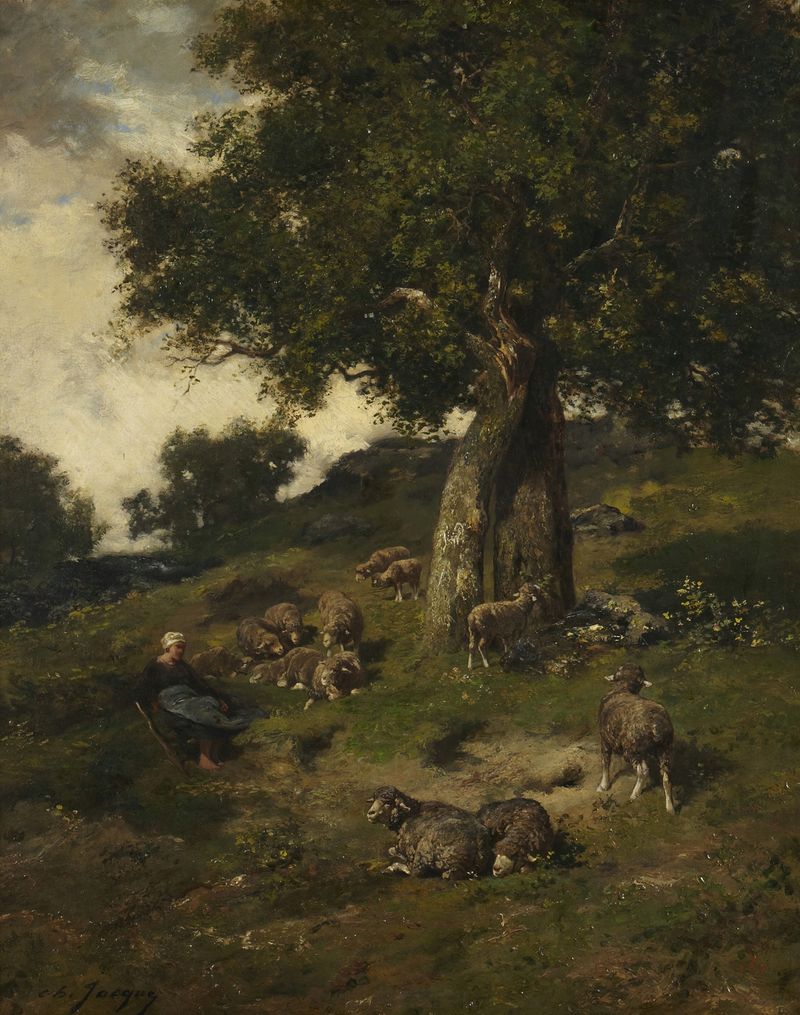
Shepherdess and Sheep
Charles Emile Jacque
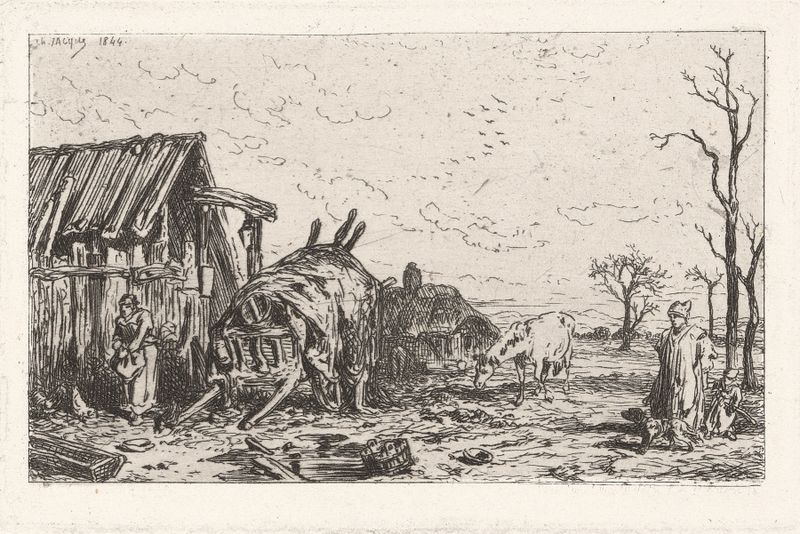
Rural farm scene with barn, cart, two farmers
Charles Emile Jacque

Shepherdess and her flock
Charles Emile Jacque

Ducks in the courtyard
Charles Emile Jacque

Two-horse plow in field
Charles Emile Jacque

Farmers loading ox cart
Charles Emile Jacque
Sheep
Charles Emile Jacque





