
Saint Francis’ Grotto on Monte Verna — History & Facts
Did the painter know this moment would outlive them? In Saint Francis’ Grotto on Monte Verna, the essence of transformation dances across the canvas, inviting contemplation of nature's power and human humility. Look to the left at the rugged terrain, where craggy rocks cradle a serene figure in prayer. The artist employs a tapestry of greens and browns that breathe life into the landscape, while luminous light filters through the leaves, casting a gentle glow upon Saint Francis. Notice how the soft brushwork creates an atmosphere of tranquility, as if the viewer stands at the threshold of this sacred space, sharing in the moment of reflection. Delve deeper into the interplay of light and shadow, which encapsulates the duality of existence—divine illumination mingling with the darkness of solitude.
The wildflowers dotting the ground serve as a reminder of the beauty inherent in the fleeting, while the distant mountains symbolize both the challenges and the spiritual elevation that accompany the pilgrimage of life. The serene yet somber posture of the saint invites introspection about faith and the transformative journey of the soul. In 1801, Jacob Philipp Hackert painted this work during a time when Romanticism was burgeoning in Europe, emphasizing nature’s relationship with the human experience. Living in Italy, he was captivated by the landscape and spiritual narratives that surrounded him, a reflection of his own search for meaning amid the turmoil of his times.
This piece exemplifies his commitment to capturing both the beauty of the natural world and the profound depths of human emotion.
More Artworks by Jacob Philipp Hackert
Browse all →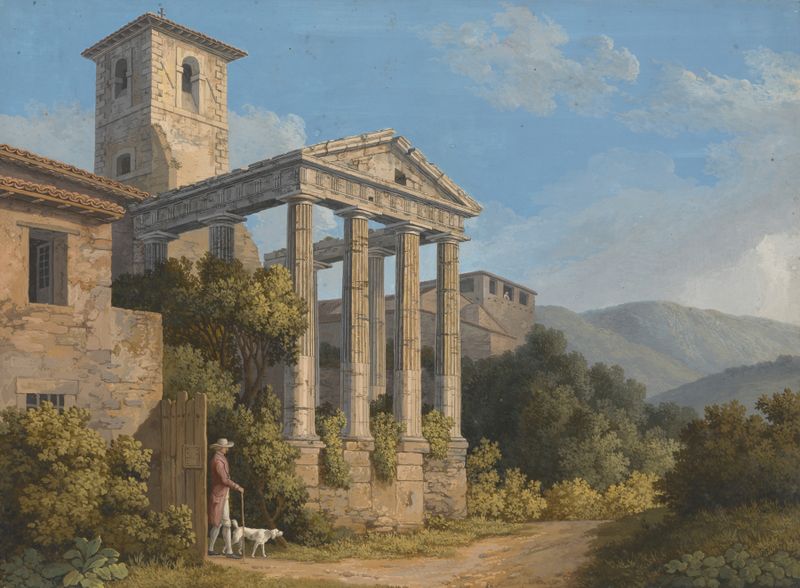
The Temple of Hercules in Cori near Velletri
Jacob Philipp Hackert
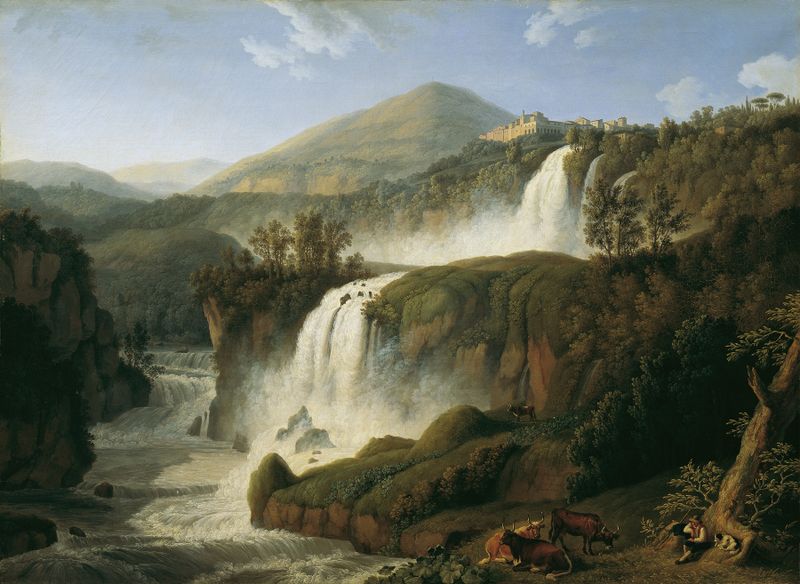
Der große Wasserfall von Tivoli bei Rom
Jacob Philipp Hackert
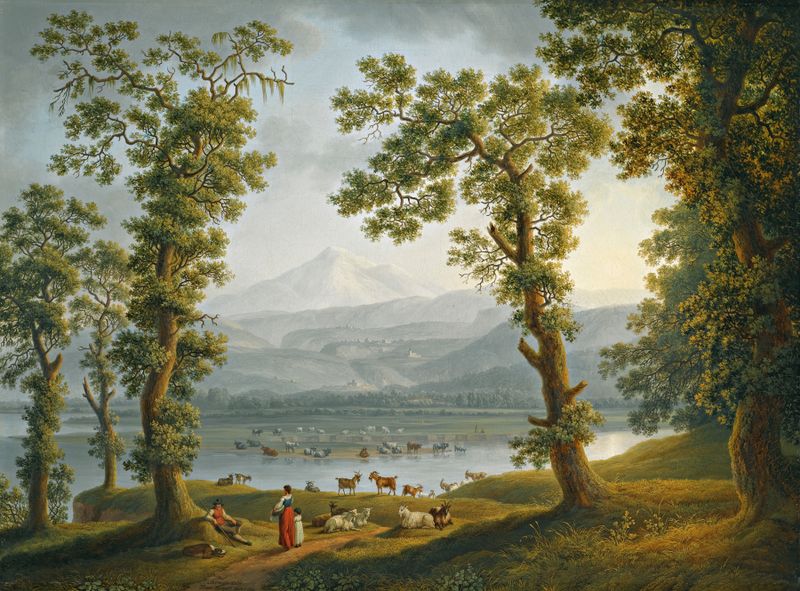
A View Across The Volturno River Towards Alife, Piedimonte Matese, And The Matese Mountains Rising Beyond
Jacob Philipp Hackert
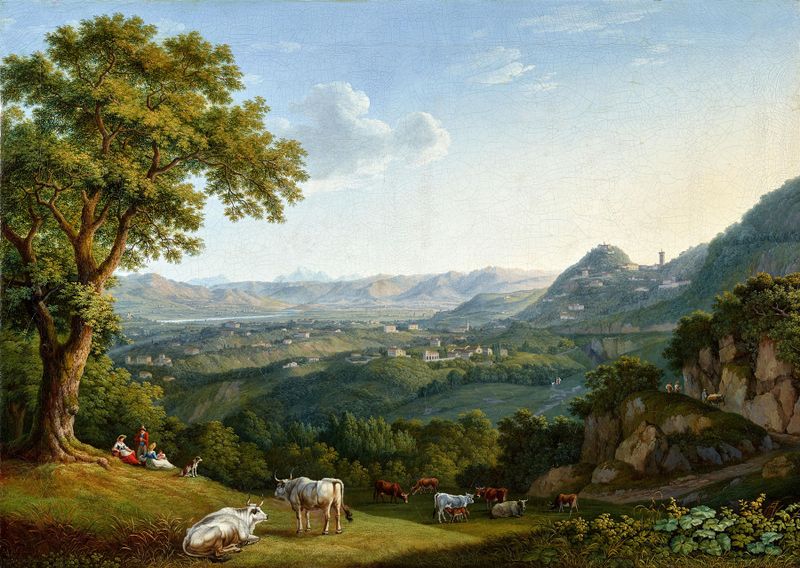
Blick auf das Arnotal und Fiesole
Jacob Philipp Hackert

A View Along The Valley Of The River Tiber Towards Poggio Mirteto, And Beyond The Sabine Mountains Lit Up By The Evening Sun
Jacob Philipp Hackert
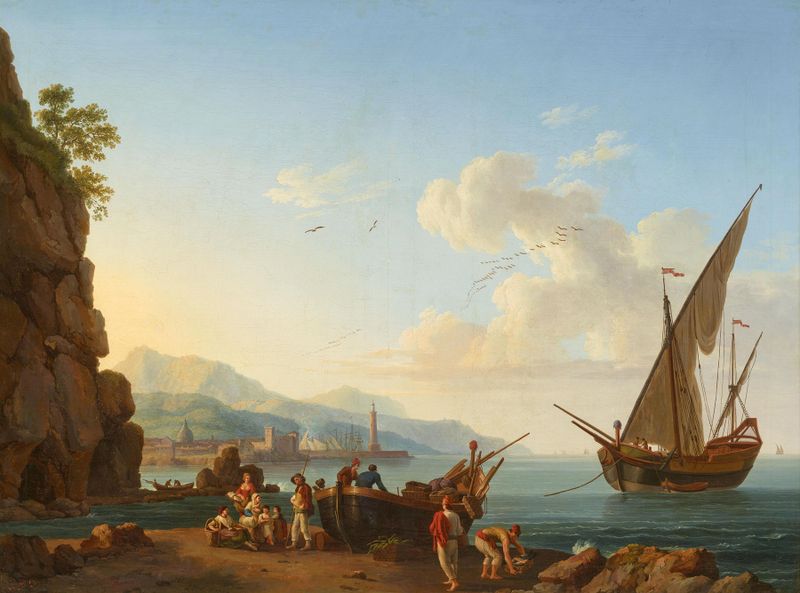
Fischer mit Boot am Strand
Jacob Philipp Hackert

Paysage
Jacob Philipp Hackert
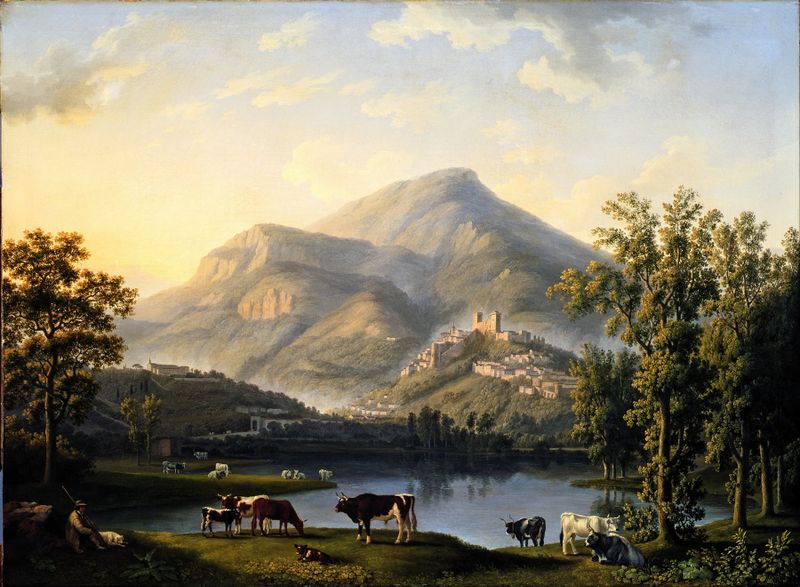
Veduta d’Itri (Landscape with a View of Itri)
Jacob Philipp Hackert
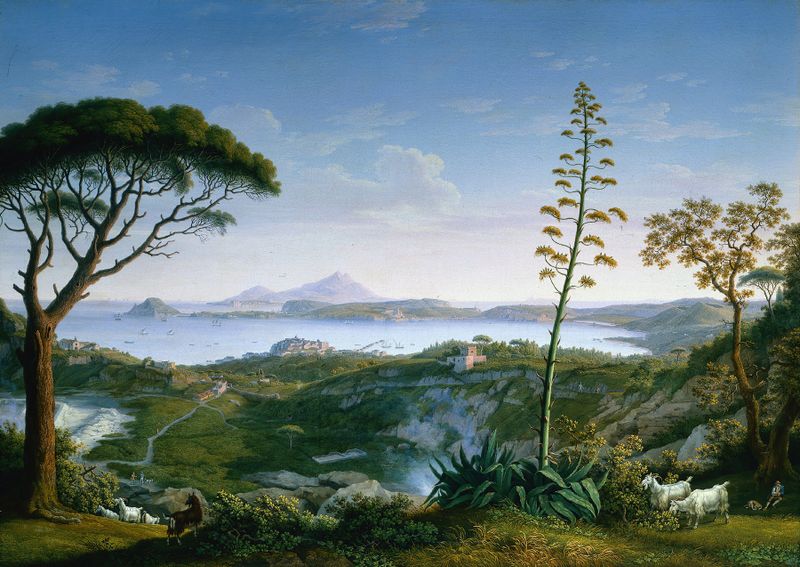
View of the Gulf of Pozzuoli from Solfatara
Jacob Philipp Hackert

View of Saint Peter’s in Rome
Jacob Philipp Hackert
More Religious Art
Browse all →
The Return of the Prodigal Son
Rembrandt van Rijn

The Garden of Earthly Delights
El Bosco

Count Orgaz’ funeral
El Greco

The Hundred Guilder Print: the central piece with Christ preaching, the plate arched
Rembrandt van Rijn

The Descent from the Cross
Rogier van der Weyden

The return of the prodigal son
Rembrandt van Rijn