
Saint Jerome — History & Facts
What first catches the eye is the vivid red galero, its wide brim and trailing cords marking out Saint Jerome’s scholarly authority as a cardinal—a detail that instantly sets this portrait apart from the usual images of the saint as a penitent in the wilderness. Here, the artist chooses not the drama of Jerome’s legendary asceticism, but the quiet intensity of study. The saint’s gaze is fixed, not on the viewer, but on the pages of a heavy book, his fingers poised as if he has just turned a leaf or is about to underline a crucial line.
The background, a golden field intricately patterned, frames his profile with a halo that is both literal and ornamental, drawing attention to the inner world of thought and devotion. Painted in 1473, this work belongs to a moment in the Italian Renaissance when artists like Antonello da Messina were experimenting with the fusion of northern European detail and Italian clarity. The careful modeling of Jerome’s face, the subtle play of light on his sleeve and cheek, and the almost tactile rendering of the book all speak to this new attention to psychological presence. The galero itself is not just a symbol but a sculptural form, casting a shadow that grounds the saint in space and time.
Unlike the wild landscapes of other Jerome paintings, here the focus is inward, the world outside shut out by the wall of gold and the scholar’s absorption. Little is recorded about the journey of this particular painting, now preserved through The Yorck Project’s digital collection. Works of this kind were often commissioned for private devotion or small chapels, intended to inspire learned contemplation rather than public awe. In the late fifteenth century, such images of saints as readers and thinkers reflected the growing status of scholarship and humanism in Italy.
As you look again, notice how the saint’s calm concentration invites the viewer to pause, to read not just the book in his hands but the painted surface itself, line by line.
More Artworks by Antonello da Messina

San Cassiano Altarpiece
Antonello da Messina

Pietà
Antonello da Messina
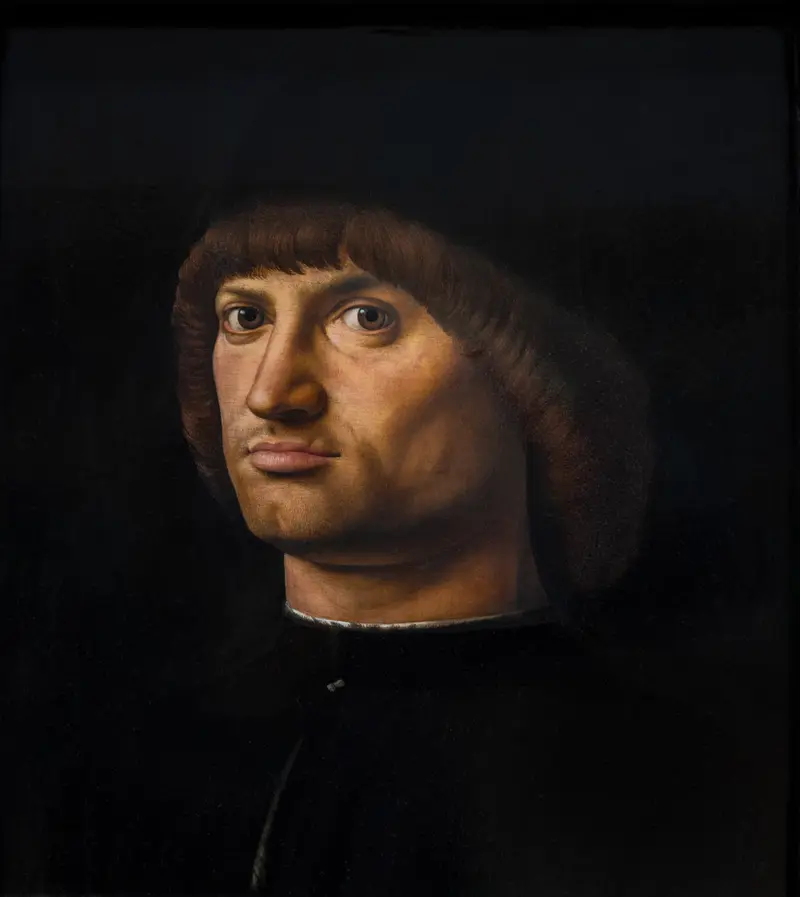
Portrait of a Man, called condottiere
Antonello da Messina
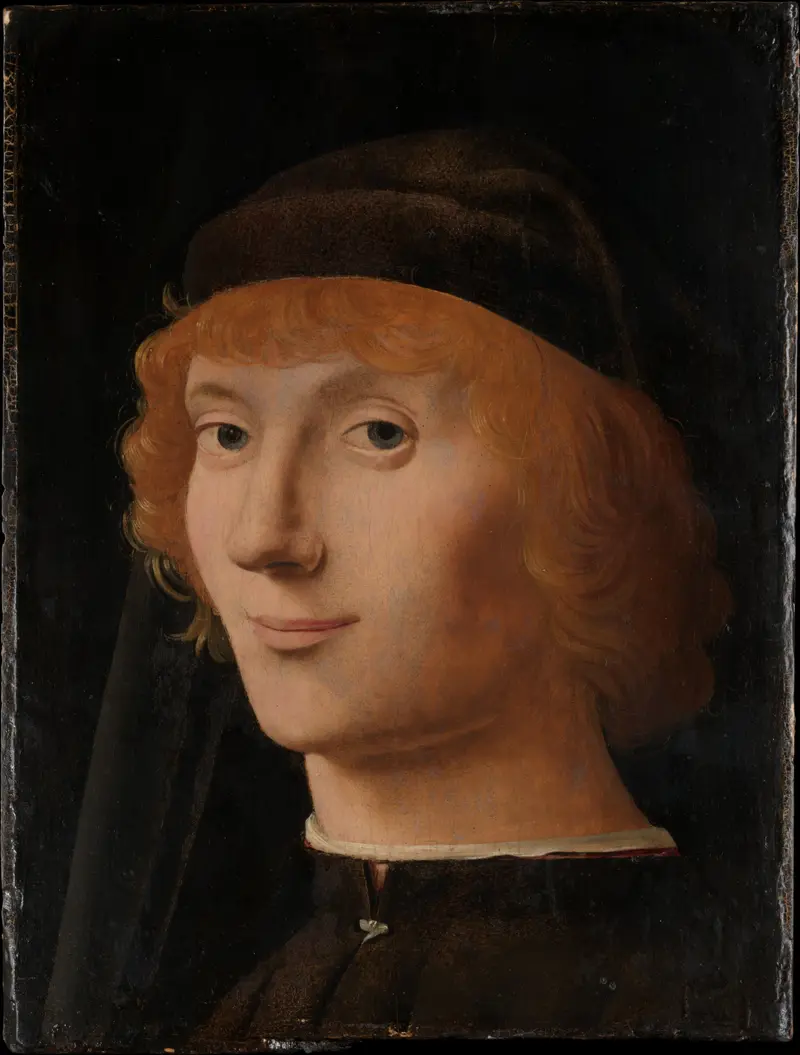
Portrait of a Young Man
Antonello da Messina
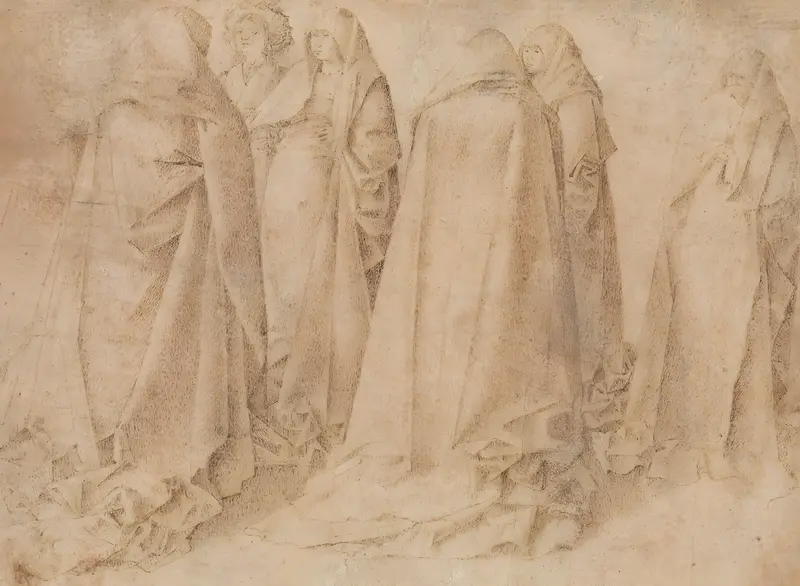
Group of Draped Figures
Antonello da Messina
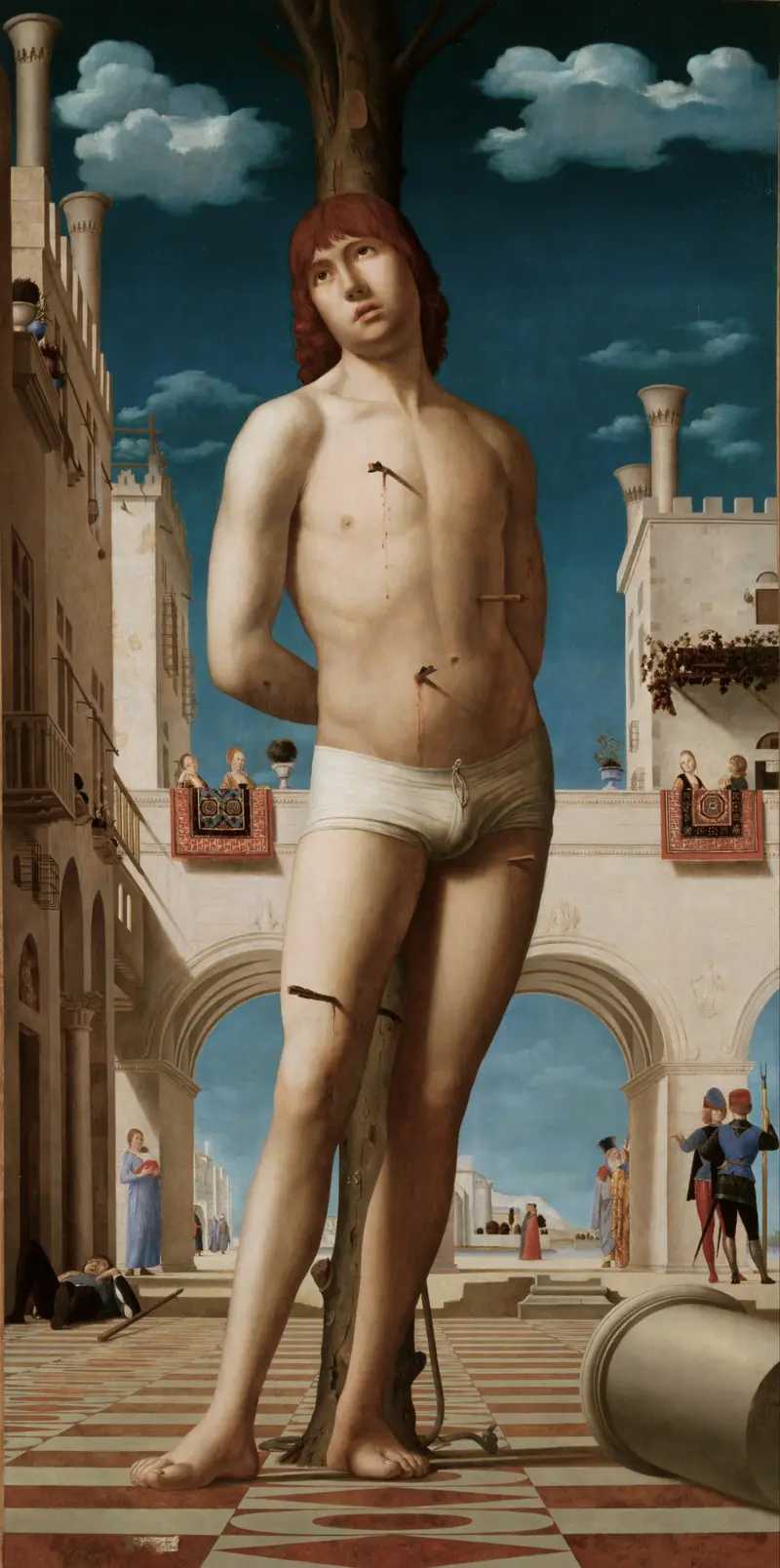
Saint Sebastian
Antonello da Messina
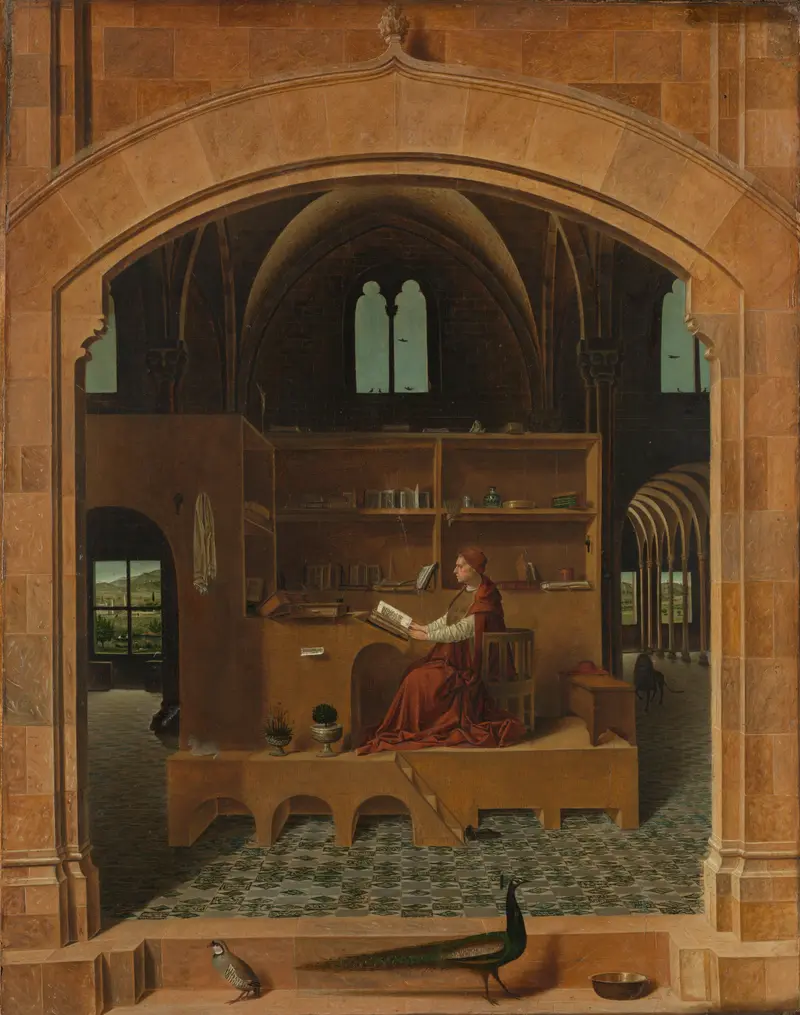
St. Jerome in His Study
Antonello da Messina
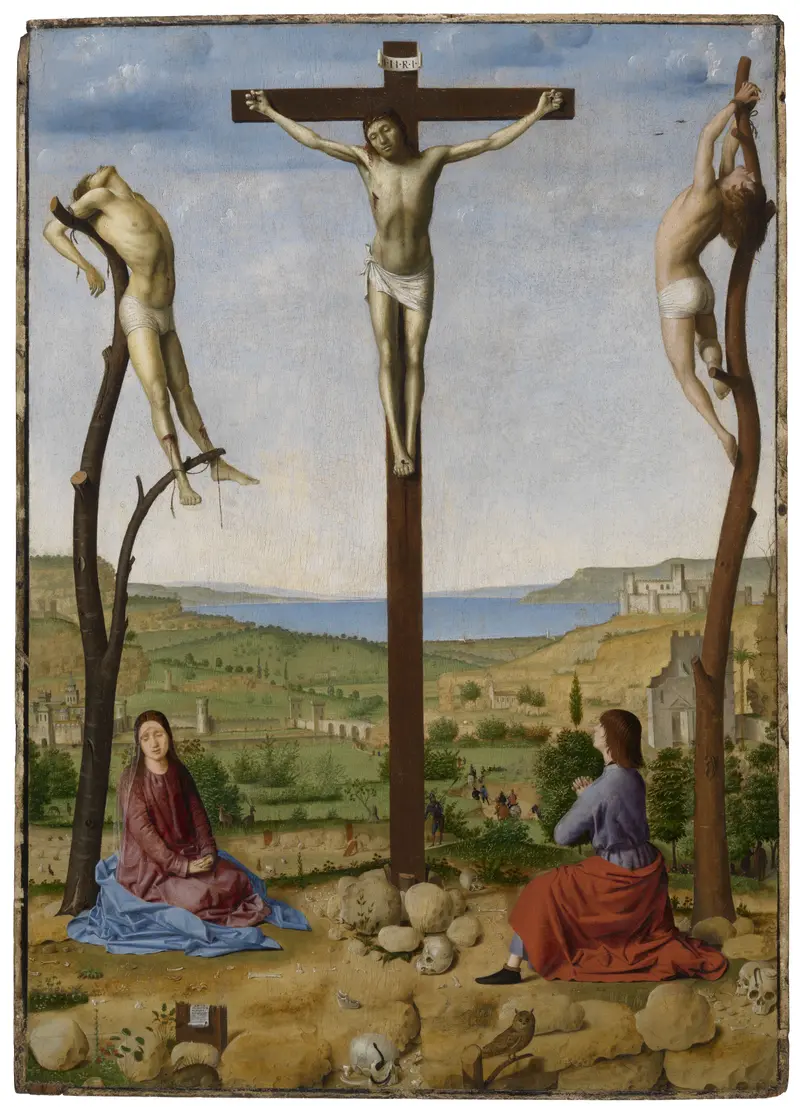
Calvary
Antonello da Messina
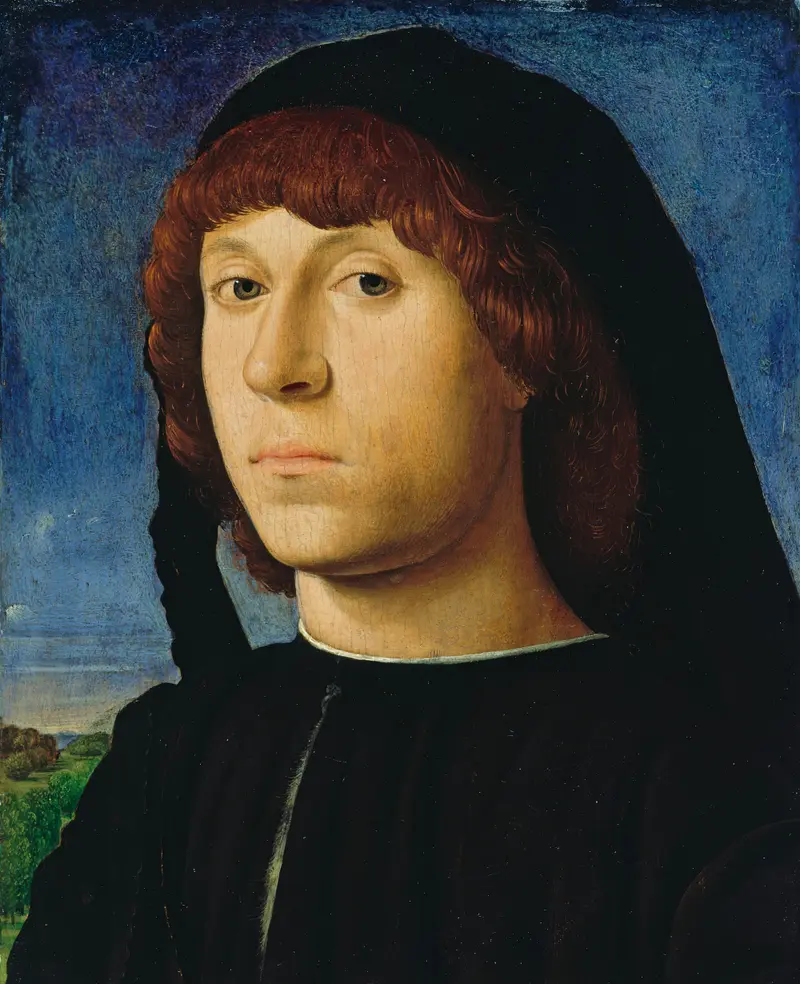
Portrait of a Man
Antonello da Messina
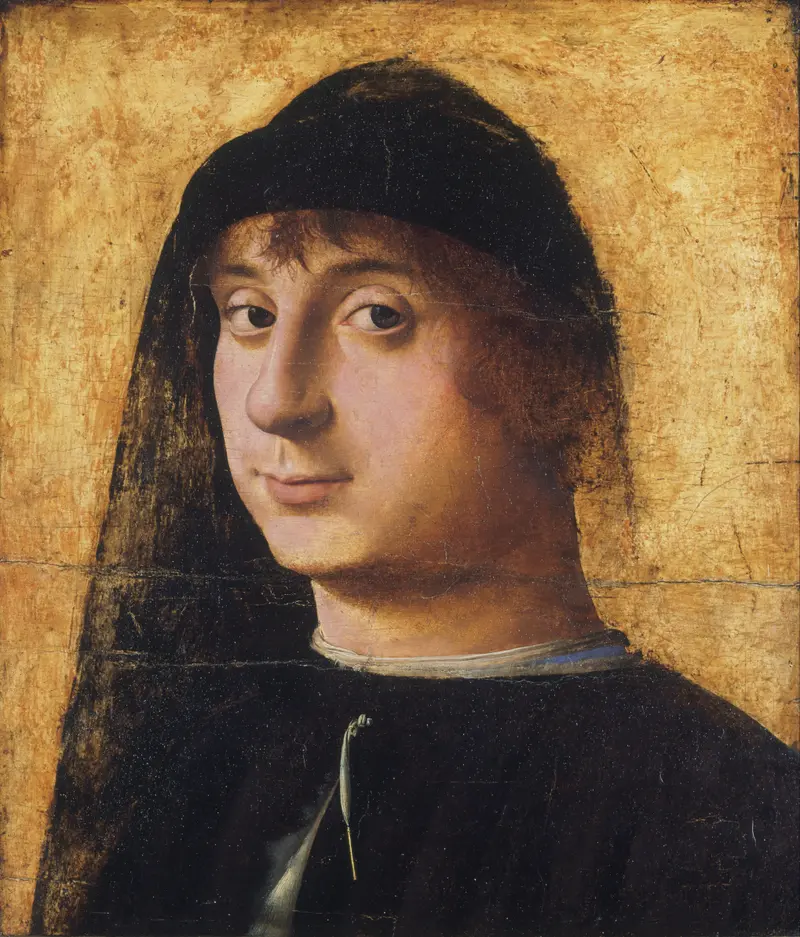
Portrait of a Young Gentleman
Antonello da Messina





