Saint-Lambert-des-Bois — History & Facts
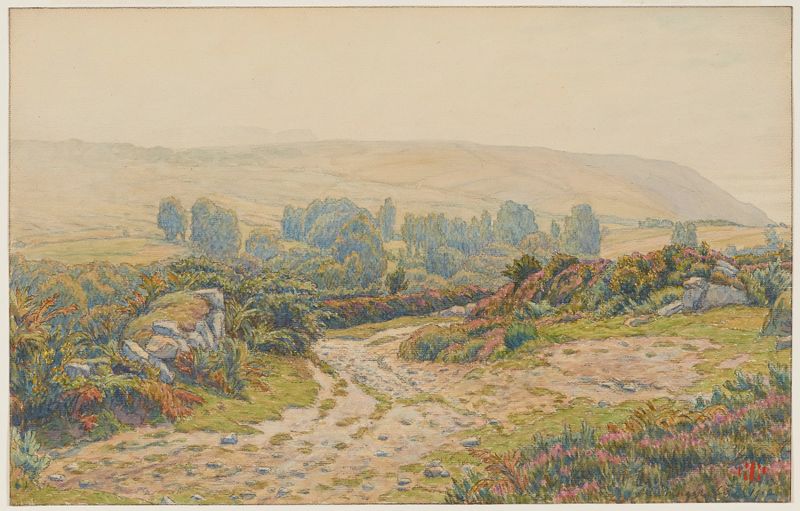
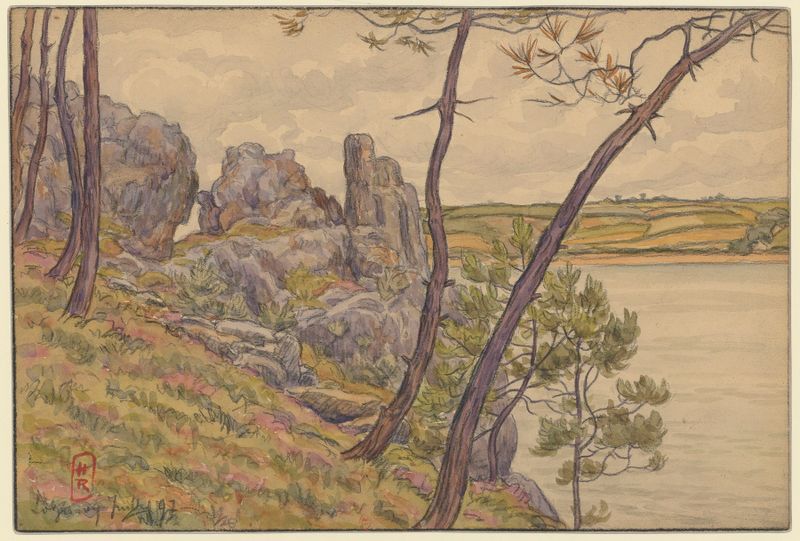
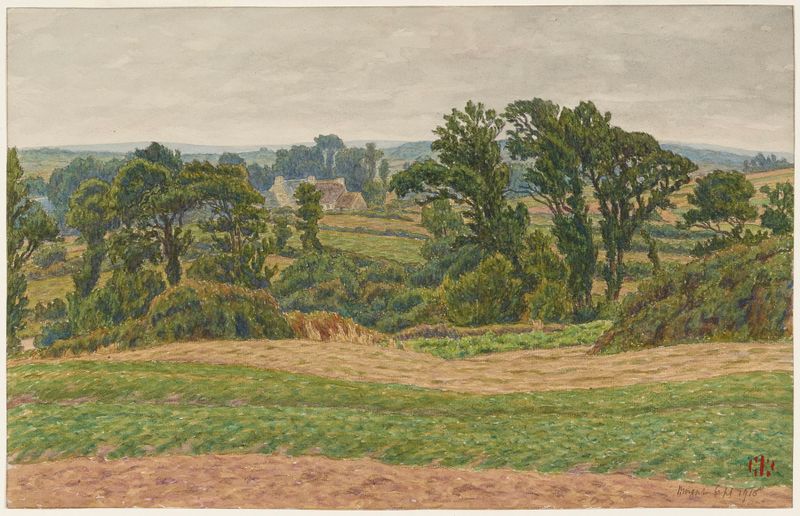
What if silence could speak through light? In Saint-Lambert-des-Bois, tranquility is not simply felt; it envelops the viewer, inviting them into a serene conversation with nature. Look to the center of the painting, where a gentle brook weaves its way through the landscape. The soft blues and greens coexist harmoniously, capturing the essence of a quiet afternoon. Notice how the light dances on the water's surface, illuminating the subtle texture of the rippling current while casting a delicate glow on the surrounding foliage.
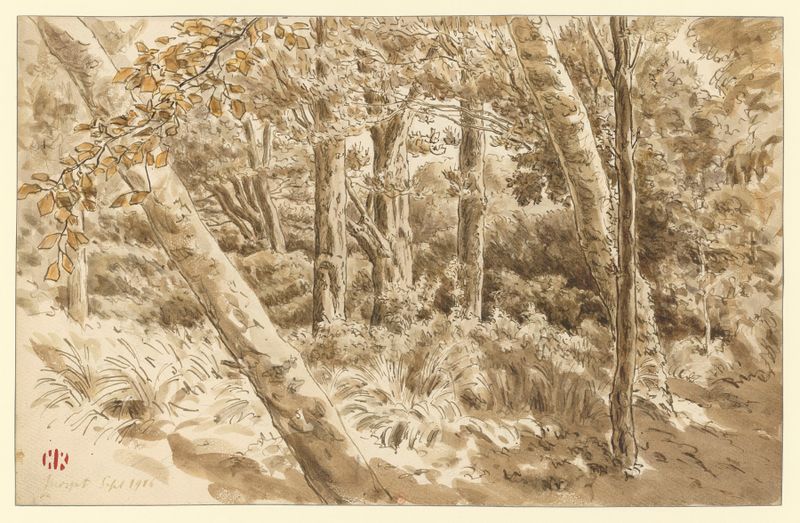
Each brushstroke suggests a moment frozen in time, where every detail, from the rustling leaves to the distant horizon, contributes to the peaceful ambiance. Delve deeper into the nuances within the work. The juxtaposition of the vibrant colors against the muted tones speaks to the balance between life and stillness. The path leading into the forest implies an invitation to explore, yet the absence of figures suggests solitude, perhaps a retreat from the chaos of urban existence.
This interplay evokes a sense of longing for quietude, reflecting our own desire for moments of introspection amidst the clamor of daily life. In 1923, Henri Rivière painted Saint-Lambert-des-Bois during a time when he was immersed in the exploration of natural landscapes, seeking to convey emotion through color and form. His work emerged against the backdrop of a shifting art world, as artists began to embrace post-impressionistic techniques, allowing for both subjectivity and sensitivity in their depictions. Rivière's commitment to capturing the serenity of nature echoes his personal pursuit of peace, mirroring a collective yearning for solace in an increasingly complex world.